



dědičná štola císaře Josefa II. Water structure
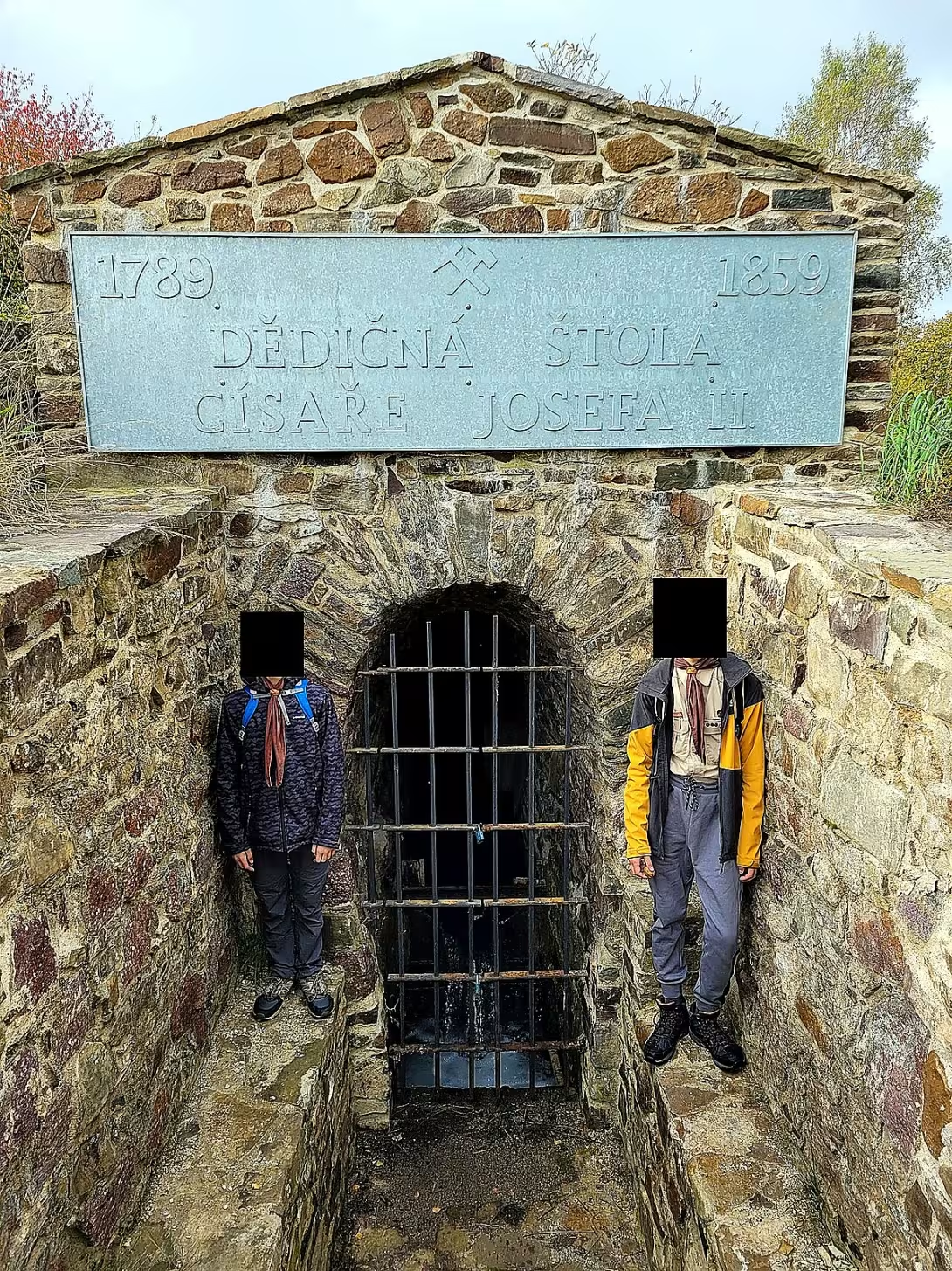
The hereditary stol of emperor Joseph II, located in the territory of the March region, is a water work built to drain the ore mines of mining silver and lead. It has been protected by the Czech Republic since 1973 and named after Emperor Josef II, known for its reform policy, which supported industrial development. This bridge connects various mines in the area of Břežové Hor and Bohtěna, allowing mining water to be diverted into the river Litavka.
The process started around 1789 as part of the concept of drainage of deep ore mines. This initiative was intended to address the water problem that prevented the extraction of silver and lead. The concept was developed in 1693 by the master Ignác Anton Putz. After several years of work, the stamping was completed by the last proclamation of July 8, 1859 between the mines of František and Šimbaba, which brought the total length of the stol with turns 21 906 meters.
The architecture is based on a combination of rock stamping and casting from stonework. The main part, which follows the red veins and was struck even as an excavation, measures 8,944 meters. The mine is arched with a gradient of between 3- 5 ° below the surface, allowing effective drainage down.
After the mining in 1978, the system of pits, ditches and corridors was flooded to level 2, which lasted 15 years. A part of the mining water is carried to this day spontaneously into the river Litavka, while another part has since February 1984 been drawn into the plant Star of the water tank Municipal. After filtering through sand filters, these waters are delivered to the Plámrama Water Regulations.
Today, the hereditary stele is not only a cultural monument, but also a functional element of local infrastructure. In 2016, a total of 795 338 m ³ of these waters were delivered to the Starfish plant 315 360 m ³ of mining waters and in 2020 795 338 m ³ of these waters were carried out by a stall. The commemorative protected part, which ranges from the Ševčina mine to the result of the Market Dushník, was repaired between 2018 and 2019, which included the removal of non-original ports and the fixation of historical masonry.
The hereditary stol of emperor Joseph II is an important monument, which shows the industrial development of the 18th and 19th centuries in Bohemia and the engineering capabilities of the time. Its history and current features represent an interesting combination of past and modernity, making it a visit not only to historians, but also to any curious tourist. Today it is accessible and offers a unique view of the technical past of the region, which makes it an essential part of the cultural heritage of the Czech Republic.
Historical milestones
- 1789
- The embossing of the hereditary stol began.
- 1859
- The stampede ended with the last break between the mines of František and Shimbaba.
Architectural development
The gavel has been in operation since 1789 and its main part is 8944 m long, follows the red veins and has been pressed like an overflow. It's arched and plastered from stonework.
Historical events
- 1789
- The embossing of the hereditary stol started to drain ore mines.
- 1859
- The stampede ended with the last break between the mines of František and Shimbaba.
- 1978
- After mining in the area, the jam system was flooded to level 2.
Points of interest
- The inheritance of emperor Joseph II is protected by the Czech Republic since 1973. - Named after Emperor Joseph II, known for his reform policy, which supported industrial development. - The stamping started around 1789 as part of the concept of drainage of deep ore mines. - After several years of work, the stamping was finished by the last break of July 8, 1859 between the mines of František and Řimbaba, bringing the total length of the stol with turns 21 906 meters. - Today, the hereditary stele is not only a cultural monument, but also a functional element of local infrastructure.
Guide
Show guide text
This text was created by artificial intelligence and has not been editorially reviewed. It may contain inaccuracies.
Welcome to a place full of history and technical art - you are standing before the hereditary stol of emperor Joseph II, one of the most important water works of the region of Bředový Hor and Bohtěna. You have a structure in front of you that talks about the past where problems with the drainage of ore mines in this part of the Czech Republic needed to be addressed.
The origin of the hereditary stol dates back to 1789, when its stamping began. The aim was to improve the conditions for mineral extraction by more effectively exiting water out of the mines. The bridge connects various mines and allows the transfer of mining water into the river Litavka, thereby ensuring the safety of underground work. It was named after the Emperor Joseph II, known for its reform policy and support for industrial development.
Look up at the structure of the dimple, which is adapted to the needs of past times. Notice its robustness and durability - proof of how technical problems were solved at the time. This wall is not only a functional part, but also an architectural evidence of the skills of the then builders.
The key personalities associated with this monument include císař Josef II., whose initiative led to the creation of this work. Ignác Anton Putz, another important figure of the time, also played a role in the implementation of the project. Their cooperation and efforts made it possible to complete the stol in 1859.
The interesting thing is that dědičná štola císaře Josefa II. has been protected as a cultural monument of the Czech Republic since 1973. This protection ensures that future generations can recognize and appreciate the historical importance of this work.
Let's move closer to the mantelpiece and look at the details. Notice how it was designed to withstand the time side and nature. It is a testament to technical progress and the innovative spirit of past generations.
We're finishing our tour by inviting you to explore the area again. There are many other attractions in this area and each one has a story. I hope this guide has provided some insight into the hereditary stol of emperor Joseph II. And now I salute you, and I hope you will return with new experience and knowledge.
Tips for visitors
The best time to visit the hereditary stoll of emperor Joseph II is in the spring or autumn period, when nature is especially celebrated and the weather is usually quieter. This time years also offers ideal lighting conditions for photography.
When visiting stolla, it is advisable to carry shoes suitable for walking on uneven terrain, a protective umbrella and plenty of drinking water. If you are planning photography, do not forget the quality camera and perhaps some stability for long-term exposure.
Photo stolle offers many interesting perspectives. The best light appears in the morning or evening, when the sun is lower and shading creates dramatic effects. The interior of the stolle for unique views can be searched.
In the vicinity of the stolla there is a historic place Bředová Hora, where you can discover an ancient entertainment spa and other sights. For families with children this place is an interesting destination for a short walk and visit.
Frequently asked questions
Can the monument be visited?
This is a structure in a public space that can usually be seen from outside free of charge. We have not verified that this particular one is freely accessible.
Where is the monument?
Location: Středočeský kraj. The map on this page shows the exact spot.
Why is the monument protected?
It is listed in the Central List of Cultural Monuments of the Czech Republic as a cultural monument (register no. 1000143624).
Businesses nearby
Do you run a restaurant, accommodation, shop, museum, rental, wellness or other visitor service near this monument? Show yourself directly to the people heading to it — this is how they will see you in the app and on the web:
Nearby
🏰 Historic sites (90)
- Pomník obětem 2. světové války 2.1 km
- pomník obětem 1. sv. války 2.2 km
- socha A. Jiráska 2.2 km
- sv. Václav 2.3 km
- Ida Edelsteinová 2.4 km
- Adolf Edelstein 2.4 km
- Šimon Edelstein 2.4 km
- Bedřich Edelstein 2.4 km
- Hornické muzeum Důl Anna 2.5 km web
- Dr. Josef Theurer 2.5 km
- 1914-1918 2.7 km
- Hornické muzeum Příbram 2.7 km web
- Svatohorské poutní muzeum 2.8 km
- sv. Vojtěch 2.8 km
- Mariánský sloup 2.9 km
- Socha horníka 3.0 km
- Sady Hrabákovy 3.1 km
- Hornické muzeum Příbram 3.1 km web
- Ševčinský důl 3.1 km
- socha Ant. Dvořáka 3.2 km
🍽️ Restaurants and dining (132)
- Nón Viet 1.9 km
- Restaurace Švejk 2.1 km Na Příkopech 105 +420 722 229 800+420 728 258 410 web
- Restaurace Nádraží 2.2 km
- Na Hradbách 2.3 km
- Zlatý Soudek 2.3 km
- Café del Mar 2.3 km
- V tržnici 2.3 km
- Time Cafe 2.3 km
- Wokno 2.3 km
- Istanboli Kebab 2.3 km
- Dante pizzeria 2.3 km
- Salátovna 2.4 km
- Kaférna 2.4 km Pražská 138 web
- Bistro rynk. 2.4 km náměstí T. G. Masaryka 154
- Jídelna U Řezníka 2.4 km Pražská 140
- Namaskar 2.4 km +420 774 086 178 web
- Šatlava 2.4 km Potoční 139 +420 326 531 970 web
- Pizzeria Bar Hollywood 2.5 km
- Šalanda 2.5 km Zahradnická 74 +420 318 581 239 web
- Pivnice Branický sklípek 2.7 km
🏨 Accommodation (26)
- Time Cafe 2.3 km
- Hotel Jurkos 2.3 km
- Pension Asoft 2.4 km +420 777 188 999
- hotel Belvedere 3.0 km Legionářů 401 web
- Minicamp 3.8 km
- Penzion Leona 4.2 km +420 605 555 454 web
- Dětský areál Pepa 4.3 km
- Anamo 5.9 km
- Hornický penzion 6.1 km web
- Ermi 7.4 km
- Hotel u Milína 8.4 km
- Bivak 9.3 km
- Restaurace a Penzion EŠKA 9.3 km +420 318 692 805 web
- Malý Janek 9.3 km Eškova 33 +420 731 142 999 web
- Penzion Rafanda 9.6 km +420 605 435 734 web
- Seník u pramene Brdlavky 10.8 km
- Penzion a Pivovar Nový Rybník 10.9 km
- Bivak 11.2 km
- Džbánek 11.4 km
- Pribiance 12.7 km
🚲 Rentals and sport (17)
- Cyklosport 2.2 km
- Bike-Arena 2.3 km
- Spartak 2.5 km
- Aquapark 3.2 km
- Sportisimo 4.7 km
- Půjčovna elektrokol - Radek Švehla 4.7 km web
- Střelnice 5.2 km
- JUMP-TANDEM SkyCentrum 6.5 km Drásov 222 +420724002001 web
- TJ Sokol Jince 8.7 km web
- Bio Koupaliště 9.4 km
- Pumptrack Zaječov 13.7 km
- TJ Sparta Podluhy 13.9 km
- Koupaliště Nepomuk 14.0 km
- Kola a lyže Beran 14.1 km Tyršovo náměstí 51 +420 602 439 937 web
- Cyklo Kraken 14.2 km Mládeže 447 +420 725 768 997 web
- Tělocvičná jednota Sokol Dobříš 14.4 km
- tělocvičny 1. a 2. ZŠ 14.4 km
🥾 Hiking and nature (233)
- Na Homoli 1.0 km
- Jalovčiny 1.2 km
- Čertův pahorek 1.2 km
- Huťský lesík 1.3 km
- Květná 1.6 km
- Hůrka 1.8 km
- Planiny 1.8 km
- Motýlí vrch, Ferdinandka 1.9 km
- Šibeniční vrch 2.1 km
- Strážný 2.1 km
- Střelovna 2.2 km
- Zátiší 2.2 km
- Pahorek 2.2 km
- Jiráskovy sady 2.2 km
- Čihadlo 2.2 km
- Hornické náměstí 2.4 km
- Jezírka 2.5 km
- Malá Dubová hora 2.5 km
- Pichce 2.6 km
- Homole 2.6 km
Accommodation nearby
Themed route
Thematic cruise route: Hereditary stol of emperor Joseph II.
1. Hereditary stol of emperor Joseph II. (water work) - Type: Historical water work - Why is it worth a visit: This stol is a key part of the history of local water supply. Designed by Emperor Joseph II, points to the engineering skills of the 18th century and its construction contributed to the development of the region.
2. Ambient park - Type: Green Zone - Why is it worth a visit: The park offers a peaceful walk in nature, which complements the historical character of the rock. It is an ideal place to relax and explore after studying the technical work.
3. Information Center - Type: Educational equipment - Why is it worth a visit: The Centre provides detailed information about the history of the stacks and its importance for the region. Here you can learn more about the technical aspects of the construction and its innovative solutions.
4. Tanks with memorial plate - Type: Historical courtyard - Why is it worth a visit: The reservoir is an important place where there is a commemorative plaque about the importance of the stacks. It is a place that celebrates historical value and resembles the personalities involved in its creation.
5. Exhibition space - Type: Exposure - Why is it worth a visit: The exhibition shows historical documents, photos and models related to the dimple. It provides a deeper insight into its creation and impact on the local community.
This route offers a combination of historical knowledge and natural beauty, which makes a visit to the hereditary wall of emperor Joseph II full of discoveries and learning.
Seasonal recommendations
Spring: In the spring period, a visit to the hereditary stol of emperor Joseph II is special because of the dazzling sunlight entering the underground corridors. The growing vegetation around the object adds landscape beauty and the atmosphere is full of recovery and hope. Visit the mound soon after sunrise to expect a less demanding diary and mild crowd volumes. It is advisable to prepare light clothes with the possibility to add a layer to any cool morning.
Summer: In summer, the hill of emperor Joseph II is full of life, where underground space becomes a refuge from the heat from the outside. The light falling through small windows creates unique effects and atmosphere, supplemented by warm air underground. The best time to visit is an early afternoon when there are fewer tourists and the entrance time will be more comfortable.
Autumn: In the autumn period, the hill of emperor Josef II. offers a quieter visit with a milder crowd and beautiful colours around the building that provide a unique atmosphere. The light falls on the gray sky creating melancholy effects in the shady spaces of the underground world. At night, it is recommended to visit the memory when the colours of trees and flowering plants are projected underground. Wear flexible and warm clothes with additional layers for a cold evening visit.
Winter: In the winter period, the hill of emperor Joseph II is a place of escape from freezing conditions outside where it enters the warm and moist space. The dazzling light falling through the shaded windows adds a mystical atmosphere, which is supplemented by cool freezing outside. Prepare warm clothes and protective legs on a cool floor surface to make the visit comfortable and safe.
Visualizations and artistic views


The visualisations are generated by artificial intelligence and serve as inspiration.
Photos from the area
Real photos taken near the monument

Zdroj a licence jsou uvedeny u každého snímku.
Tips from visitors
No tips yet. Be the first!
Log in and add your tip.
Sources and literature
Photos: Zmatlík / CC BY-SA 4.0 — Wikimedia Commons. The author and licence also appear when you hover over the image.
Faktickým podkladem tohoto textu byl článek na Wikipedii, jehož autory jsou přispěvatelé Wikipedie. Článek je dostupný pod licencí CC BY-SA 4.0.
Location on the map





Příběhy a pověsti
Legendy, pověsti a příběhy spjaté s touto památkou

Fotografie návštěvníků
Zatím žádné fotografie. Buďte první, kdo přidá fotografii z návštěvy!
Log in a přidejte svou fotografii nebo hodnoťte.
Za ověřenou návštěvu v aplikaci získáte víc bodů — poznáme podle GPS, že jste na místě.
Reviews and comments