






Dělostřelecké artelerie Barracks
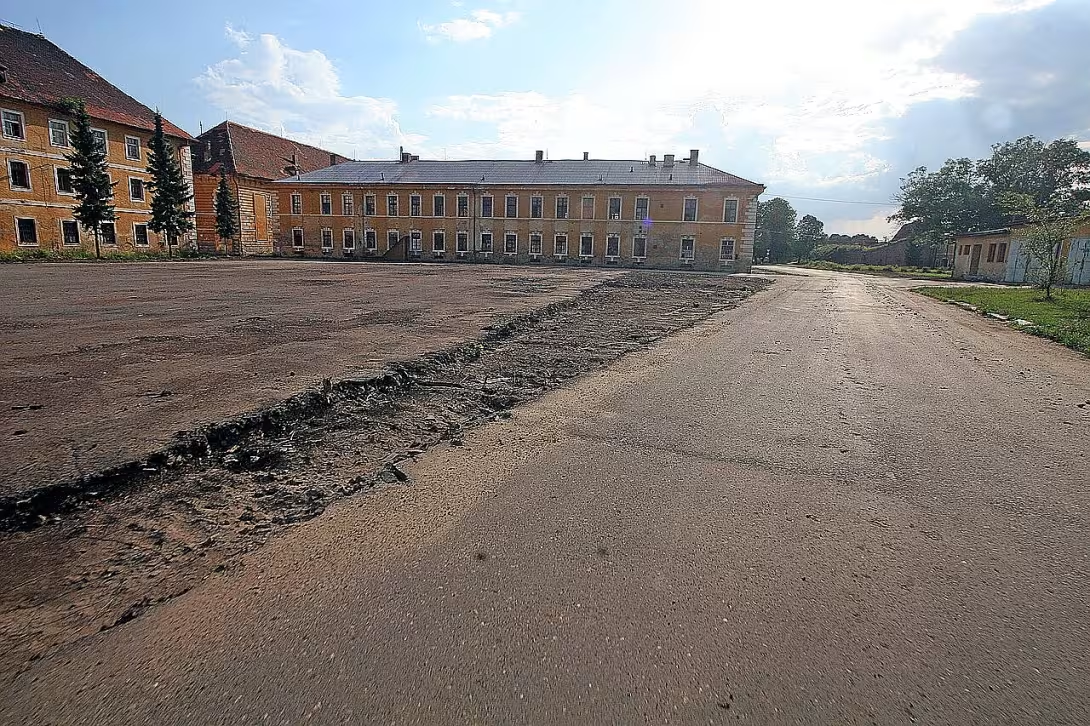
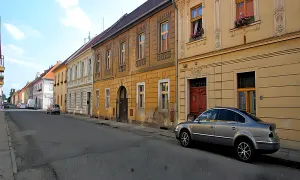
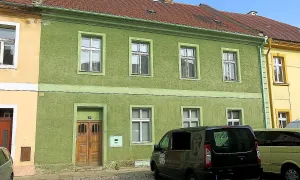
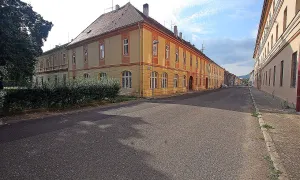
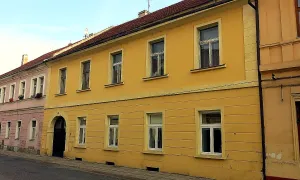
Dělostřelecké artelerie, a cultural monument of the Czech Republic, is located in Terezín, district Litoměřice, Ústecký kraj. It is a classicist barracks built between 1782 and 1784 as part of the Great Fortress. The complex includes a single-wing armory and triple-wing barracks, which are protected as a monument protected area.
These objects were created because of the need to strengthen the defence capabilities of the Great Fortress. The construction took place between 1782 and 1784, corresponding to the time of intensive construction to defend against military threats in Europe. Classicist architecture of barracks reflects aesthetic and functional requirements of this era.
Today, artillery arteuses are accessible to visitors. Their historical importance associated with classical architectural style and past functions makes this object an interesting destination for lovers of history and architecture. The visit offers important aspects of Czech military history.
Today, when these objects are protected as a cultural monument, it is worth visiting them not only for their historical significance, but also for the opportunity to appreciate classical architecture. These barracks are witnesses of the past and offer a view of the important period of Czech history.
Historical milestones
- 1782-1784
- Status of a single-wing armory and triple-wing barracks.
Points of interest
- It is a classical barracks built between 1782 and 1784 as part of the Great Fortress. - The complex includes a single-wing armory and triple-wing barracks. These objects were created because of the need to strengthen the defence capabilities of the Great Fortress. - The construction took place at a time of intensive construction to defend against military threats in Europe. - Today these objects are accessible to visitors and are protected as a cultural monument.
Guide
Show guide text
This text was created by artificial intelligence and has not been editorially reviewed. It may contain inaccuracies.
Welcome to Terezín. Right now you're standing in a place where history touches the present and where every stone tells the story of strength, order and military tradition. In front of your eyes is a monumental set of buildings that once was the heart of an artillery army. Feel the atmosphere. You feel the weight of a place that wasn't built for aesthetic pleasure, but for purposes that required strength, stability and unwavering. In front of you is the artillery artetry, part of an extensive military complex that shaped the face of this section of the country.
Let's go back together to the time when there were the foundations for everything you see now. Imagine the end of the 18th century. It is a period when power balances have changed in Europe and the need to have strong, organised armies has been more urgent than ever. It is in this important context, between 1782 and 1784, that these buildings were created. Terezín was a strategically key point at the time, and this artillery artillery was supposed to serve as a base for soldiers and their armaments. This whole space was designed to meet the strict requirements of the then military science and to ensure safe storage and operation of artillery units.
Now pay attention to what you see right in front of you. The architecture of this place is strict and functional, which is typical of military structures of the time. Notice the layout of the buildings that make up this whole. You have a one-wing armory that was designed to store weapons and valuable equipment. Its shape and location had to meet the need for both rapid access and security. There's a three-wing barracks next to her. This extensive structure of buildings creates a comprehensive space that has been designed for the life and discipline of hundreds of men. Looking at these buildings, you can realize how much the organization of space played at that time. Every wing, every node of buildings had its exact purpose. Even if you look at these buildings today as a cultural monument, at the time of their creation they were alive, noisy and constantly in motion where the state's strength was being prepared.
When you look at these walls, you might wonder who the people who lived and worked here were. Although we have not been able to maintain the names of the specific personalities that worked in these premises, their presence is felt in every corner. But we can imagine them. Imagine the soldiers who trained here every day, who slept here, and who were waiting for orders in times of unrest. Imagine craftsmen and workers who, between 1782 and 1784, built buildings, carried materials and formed this monumental whole. Even though their names remain unknown in history, their work is still alive and standing right in front of you. They are the unknown heroes of everyday life who have created the basis for this historic monument.
But there is also one mystery that can arouse your imagination. Although you are faced with such a sophisticated and massive work that required deep knowledge of the construction and military order, the names of the architects themselves who designed these buildings remain hidden. Who were those people? What were their thoughts when they drew plans for a triple-wing barracks? What role did their personal vision play in creating this military group? This ignorance creates an interesting contrast between the visible power of buildings and the invisible, lost identity of their creators. It is like a quiet dialogue between what we see and what we have failed to reveal from the past.
This whole area is today protected as an important cultural monument of the Czech Republic. It's proof of how important it is to keep track of our common history. This artillery artillery is not just a pile of stone and mortar, it is a witness to the time when modern armies were formed and when Terezín was becoming a key fortress point.
But now I will not hold you back. I suggest you continue your search and be carried away by the atmosphere of this place. Look at the more detailed parts of the buildings, see their dimensions and try to reconstruct the life that took place here over 200 years ago. Explore the surrounding space and look at these buildings from different angles to fully understand their scope and significance. Thank you for choosing to make this journey with interest in history. We wish you a pleasant and inspiring continuation in discovering this place.
Tips for visitors
The best time to visit is in the morning or late afternoon when the light is softer, which is ideal for taking pictures of the historical building. For the best results, use the space between barracks, where the sun rays create interesting shadows.
You can reach the monument by car and public transport; check the current connection in the search engine. Staying vehicles is possible nearby, but we recommend looking for vacancies in nearby streets.
Bring comfortable shoes suitable for walking and plenty of drinking water. It is important to be prepared for movement in the space of the historical whole.
For families with children we recommend to prepare some fun to make a walk around the place for the smallest pleasant. There are no other places to visit in the area.
Businesses nearby
Do you run a restaurant, accommodation, shop, museum, rental, wellness or other visitor service near this monument? Show yourself directly to the people heading to it — this is how they will see you in the app and on the web:
Events nearby




Zdroj akcí: otevřená data měst a obcí ČR (Národní katalog otevřených dat) a kalendář akcí Národního památkového ústavu.
Nearby
➜ Zobrazit interaktivní přehled okolí – restaurace, ubytování, půjčovny a další místa v okruhu 15 km.
Data: OpenStreetMap contributors, okruh 15 km.
🏰 Historické památky
- Magdeburská kasárna (0.6 km)
- Terezín memorial (0.7 km)
- Památník Terezín (1.3 km)
- Severočeská galerie výtvarného umění v Litoměřicích (2.7 km)
- Krematorium Litoměřice (3.4 km)
- Hrad Kamýk (6.9 km)
- Pamětní deska obětem komunistické zvůle (7.1 km)
- Morový kámen (1680) (9.4 km)
🍽️ Restaurace a stravování
- Vikárka (2.5 km)
- Radniční sklípek (2.6 km)
- Vinoteka (2.6 km)
- U Zlatého Bažanta (2.6 km)
- Robo (2.7 km)
- Občerstveni (2.7 km)
- Gurmanie (2.7 km)
- Budvarka (2.8 km)
🏨 Ubytování
- Parkhotel Terezín (0.1 km)
- U Borovičku (2.6 km)
- Hotel Labe (2.7 km)
- U Svatého Václava (2.7 km)
- Hotel Apollon (2.7 km – Na Valech 2094/25)
- Pivovarský sál (2.8 km)
- Hotel Dejmalík (2.9 km)
- Hostel U sv. Štěpána (3.1 km – Komenského 748/4)
🚲 Půjčovny a sport
- Yacht-klub Lovosice (2.1 km)
- norskamoda (2.4 km)
- Skicentrum (2.8 km)
- Plavecký bazén (2.9 km – Daliborova 2078/7)
- Sokol (3.1 km)
- Roots Camp (3.4 km – Teplická 2327)
- Městský bazén ASK Lovosice (6.5 km)
- Yacht-klub Lovosice (6.6 km)
🥾 Turistika a příroda
- Lovosice (ŽST) (6.3 km)
- Lovosice centrum (7.0 km)
- Lovoš (rozcestí modré a žluté) (9.1 km)
- Vchynice (9.2 km)
- Lovoš (tur. ch.) (9.3 km)
- Lovoš (9.3 km)
- Struženka (10.8 km)
- Boreč (11.3 km)
Accommodation nearby
Trips and activities nearby
Guided tours, tickets and activities nearby from GetYourGuide
Affiliate link: if you buy from the partner, we may receive a commission. The price for you does not change.
Search tours and activities →Themed route
1. Dělostřelecké artelerie (barracks), type: military object, why: Main destination trip, which represents historical accommodation for soldiers. 2. Casseran courtyard, type: open space, why: Here you will see the central part of the object and its internal layout. 3. Internal exposition, type: exhibition, why: This section will present the attractions associated with artillery. 4. The immediate area, type: outdoor space, why: Walk around buildings will allow you to better see the scope of the entire base.
Seasonal recommendations
Spring brings new life around artillery houses, where green vegetation begins to intertwine with historical matter of the wall. The light is delicate in this period, which will be appreciated especially by lovers of photography looking for details of architecture. For convenience I recommend choosing layered clothes because the weather can quickly change between cold and heat. It is the perfect time to visit if you are looking for peace without large groups of tourists.
The atmosphere is very lively in the summer months, but stone buildings can emit heat in heat. The sun is intense and the days are long, allowing for walking until late afternoon. The best thing to do is to arrive right after the opening so that you can avoid the biggest crowds and the strongest heat. Don't forget enough water and headgear for sun protection.
Autumn in this area creates a melancholy charge, especially when the morning fog floats around old objects. The colours of decaying leaves create an interesting contrast to the grey walls of the barracks. Due to the humid air and the possible slippery surface, I recommend that you wear firmer and waterproof shoes. It is a period for those who seek a deep, historical sense at a calmer pace.
Winter here is very raw and monumental, which underlines the military history of the place. In this period there is the highest silence and the least visitors, which allows an unloaded tour. Due to low temperatures it is necessary to have very warm clothes and high quality shoes. Always check the current opening times before travelling, which are shorter in the winter months.
Visualizations and artistic views


The visualisations are generated by artificial intelligence and serve as inspiration.
Photos from the area
Real photos taken near the monument

Zdroj a licence jsou uvedeny u každého snímku.
Tips from visitors
No tips yet. Be the first!
Log in and add your tip.
Sources and literature
Photos: Petr1888 / CC BY-SA 3.0 — Wikimedia Commons. The author and licence also appear when you hover over the image.
Location on the map
More monuments – Terezín
Show all in the municipality

Příběhy a pověsti
Legendy, pověsti a příběhy spjaté s touto památkou
Fotografie návštěvníků
Zatím žádné fotografie. Buďte první, kdo přidá fotografii z návštěvy!
Log in a přidejte svou fotografii nebo hodnoťte.
Za ověřenou návštěvu v aplikaci získáte víc bodů — poznáme podle GPS, že jste na místě.
Reviews and comments