



Dlouhá 15 House
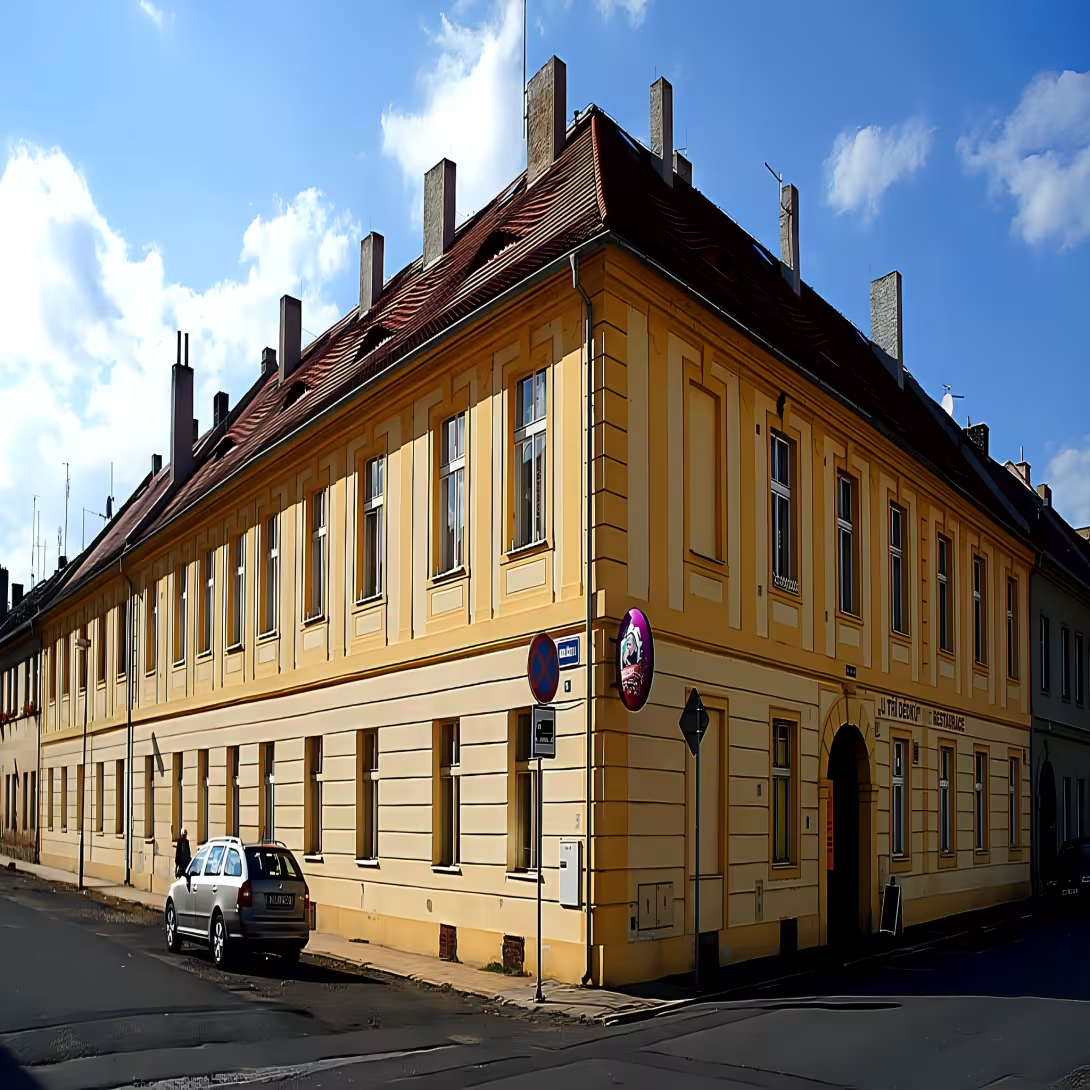
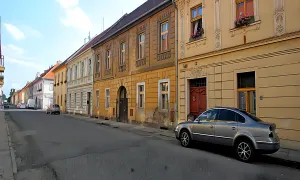
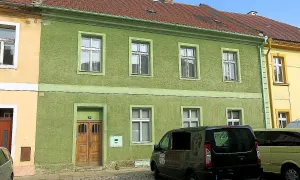
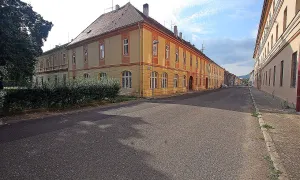
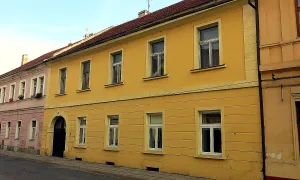
Long No. 15 in Terezín is a four-storey corner house built in a classical style between 1786 and 1820. Located in the village Terezín in the district of Litoměřice and is registered among cultural monuments of the Czech Republic. Its valuables lie mainly in the preserved classical facade, where belt rustics appear on the ground floor and on the floor of the Pillastra which breaks the smooth surface. The saddle roof is covered by a giant, typical roof cover for the buildings of the time. This object represents a rare example of urban architecture from the period of classicism in the region, where only limited similar buildings have been preserved.
There was little information about the creation of the house. According to archival records it was built between 1786 and 1820, which corresponds to the top stage of Classicism in Czech countries. This style was characterised by clear symmetry, straight lines and decorative elements, which are particularly visible on this house in the arrangement of the facade. The exact name of the builder or client is not known, but it is assumed that it served as a residential building for local residents or as a commercial object. Terezín was one of the smaller villages in the vicinity of Litoměřice, so similar houses played an important role in local architecture.
The architecture of the house reflects the typical features of the classical style that dominated Central Europe at that time. The facade is divided by pilasters which create vertical rhythm and give the building a monumental character. On the ground floor there is a belt rustic - decorative technique, where apparently protruding strips of stone or plaster are applied to the façade, thus highlighting horizontal breakdown. On the floor, the facade is smooth, with regularly distributed pilasters that create illusions of columns. The saddle roof covered by a giant is typical of rural and urban houses of the time and has been preserved in its original form to this day.
The property of the house or its history after the completion of the building was preserved only a minimum of data. According to the available records, it has not undergone any significant modifications to its original form. It is believed to have served as a residence for local families or as a business premises, but the precise name of the owners and the specific use is unknown. Since Terezín is mainly associated with a nearby concentration camp, this house represents a rare example of civil architecture that was not affected by war events.
Today the House Dlouha No. 15 is preserved in its original form and is protected as a cultural monument of the Czech Republic. Its value lies in the preserved Classicist facade, which is a rare example of urban architecture from the period of Classicism in the region. For tourists and history lovers, it is an interesting stop while walking Terezín, where you can learn about local architecture outside the context of the concentration camp. Access to the house is restricted because it is privately owned, but its facade is visible from public spaces. This monument thus offers the opportunity to know the authentic part of the history of the village, which is not associated with war events, but with the everyday life of the locals.
Terezín is now known primarily as the site of the former concentration camp, but its history goes much deeper. The house at Dlouhá no. 15 shows that even during such a difficult period there was a common architecture and life. Visiting this monument allows not only to admire the classicist details, but also to understand that the history of places is not unilateral and that each monument has its own story. For people interested in architecture and history, this house is an interesting and rare evidence of the past.
Historical milestones
- 1786-1820
- Position of corner four-piece house with classical facade.
Architectural development
The house was built in a classical style between 1786 and 1820. The facade is divided by pilasters and the ground floor is used belt rustic. The roof is saddled and covered with a giant. Further details on construction modifications are not available.
Points of interest
- Long No.15 is a rare example of urban architecture in a classical style from 1786 to 1820, when only limited similar buildings were preserved in the region.
- The facade of the house is broken down by pilasters and belt rustics, which are typical decorative elements of Classicism that highlight symmetry and horizontal breakdown.
- The saddle roof of the house is covered with a giant, which was a common roof cover for the buildings of the time and has been preserved to this day in its original form.
- The house probably served as a living space for local residents or as a business object, but the exact name of the builder, client or owner is unknown.
- This object represents an authentic part of the history of the village Terezín, which is not associated with a nearby concentration camp, but with the normal life of the local population.
Guide
Show guide text
This text was created by artificial intelligence and has not been editorially reviewed. It may contain inaccuracies.
Welcome to Terezín. You're standing right where time has stopped and where every brick and every stone tells the story of order, beauty and durability. In front of you is a demanding building at the address of Long Fifteen. It's a building that defines this whole corner of the street with its presence. Feel the atmosphere of peace and stability that this house radiates. It is a one-storey four-piece house that has a special L-shaped floor plan, thus gently encircling its structure and creating a sense of security and closure. Right now, when you're standing here, you're looking at a piece of real history that has survived for centuries and has been preserved for all of us.
Now let's go back a little bit to the past to understand where this house comes from. This building was not created by accident. Its formation is closely linked to the period between 1786 and 1820. This is a fascinating time span which includes the transition between the end of the eighteenth and the beginning of the nineteenth century. At that time, the ideals of clarity, symmetry and harmony were promoted in architecture. This house is an exact mirror to the ideas of what a dignified building should look like. Although we do not know the names of the particular builders or architects who oversaw this work, their work is evident in every detail. The people who worked here put their efforts into this building for perfection, which has been manifest to us for hundreds of years. The house was built not only as a simple sanctuary, but as an expression of a certain order in the human world.
Now pay attention to the architecture itself and try to view the building as a work of art. Notice how the facade is divided into two distinct parts, which is typical of the classical style. Your eyes are likely to hit the ground floor first. Look at the bottom of the house. You see the distinctive horizontal grooves and the structure? This decorative first one is called belt surgery. This element has the task of optically emphasizing the base of the house, giving it a sense of weight, strength and unshakefulness. It's like the house is standing firmly in the ground and ready to face all the storms of time. This rougher texture at the bottom creates an interesting contrast to what you see above.
Now slowly raise your eyes to the top floor. Change is instant and fascinating. While the lower part is robust and hard, the upper part is smooth, clean and elegant. On this smooth surface, you'll see pilasters. These are the flat, decorative pillars that are part of the wall but do not come out of it as significantly as the actual columns. These pilasters give the facade a vertical rhythm and a sense of grandeur. They make the house not only look like an ordinary building, but as a monumental work that has its own dignity. This contrast between the rough texture on the ground floor and the smooth elegance on the floor is key to understanding the beauty of this house. It's a game of light and shadow that changes depending on how the sun shines on this challenging facade.
If you look up, you'll see the roof. It's a saddle roof that's covered with bags called a bobcat. These small, flat and rounded bags cover the roof area as solid scales, creating a beautiful, rhythmic pattern. This roof is not only a protection against rain and snow, but it is an integral part of the overall appearance of the building, which, by its quiet presence, closes this whole architectural composition.
Even though we have no record of this place of great heroes or famous characters living in it, the house carries another, perhaps more important secret. It's the secret of anonymity. Think about all the people who went through this threshold, all the families who found their home here, and all the generations that looked at this house from different angles. This house is a silent witness to the everyday life that took place in Terezín for two centuries. We don't know the names of those who slept, ate or worked here, but their existence is written in every crack of old wood or in every stone detail. It is this ignorance that gives the place some depth and makes us wonder how quickly time passes and how little remains of individual lives, while buildings like this remain.
This building is protected as a cultural monument of the Czech Republic, which tells us that its value is not only in the material from which it is built, but in its importance for our common history and identity. It is proof that even ordinary, albeit beautiful, construction can be an integral part of the heritage of the entire nation.
I hope this view of the Long Fifteen has helped you see more in this house than just plain walls and a roof. Now that you know what to look at and what you've just seen, I suggest you continue your walk. Terezín offers many other places worth exploring, and every other street can welcome you with a new story. I wish you a wonderful journey and many other interesting experiences in discovering the beauty of this region. I'll say goodbye and wish you a pleasant continuation of the tour.
Tips for visitors
The best time to visit this corner house is in spring or autumn. The temperatures are pleasant, fewer people and nature is in full beauty. In summer there can be hot and crowds of tourists close to the house, while in winter some roads or walkways are covered with snow. If you want to see a home in peace, avoid weekends and holidays.
In these times the visit is most pleasant thanks to natural conditions and smaller crowd.
It is recommended to arrive by car because public transport to this place is not very frequent.
When visiting, wear comfortable shoes and suitable clothes, as walking around the historic parts of the city can be on stones or uneven surfaces. If you want to take photos, take a clean cloth or micro-cloth to clean your lenses, because historic houses can be covered with dust. Next, prepare plenty of water and perhaps even a small lunch, because there are no restaurants or refreshments in the vicinity of the monument.
Preparing for a visit will ensure that you enjoy the whole day without unpleasant surprises.
The best places for photography are the facades of the house and its corners, where its architectural solution is best captured. It is recommended to photograph in the morning or in the afternoon when light falls favourably and creates fewer shadows. If you want to capture the detailed structure of the walls, use the width shot and avoid direct sunlight that could cause the image to disengage.
The correct lighting and angle of the shot will improve the quality of your photos.
There are not many interesting places in the vicinity of the monument because the information about the surroundings is limited. However, if you want to walk and explore the surrounding area, you can visit other historic houses and buildings in the center of Terezína. These buildings are also protected and have historical significance. For families with children it is advisable to visit local museums or parks that are close to the city center.
Terezín offers rich history and is suitable for families interested in cultural heritage.
The visit to this house is interesting for families with children thanks to its historical value and architectural design. Children can be intrigued by what a building like this looked like many years ago. They are advised to explain the history and importance of the monument in order to remember it better. You can also visit the local library or children's museum that are suitable for children and offer interactive activities.
History and interactive activities will help children better understand and remember the importance of the monument.
Frequently asked questions
Can the monument be visited?
This is a residential or farm building, not a museum with opening hours. Please view it from public space and respect the owners' privacy. We have no information about access to the interior.
Where is the monument?
Location: Dlouhá 15, Terezín, Ústecký kraj. The map on this page shows the exact spot.
Why is the monument protected?
It is listed in the Central List of Cultural Monuments of the Czech Republic as a cultural monument (register no. 42779/5-4713).
Businesses nearby
Do you run a restaurant, accommodation, shop, museum, rental, wellness or other visitor service near this monument? Show yourself directly to the people heading to it — this is how they will see you in the app and on the web:
Events nearby




Zdroj akcí: otevřená data měst a obcí ČR (Národní katalog otevřených dat) a kalendář akcí Národního památkového ústavu.
Nearby
➜ Zobrazit interaktivní přehled okolí – restaurace, ubytování, půjčovny a další místa v okruhu 15 km.
Data: OpenStreetMap contributors, okruh 15 km.
🏰 Historické památky
- Magdeburská kasárna (0.4 km)
- Terezín memorial (1.0 km)
- Památník Terezín (1.4 km)
- Severočeská galerie výtvarného umění v Litoměřicích (2.9 km)
- Krematorium Litoměřice (3.6 km)
- Pamětní deska obětem komunistické zvůle (7.1 km)
- Hrad Kamýk (7.1 km)
- Morový kámen (1680) (9.4 km)
🍽️ Restaurace a stravování
- Vikárka (2.7 km)
- Vinoteka (2.8 km)
- Radniční sklípek (2.9 km)
- U Zlatého Bažanta (2.9 km)
- Budvarka (3.0 km)
- Robo (3.0 km)
- Občerstveni (3.0 km)
- Gurmanie (3.0 km)
🏨 Ubytování
- Parkhotel Terezín (0.2 km)
- U Borovičku (2.9 km)
- Hotel Apollon (2.9 km – Na Valech 2094/25)
- Hotel Labe (3.0 km)
- U Svatého Václava (3.0 km)
- Penzion Mácha (3.0 km – Pekařská 496/17)
- Pivovarský sál (3.1 km)
- Hotel Dejmalík (3.2 km)
🚲 Půjčovny a sport
- Yacht-klub Lovosice (2.4 km)
- norskamoda (2.6 km)
- Skicentrum (3.0 km)
- Plavecký bazén (3.2 km – Daliborova 2078/7)
- Sokol (3.3 km)
- Roots Camp (3.7 km – Teplická 2327)
- Městský bazén ASK Lovosice (6.4 km)
- Yacht-klub Lovosice (6.6 km)
🥾 Turistika a příroda
- Lovosice (ŽST) (6.2 km)
- Lovosice centrum (7.0 km)
- Lovoš (rozcestí modré a žluté) (9.1 km)
- Vchynice (9.1 km)
- Lovoš (tur. ch.) (9.3 km)
- Lovoš (9.3 km)
- Struženka (10.7 km)
- Boreč (11.2 km)
Accommodation nearby
Trips and activities nearby
Guided tours, tickets and activities nearby from GetYourGuide
Affiliate link: if you buy from the partner, we may receive a commission. The price for you does not change.
Search tours and activities →Themed route
Thematic cruise route around the monument Dlouhá 15 in TerezínA
1. Terezín Memorial - Ghetto (historical monument) The beginning of the route consists of the Terezín Memorial, which documents the fate of the prisoners and the history of the Nazi ghetto. Its exposition and premises offer a deep view of the suffering and legacy of Holocaust victims.
2. Small fortress Terezín (military monument) Approximately 1 km from Long 15 is the Small Fortress, originally a military barracks, later converted into a concentration camp. Its tower and exposition illuminate another page of Teresian heritage.
3. Synagogue in Terezín (Jewish landmark) In the centre of the village stands the Synagogue, which reminds of the rich Jewish history of the region. Its architecture and interior reflects the cultural legacy that has disappeared here.
4. Jewish cemetery in TerezínA (memorial) Near the synagogue lies the Jewish cemetery, where local Jews are buried. Its atmosphere and tombstones provide a peaceful place to reflect on the past.
5. Dlouhá 15 (historical building) The road ends at Long 15, a former barracks that served as the administrative center of the ghetto. Its interiors and exhibitions complement the overall picture of the Teresian heritage.
The route is aimed exclusively at the places specified in the assignment.
Seasonal recommendations
In spring Terezín comes alive with the arrival of the first flowers and fresh air. The soft spring light highlights the details of the facade of the house in the street Dlouhá and the surrounding greenery begins to grow again. We recommend wearing more layers of clothing because the weather is very variable in this period. Visiting is medium, which is why it is the perfect time for the morning tour.
The summer season brings intense sun and rich green nature around the fortress. The atmosphere is most lively at this time, but it is often accompanied by high temperatures. Due to large groups of tourists in the season, it is best to arrive first thing in the morning to avoid the biggest crowds. Remember light summer clothes, hat and plenty of drinking water.
Autumn in Terezín is melancholy, which matches the history of this place. The golden leaves and morning fog provide a mysterious touch and quiet peace of mind. In this period, people are significantly fewer, which allows deeper reflection without disturbing elements. Waterproof shoes and a wind-proof jacket are suitable.
In winter, the landscape is dominated by frosty calm and grey colors that underscore the rigour of architecture. The atmosphere is quiet and respectful, especially in advent time. It is imperative to have very warm clothes and firm shoes that keep your feet warm. Pay attention to shorter opening times, which are common in winter months.
Visualizations and artistic views


The visualisations are generated by artificial intelligence and serve as inspiration.
Photos from the area
Real photos taken near the monument


Zdroj a licence jsou uvedeny u každého snímku.
Atmosphere of the place
This atmospheric visualisation of the place and period was generated by artificial intelligence. It is not real footage of the location.
Tips from visitors
No tips yet. Be the first!
Log in and add your tip.
Sources and literature
Photos: Aloxe / FAL, rozlišení zvýšeno umělou inteligencí — Wikimedia Commons. The author and licence also appear when you hover over the image.
Location on the map
More monuments – Terezín
Show all in the municipality

Příběhy a pověsti
Legendy, pověsti a příběhy spjaté s touto památkou
Fotografie návštěvníků
Zatím žádné fotografie. Buďte první, kdo přidá fotografii z návštěvy!
Log in a přidejte svou fotografii nebo hodnoťte.
Za ověřenou návštěvu v aplikaci získáte víc bodů — poznáme podle GPS, že jste na místě.
Reviews and comments