






Dlouhá 18, B. Němcové 19 House
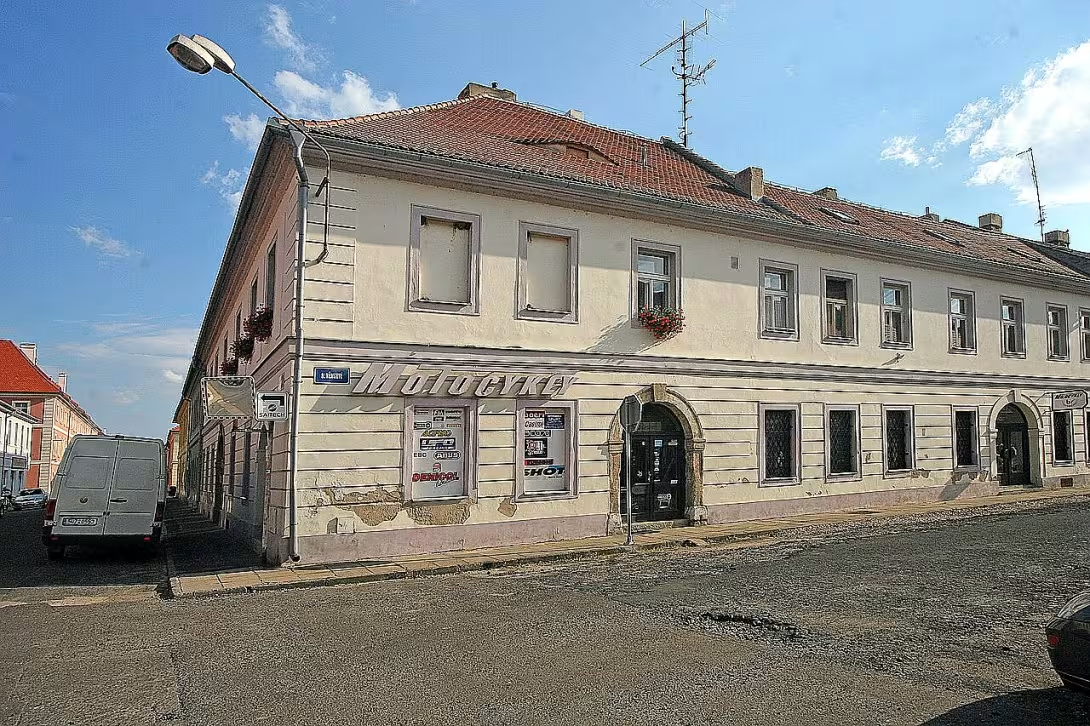
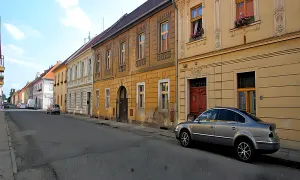
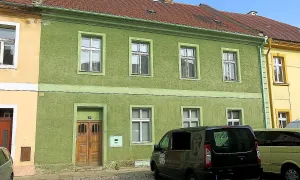
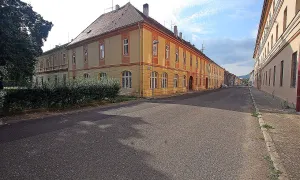
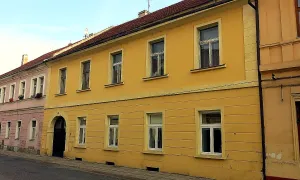
Dlouhá 18, B. Němcové 19 in the village Terezín (district Litoměřice, Ústecký kraj) is a corner storey house with classical facade. It is protected as a cultural monument of the Czech Republic. The building stands out for architectural value and historical significance for the whole area.
The construction was carried out in the spirit of classicism, which is confirmed by the symmetrical facade. The ground floor is decorated with belt barefoot and semi-circular end portals, the windows are framed with shingles. The opal eyes in the street facade give the building a characteristic character.
The history of the house is closely linked to its architectural quality and cultural heritage status. Although specific owners or major changes are not documented in detail, the building remains an important part of the local heritage.
Today, the Dlouhá 18, B. Němcové 19 is accessible to visitors. It is worth visiting thanks to its aesthetics and historical valuables. The monuments form an important part of the local picture and resembles the rich history of the region.
Visiting the house allows time to travel and appreciate the artistic skill of architects of past times. It is a reminder of the endurance and beauty that can be preserved for future generations.
Historical milestones
- around 1800-1850
- construction in the period of classicism
- 20th century
- registration of the object in the list of cultural monuments
Points of interest
- Dlouhá 18, B. Němcové 19 is protected as a cultural monument of the Czech Republic. - The object has a classical facade with a symmetrical facade and semi-circular end portals. - The house is an important part of the local heritage, even if its specific owners or major changes are not documented in detail. - It is accessible to visitors and is worth visiting thanks to its aesthetics and historical valuables. - Visiting allows time travel and appreciation of the artistic skill of architects of past times.
Guide
Show guide text
This text was created by artificial intelligence and has not been editorially reviewed. It may contain inaccuracies.
Welcome to Terezín, in a place where every stone and every wall tells their own, often silent story. Right now you're standing in front of one of those time witnesses. In front of you stands a corner bunk house, which is located on the streets of Long and Božena Germans. It is a building that naturally dominates space by its location and creates an important point in the form of a local development. If you look at it now, you may be particularly aware of the calm and stability it radiates into the surroundings. It is a place that stops you in your everyday haste and makes you wonder how many generations of people have been around this place before you and how many views have fallen on these walls.
Let us now think together about the emergence of this house and its historical context. I must admit that the history of this particular house is mysterious in many ways. The exact date of its construction and the names of the people who designed or built it remain forgotten. We don't know the name of an architect who invented in his head the layout of these spaces, nor the exact reasons why the house was lifted up in this form. It may seem to you to be lacking, but in a sense, this unsub is fascinating. This house does not appear in front of a visitor as a monument to a single famous person, but rather as a representative of everyday life in Terezín. It is a monument that represents the craftsmanship of its time and the needs of the people who lived and worked here. Nevertheless, its value is recognised at the highest level because the house is protected as a cultural monument of the Czech Republic. This means that the state has recognised its irreplaceable contribution to our architecture and history, although the particular names of the creators in the archives are missing.
Now pay attention to the architecture itself. Look carefully at the front of the house. What you see here is a classic facade. Classicism was a style that sought beauty in balance, simplicity and harmony. When you look at the house, notice how its overall composition works. The Classicist style avoided excessive decorations and instead bet on clean lines and regularity. It is this moderation that gives the house its noble and inconspicuous character. Feel the facade rhyming the street space. As a corner building, the house must communicate with two different directions, and the classicist approach helps it to act united and stable in this challenging location. See how the house floats above the ground as a storey structure, which in its time of origin meant a certain status and sufficient space for the inhabitants. Watch the light and shadow game on the surface of the walls and see how this building defines the line between the public area of the street and the privacy of the inner space.
When we think about the people who were connected to this place, we have to lean on our imagination again, because the specific names of the historical personalities that would live in or own this house are not listed in the records. And this is where the most interesting part of our encounter with this monument begins. Imagine all the anonymous lives that happened here. Who was walking through that door? Who watched people move from the windows in the streets of Long and Božena Germans? This house was a silent witness to thousands of small dramas, joy and sadness of the inhabitants of Terezína. Maybe there was a craftsman's family, maybe there was a businessman, or someone who came to town from a distance found refuge. Ironically, knowing their names doesn't make them less important people. On the contrary, this house becomes a symbol of all the thousands of forgotten stories that together form the true history of our region. It is a reminder that history is not only about kings and great warlords, but, above all, about the people who, by their work and presence, formed the face of our cities.
And now we're getting to the part that might be hiding its greatest mystery in the buodie. What is really fascinating about this house? It's the contrast between his official status as a cultural monument and his deep anonymity. You are standing in front of a building which is protected by law, which is recognised as valuable, and yet we know almost nothing concrete about it in terms of personalities or accurate data. It's like reading a book where the title page and the author's name are missing, but the text itself is so beautiful and valuable that we want to read it further. This mystery teaches us humility against time. It shows us that even if we forget the names of architects or owners, the work itself remains. The facade that you see right now has survived generations, survived changes in regimes, wars and storms, and it still stands here to remind us of aesthetics and values of the time when classicism was the peak of taste.
Feel the atmosphere of this place. Terezín is a city with very strong and specific energy. This house fits into it as a natural element. He's a quiet guard on the corner of two streets who's encouraging us to stop. When you look at it, don't just ask what's written in the archives, but try to feel what the house tells you in its form. Can you feel the stability? Do you perceive the pursuit of order and purity that classicism puts into us? It is in these details, the overall impression of the facade and the very fact that the house is still standing, that its greatest strength lies.
Now that you've looked at the house and tried to perceive its silent history, it's time to say goodbye to this particular place. I hope this short journey to the secret of the corner house in Terezín caught your eye and that you found something in it more than just old walls. This house is proof that even in simplicity and ignorance a great value can be hidden. I invite you to continue to explore Terezín. Follow the surrounding buildings, note the details on the facades and look for clues of the past in every corner of this fascinating city. You may encounter other sights that tell you their stories, whether loudly or in such a quiet whisper.
Thank you for your attention and for taking a moment for this forgotten yet valuable piece of our architecture. I wish you a pleasant further walk and many new discoveries in the Ústí Region. Goodbye and enjoy the rest of your day in Terezín.
Tips for visitors
The best time to visit this historical monument is in the spring or autumn season when the weather is pleasant and sunny to highlight the classical architecture of the house. This time of year also offers a softer attendance compared to winter or summer.
Parking can be found in the surroundings, but we recommend using public transport for easier access. The city meeting Terezín offers several bus and tram connections that will take you near the monument. Current information about traffic links can be found on local websites or in search engines.
When visiting, it is advisable to take with you protective sunglasses and plenty of drinking water, especially if you visit the memory during warmer months. A gift for children could be a small toy or a book with historical stories, which will help to explore the place more interesting.
Photography is particularly attractive in the first light or evening, when light is softer and classical architecture of the house emits a delicate atmosphere. The best places for photos can be found on the corner of the street overlooking the facade, where the light is best.
The historical museum Terezín and the park Theresienstadt, which offers beautiful walks, is located in the vicinity of the monument. These places are ideal for those who want to expand their experience by more historical and natural attractions.
Businesses nearby
Do you run a restaurant, accommodation, shop, museum, rental, wellness or other visitor service near this monument? Show yourself directly to the people heading to it — this is how they will see you in the app and on the web:
Events nearby
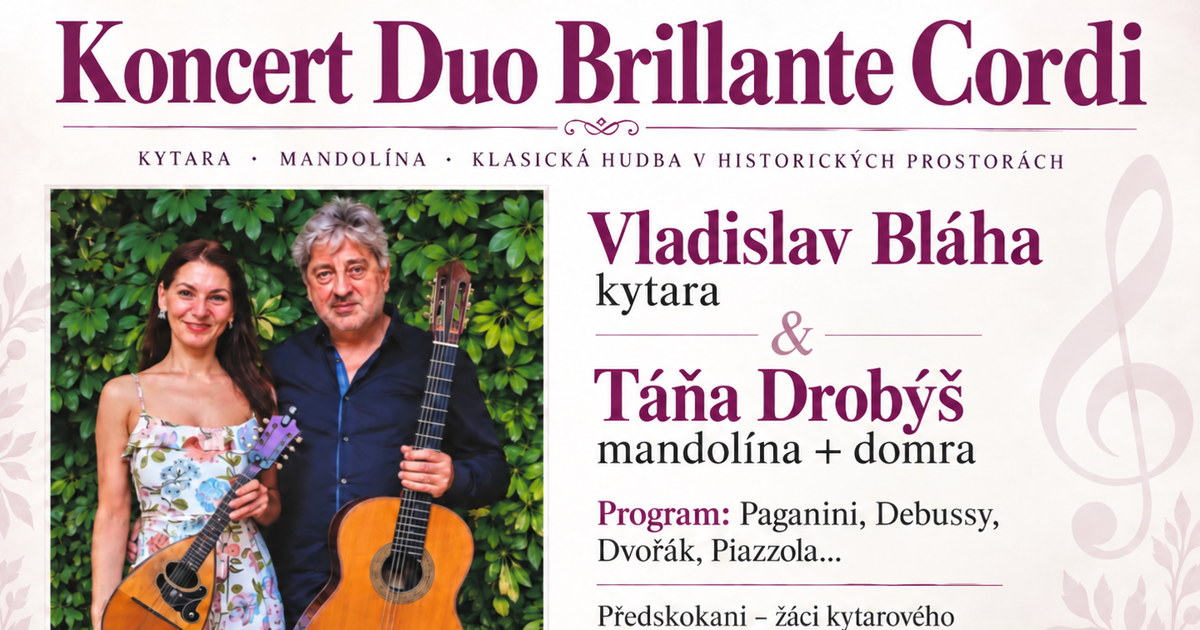

Zdroj akcí: otevřená data měst a obcí ČR (Národní katalog otevřených dat) a kalendář akcí Národního památkového ústavu.
Nearby
➜ Zobrazit interaktivní přehled okolí – restaurace, ubytování, půjčovny a další místa v okruhu 15 km.
Data: OpenStreetMap contributors, okruh 15 km.
🏰 Historické památky
- Magdeburská kasárna (0.4 km)
- Terezín memorial (0.9 km)
- Památník Terezín (1.4 km)
- Severočeská galerie výtvarného umění v Litoměřicích (2.9 km)
- Krematorium Litoměřice (3.5 km)
- Pamětní deska obětem komunistické zvůle (7.0 km)
- Hrad Kamýk (7.0 km)
- Morový kámen (1680) (9.4 km)
🍽️ Restaurace a stravování
- Vikárka (2.7 km)
- Radniční sklípek (2.8 km)
- Vinoteka (2.8 km)
- U Zlatého Bažanta (2.8 km)
- Robo (2.9 km)
- Občerstveni (2.9 km)
- Gurmanie (2.9 km)
- Budvarka (3.0 km)
🏨 Ubytování
- Parkhotel Terezín (0.2 km)
- U Borovičku (2.8 km)
- Hotel Labe (2.9 km)
- U Svatého Václava (2.9 km)
- Hotel Apollon (2.9 km – Na Valech 2094/25)
- Pivovarský sál (3.0 km)
- Penzion Mácha (3.0 km – Pekařská 496/17)
- Hotel Dejmalík (3.1 km)
🚲 Půjčovny a sport
- Yacht-klub Lovosice (2.3 km)
- norskamoda (2.6 km)
- Skicentrum (3.0 km)
- Plavecký bazén (3.1 km – Daliborova 2078/7)
- Sokol (3.3 km)
- Roots Camp (3.6 km – Teplická 2327)
- Městský bazén ASK Lovosice (6.4 km)
- Yacht-klub Lovosice (6.6 km)
🥾 Turistika a příroda
- Lovosice (ŽST) (6.2 km)
- Lovosice centrum (7.0 km)
- Lovoš (rozcestí modré a žluté) (9.1 km)
- Vchynice (9.1 km)
- Lovoš (tur. ch.) (9.3 km)
- Lovoš (9.3 km)
- Struženka (10.7 km)
- Boreč (11.2 km)
Accommodation nearby
Trips and activities nearby
Guided tours, tickets and activities nearby from GetYourGuide
Affiliate link: if you buy from the partner, we may receive a commission. The price for you does not change.
Search tours and activities →Themed route
Terezín cruise route
1.Dlouhá 18, B. Němcové 19 (house) Type: Historical House Why is worth visiting: This house is not only a monument to architecture, but also a witness to the rich history of the village. While walking you can enjoy a quiet environment and remind yourself of the important personalities associated with this address.
2. Church of the Assumption of the Virgin Mary Type: Church Why is worth a visit: This church is the oldest sacral object in the village and offers a view of historical architecture. Its interior and artistic elements are attractive points for visitors.
3. Municipal Office Type: Historical object Why is it worth visiting: Originally served as a school and today it is the seat of local self-government. His history and architecture attract people interested in the history of the village.
4. Old Town Hall Type: Historical object Why is worth a visit: This object is an important part of the history of local administration and architecture. Its appearance and location are ideal for understanding the development of the village.
5. Memorial to War Victims Type: Memorial Why is it worth a visit: This monument is an important monument that reminds the victims of war. There is a place for calm and reflection on historical events.
This route will offer a view of important historical and cultural points in Terezín, allowing a deeper understanding of his past.
Seasonal recommendations
Spring: In the spring period Terezín is decorated with the wonderful flowering and freshness of nature, which increases the beauty of the historical monument Dlouhá 18. Sun rays illuminate the architecture of houses in a new light, highlighting details and colours. When visiting, it is advisable to keep in mind any rain floods, therefore it is recommended to wear light but protective clothing. The best time to visit is noon, when the sun illuminates the memory and nature is in full glory.
Summer: The Terezín becomes a lively atmosphere with warm days that attract many tourists. In the main summer season it is advisable to visit the memory in the early morning or evening to avoid long fronts and heat. It is recommended to wear light clothes, hat and plenty of drinking medicine. When visiting, notice how the sun illuminates historic buildings, which gives them a different character.
Autumn: In autumn, Terezín turns into melancholy beauty with darker colours of trees and colder air. Beautiful sun days are ideal for walking around the sights when the atmosphere is calm and less demanding to the temperature. It is recommended to wear top clothes and perhaps an umbrella, because autumn weather can suddenly be variable. The best time to visit is usually afternoon.
Winter: Winter Terezín offers a unique atmosphere where cool air and mild snow can emphasize historical architecture. Monuments are often illuminated by light modifications, which creates a romantic environment. When visiting it, it is important to remember short hours and warm clothes such as leather handkerchiefs and shoes with heat pads. The best time to visit is during sunny days when you can relax and appreciate the calm winter atmosphere.
Visualizations and artistic views


The visualisations are generated by artificial intelligence and serve as inspiration.
Photos from the area
Real photos taken near the monument


Zdroj a licence jsou uvedeny u každého snímku.
Tips from visitors
No tips yet. Be the first!
Log in and add your tip.
Sources and literature
Photos: Petr1888 / CC BY-SA 3.0 — Wikimedia Commons. The author and licence also appear when you hover over the image.
Location on the map
More monuments – Terezín
Show all in the municipality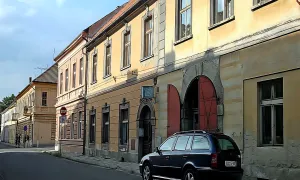

Příběhy a pověsti
Legendy, pověsti a příběhy spjaté s touto památkou
Fotografie návštěvníků
Zatím žádné fotografie. Buďte první, kdo přidá fotografii z návštěvy!
Log in a přidejte svou fotografii nebo hodnoťte.
Za ověřenou návštěvu v aplikaci získáte víc bodů — poznáme podle GPS, že jste na místě.
Reviews and comments