



Dominikánský klášter (Olomouc) Monastery
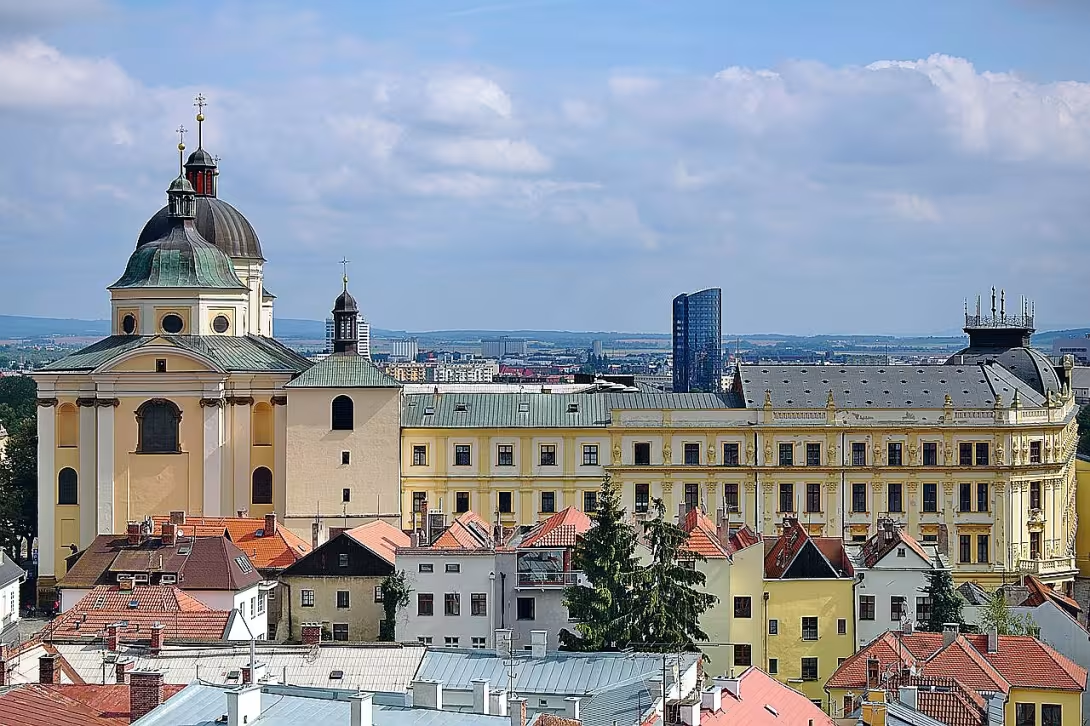
The Dominikánský Klášter in Olomouc, featuring the Church of St. Michael, is a significant historical site at the city's heart. Established in the early 13th century, it has undergone numerous reconstructions due to devastating fires and other events. Over centuries, the monastery played crucial roles in religious and educational activities, transitioning from its original Dominican use to serving as a seminary and later university facilities.
The origins of the Dominikánský Klášter trace back to the early 13th century when the presence of Dominicans in Olomouc is documented. Tradition holds that Saint Hyacinth founded the convent around this time, with confirmation by King Přemysl Otakar II in 1255 indicating their established presence between 1239 and 1240. Strategically located in the southeastern part of Olomouc near the city's market square and walls, it reflects its importance within the urban landscape.
Architecturally, the Dominikánský Klášter began with early Gothic elements, evolving through several phases including significant Baroque renovations in the 17th century. The original chapel of St. Michael, though its exact location and appearance remain unknown, was part of this early structure. Key materials used included brick and limestone, with decorative spongilit enhancing architectural details. Over time, the complex expanded to include a bell tower and other structures, reflecting both functional needs and aesthetic developments.
Ownership and administration have seen dramatic changes throughout its history. Initially under the Dominican Order from the 1240s until its suppression in 1784, it transitioned to serve as a parish church and seminary. The Archbishop's Seminary used the site until 1950, after which Palacký University took over. In 1990, following political changes, the site was returned to the church, where the seminary resumed operations.
Key events in the monastery's history include multiple reconstructions due to fires in the late 14th century and suppression by a royal decree in 1784. Early 17th-century conflicts led to significant damage, including the destruction of much of its library. Despite these challenges, the site has been preserved as part of Olomouc's cultural heritage since 1958.
Today, the Dominikánský Klášter remains a testament to the rich historical and architectural legacy of Olomouc. Visitors can explore this site, which continues to serve educational purposes while offering insights into its storied past. Its significance as a cultural monument makes it a must-visit for those interested in history and architecture.
The Dominikánský Klášter is not only a historical landmark but also a living part of Olomouc's heritage, inviting visitors to delve into its centuries-old story.
Then and now
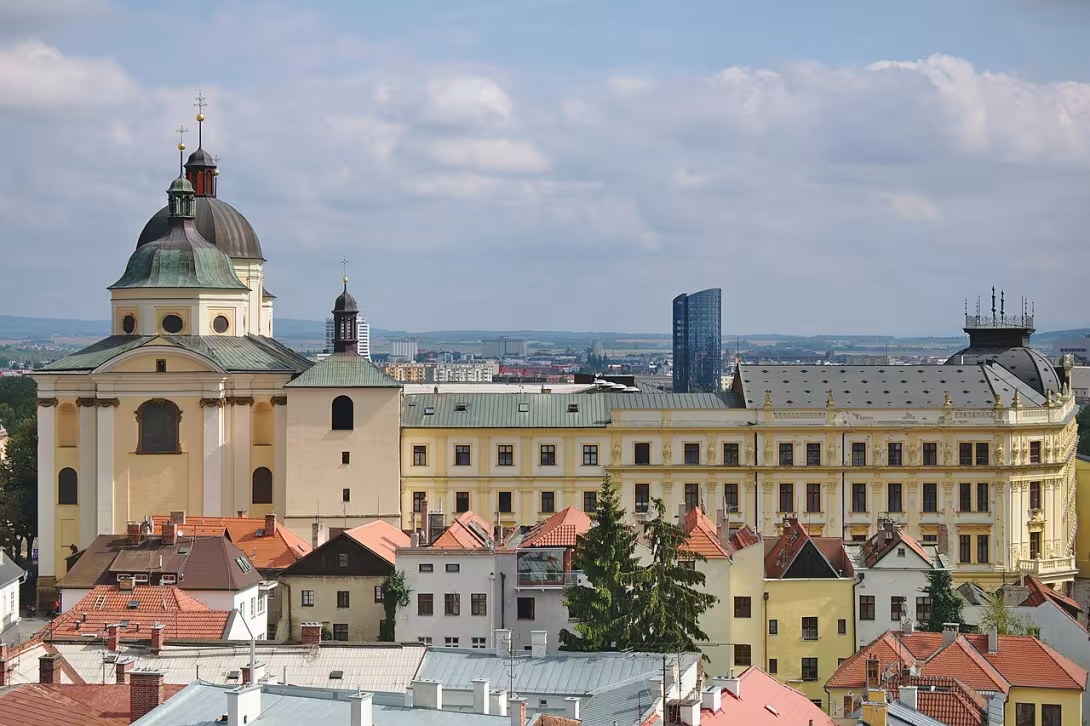
Drag the slider to compare how the landmark may have looked when it was built with the view today.
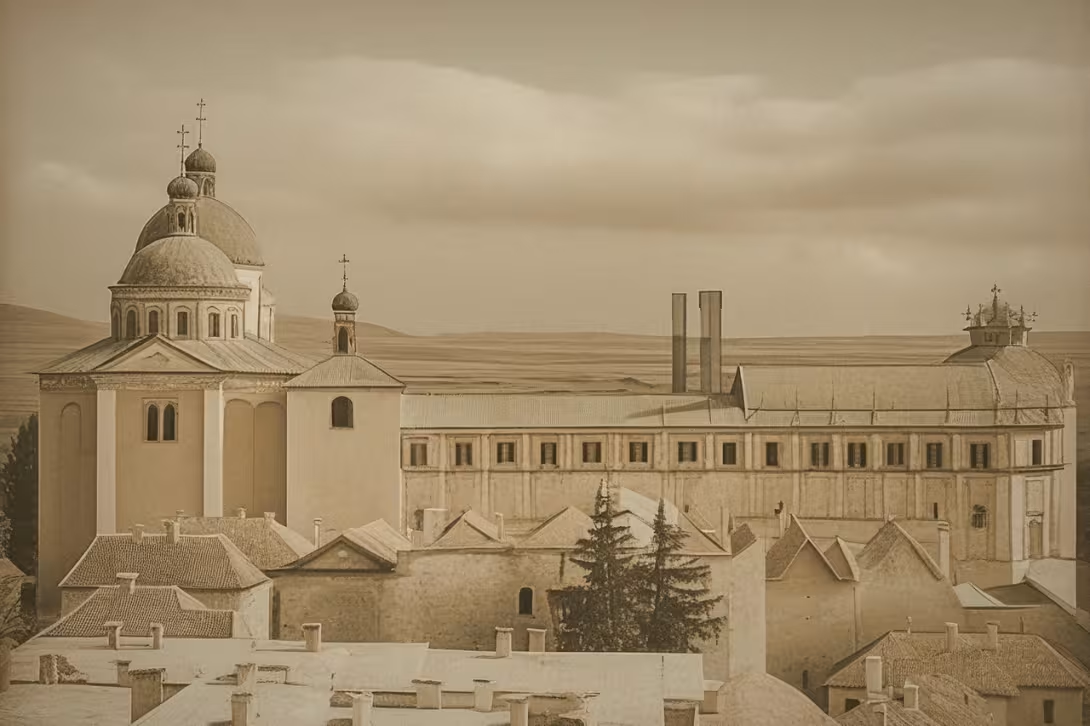
The historical appearance on the left is an AI-generated visualisation and serves as inspiration only.
Historical milestones
- 1240
- Založení Dominikánského kláštera v Olomouci.
- 1255
- Potvrzení přítomnosti dominikánů králem Přemyslem Otakarem II.
- Konec 14. století
- Rekonstrukce kláštera po požárech.
- 1784
- Zrušení Dominikánského řádu a převzetí kláštera církví.
- 1950
- Přechod správy na Palacký Univerzitu v Olomouci.
- 1990
- Vrácení kláštera církvi a obnovení semináře.
Architectural development
The monastery began with early Gothic architecture, evolving through several phases including Baroque renovations in the 17th century. Key materials used were brick and limestone, with decorative elements crafted from spongilit. The complex expanded over time to include a bell tower and other structures.
Historical events
Established by Saint Hyacinth around 1239-1240.
Destroyed and rebuilt multiple times due to fires in the late 14th century.
Suppressed in 1784, leading to its use as a parish church and seminary.
Owners
Dominican Order (1240s-1784), transferred to the parish after dissolution; subsequently used by the Archbishop's Seminary until 1950, then by Palacký University. Returned to the church in 1990.
Points of interest
- The Dominikánský Klášter in Olomouc features the Church of St. Michael and is a significant historical site at the city's heart. - Established in the early 13th century, it has undergone numerous reconstructions due to devastating fires and other events. - Tradition holds that Saint Hyacinth founded the convent around this time, with confirmation by King Přemysl Otakar II in 1255 indicating their established presence between 1239 and 1240. - The monastery played crucial roles in religious and educational activities, transitioning from its original Dominican use to serving as a seminary and later university facilities. - Ownership and administration have seen dramatic changes throughout its history, including being under the Archbishop's Seminary until 1950 and Palacký University thereafter.
Guide
This guide is narrated by a synthetic voice generated by artificial intelligence.
Show guide text
This text was created by artificial intelligence and has not been editorially reviewed. It may contain inaccuracies.
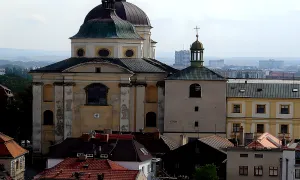
The former Dominican monastery with the Church of Saint Michael stands in the historic center of Olomouc and is one of the city's landmarks. Since 1958, the complex has been a cultural monument.
The Dominicans are documented in Olomouc as early as the beginning of the 1240s, and according to an analysis of a charter of Přemysl Otakar II from 1255, they likely settled here in 1239 and 1240. Tradition attributes the founding of the convent to Saint Hyacinth. The order received a plot of land in the southeastern part of the city from Václav I, above the marketplace and fortification wall, along with the Chapel of Saint Michael. Its location and appearance, however, are not known. Only fragments from the 13th century have survived: vaults in the sacristy, a window, and part of the chapter hall portal.
The church stood at the highest point of the hill, and over the course of the 13th century it became a three-aisled basilica. The builders used low brick and broken stone, and spongilite for decorative elements. The monastery was repeatedly damaged by fires. In 1393, the entire city, including the monastery, burned down, and another fire came in 1404. Earlier, in the first half of the 14th century, all the brothers died of plague and the church was temporarily run by the city magistrate. Among later structures, the ambulatory with the Chapel of Saint Alexius and the bell tower from 1482 stand out, whose foundations are likely remains of an earlier castle.
After the war years of 1619 and 1620, when the monastery was plundered and lost its library, and after damage from the Swedish occupation, came the Baroque renovation. The Church of Saint Michael was rebuilt from 1673 to 1699 according to the design of Giovanni Pietro Tencalla. The hall space was vaulted with three domes, which has few parallels in Europe, and crypts were created beneath the church. It was consecrated in 1707, but burned down two years later and was repaired again.
A court decree from July 26, 1784 dissolved the monastery. The Dominicans moved to the former Franciscan monastery, where they remain to this day. The church became a parish church, and part of the buildings went to the archbishopric seminary. It continued to grow. In the 1830s, it acquired a classicist portico with fourteen Tuscan columns according to a design by Antonín Archey, in 1910 and 1911 the Salesianum was added, and in the 1930s the Leopoldinum.
The communist government dissolved the seminary in 1950 and the buildings were taken over by Palacký University. After 1989, the complex returned to the church and the seminary reopened in 1990. Since September 2021, it has been located only in the oldest part of the complex near the church, in Marianus.
Tips for visitors
The best time to visit the Dominicans' Monastery in Olomouc is during late spring or early autumn. During these seasons, the weather is typically mild and pleasant, making it ideal for exploring both indoors and outdoors without the crowds that can be found in summer. Additionally, visiting during this period allows you to enjoy the beautiful gardens surrounding the monastery in full bloom.
It is advisable to use public transportation or park at a nearby lot outside the city center and walk from there. For those preferring public transport, Olomouc's tram system provides convenient access to the area.
When visiting the monastery, it’s recommended to bring comfortable walking shoes, especially if you plan on exploring the surrounding areas or climbing any stairs within the church of St. Michael. A light jacket might be useful as well, considering that indoor temperatures can vary. Don’t forget your camera for capturing the stunning architecture and serene atmosphere.
For photography enthusiasts, some of the best spots include the interior of the Church of St. Michael, where natural light creates a dramatic effect on the frescoes and sculptures. Early morning or late afternoon is ideal for softer lighting conditions. Additionally, the monastery’s gardens offer picturesque views, especially during sunrise or sunset.
Nearby attractions within 30 minutes include the Archbishop's Palace and the Cathedral of St. Wenceslas, both of which are significant historical sites in Olomouc. These locations provide additional cultural insights and architectural marvels to explore after visiting the monastery. For families with children, these areas offer a mix of history and leisure, making them perfect for educational outings.
Frequently asked questions
Can the monument be visited?
Religious buildings are usually open mainly during services; at other times a visit is normally arranged with the parish or the operator. We have not verified specific times.
Where is the monument?
Location: Olomouc, Olomoucký kraj. The map on this page shows the exact spot.
Why is the monument protected?
It is listed in the Central List of Cultural Monuments of the Czech Republic as a cultural monument (register no. 1000123624).
Businesses nearby
Do you run a restaurant, accommodation, shop, museum, rental, wellness or other visitor service near this monument? Show yourself directly to the people heading to it — this is how they will see you in the app and on the web:
Events nearby

Zdroj akcí: otevřená data měst a obcí ČR (Národní katalog otevřených dat) a kalendář akcí Národního památkového ústavu.
Nearby
Located near Olomouc's historic market square, surrounded by other notable historical sites such as the Archbishop's Palace and Cathedral of St. Wenceslas.
Accommodation nearby
Trips and activities nearby
Guided tours, tickets and activities nearby from GetYourGuide
Affiliate link: if you buy from the partner, we may receive a commission. The price for you does not change.
Search tours and activities →Themed route
Thematic Walking Tour: Olomouc's Historical Heart
1. Dominikánský klášter (Olomouc) Begin your journey at the Dominikánský klášter, a stunning example of Baroque architecture located near the historic market square. This former Dominican monastery is renowned for its beautifully preserved church and cloister, offering visitors an insight into Olomouc's rich religious history. The intricate frescoes and serene atmosphere make it a must-visit for anyone interested in art and spirituality.
2. Cathedral of St. Wenceslas A short walk from the monastery will lead you to the majestic Cathedral of St. Wenceslas. This Romanesque-Gothic cathedral is one of Olomouc's most iconic landmarks, with its striking twin towers dominating the city skyline. Inside, you'll find an impressive collection of religious art and artifacts that reflect centuries of devotion and craftsmanship. The cathedral's historical significance as a site of coronations adds to its allure.
3. Archbishop's Palace Adjacent to the Cathedral is the grand Archbishop's Palace, another architectural gem in Olomouc. This Renaissance palace houses an impressive art collection, including works by renowned artists such as Pieter Bruegel the Elder and Albrecht Dürer. The palace gardens provide a tranquil escape from the bustling city streets, offering panoramic views of Olomouc’s historic center.
4. Historic Market Square Conclude your tour at the vibrant historic market square, located near both the monastery and cathedral. This lively square is surrounded by colorful Baroque buildings and serves as a central hub for local life in Olomouc. Here, you can enjoy traditional Czech cuisine at one of the many cafes or browse unique shops selling local crafts. The square's festive atmosphere makes it an ideal spot to reflect on your journey through Olomouc’s historical treasures.
This tour offers a comprehensive exploration of Olomouc's most significant historical sites, providing insight into its cultural and architectural heritage.
Seasonal recommendations
Spring: Visiting the Dominican Monastery in spring offers a unique experience as nature begins to awaken around this historic site. The early morning light gently illuminates the monastery, casting soft shadows that enhance its architectural details. This season is characterized by blooming flowers and budding trees, creating a picturesque backdrop for your visit. While the weather can be unpredictable, with occasional rain showers, it's an ideal time to explore as the crowds are typically smaller than in summer. Dress in layers to accommodate fluctuating temperatures, and consider bringing a light waterproof jacket. Early mornings or late afternoons are often quieter times to enjoy the serene atmosphere.
Summer: The summer months bring vibrant energy to the Dominican Monastery, with long daylight hours providing ample time for exploration. This period is marked by lush greenery surrounding the site, making it an ideal setting for photography enthusiasts. Summer attracts more visitors due to school holidays and favorable weather, so arriving early in the day can help you avoid larger crowds. Comfortable walking shoes are recommended as you explore both inside the monastery and its outdoor areas. Light, breathable clothing is advisable to stay cool during your visit.
Autumn: Autumn transforms the Dominican Monastery into a stunning canvas of warm colors, with foliage providing a breathtaking backdrop. The cooler temperatures make for a pleasant visiting experience, and the reduced number of tourists compared to summer allows for a more relaxed exploration. As daylight hours shorten, it's best to plan your visit during midday when natural light is at its peak. Layered clothing will help you adjust comfortably to the changing weather throughout the day.
Winter: Winter offers a unique charm at the Dominican Monastery, with snow often adding a magical touch to this historic site. The atmosphere in winter is serene and contemplative, especially during early mornings or late afternoons when the light casts dramatic shadows across the monastery's architecture. While some areas might be closed due to weather conditions, the main attractions remain accessible. Dress warmly in layers, including a hat and gloves, as temperatures can drop significantly. The shorter days mean planning your visit around daylight hours is essential for making the most of your time here.
Visualizations and artistic views


The visualisations are generated by artificial intelligence and serve as inspiration.
Photos from the area
Real photos taken near the monument


Zdroj a licence jsou uvedeny u každého snímku.
Atmosphere of the place
This atmospheric visualisation of the place and period was generated by artificial intelligence. It is not real footage of the location.
Tips from visitors
No tips yet. Be the first!
Log in and add your tip.
Sources and literature
Photos: Jiří Komárek / CC BY-SA 4.0 — Wikimedia Commons. The author and licence also appear when you hover over the image.
Faktickým podkladem tohoto textu byl článek na Wikipedii, jehož autory jsou přispěvatelé Wikipedie. Článek je dostupný pod licencí CC BY-SA 4.0.
Location on the map

Příběhy a pověsti
Legendy, pověsti a příběhy spjaté s touto památkou

Fotografie návštěvníků
Zatím žádné fotografie. Buďte první, kdo přidá fotografii z návštěvy!
Log in a přidejte svou fotografii nebo hodnoťte.
Za ověřenou návštěvu v aplikaci získáte víc bodů — poznáme podle GPS, že jste na místě.
Reviews and comments