






Důl Anselm Building complex
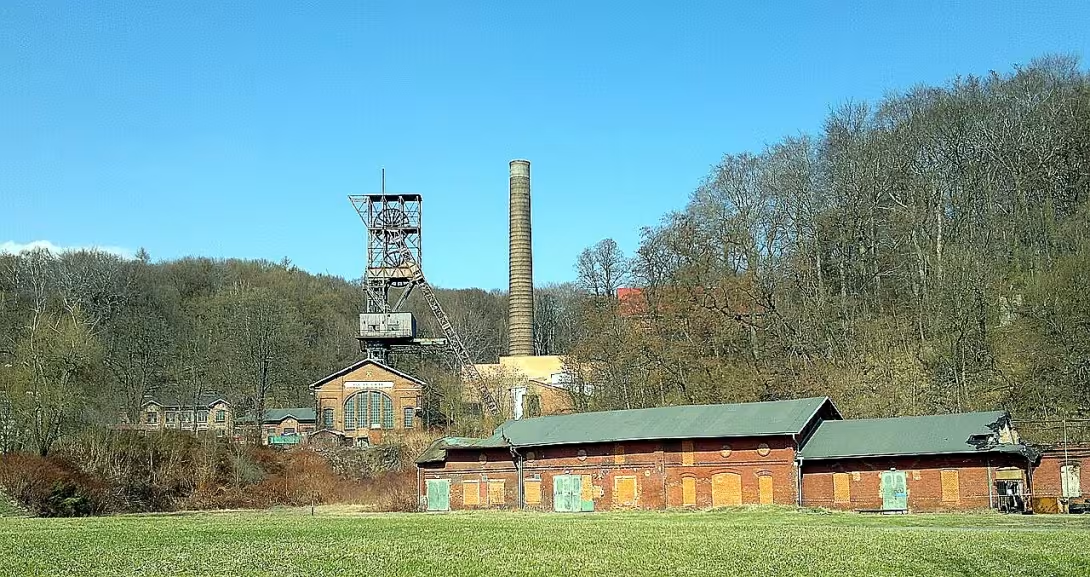
The Důl Anselm is a historic coal mine complex located in the Petřkovice area near Ostrava, in the Moravskoslezský kraj region. Established in 1830, it is the oldest coal mine in the Ostrava region and a significant part of the region's industrial heritage. The mine's complex history spans over a century, with various owners and administrators contributing to its development and transformation.
The mine was founded in 1830 by the Capitula of the Olomouc Archbishopric. Initially, it was a shaft mine, but it was later converted to a deep mine. In 1843, Salomon Mayer Rothschild purchased the mine and renamed it Anselm after his son. During his ownership, the mine underwent significant modernization and expansion, including the installation of a steam engine in 1847. The mine was later leased to the Gutmann brothers, who operated it until 1894.
The mine's architecture reflects its evolution over time. The original shaft mine was converted to a deep mine, and a new 40-meter-high shaft was constructed in 1915. The mine's layout and infrastructure were designed to accommodate increasing coal production demands, with the installation of a steam engine and other modern technologies. The mine's architecture showcases the innovative spirit of its time, highlighting the ingenuity of its designers and engineers.
Throughout its history, the Důl Anselm has had several owners and administrators. The Capitula of the Olomouc Archbishopric founded the mine in 1830, followed by Salomon Mayer Rothschild, who owned it from 1843 to 1872. The Gutmann brothers leased the mine from 1872 to 1894, and it was later nationalized in 1945. The mine was renamed several times, including to Masaryk in 1946 and Eduard Urx in 1951.
The Důl Anselm has witnessed significant events in the history of coal mining in the region. The mine was once the largest coal mine in the region, and its innovative use of steam engines and other modern technologies made it a pioneering site in the industry. The mine played a crucial role in the growth of Ostrava during the 19th century and was affected by both World Wars. Today, the mine is a museum, offering a glimpse into the region's industrial past and the lives of the people who worked there.
Today, the Důl Anselm is a museum and a testament to the region's industrial heritage. The mine's complex is open to visitors, offering a unique opportunity to explore the history of coal mining in the region. The museum showcases the mine's equipment, documents, and photographs, providing a comprehensive understanding of the mine's operations and the lives of its workers. Visitors can explore the mine's underground tunnels and learn about the challenges and triumphs of the people who worked there. The Důl Anselm is a must-visit destination for anyone interested in history, industry, and the region's cultural heritage.
Then and now
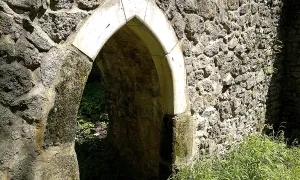
Drag the slider to compare how the landmark may have looked when it was built with the view today.
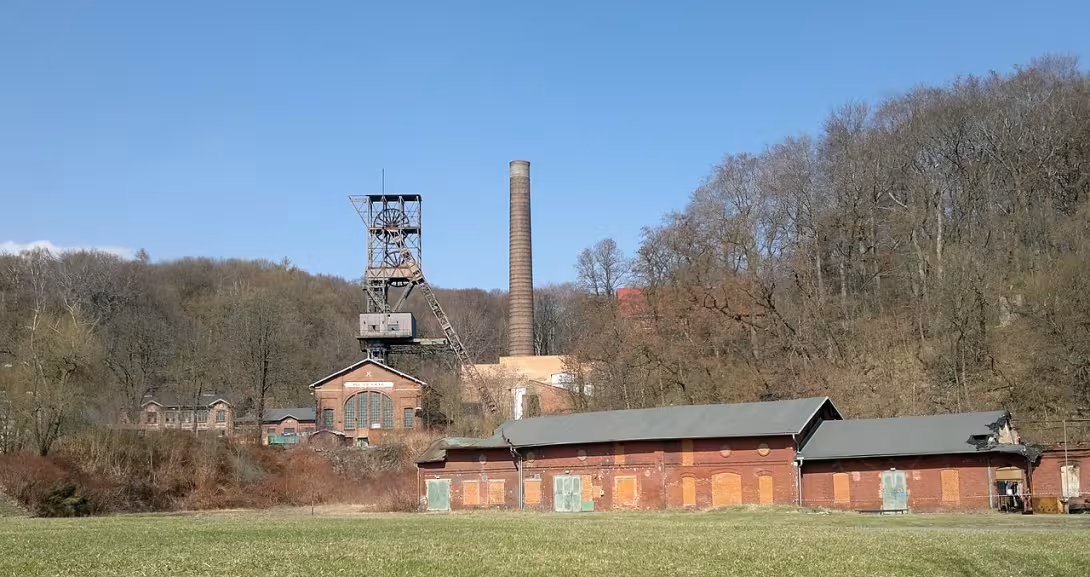
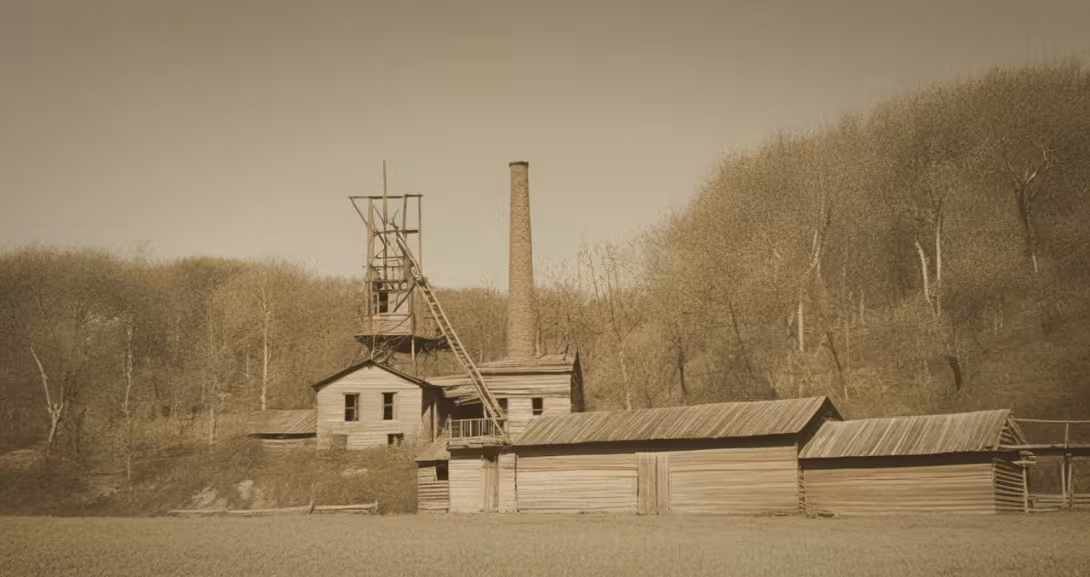
The historical appearance on the left is an AI-generated visualisation and serves as inspiration only.
Historical milestones
- 1782
- Established
- 1830
- Renamed from Ferdinand to Ferdinandovo štěstí
- 1847
- Steam engine installed
- 1915
- New 40-meter-high shaft constructed
- 1946
- Renamed to Masaryk
- 1951
- Renamed to Eduard Urx
- 1991
- Closed
Architectural development
The mine was initially a shaft mine, but it was later converted to a deep mine. The mine was modernized and expanded several times, with the installation of a steam engine in 1847 and the construction of a new 40-meter-high shaft in 1915.
Historical events
Established in 1782
Renamed from Ferdinand to Ferdinandovo štěstí in 1830
Steam engine installed in 1847
Closed in 1991
Owners
Capitula of the Olomouc Archbishopric (1782-1843), Salomon Mayer Rothschild (1843-1872), Gutmann brothers (1872-1894), Vítkovické horní a hutní těžířstvo (1894-1945), nationalized (1945-1991)
Points of interest
– The Důl Anselm was initially a shaft mine, but it was later converted to a deep mine, a process that required significant technical and logistical changes.
– The mine's architecture reflects its evolution over time, with the original shaft mine being converted to a deep mine and a new 40-meter-high shaft being constructed in 1915.
– The mine was once the largest coal mine in the region and its innovative use of steam engines and other modern technologies made it a pioneering site in the industry.
Guide
This guide is narrated by a synthetic voice generated by artificial intelligence.
Show guide text
This text was created by artificial intelligence and has not been editorially reviewed. It may contain inaccuracies.
Welcome before Důl Anselm, the oldest coal mine on Ostrava. You are standing in front of a complex of buildings that tells the story of the evolution of mining technologies and human effort. Let's move forward in time to explore its history.
Let's go back to 1782 when Důl Anselm was founded. At that time, it was a shaft that gradually grew and was modernized. In 1830, it was renamed from Ferdinand to Ferdinandovo štěstí because there already existed another mine with that name. Now pay attention to the buildings before you – observe how architecture changes over time.
Notice the original shaft entrance, which was later modified for deep mining. Důl Anselm was one of the first to make the transition from a shaft to deep mining, requiring significant technical and logistical changes. Deep mining required new technologies and innovations that changed the face of the mine.
Let's return to the architecture – the complex of buildings before you is the result of many changes and modifications. Notice how the original shaft entrance transformed into a deep shaft. A new 40-meter-high shaft was built in 1915 and became a symbol of the mine’s modernization.
Důl Anselm was also a place where important events in Ostrava's history took place. In 1847, a steam engine was installed in the mine, which fundamentally changed the mining process. The mine was renamed Masaryk in 1946 and Eduard Urx in 1951. The architecture of the complex is an interesting combination of various styles and eras that meet here.
Let's return to the present and invite you to explore the complex of buildings and discover its history. Důl Anselm is a symbol of human effort and innovation in mining. It is a place where you can learn about the history of Ostrava and its people.
Tips for visitors
The best time to visit the Důl Anselm is during spring and autumn, when the weather is mild and the crowds are smaller. These seasons offer the best conditions for taking photos and exploring the mine's surroundings.
Parking is available near the mine, but it's recommended to use public transportation. The nearest bus stop is a short walk from the mine, and you can check the current schedule on the official website or a public transportation app.
Bring comfortable shoes and clothing suitable for walking and exploring the mine. It's also a good idea to bring a camera and a water bottle to stay hydrated.
The best spots for photography are the mine's entrance, the shaft, and the surrounding area. The light is best during the golden hour, just before sunset, when the sun's rays cast a warm glow over the landscape.
If you have time, visit the nearby Silesian Ostrava Museum, which is about a 30-minute walk from the mine. The museum showcases the history and culture of the Silesian region.
Businesses nearby
Do you run a restaurant, accommodation, shop, museum, rental, wellness or other visitor service near this monument? Show yourself directly to the people heading to it — this is how they will see you in the app and on the web:
Events nearby
Zdroj akcí: otevřená data měst a obcí ČR (Národní katalog otevřených dat) a kalendář akcí Národního památkového ústavu.
Nearby
The mine is located in the Petřkovice area, near the city of Ostrava.
Accommodation nearby
Themed route
Trasa: Důl Anselm a okolí
1. Důl Anselm (hlavní cíl) Důl Anselm is a unique industrial heritage site that represents an important part of the history of coal mining in Ostrava. Visitors can explore the extensive complex of buildings, including a tower offering views over the city. 2. Park Petra Bezruče (cca 1,5 km) Park Petra Bezruče is a beautiful park offering peaceful walks and relaxation. It also features a number of interesting sculptures and fountains that enhance its atmosphere. 3. Kostel svatého Petra a Pavla (cca 2 km) Kostel svatého Petra a Pavla is a stunning sacred building located near Důl Anselm. Its history dates back to the 13th century, offering visitors a unique atmosphere. 4. Nádraží Ostrava-Svinov (cca 3 km) Nádraží Ostrava-Svinov is an important transportation hub providing connections with the rest of the republic. It also features interesting architecture and offers visitors the opportunity to explore its interior. 5. Park Ostrava (cca 4 km) Park Ostrava is a large park offering a wide range of activities, from walks to sports facilities. It also includes various points of interest such as fountains and sculptures.
Seasonal recommendations
Jaro
Spring is the ideal time to visit Důl Anselm, when nature around the complex of buildings blooms and creates a pleasant atmosphere. Unique is the rich lighting that illuminates the historic buildings and surroundings. We recommend visiting Důl Anselm in the spring season when there is more open time and fewer visitors. Don't forget to bring appropriate clothing for a walk in nature.
Léto
Summer is the main season for visitors to Důl Anselm. During the peak summer season, there are more visitors, so we recommend coming earlier to avoid crowds. The lighting remains rich and nature is in full bloom. Don't forget to bring suitable footwear for a walk in nature and also pack some sunscreen.
Podzim
Fall is a time when the nature around the complex of buildings changes colors, creating a pleasant atmosphere. Unique is the soft lighting that illuminates the historic buildings and surroundings. We recommend visiting Důl Anselm during the fall season when there is ample open time and fewer visitors. Don't forget to bring appropriate clothing for a walk in nature and also pack an umbrella.
Zima
Winter is a period when Důl Anselm is open only for limited hours. Unique is the soft lighting that illuminates the historic buildings and surroundings. We recommend visiting Důl Anselm during the winter season when there are fewer visitors. Don't forget to bring warm clothing and also pack gloves and a hat.
Visualizations and artistic views


The visualisations are generated by artificial intelligence and serve as inspiration.
Photos from the area
Real photos taken near the monument


Zdroj a licence jsou uvedeny u každého snímku.
Tips from visitors
No tips yet. Be the first!
Log in and add your tip.
Sources and literature
Fotografie: Tedmek / CC BY-SA 3.0 — Wikimedia Commons. The author and licence also appear when you hover over the image.
Faktickým podkladem tohoto textu byl článek na Wikipedii, jehož autory jsou přispěvatelé Wikipedie. Článek je dostupný pod licencí CC BY-SA 4.0.
Location on the map


Příběhy a pověsti
Legendy, pověsti a příběhy spjaté s touto památkou
Fotografie návštěvníků
Zatím žádné fotografie. Buďte první, kdo přidá fotografii z návštěvy!
Přihlaste se a přidejte svou fotografii nebo hodnoťte.
Za ověřenou návštěvu v aplikaci získáte víc bodů — poznáme podle GPS, že jste na místě.
Reviews and comments