






Dům čp. 107 House
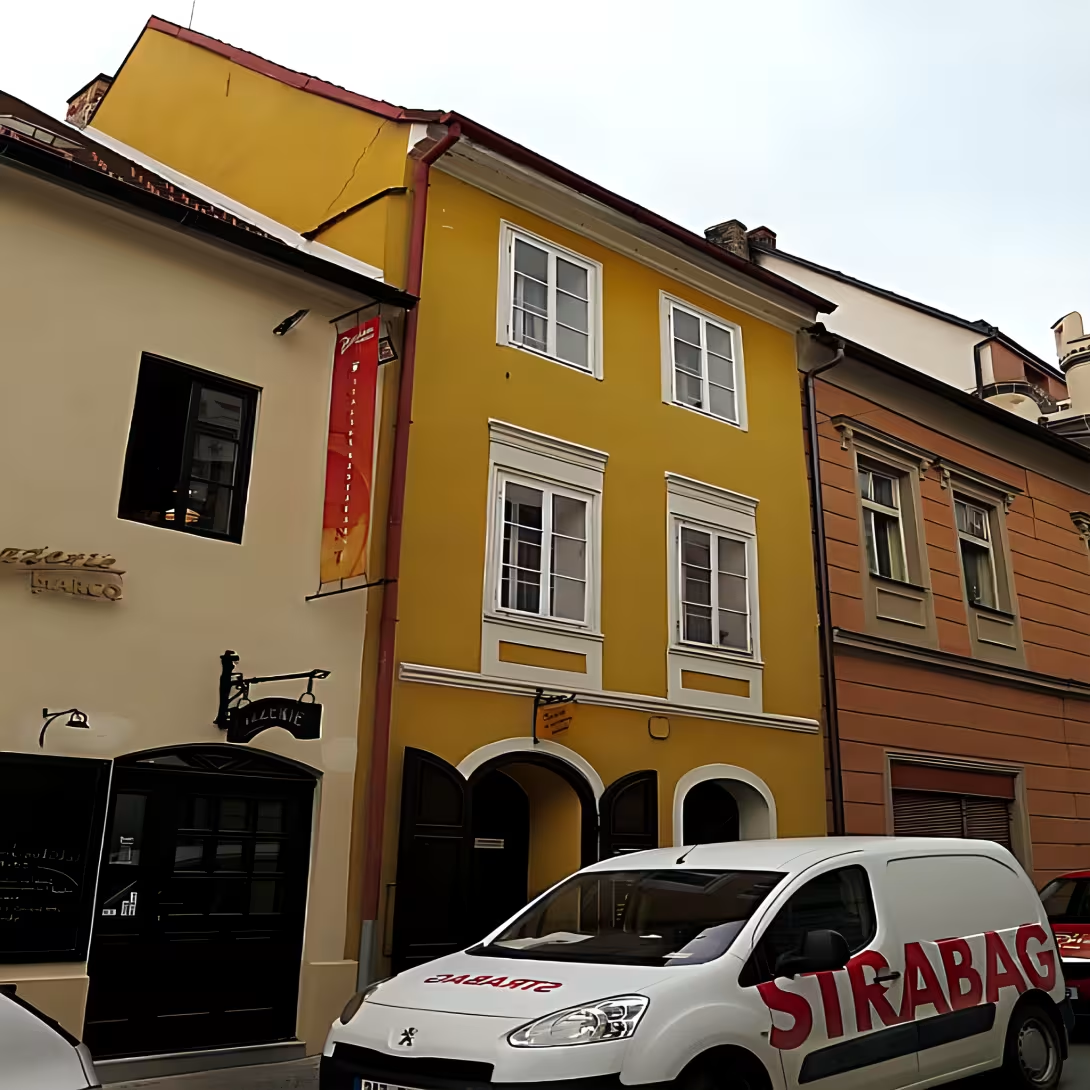
Dům čp. 107, located on Kopec street in Štramberk in Nové Jicin district, is an important historical monument of the Czech Republic. Built at the end of the 18th century, this walled building was declared a cultural monument in 1995 and is part of the city conservation Štramberka. Its architecture represents a typical example of the first reconstructions of grafted houses into the Empire style in the early 19th century.
The history of Štramberka is rich and complex, which is reflected in the history of house No. 107. According to the urbarian from 1558, 22 wooden houses were originally built with the law and seven residents in the suburbs. After the fire in 1855, which burned down 40 houses and two barns, further development and reconstruction took place. Dům čp. 107 was built in the late 18th century and in the first half of the 19th century it was rebuilt in Empire style, reflecting the architectural trends of the time.
The architecture of house No. 107 is characteristic of its construction form and materials. It is a ground-floor, wall-mounted building of a rectangular plan, oriented by a longitudinal gutter side to the street and perpendicular to the slope. The house is built on a tall stone suspect with cellar spaces and a valed vault. The ground floor in the shield side is double axis with recessed corner, half column and profiled main ledge. The windows were replaced during repairs by undivided without champagne. The roof is saddled with tin templates, and the walls have two windows. The interior preserved historical vaults and beam ceiling.
Dům čp. 107 has gone through several ownership and administration, which reflects its long history. In 1995 the house was declared a cultural monument of the Czech Republic, which underlines its significant value. The wooden ceiling was renovated in 2017 with the support of the Ministry of Culture of the Czech Republic, thus preserving its historical character.
Key events in the history of house No. 107 include its declaration for cultural monument and reconstruction of the ceiling in 2017, which underlines the importance of preserving historical heritage.
Today house No. 107 is accessible to visitors who want to discover its history and architectural value. Its location in the city monument reservation Štramberka increases its attractiveness for tourists and historians. The house stands as a testament to the rich history of the region and the architectural changes that have taken place over the years.
Dům čp. 107 is not only a monument to the past, but also an inspiration for the present. Maintaining its historical character and promoting culture are important for understanding our common history. The visit to this building offers a unique view of the past and reminds us of the value of conservation of cultural heritage.
Historical milestones
- 1995
- Declaration of the building for the cultural monument of the Czech Republic.
- 2017
- Repair of wooden ceiling with support of the Ministry of Culture of the Czech Republic.
Architectural development
Originally built at the end of the 18th century, in the first half of the 19th century it was rebuilt in Empire style. The building is built on a tall stone suspect with vaulted basement spaces. In the 20th century, partial modifications were made and the ceiling was renovated in 2017.
Historical events
In 1995 the house was declared a cultural monument of the Czech Republic. The wooden ceiling was renovated in 2017.
Points of interest
- The house was built at the end of the 18th century and rebuilt in the first half of the 19th century in the Empire style. - In 1995 it was declared a cultural monument and is part of the city conservation Štramberka. - The building stands on a tall stone suspect with cellar spaces and a coveted vault. - The interior preserved historical vaults and beam ceiling. - The wooden ceiling was renovated in 2017 with the support of the Ministry of Culture of the Czech Republic.
Guide
Show guide text
This text was created by artificial intelligence and has not been editorially reviewed. It may contain inaccuracies.
Welcome to the heart of Štramberka, where history is inserted into every stone and every wooden beam. Stop for a moment, take a breath and look in front of you. You are standing in front of the house with the number hundred and seven, which is a silent but proud witness to the transformation of this picturesque city. The first impression that radiates from the building is a sense of stability and balance, which is completely out of the question in this hilly terrain. This house is not just an ordinary building, it is part of the city conservation, which means it helps maintain the face of XZ0 A ZXa like we knew her centuries ago.
Now let's take a look together at how this house was built and how it went down. His story begins at the end of the eighteenth century. Imagine Štramberk at that time, the atmosphere of old crafts and life in the rhythm of nature. Legally in this period, the house was built. Originally, it was a typical blasphemous house, which at that time was a completely natural choice in our landscapes thanks to the availability of wood and its ability to maintain heat. The grafted buildings have a certain grounding and cosy feel in this house today, although time and human desire for more modern trends have brought about fundamental changes.
In the first half of the nineteenth century, however, the owners decided to update the house. At that time in Europe, and subsequently in our country, the fashion of Empire style ruled. The Empire, which drew inspiration from the ancients, brought purity to the architecture of lines, elegance and order. It was during this period that the house was rebuilt and acquired its present form. It's fascinating to think how one building can adapt to the spirit of time. A simple grafted house thus became an object with a hint of urban elegance, which nevertheless preserved its original essence.
Now pay attention to the lower part of the building. If you look down, you'll notice tall stone suspects. This is not only an aesthetic element, but above all a brilliant technical solution. Štramberk is known for its rugged terrain and slopes. In order for the house to stand straight and steady, the builders had to build this massive stone base that equalizes the inequality of the slope. This suspect also serves as the basis for the basement space, where there is a rolling vault. Imagine the cold and quiet that exists in these areas, and think how many generations of people have kept their supplies and food here.
When you think about what's inside, you're comforted by the fact that rare historical elements have been preserved in the interior. Even though we're out now, we can imagine a space where arched ceilings meet massive beam ceilings. It is these elements that are now greatly appreciated because they tell the story of the craftsmanship of ancient builders who have worked with the materials provided by the country. The framework ceilings are a symbol of stability and traditional building arts that have survived in this house for centuries.
You may be wondering who designed this house or who lived in it. The names of particular architects or famous personalities that would be directly connected to the house may not have been preserved in the period records, but that is precisely what lies in the magic of this place. This house is not a monument to one particular celebrity, but a monument to ordinary human life, everyday work and efforts to improve its home. It's a story of anonymous craftsmen and families who lived here, loved and built their future.
The key moment for recognising the value of this house was the year one thousand nine hundred ninety-five. Just then, the building was officially declared a cultural monument of the Czech Republic. This was not only a formal act, but recognition of the fact that house number hundred seven is a typical and valuable example of a remodeled garb house that represents architectural development in the region. Thanks to this status, the building is protected and its essence must be preserved for future generations.
The interesting thing that points to the constant care of this object is the year two thousand seventeen. There was an important repair of the wooden ceiling at the time. This work was not easy and required a technical approach in order to preserve the original structure. The correction was implemented with the support of the Ministry of Culture of the Czech Republic, which confirms that the state sees this house as an important part of our national heritage. It is a reminder that monuments are not just dead objects from the past, but living structures that require constant attention and love.
Now if you look again at the total silhouette of the house, try to perceive the atmosphere surrounding it. It's a combination of rock robustness, warmth wood and the elegance of Empire style. This house is like a book in which each layer of material represents a different chapter in the history of Štramberka. From the end of the eighteenth century to the bloom of the nineteenth to today's care for cultural monuments.
Note how harmonically the house is connected to the surroundings of the city conservation. It is precisely because of objects such as house number hundred seven that we can now imagine what the old town looked like, how architecture developed, and how people solved practical problems such as building on a slope. It's a fascinating example of how the tradition of the blasphemous house managed to connect with the more modern influences of its time.
Now that you know the story of this house, I suggest you observe it for a while and see the details of its facade and the way it stands in the field. Let yourself be carried away by thinking of all the people who passed by him 200 lecturers ago.
Thank you for accompanying me to this brief interpretation of house number hundred and seven. I hope that you are interested in this view of history and that you will take a sense of respect for the craftsmanship of our ancestors. Now you can go on with ease and explore other hidden corners and beauty Štramberka. I wish you a pleasant continued journey and many new discoveries in this wonderful city. Goodbye.
Businesses nearby
Do you run a restaurant, accommodation, shop, museum, rental, wellness or other visitor service near this monument? Show yourself directly to the people heading to it — this is how they will see you in the app and on the web:
Nearby
City Heritage Reservation Štramberk.
Accommodation nearby
Themed route
1.Dům čp. 107 (others) Type: Historical building Why to visit: It represents the main objective of the tour and a significant building element.
2. Tanks at house No. 107 (others) Type: Building area Why to visit: Allows detailed observation of architecture from the immediate surroundings.
3. City Monument Reservation Štramberk Type: Protected historical area Why to visit: This zone offers a unique atmosphere and preserved urban structure.
Seasonal recommendations
In spring, the surrounding area is dominated by the awakening nature and a fresh green shade of leaves, creating an optimistic atmosphere. Soft spring light is ideal for observing the details of the historical facade. We recommend to wear more layers of clothing because the weather is usually variable, and set off in the morning when there is relative calm in the streets.
The summer season brings a radiant sun and the highest intensity of colors, where the monument is surrounded by dense vegetation. The energy of the main tourist season flows through the air. Because of the great crowds, the best time is a very early morning. Remember light, breathable clothes and plenty of fluids.
Autumn of Štramberk attaches nostalgia to golden tones of leaves and frequent morning fog that give the house a mysterious touch. The lighting is softer and warmer in this period. It is practical to choose waterproof shoes and plan a visit for the afternoon when the number of visitors is significantly lower than in previous months.
In winter, the building is more peaceful and in the case of snow it has a fairy tale form under the grey sky. The atmosphere is intimate and cosy, especially in advent time. It is necessary to wear warm winter clothes and to verify in advance the shortened opening times, which are common during this cold period.
Visualizations and artistic views


The visualisations are generated by artificial intelligence and serve as inspiration.
Photos from the area
Real photos taken near the monument

Zdroj a licence jsou uvedeny u každého snímku.
Tips from visitors
No tips yet. Be the first!
Log in and add your tip.
Sources and literature
Faktickým podkladem tohoto textu byl článek na Wikipedii, jehož autory jsou přispěvatelé Wikipedie. Článek je dostupný pod licencí CC BY-SA 4.0.
Location on the map
More monuments – Štramberk
Show all in the municipality
Příběhy a pověsti
Legendy, pověsti a příběhy spjaté s touto památkou
Fotografie návštěvníků
Zatím žádné fotografie. Buďte první, kdo přidá fotografii z návštěvy!
Přihlaste se a přidejte svou fotografii nebo hodnoťte.
Za ověřenou návštěvu v aplikaci získáte víc bodů — poznáme podle GPS, že jste na místě.
Reviews and comments