

Dům čp. 2 (Pecka) Town hall
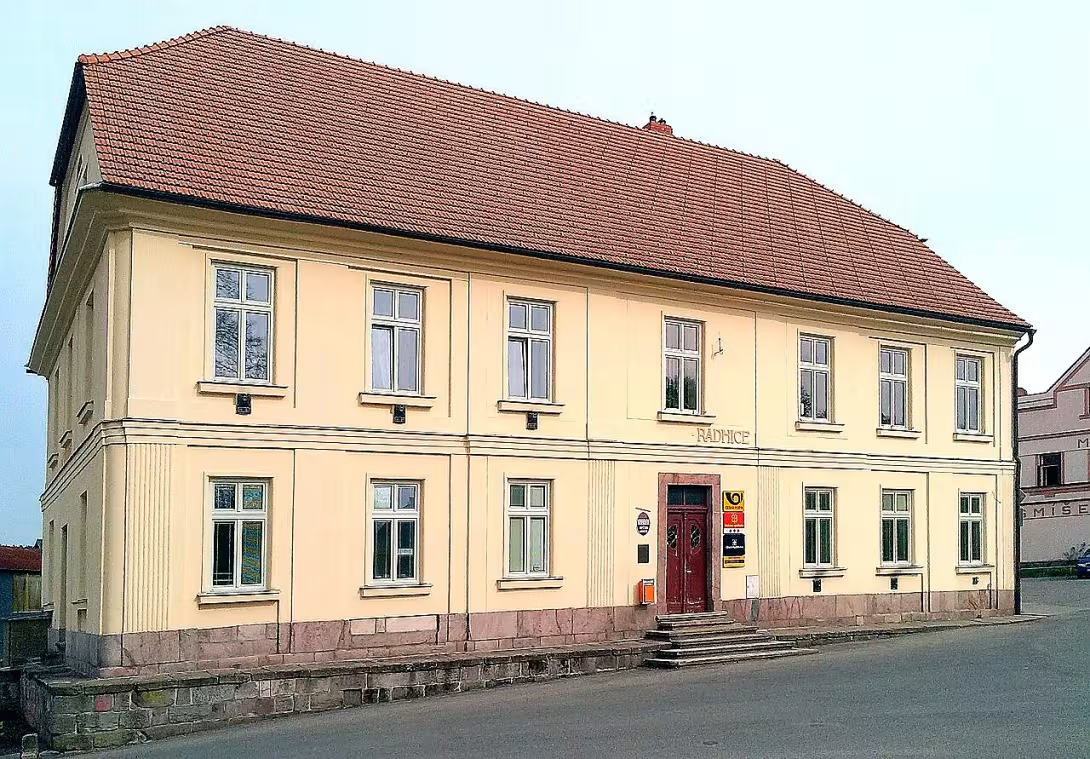
The town hall in Pecca is a protected historical house no. 2. It serves as the administrative centre of the town and the seat of the Library of Christopher Harant. The building from 1842 is located in the centre of the village in the district of Jičín, on the hill north of the square near the parish church of St. Bartholomew.
The creation of the building is closely linked to the great fire of the city from 1830. The one-storey town hall was built in 1842 at the place of the burned-out house. The orientation of the building was determined by using the remains of the original building with a rectangular plan. However, the reconstruction was very thorough, so there were no fragments of the older building in the building or in the basement.
Sandstone and bricks were used for construction. The building is divided into three transverse tracts with strictly axis composing facade. The main west front has seven axes. The middle three form a shallow risalite with entrance doors, sandstone portals and an outdoor staircase. The ground floor is slightly elevated relative to the terrain. The original smooth facade was divided by the cordon and the main ledge. The roof is covered with a burnt cover and the attic is lit by two windows in the north and south shield.
Decorated windows are set in mild niche with smooth edge in plaster. There are two types of windows in the building: the inner wings are original classicist, while the outer and the pantry windows come from the 1930s. The windows were preserved by hand-made glass plates and fittings from the 19th century. The entrance door with a skylight is likely to have been created in the early 20th century and combine elements of Art Nouveau and late Classicism.
The interior of the building contains an entrance corridor with flat vaults and a triple staircase with segment vaults in the rear right. The ground and floor rooms have flat ceilings with wooden beams and a cover. The floors are wooden or terraced. Most internal doors, including original fittings, come from the second half of the 19th century. The cellar, built from sandstone blocks, is encased with plastic vaults.
On the ground floor of the house there was a inn and butcher shop until the end of World War II. In 2007-2008 the building underwent a complex reconstruction and expansion with a new right track with a new staircase. There was a firehouse on his ground floor. Until 2025, the Czech Post Office was also located in the building.
The building is a valuable example of the classical architecture and administration of small towns from the mid-19th century. Its visit offers the possibility to observe details of original craftsmanship such as hand-made window glass or sandstone elements.
Then and now
Drag the slider to compare how the landmark may have looked when it was built with the view today.
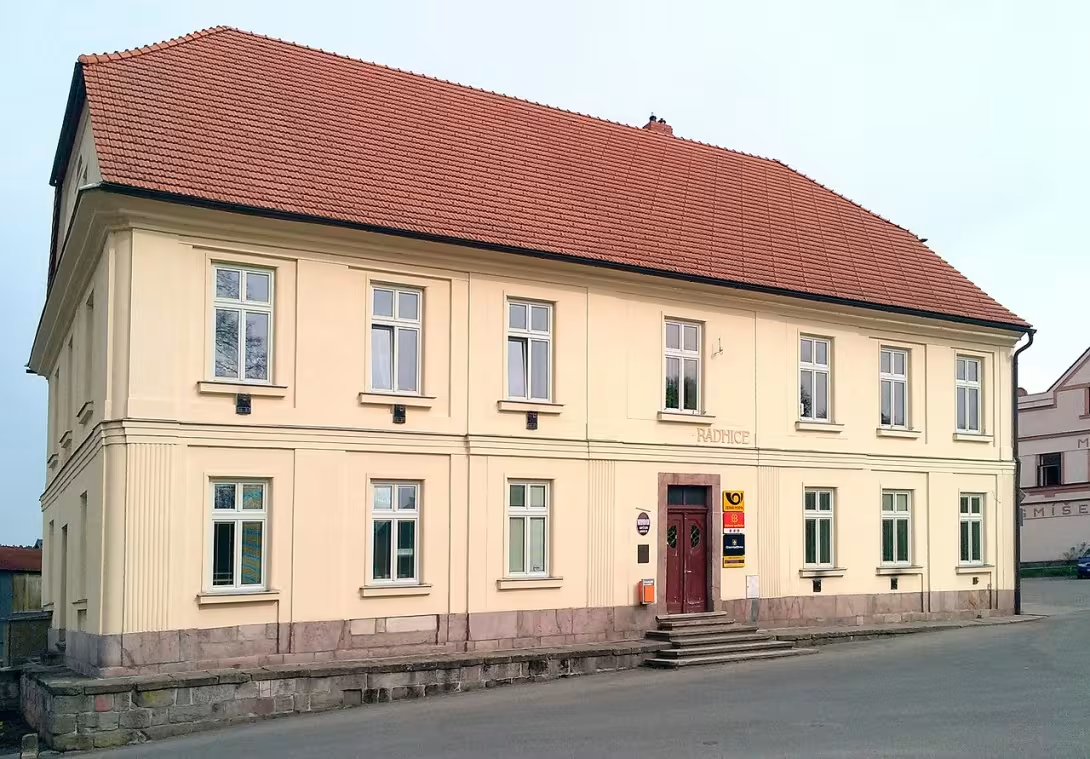
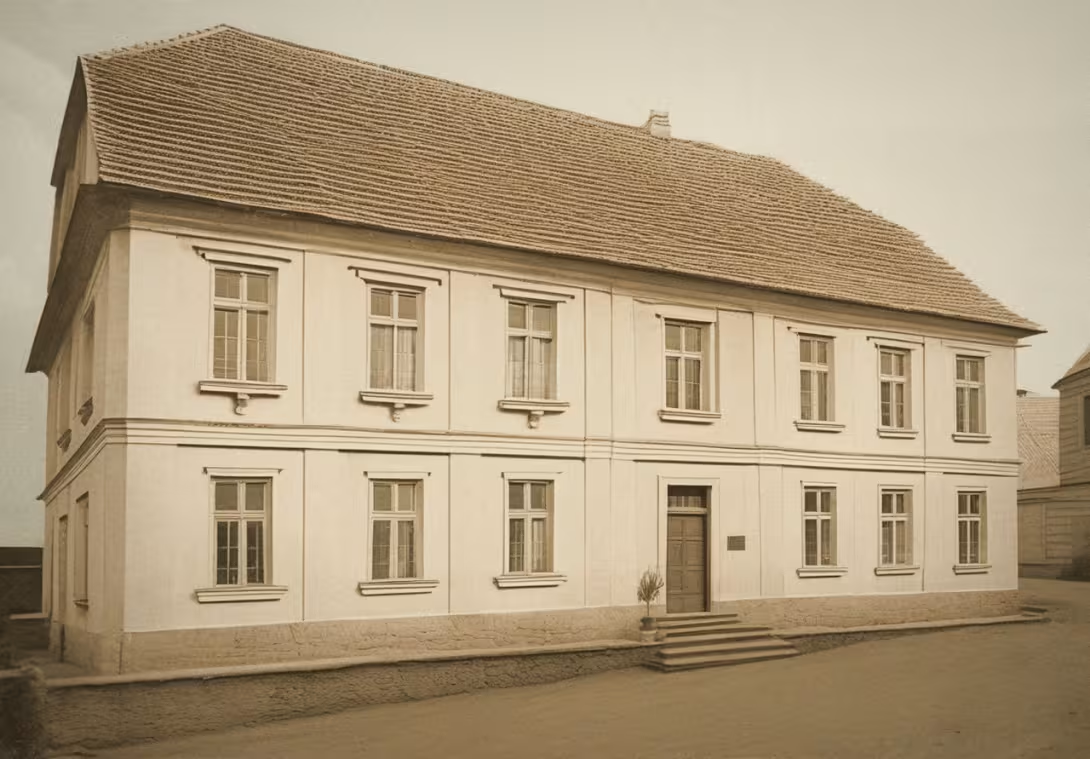
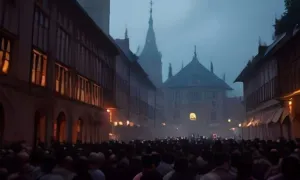
The historical appearance on the left is an AI-generated visualisation and serves as inspiration only.
Historical milestones
- 1830
- A big city fire that destroyed the original building in the town hall.
- 1842
- Building a one-storey Classicist Town Hall of sandstone and bricks.
- 1930
- Exchange of external and sled windows.
- 1945
- End of operation of inn and butcher shop on the ground floor of the building.
- 2007
- The beginning of a complex reconstruction and extension of the building with a new right tract.
Architectural development
The building was built in a classical style of sandstone blocks and bricks with flat vaults in the basement. In the 1930s, part of the new windows and pantry windows were installed, with the entrance doors combining elements of Art Nouveau and late Classicism. In 2007-2008, a new tract with a new staircase and a firehouse was built.
Historical events
1830: The fire of the city of Pecka, which led to the subsequent construction of the town hall. 2007-2008: Comprehensive reconstruction and extension of the building with a new tract.
Points of interest
- A one-story town hall from 1842 was built on the site of a house burned down in a big fire in 1830. - The windows were preserved by 19th century fittings and handmade glass tables. - The entrance door was probably created in the early 20th century, connecting elements of Art Nouveau and late Classicism. - On the ground floor of the building lived until the end of World War II butchery and inn. - In 2007-2008, the building was reconstructed and expanded to include a new real tract, where the firehouse was located.
Guide
This guide is narrated by a synthetic voice generated by artificial intelligence.
Show guide text
This text was created by artificial intelligence and has not been editorially reviewed. It may contain inaccuracies.
Welcome to the furnace. You're standing in front of building number two, which serves as the town hall of this picturesque town. If you look at it now, you'll see a one-story building unit that typically represents the style of classicism with its appearance purity and balance. It's a building that combines official seriousness with the history of local life. At present you will find an administrative centre of the city and also a library with the name Christopher Haranta. It's a place where the administration of the village meets culture and education, and all within one historical wall.
To understand why this building looks just like this, we have to go back almost two yards in time. Imagine the year one thousand eight hundred thirty. At that time, Pecka was struck by a great tragedy in the form of a devastating fire that took down a large part of the city. It was in the place where you are now standing that the house burned down in this disaster. After such loss, it was necessary to start over. Twelve years later, in the year one thousand eight hundred forty-two, this new town hall was built here. So it was created as a symbol of renewal and a new beginning for the whole town, which rose again from the ashes.
Now look carefully at the architecture itself with me. Notice the dominant western facade, which is divided into seven axes. This means that in a row you see seven vertical lines formed by windows and doors, which gives the building stability and a certain rhythm. The materials that the builders were elected in the middle of the nineteenth century are sandstone and bricks. It is the combination of these materials that has ensured long service life and its characteristic appearance.
Allow me to lead you to details that may not be seen at first sight, but are extremely valuable. Look closer at the windows. Even though an exchange of external and sled windows was made in the year one thousand nine hundred thirty, the building retained unique elements. If you approach, notice the forging from the nineteenth century and hand-made glass tables. These details are rare today and remind us of the craftsmanship of people from when glass was not made in giant factories, but with care in small workshops.
Now focus your attention on the front door. It is likely that they originated in the early 20th century. If you look at them carefully, you'll see an interesting conflict of two epoch. The doors connect the elements of the Art Nouveau, which was the peak of fashion at that time and brought organic shapes to the architecture, with elements of late classicism, which is much stricter and more moderate. It's a fascinating detail that shows how the building has adapted over time to new trends without losing its ursprung face.
If we look at this building today as an office and a library, it may occur to us that there was always silence and order. But the truth is much more alive. Let's imagine what the ground floor of this town hall looked like in the past. Until the end of World War II, a thousand nine hundred forty-five, there was a inn and a butcher's house. Imagine the contrast. While on the floor were likely to deal with important urban issues and officials carefully wrote down documents, the ground floor ruled the smell of meat and the noise of guests who came to drink their working day or buy food. It was a building that connected the city's high governance to the everyday, simple life of the people.
This space was therefore the centre of the social process of Pecka. The inn was a meeting place where news spread, discussing politics and weather. It is fascinating to think that one and the mesma wall separated the world of officials from the world of craftsmen and visitors to the inn. With the end of the war, this operation ceased and the building gradually transformed into what we know today.
In the year two thousand and seven, a complex reconstruction began, which was intended to save the building for future generations while extending it. Within this repair, a new genuine tract was created, which enabled the building to perform its current functions better. Thanks to this, Kryštof Harant's library can offer its services in a modern and spacious environment today, even though the very core of the building remains faithful for a thousand and eight hundred and forty-two.
Today, this town hall is historically protected, which means it is recognized as an important piece of the history of our region. It is a witness of the summer when the city suffered a devastating fire, even when the voices of guests in the local inn were heard in the streets. It's a building that survived wars, regime changes, and technological progress.
Now, if you look again at the overall shape of the building, think of it as a layered story. From sandstone bases, to handmade glass in windows, to the connection of two styles at the entrance door. Each element tells about different times and the people who lived and worked here.
I hope this short trip to history has helped you see more in this building than just the official building. It is a monument to the endurance of the people of Pecky who have not been stopped by fire and built something that serves the city today.
Now invited to further explore the beauty of this town. Go through the surroundings, see the atmosphere of these streets and let yourself lead other traces of history. Thank you for your attention, and I wish you a pleasant continuation of the journey through the furnace.
Tips for visitors
The best time to visit is in the morning or late afternoon when the sun hits the classicist facade of the building from the most advantageous angle. It is possible to reach the village by car or public transport; Check the current connection and stop options in the Internet search engine.
To visit we recommend to take comfortable shoes for a walk through the city centre. Since the building has a library, we recommend keeping quiet and quiet in its premises.
For the best photos we recommend to capture the overall form of a single-storey town hall from the square. The ideal light for façade images is in times when the sun is not at its highest point, which will highlight the details of the construction from 1842.
In the immediate vicinity of the town hall you can visit the parish church of St. Bartholomew or take a walk around the square in the centre of the town Pecka.
Families with children will appreciate a visit to the local library, which is located in the town hall building and offers room for reading and education.
Frequently asked questions
Can the monument be visited?
The building is in use (offices, a school, shops and the like). The interior is generally accessible only during operating hours and tours are not usually offered; we have not verified the details. You can see the exterior from the street.
Where is the monument?
Location: Pecka. The map on this page shows the exact spot.
Why is the monument protected?
It is listed in the Central List of Cultural Monuments of the Czech Republic as a cultural monument (register no. 1000163731).
Businesses nearby
Do you run a restaurant, accommodation, shop, museum, rental, wellness or other visitor service near this monument? Show yourself directly to the people heading to it — this is how they will see you in the app and on the web:
Nearby
🏰 Historic sites (123)
- Panna Maria Immaculata 0.1 km
- sv. Josef 0.1 km
- sv. Jan Nepomucký 0.1 km
- sv. Šebestián 0.1 km
- sv. Florián 0.1 km
- sv. Barbora 0.1 km
- sv. Václav 0.1 km
- sv. Vít 0.1 km
- sv. Kateřina 0.1 km
- Svatý Jan Nepomucký 0.2 km
- Pomník padlých 1. světové války 0.3 km
- hrad Pecka 0.4 km
- Svatý Jan Nepomucký 0.5 km
- Padlým v 1. sv. v. 2.7 km
- Památník K. V. Raise 4.5 km
- Preusslerova cesta 4.7 km web
- Karel Václav Rais 5.9 km
- Památník Karla Václava Raise 5.9 km
- Fričovo muzeum 6.2 km Vojtíškova 191 web
- Auto-moto museum 6.3 km web
🍽️ Restaurants and dining (125)
- Kemp Pecka 1.0 km
- Hospůdka Pod Vyhlídkou 2.1 km Arnoštov 13
- Javorský mlýn 3.0 km +420 493 520 551 web
- U Myšáka 3.3 km
- Na Kopečku 1795 3.6 km
- Restaurace Pod Hůrou 4.2 km web
- Hospoda U Lánských 4.5 km web
- Krakonošova obecní hospůdka 4.7 km
- Restaurace Hotel Štikov 5.1 km
- Restaurace Bistro 5.1 km Vidochov 16
- U Krocana 5.6 km
- Restaurace Čistá 5.6 km
- Restaurace U Janáků 5.6 km
- U Červinků 5.7 km +420603164033 web
- Pizza Amata 5.9 km Náměstí K. V. Raise 147 web
- Restaurace Za Mostem 5.9 km +420 777 184 492
- Restaurant Mája 5.9 km
- Restaurace Bohumilka 6.0 km Lázeňská 177 +420 493 767 210 web
- ProKafíčko 6.0 km Lázeňská 159 +420 605 555 308 web
- Na Mostě 6.0 km +420 493 793 201 web
🏨 Accommodation (64)
- David Nosek - Roubenka U Říhů 1.9 km
- Pod Vyhlídkou 2.1 km Arnoštov 13 web
- Chalupa Kal 2.7 km
- Javorský mlýn 3.0 km
- Penzion U Myšáka 3.3 km +420 499 691 595 web
- Jiří Burda 4.6 km +420 775 433 260 web
- Tomáš Buchal - Chalupa Jana 5.0 km
- Pension Kovárna 5.1 km Vidochov 4 web
- Hotel Štikov 5.1 km +420 493 721 972; +420 603 318 304 web
- Pension Lesní Zátiší 5.1 km +420 776 391 649
- Jaroslav Sláma - Lovecká chata 5.8 km
- Autokemp Mostek 5.8 km +420 499 691 208 web
- Hotel u Kapra 5.9 km Náměstí K. V. Raise 115 +420 493 792 439 web
- Pension Mája 5.9 km
- Penzion Petra 6.0 km náměstí K. V. Raise 11 +420 737 347 304; +420 604 809 384
- Sarmo 6.1 km T. G. Masaryka 286 +420 776 165 356 web
- Ježkův statek 6.2 km +420731622580 web
- Pension Alkiony 6.3 km +420 603 845 929 web
- Autokemp "Na koupališti" 6.7 km web
- Pension Pod Farou 6.9 km web
🚲 Rentals and sport (21)
- Sokolovna 5.6 km
- Kola Šír 6.1 km T. G. Masaryka 297
- R.K. BIKE 6.4 km Pražská 515
- Bazén Nová Paka 6.5 km web
- Tenis Nová Paka 6.9 km
- Sokol Nová Paka 6.9 km
- Squash 7.1 km
- Střelnice - areál 7.6 km
- Sjezdovka Debrné 8.4 km
- Penzion Trautenberg - bazén 10.9 km
- Koupaliště Dachovy 11.2 km +420 493 624 114 web
- Cyklosport 13.0 km Aloise Hlavatého 2207
- koupaliště Kruh 13.0 km
- Sportovní hala Gymnázia 13.6 km Šalounova 2164
- Dětské brouzdaliště 14.1 km
- Střelnice střeleckého klubu Vrchlabí 14.3 km
- sportovní hala 14.6 km
- Kupkolo.cz 14.6 km
- Tyršovo koupaliště 14.7 km
- Koupaliště Nová Ves nad Popelkou 14.9 km
🥾 Hiking and nature (208)
- Homolka 0.6 km
- Jelínka 1.1 km
- Na Homolce 1.6 km
- Krkonošská vyhlídka 1.6 km
- Kazabrud 1.7 km
- Jelení hřbet 1.8 km
- Kazabrud 1.9 km
- Jeruzalém 2.2 km
- Javorka 2.3 km
- Červený vrch 2.4 km
- Na Hrdlech 2.5 km
- Na Kopci 2.5 km
- Na Kamenici 2.5 km
- Strž ve Stupné 3.0 km
- Čihadlo 3.1 km
- Kulatý vrch 3.1 km
- Supí vrch 3.2 km
- Údolí Javorky 3.3 km
- Hradiště 3.4 km
- Kozinec 3.5 km
Accommodation nearby
Themed route
Here is the design of the thematic route:
1. Square in the city centre Pecka (central space) - Start the trip at this place, which forms the heart of the village and connects the main sights. 2.Dům čp. 2 (Pecka) (Town Hall) - Visit this main building, which serves as an administrative centre and represents an important architectural element. 3. The parish church of St. Bartholomew (temple) - Walk a short distance to this sacral object, which complements the historical nature of the surroundings.
Seasonal recommendations
In the spring, the surrounding area of the building awakens to life and the young greenery complement the appearance of historical walls. Light is soft and pleasant in this period, which is ideal for viewing architecture from the outside. We recommend shoes suitable for wet terrain and visit in the morning when the air is the cleanest.
Summer brings bright sun and rich colors of the surrounding countryside. The building stands out in bright light with its structure, but in the high season there may be more people around. The best is to come early in the morning or at sunset to make it less hot, and choose light, breathtaking clothes.
Autumn, nature around the town hall turns into golden and brown shades, creating a nostalgic atmosphere. The lighting is rich and the shadows are longer, which highlights the facade details. It is advisable to carry a waterproof coat and plan to arrive before it begins to freeze.
Zimą is a monument in quiet and calm, while snow can highlight the purity of the building lines. The atmosphere is brought down by cold and short day, therefore it is best to choose the time around noon when there is the most light. Hot clothing, lining of clothing and a firm sole are essential to avoid slipping.
Visualizations and artistic views


The visualisations are generated by artificial intelligence and serve as inspiration.
Photos from the area
Real photos taken near the monument

Zdroj a licence jsou uvedeny u každého snímku.
Tips from visitors
No tips yet. Be the first!
Log in and add your tip.
Sources and literature
Photos: Pavel Dušek / CC BY-SA 3.0 — Wikimedia Commons. The author and licence also appear when you hover over the image.
Faktickým podkladem tohoto textu byl článek na Wikipedii, jehož autory jsou přispěvatelé Wikipedie. Článek je dostupný pod licencí CC BY-SA 4.0.
Location on the map
More monuments – Pecka
Show all in the municipality


Příběhy a pověsti
Legendy, pověsti a příběhy spjaté s touto památkou
Fotografie návštěvníků
Přidat fotografiiZatím žádné fotografie. Buďte první, kdo přidá fotografii z návštěvy!
Máte k místu vzpomínku nebo zajímavý příběh?
Log in a přidejte svou fotografii nebo hodnoťte.
Za ověřenou návštěvu v aplikaci získáte víc bodů — poznáme podle GPS, že jste na místě.
Reviews and comments