



Kostel svatého Bartoloměje (Pecka) Church
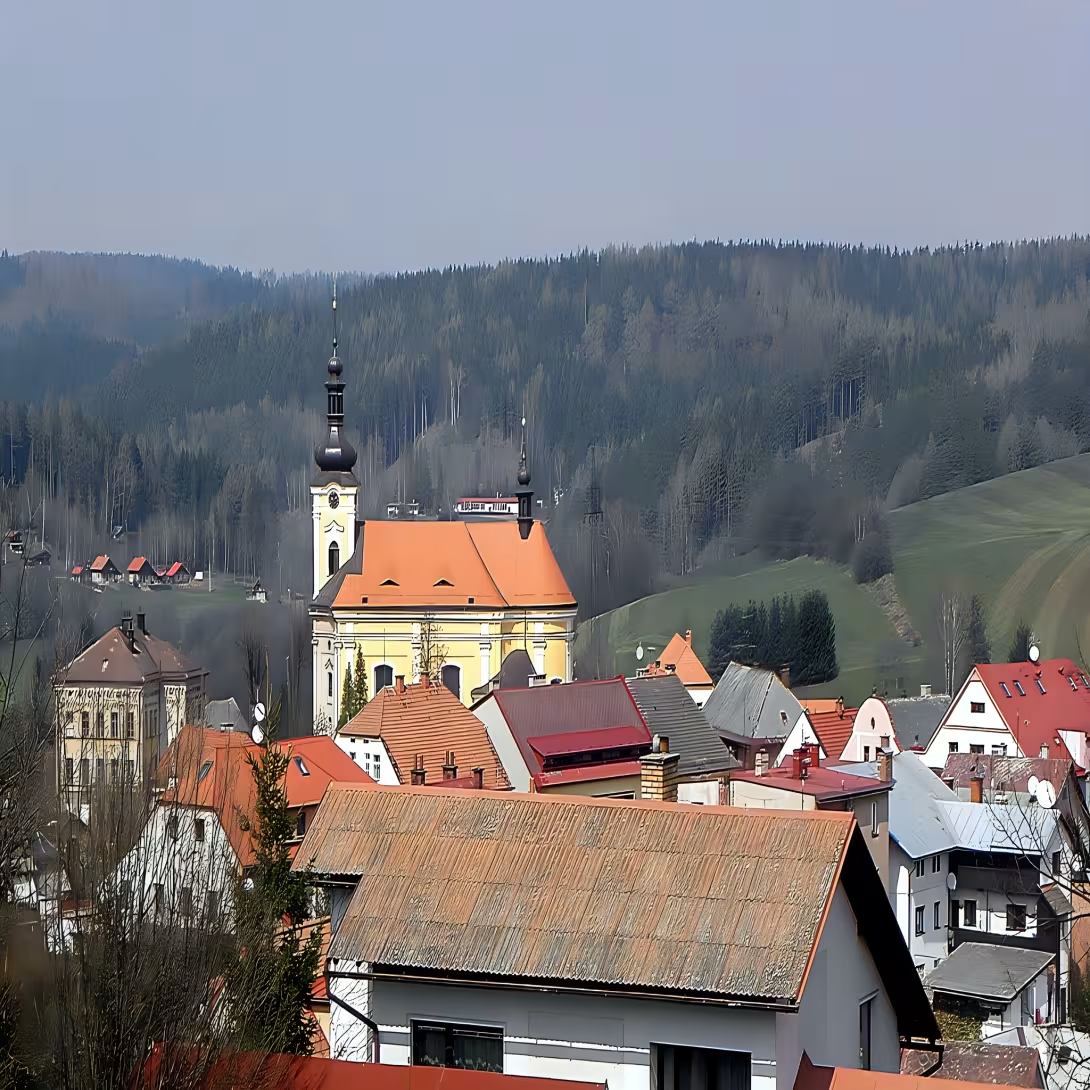
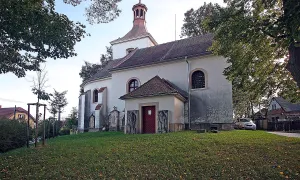
The Church of Saint Bartholomew is a Roman Catholic church in Pece, located north of the center of the village. It is a dominant feature of the village and a protected cultural monument. The current Baroque style building was built between 1748 and 1758.
This monument is remarkable for its well preserved Baroque architecture and rich history dating back to the 14th century. The church has undergone several transformations for centuries. The first written record of St. Bartholomew's wooden church dates back to 1384. In 1603 the wooden church was replaced by a stone church, renovated in the 18th century.
the church is a single-boat building with presbytery on an elongated floor plan, designed in the style of Dienzenhofer building school. It has the influence of a late baroque and early classicism. The church was restored between 1936 and 1939. The central entrance is located underground and the church is surrounded by a stone cross path designed by Jan Josef Lederer.
The interior of the church is decorated with an illusory main altar, decorative paintings and frescoes depicting the life of St. Bartholomew. The church also has a central entrance underground and a stone cross path designed by Jan Josef Lederer. The main altar, ornamental paintings and frescoes were created by artist Václav Prokop Kramolín.
the church has a significant historical context, built during the influence of the Habsburg Empire in Bohemia. The Catholic Church was the dominant force in the region during this period. The construction of the church began in 1748 and was completed in 1758.
Today the church of St. Bartholomew is a place of worship and a popular tourist destination. Visitors can attend mass on Sunday, Thursday and Friday. The church is surrounded by rolling hills and forests, making it a picturesque place to visit. The rich history and preserved architecture of make it a mandatory tour for anyone interested in Czech history and culture.
The current condition of the church is well preserved, which is proof of the rich cultural heritage of the region. Visitors can explore the interior and exterior church, taking in stunning architecture and art works. The importance of the church goes beyond its historical value because it continues to serve as a place of worship and community for the locals.
Finally, the church of St. Bartholomew is an important cultural monument in the Czech Republic, which offers a view of the country's rich historical and architectural heritage. His well-preserved Baroque architecture and stunning works of art make him a must - see the goal for anyone interested in Czech culture and history. Visitors are invited to explore the church and its surroundings, taking on the beauty and importance of this remarkable monument.
Then and now
Drag the slider to compare how the landmark may have looked when it was built with the view today.
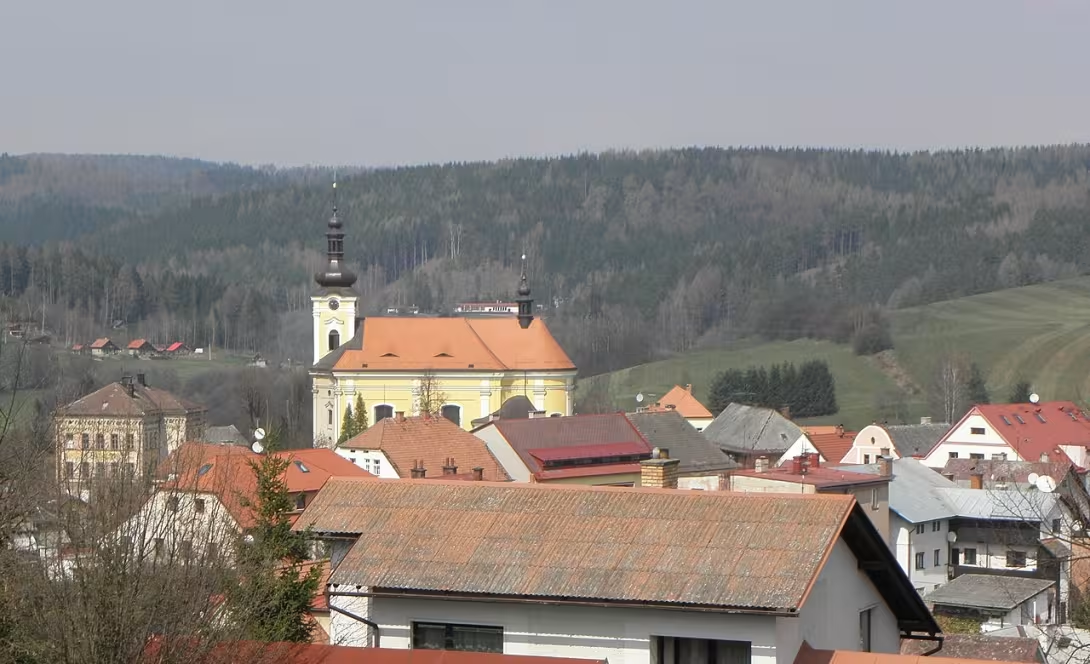
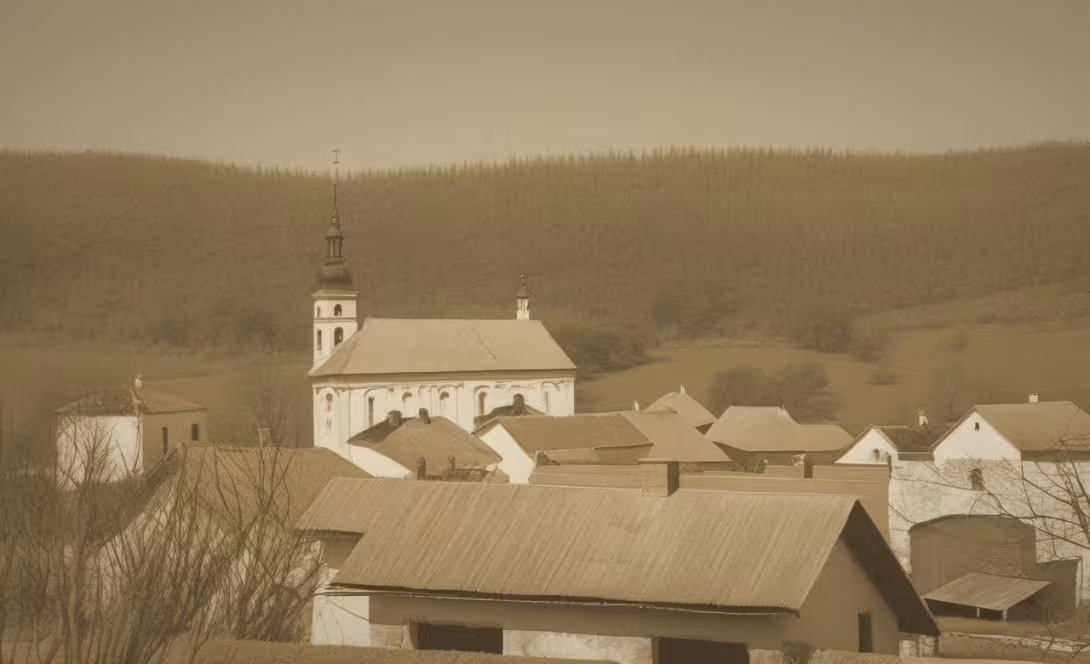
The historical appearance on the left is an AI-generated visualisation and serves as inspiration only.
Historical milestones
- 1384
- The first tablet of the wooden church of St. Bartholomew
- 1603
- Wooden church replaced by stone church
- 1748
- Construction of the current Baroque style building started
- 1758
- Construction of the current Baroque style building completed
- 1936
- The restoration of the church began
- 1939
- Church renewal completed
Architectural development
the church is a single-boat building with presbytery on an elongated floor plan, designed in the style of Dienzenhofer building school. It has the influence of a late baroque and early classicism. The church was restored between 1936 and 1939.
Historical events
- 1384
- The first written record of St. Bartholomew's wooden church dates back to 1384.
- 1603
- The wooden church was replaced by a stone church in 1603.
- 1992
- In 1992 two new bells were installed in the tower.
Points of interest
- Saint Bartholomew Church in the kiln has a mysterious connection to the local legend of hidden treasure. According to legend, a rich nobleman buried a treasure near the church, but its exact location remains unknown to this day.
- architect church, Jan Blažej Santini-Aichel, was a renowned Czech architect who designed many remarkable buildings in the region. However, it is not clear whether he was directly involved in the construction of St. Bartholomew's church.
- Václav Prokop Kramolín, the artist responsible for interior decoration church, was a prominent figure of Czech art during the 18th century. His work at St. Bartholomew's Church is considered some of his best achievements.
- The Church of Saint Bartholomew has undergone several transformations over the centuries, but its original wooden structure from the 14th century has been lost to history. The contemporary stone church was built in the 17th century, but in the 18th century it was renovated in the present Baroque style.
- Jan Josef Lederer, the designer of the stone cross around the church, was a Czech architect who worked on several important projects in the region. His design for the Church of St. Bartholomew is considered one of his most impressive works.
Guide
This guide is narrated by a synthetic voice generated by artificial intelligence.
Show guide text
This text was created by artificial intelligence and has not been editorially reviewed. It may contain inaccuracies.
The Church of Saint Bartholomew is a Roman Catholic parish church in Pecca. It stands north of the center and is the second landmark of the market town after the castle. It is protected as a cultural monument.
The first written mention of the Church of Saint Bartholomew dates from 1384. At that time it was apparently a wooden structure. In 1603 it was replaced by a stone church. The church received its present Baroque appearance from the Carthusians from nearby Valdice, and the structure dates from 1748 to 1758. The name of the builder is not known.
It is a longitudinal single-nave structure with a presbytery on a rectangular ground plan. It is designed in the spirit of the Dientzenhofer building school and features influences of late Baroque and early Classicism. On either side of the nave are symmetrically placed sacristies with oratories. From the western façade rises a prismatic tower and the main entrance leads directly beneath it.
The outer perimeter of the church is decorated with a stone Way of the Cross by Jan Josef Lederer. It was originally set into the cemetery wall. After the cemetery was closed, it was installed in the church wall.
Inside, the illusory main altar draws attention, along with ornamental paintings and frescoes on the vaults that tell the story of the church's patron saint. They are the work of painter Václav Prokop Kramolín. The side altars and pulpit date from 1722 and are older. The main altar with twisted columns was made as early as 1680 for the original stone church. Part of the interior furnishings was brought here in 1782 from the dissolved Carthusian monastery in Valdice. The stained glass windows from 1895 depict Saint Wenceslas, Saint Ludmila, Saint Aloysius, and Saint Philomena.
The church was restored between 1936 and 1939. In 1992 the tower received two new bells. They were obtained from the collections of local citizens and friends from Germany.
A small monument to the local-born priest Josef Štemberka stands at the south wall of the church. He was a parish priest in Lidice and was tortured to death by the Nazis.
Tips for visitors
The best time to visit the church of St. Bartholomew in the furnace is at the end of spring or early autumn when the weather is mild, and surrounding hills and forests are lush greenery. These seasons offer pleasant temperatures for walks around the village and exploring surrounding areas without crowds that could be present during peak tourist months such as summer. In addition, a visit outside the main holiday can provide a calmer experience as you explore this historic place.
There are options for those who prefer public transport; However, it is advisable to check current plans and routes using an online search tool before your visit. The proximity of the village to the main roads is accessible by car, which may be beneficial for families or groups that travel together.
When visiting St. Bartholomew's Church, consider bringing comfortable walking shoes as you wish to explore the surrounding natural landscape. The camera is recommended to capture stunning views and architectural details of the church. Since light conditions may vary, early morning visits can offer softer light for photography, while late afternoon can provide dramatic shadows and highlighting.
For families with children, Pecka offers a quiet environment for sitting together. The village itself has open spaces where children can play, and the natural environment is ideal for short tours or nature walks. The nearby attractions within 30 minutes include other historical monuments in the Králové Hradec Region, offering educational opportunities about local history and culture.
Frequently asked questions
Can the monument be visited?
Religious buildings are usually open mainly during services; at other times a visit is normally arranged with the parish or the operator. We have not verified specific times.
Where is the monument?
Location: Pecka, Královéhradecký kraj. The map on this page shows the exact spot.
Why is the monument protected?
It is listed in the Central List of Cultural Monuments of the Czech Republic as a cultural monument (register no. 46084/6-1312).
Businesses nearby
Do you run a restaurant, accommodation, shop, museum, rental, wellness or other visitor service near this monument? Show yourself directly to the people heading to it — this is how they will see you in the app and on the web:
Nearby
the church is located in the village Pecka, surrounded by rolling hills and forests.
Accommodation nearby
Themed route
Thematic cruise route: Kostel svatého Bartoloměje (Pecka)
1.Kostel svatého Bartoloměje (Pecka) - * Type: * Religious monument - * Why is it worth visiting: * This Baroque church is a tiny architectural house in the village Pecka. Its rich history and unique interior offers a dense insight into the region's religious life.
2. Forest prose around the church - * Type: * Nature area - * Why is it worth visiting: * Surrounded forests and hills offer a gentle but engaging walk. This nature landscape provides liquid products to the contractor after a new church.
3. Church tank - * Type: * Cultural area - * Why is it worth visiting: * The square of the cube is an ideal place for relaxation and position outdoor product. Here you can enjoy quiet moments while looking at historical architectural elements.
This route offers combined cultures and natural atrocities in the circumstances of St. Bartholomew, which from another ideal choice for those which are part of the history and beauty of the Royal Hradec Region.
Seasonal recommendations
Spring: The mantle of St. Bartholomie's skeleton in the spring possible acquired demanding sexes on the light bush and trees that can be used to produce the landscape. Sunshine days go to a new world, which is intended for architecture in living colours, which is its historical and aesthetic charm. At that time, this information may be valid, in particular as soon as the church is built at the beginning or end of spring. This Regulation shall enter into force on the twentieth day following that of its publication in the Official Journal of the European Union. The best time on the claim is at noon, when the sun muscles the church from the most beautiful hives.
Summer: For years, Pecka graduated from tourist attractions, which is meant to be used by the crowd to choose the bones of St. Bartholomew. Warm sunny days and breathtaking evenings offered ideal support for supporting historical monuments that differ in the surrounding gardens. It is important that the church is put into service or at a party, so that it can be carried out at the peak of the summer rush of tourists. Wearing a reclining round and forbidden sunny bré is quiet for the use of gaseous, light days.
Autumn: In the autumn period the church of St. Bartholomew is determined by the magical appearance of the forest is the changing common range of trees and shrubs. The sunny days are warm, but the evenings quickly pass to the place of true clouds, the romantic atmosphere around the skeleton. This season is ideal for visiting, because crowds are usually less burdened in conjunction with winter and summer months. It is recommended that it is not necessary to apply the regulation to cool morning or evening which may require liquid products around the skeleton in the national autumn building.
Winter: The winter intensity of the St. Bartolomie skeleton offers a one-way atmosphere where the historical object is illuminated by cool rays of the sun or smaller lights. Hot round and secure bots are persistent for tardy stays outside during cold days, in particular just float the proofs around the area. Despite winter calmness and less of a nominee, it is desirable to realise that certain elements of the skeleton can be set up to maintain.
Visualizations and artistic views


The visualisations are generated by artificial intelligence and serve as inspiration.
Photos from the area
Real photos taken near the monument


Zdroj a licence jsou uvedeny u každého snímku.
Atmosphere of the place
This atmospheric visualisation of the place and period was generated by artificial intelligence. It is not real footage of the location.
Tips from visitors
No tips yet. Be the first!
Log in and add your tip.
Sources and literature
Photos: Tedmek / CC BY-SA 3.0, rozlišení zvýšeno umělou inteligencí — Wikimedia Commons. The author and licence also appear when you hover over the image.
Faktickým podkladem tohoto textu byl článek na Wikipedii, jehož autory jsou přispěvatelé Wikipedie. Článek je dostupný pod licencí CC BY-SA 4.0.
Location on the map


Příběhy a pověsti
Legendy, pověsti a příběhy spjaté s touto památkou
Fotografie návštěvníků
Zatím žádné fotografie. Buďte první, kdo přidá fotografii z návštěvy!
Log in a přidejte svou fotografii nebo hodnoťte.
Za ověřenou návštěvu v aplikaci získáte víc bodů — poznáme podle GPS, že jste na místě.
Reviews and comments