






městský dům (Pecka) House
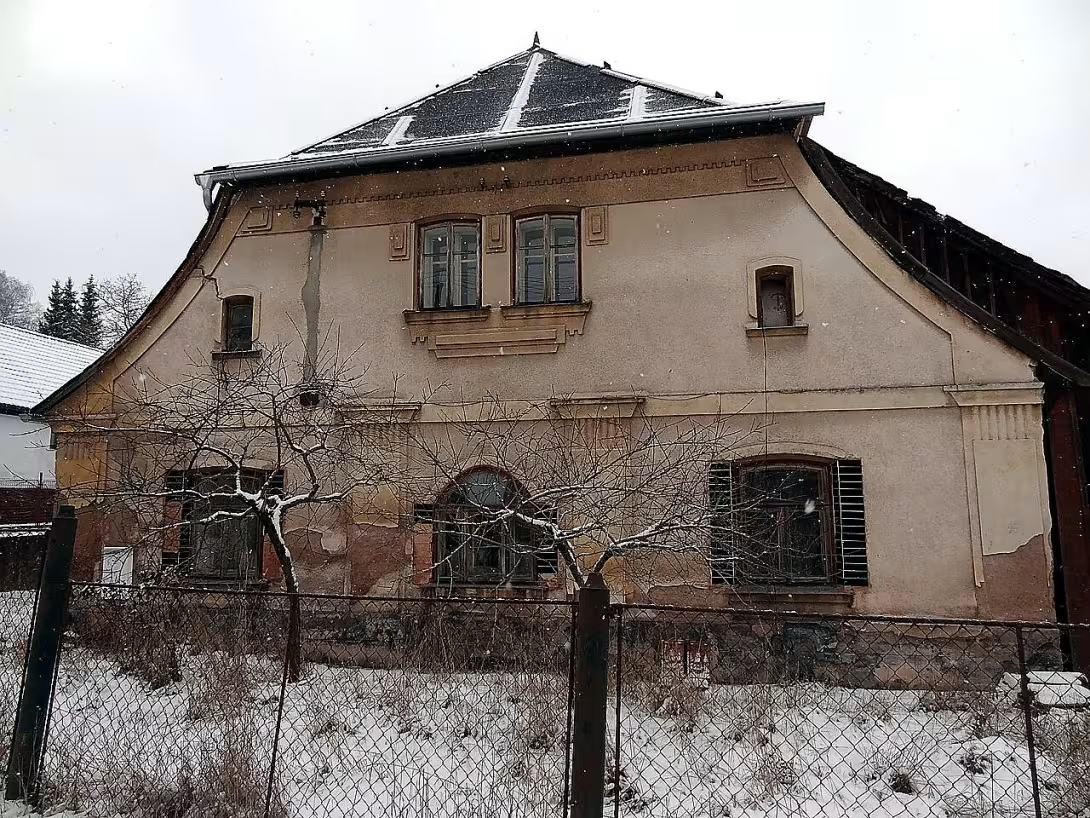
House No. 42 is a masonry town house on the square in Pecka. It began as a log cabin in the late 18th century, was extensively rebuilt at the turn of the 19th and 20th centuries, and altered again in the 1920s. Today it is a protected cultural monument that demonstrates the town’s urban architectural development.
The first structure on the site was a log cabin erected at the end of the 18th century. Initially recorded as house 36, it was renumbered 42 in 1843. The stable cadastre of 1841 already shows the building on its present footprint.
Constructed of mixed masonry on a rectangular plan, the house’s gable faces the square. It has a mansard roof with a half‑hip and a sandstone‑block barrel‑vaulted cellar. The two‑tract building’s rear wing originally served as stables before being adapted for residential use. In 20th‑century renovations the exterior received plaster. The southeast gable façade is the most elaborate, with corner pilasters and windows framed by architraves. Inside, several valuable coffered wooden doors survive.
As of 2024, a construction company owns the property and uses it as its headquarters.
During the 20th‑century overhaul the layout changed. The original central entrance on the southeast façade was partly walled up and turned into a window, while a new doorway was created on the southwest side. At the same time, two small residential rooms were added to the mansard.
The house was officially declared a cultural monument in 2019. In 2022 it entered Pecka’s urban conservation‑zone regeneration program for 2023–26, and it is currently being restored to its early‑20th‑century appearance.
This monument exemplifies the shift from traditional log construction to urban masonry. It enriches the historic character of Pecka’s square and is worth visiting for anyone interested in local architectural history.
Historical milestones
- 1841
- The house is recorded in the stable cadastre maps on its current footprint.
- 1843
- The house was re-numbered from 36 to 42.
- 2019
- The building was designated as a cultural monument.
Architectural development
The building evolved from a late 18th-century log cabin to a masonry structure with a rectangular floor plan and a mansard roof. It features a sandstone barrel-vaulted cellar and a southeast facade decorated with corner pilasters and window architraves. The interior retains several valuable coffered wooden doors.
Historical events
In 2019, the house was officially protected as a cultural monument. In 2022, it was included in the regeneration program for the urban conservation zone of Pecka for the years 2023–26.
Owners
Currently owned by a construction company (as of 2024).
Points of interest
– The house began as a log cabin in the late 18th century. – Originally recorded as house 36, it was renumbered to 42 in 1843. – The building's rear wing originally served as stables before being adapted for residential use. – Several valuable coffered wooden doors have survived in the interior. – As of 2024, the property is owned by a construction company and used as its headquarters.
Guide
Show guide text
This text was created by artificial intelligence and has not been editorially reviewed. It may contain inaccuracies.
Welcome to the heart of Pecka. Please, take a moment to settle in, adjust your headphones, and look around you. You are standing in the town square, a place where the layers of history are woven into the very fabric of the buildings surrounding you. Right here, before you, stands House number 42. At first glance, it presents itself as a solid, masonry town house, a characteristic piece of the local urban landscape. It may seem like a quiet witness to the passing years, but if you look closer and let your imagination wander, you will realize that this building is actually a living chronicle of how Pecka and its residents evolved over more than two centuries.
To truly understand what you are seeing, we have to travel back in time, far beyond the stone walls currently before you. In the late 18th century, this exact spot looked very different. Instead of a masonry structure, there stood a humble log cabin. Imagine the scene: the smell of fresh timber, the rustic simplicity of a wooden home, and a town that was still finding its architectural identity. This original log cabin served as the foundation, not just physically, but symbolically, for everything that followed. It represents a time when building materials were sourced directly from the surrounding forests, and the architecture was dictated by necessity and the raw nature of the landscape.
As the 19th century progressed, the needs of the town and its people changed. The humble wooden cabin was no longer sufficient for the ambitions or the requirements of the era. By 1841, the house was officially recorded in the stable cadastre maps. For those of us who love history, these maps are like a treasure chest; they provide the exact footprint of the building, confirming that the house occupied this very space and shape nearly two hundred years ago. Interestingly, if you had looked for this house in the records just a few years prior, you would not have found it under number 42. In 1843, the house underwent a formal renumbering, changing from house number 36 to the number 42 that it carries to this day. It is a small detail, perhaps, but it reminds us that towns are living organisms, constantly being reorganized and redefined.
Now, let us focus on the building as it stands today. As you look at the facade, you are seeing the result of a long process of transformation. The transition from a wooden cabin to a masonry house was a significant leap in status and durability. However, the house did not stop evolving there. As we moved into the turn of the 19th and 20th centuries, the building underwent significant reconstructions. This was a period of great change across Europe, where old structures were often updated to reflect new tastes in comfort and style. The house was touched once again in the 1920s, receiving further modifications that shaped its character for the modern era.
While you observe the exterior, I invite you to think about the invisible work happening behind these walls. In 2019, the building was officially designated as a cultural monument. This is a prestigious title, but it also comes with a great responsibility. Currently, the house is undergoing a careful restoration process. The goal of this work is not simply to fix what is broken, but to peel back the layers of time and return the building to its early 20th-century appearance. The restorers are working to ensure that the elegance and the spirit of that specific era are preserved for future generations to see. When you look at the walls now, you are seeing a building in a state of transition, caught between its storied past and its restored future.
If you could step inside or imagine the layout of the interior, there are a few hidden gems that deserve your attention. While the front of the house faced the public life of the square, the rear wing told a different story. Originally, this back section did not house people, but animals; it served as stables. It is fascinating to think about the daily rhythms of this house—the formal life of the town square in the front, and the earthy, hardworking atmosphere of the stables in the back. Eventually, as the way of life in Pecka changed, these stables were adapted for residential use, transforming a place of labor into a place of living.
Furthermore, the interior holds a secret of true craftsmanship. Within the house, several valuable coffered wooden doors have survived. These are not mere functional objects; they are pieces of art. The coffered design, with its recessed panels, speaks to a level of detail and quality that was meant to last for centuries. These doors have remained silent witnesses to every conversation, every celebration, and every quiet moment that has occurred within these walls since the house was modernized.
It is rare to find a building that so clearly demonstrates the evolution of a town's social and architectural history. From a rustic log cabin to a formal masonry house, from a place with stables to a protected cultural monument, House number 42 is a mirror of Pecka itself. It tells a story of growth, of adaptation, and of a deep respect for heritage. Even though the architects who designed these changes remain unknown to history, their vision lives on in the proportions and the strength of the masonry you see before you.
As you stand here, take one last look at the facade. Try to see the ghost of the 18th-century log cabin beneath the stone. Think about the people who lived here in 1843, perhaps confused for a moment by their new house number. Consider the craftsmen of the 1920s who updated the rooms to fit the fashion of the time. This house is more than just a structure; it is a bridge connecting the distant past to our present moment.
Thank you for stopping here to uncover the history of this remarkable town house. The square in Pecka has many more stories to tell, and many more hidden details waiting to be discovered. I encourage you to continue your walk, to look up at the eaves of the other buildings, and to feel the atmosphere of this historic place. Enjoy the rest of your exploration of Pecka. Farewell for now.
Tips for visitors
Best Time to Visit: The best time to visit House no. 42 is during the spring and summer months when the weather is mild and sunny, making it ideal for photography and exploring the surrounding area. Avoid visiting during peak winter months as the cold weather may limit your experience.
Businesses nearby
Do you run a restaurant, accommodation, shop, museum, rental, wellness or other visitor service near this monument? Show yourself directly to the people heading to it — this is how they will see you in the app and on the web:
Accommodation nearby
Themed route
Pecka Heritage Trail
This trail takes you through the charming town of Pecka, showcasing its rich history and cultural heritage. The main attraction is the Městský dům (Pecka), a stunning example of traditional architecture.
1. Městský dům (Pecka): This historic house dates back to the 17th century and is a must-see for anyone interested in local history and culture. Its unique architecture and well-preserved interior make it a standout attraction. 2. Kostel svatého Víta: Located just a short walk from the Městský dům, this beautiful church is a great place to learn about the town's spiritual heritage. Take a moment to admire its stunning architecture and peaceful atmosphere. 3. Rybářská usedlost: This traditional fisherman's cottage offers a glimpse into Pecka's rural past. Explore its charming interior and learn about the local fishing industry that once thrived here.
This trail provides a unique insight into the history, culture, and daily life of Pecka, making it an unforgettable experience for visitors.
Seasonal recommendations
Spring
As spring arrives, Pecka's historic city house comes alive with vibrant greenery and blooming flowers. The atmosphere is filled with the sweet scent of blossoms and the gentle chirping of birds. This is a great time to visit, as the weather is mild and the crowds are smaller compared to summer months.
Practical tips: Wear comfortable shoes for walking around the city, and consider visiting early in the morning or late in the afternoon to avoid the peak tourist hours.
Summer
During the summer season, Pecka's historic city house takes on a lively atmosphere, with outdoor events and festivals drawing large crowds. The sun shines brightly, making it perfect for taking photos and enjoying the beautiful architecture. However, be prepared for larger groups of tourists and consider visiting early in the morning or later in the evening to avoid the heat.
Practical tips: Bring sunscreen and a hat to protect yourself from the sun, and plan your visit accordingly to avoid peak tourist hours.
Autumn
As autumn arrives, Pecka's historic city house is surrounded by the vibrant colors of changing leaves. The atmosphere is cozy and inviting, with the smell of wood smoke and roasting coffee wafting through the air. This is a great time to visit, as the weather is mild and the crowds are smaller compared to summer months.
Practical tips: Wear layers for cooler mornings and evenings, and consider visiting during the week instead of weekends to avoid larger groups of tourists.
Winter
During the winter season, Pecka's historic city house takes on a cozy and intimate atmosphere, with twinkling lights and festive decorations. The cold weather makes it perfect for warm cups of coffee or hot chocolate, and the smaller crowds make it easier to explore without feeling rushed.
Practical tips: Dress warmly and consider visiting during the week instead of weekends to avoid larger groups of tourists. Also, be aware that some areas may have limited hours or be closed due to maintenance.
Visualizations and artistic views


The visualisations are generated by artificial intelligence and serve as inspiration.
Photos from the area
Real photos taken near the monument


Zdroj a licence jsou uvedeny u každého snímku.
Tips from visitors
No tips yet. Be the first!
Log in and add your tip.
Sources and literature
Fotografie: MartinVeselka / CC BY-SA 4.0 — Wikimedia Commons. The author and licence also appear when you hover over the image.
Faktickým podkladem tohoto textu byl článek na Wikipedii, jehož autory jsou přispěvatelé Wikipedie. Článek je dostupný pod licencí CC BY-SA 4.0.
Location on the map
More monuments – Pecka
Show all in the municipality
Příběhy a pověsti
Legendy, pověsti a příběhy spjaté s touto památkou
Fotografie návštěvníků
Zatím žádné fotografie. Buďte první, kdo přidá fotografii z návštěvy!
Přihlaste se a přidejte svou fotografii nebo hodnoťte.
Za ověřenou návštěvu v aplikaci získáte víc bodů — poznáme podle GPS, že jste na místě.
Reviews and comments