



Dům čp. 225 House
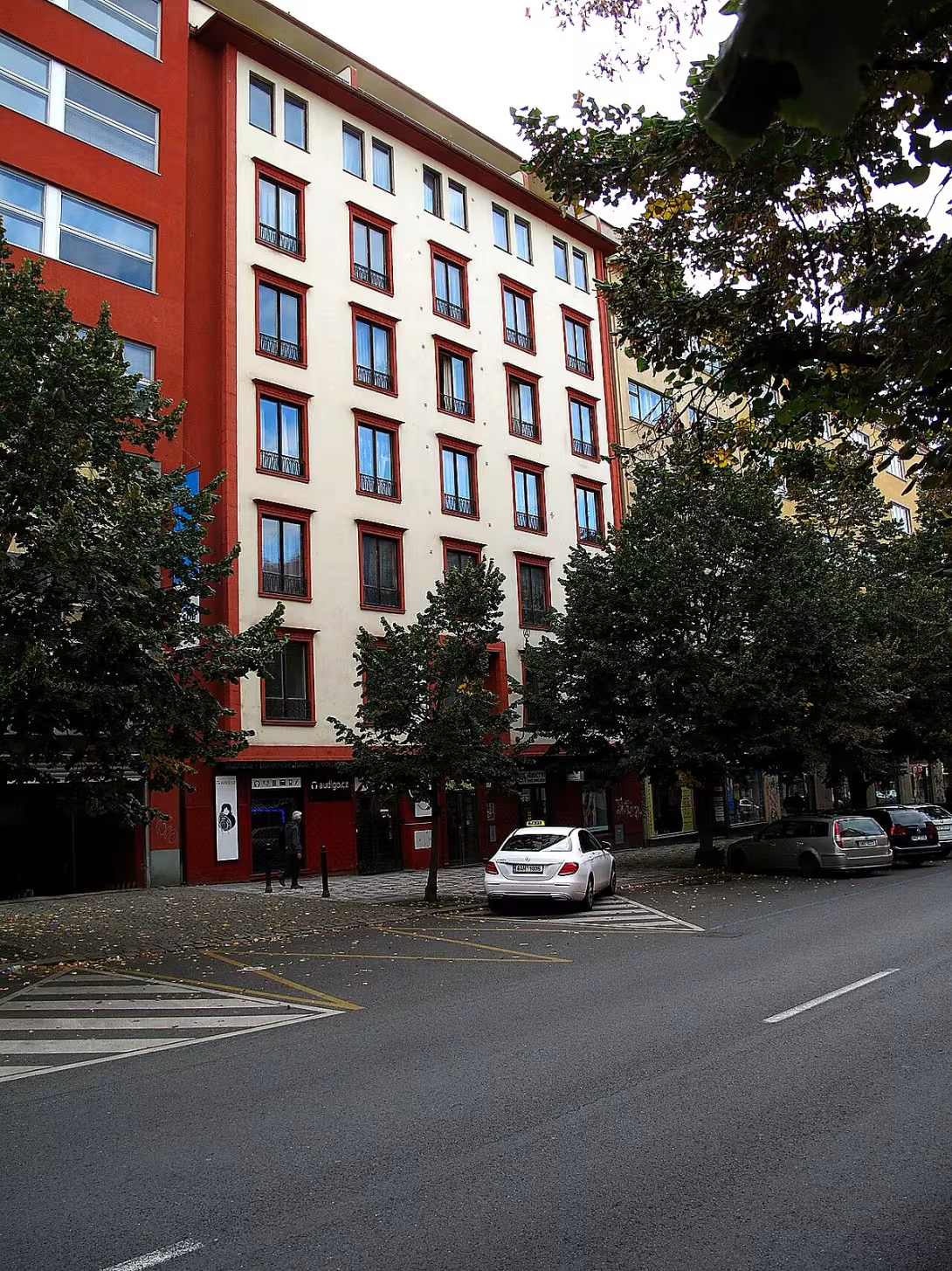
Dům čp. 225 in Štramberk, a village in the district of Nový Jicin, is a historical monument from the first half of the 19th century, which represents a typical suburban development of this area. This grafted house was built at the time of industrialization and modernization, which affected the architectural development of many municipalities, including Štramberka. The house is part of the town conservation and was entered in the Central List of Cultural Monuments of the Czech Republic before 1988.
The history of Štramberk dates back to the 16th century, when according to the urban town hall from 1558, 22 houses with wooden arches were originally built on the square, which had the right to enchantment. In 1614 28 farms, rectory, church and school are listed, 19 houses behind the walls. 53 houses were recorded for the reign of Jesuits in 1656. The first brick house No. 10 was built on the square in 1799. In 1855, the fire destroyed 40 houses and two barns. In the first half of the 19th century there were still twelve wooden houses near the square.
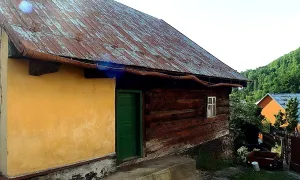
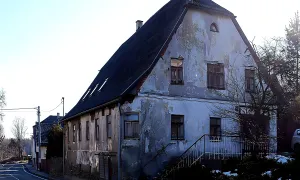
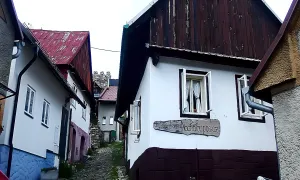
Dům čp. 225 was built as a grafted building on a rectangular floor plan with a tripartite layout which includes a hall, a scar and a brick chamber. The construction is grafted from hobs and built on a high-plastered stone suspect that equalises the slope inequality. The house is undercut with entrances on the west side and off the street. A wooden annex with a counter wall was added to the back of the gutter. The street facade is four-axis with the entrance to which the staircase leads. The western shield facade has two tile windows in a simple formwork while the eastern facade is without windows. Shields are triangular vertically formatted with a decorative and broken shield heel. The western shield has a half-wall at the top, while the roof is saddled with a pasty covered asphalt cardboard.
During the 20th century, the house was reconstructed and expanded by a walled extension, indicating its adaptation to modern needs and changes in the environment. This house is therefore not only a monument to the architectural character, but also a testament to the historical changes Štramberk has undergone.
Today the house stands no. 225 as an important cultural monument and is accessible to visitors who want to know the history and architecture of Štramberk. The preservation and protection of this house are important for the preservation of the cultural heritage of this area.
Dům čp. 225 is therefore not only a monument from the first half of the 19th century, but also a witness to the historical changes of Štramberk and its architectural development. Visiting this house offers a valuable view of the past and recalls the importance of protecting cultural heritage for future generations.
Then and now
Drag the slider to compare how the landmark may have looked when it was built with the view today.
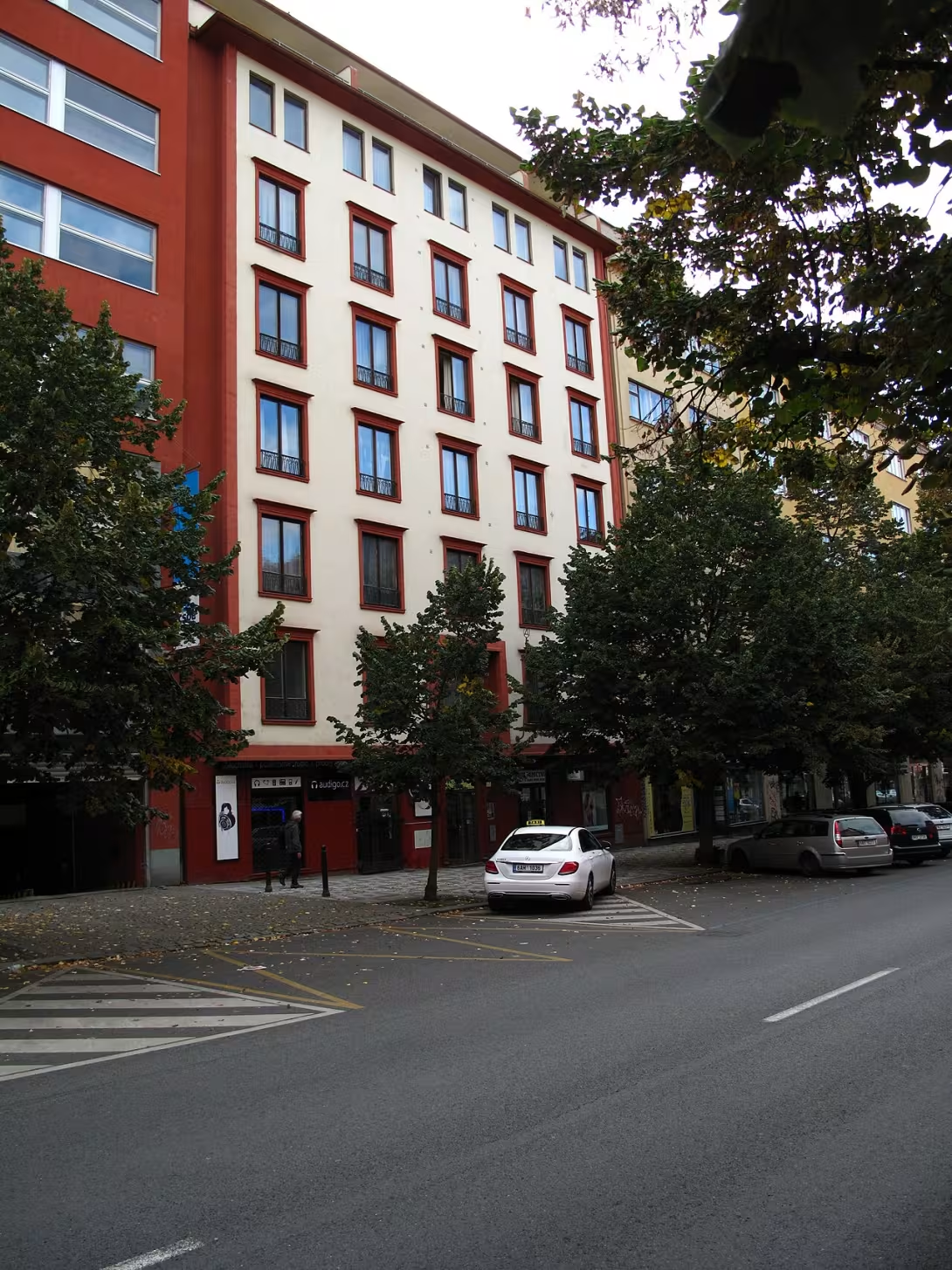
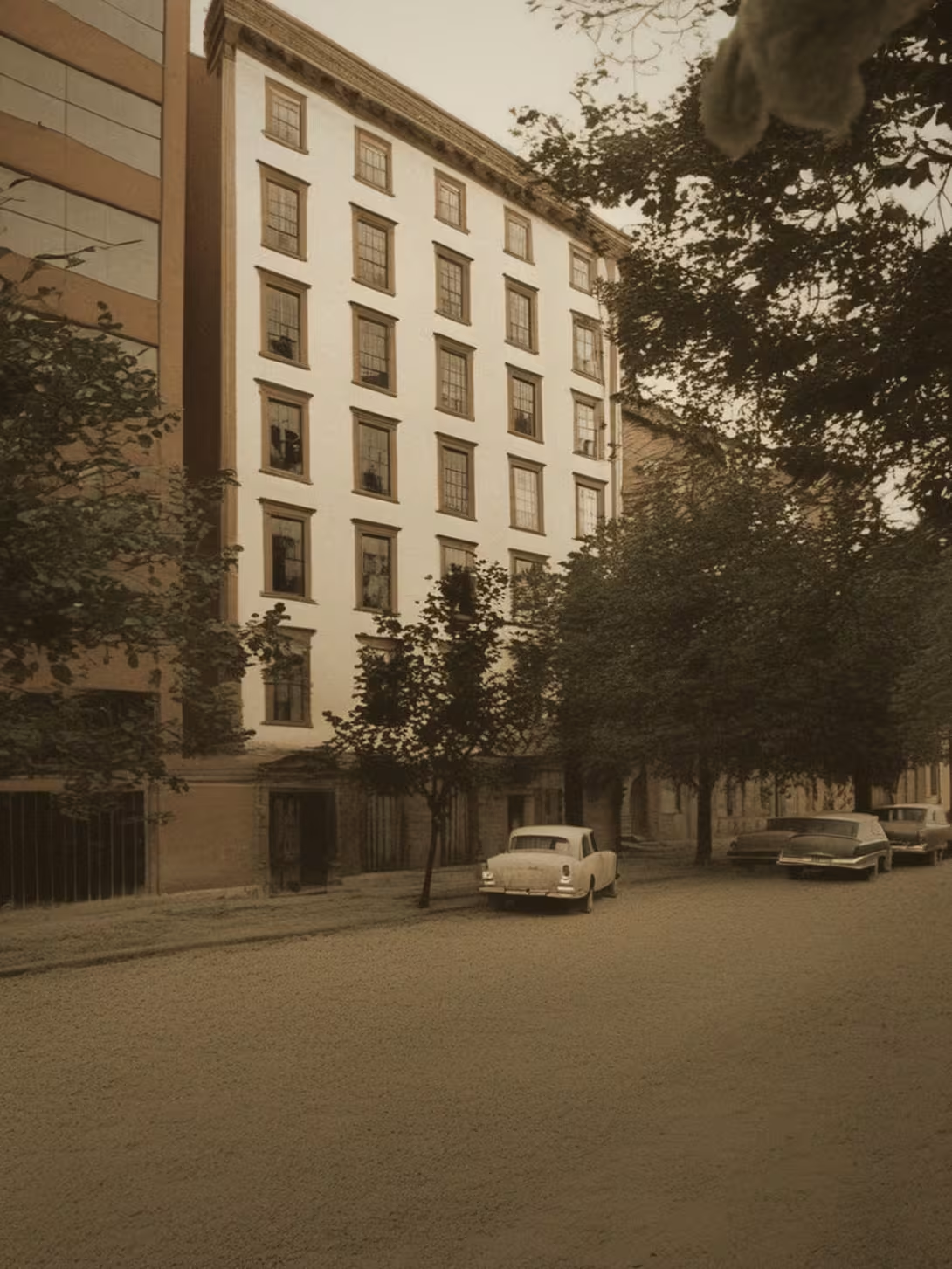
The historical appearance on the left is an AI-generated visualisation and serves as inspiration only.
Architectural development
The original grafted structure was built on a rectangular floor plan with a tripartite layout. During the 20th century, there was reconstruction and extension of the wall extension. The building is grafted from a ball, built on a high-plastered stone suspect with underglass.
Historical events
- 1799
- Position of the first brick house No. 10 in the square.
- 1855
- A fire in Štramberk that destroyed 40 houses and two barns.
Points of interest
- Dům čp. 225 in Štramberk is a historical monument from the first half of the 19th century.
- This blasphemous house was built as part of industrialization and modernization, which affected the architectural development of Štramberka.
- The house is part of the town conservation and was entered in the Central List of Cultural Monuments of the Czech Republic before 1988.
- In the course of the 20th century, the house was reconstructed and expanded by a walled extension, indicating its adaptation to modern needs.
- Today house No. 225 is accessible to visitors who want to know the history and architecture of Štramberk.
Guide
Show guide text
This text was created by artificial intelligence and has not been editorially reviewed. It may contain inaccuracies.
Welcome to the beautiful Štramberk, where history intersects with the present in every corner. Right now, you're standing in front of the house with the number two hundred twenty-five. Stop for a moment, take a breath and just feel the atmosphere of this place. In front of you is a building that may appear modest at first glance, but it is in this modesty that its greatest value lies. It's a house that tells the story of ordinary people, craft and how our city's face has changed over the last two centuries. Look at its total silhouette and feel the calm that radiates from it.
Now let's look together at where this building came from and in what context it came from. This house was built in the first half of the nineteenth century. So imagine Štramberk at the time. The world was beginning to change, a new era was coming, and with it new needs. House number two hundred twenty-five was not built as a representative residence for nobles or wealthy merchants, but as part of the so-called suburban development. At that time, the city was expanding beyond its original center, creating new neighborhoods where people who formed the backbone of local society lived. It is this house that is a typical and authentic example of how living in these peripheral parts of Štramberka almost two stylets ago.
Now pay attention to the architecture itself. As you can see, this is a ground-floor grafted structure. The grafting is a technique that has been dominant in our landscapes for centuries because it has used available materials from surrounding forests. Look at the walls of the house. Feel the texture of the wood and the way the beams are connected. The grafted houses have a certain nature of Wärme and stability that makes them homes in the true sense. It is fascinating to think about how many generations of people have lived in these walls, how many conversations have been heard and how many everyday worries have been addressed here.
When you go around the house, notice one interesting detail that shows the course of time. A walled chamber was added to the original grafted part during the twentieth century. This element is very important because it shows us how the house evolved along with the needs of its owners. While the first half of the nineteenth century was betting on wood, the twentieth century brought new materials and new methods of construction. This combination of wood and masonry is basically a record of technological progress on a small scale. It's proof that architecture is not something static, but a living organism that adapts to time.
You might wonder who designed this house or who lived in it. Unfortunately, the names of specific architects or significant personalities that would be connected to the house have not been preserved in historical records. And that's where the magic of this place lies. This house is not a monument to one famous person, but a monument to anonymity and everyday life. It is a tribute to the unknown builders who have worked with the material with love and precision and the unknown families who have found refuge here. It is a reminder that history is not only made up of great battles and signing contracts, but especially millions of small moments in houses like this.
Now, I'd like to interest you in one interesting thing that gives this house a deeper meaning. You may have noticed that you are in a city conservation. This is not only a beautiful name, but a very strict protection regime. House number two hundred twenty-five is so valuable that it was entered in the Central List of Cultural Monuments of the Czech Republic a year ago a thousand nine hundred eighty eight. But why is this particular house so important? The answer lies in a process called industrialization and modernization.
This blasphemous house was built at a time when Štramberk was beginning to turn into an industrial city. Modernization brought about changes in how people worked and where they lived. The architectural development of the city was influenced by these processes. House number two hundred twenty-five serves today as an important reference point. It helps us understand the transition phase between traditional rural construction and modern urban planning. It is basically a historical document made of wood and stone, which tells us how the social structure of the city changed and how people adapted to the new economic conditions of the nineteenth century.
Think about the way this house went. From its inception in the first half of the nineteenth century, to the era of the boom of industrialization, to its present form of a protected monument. How many times has it been repaired how many layers of paint or paint cover its walls and how many times the atmosphere has changed. The fact that it stands before you today and is part of the memorial reservation is the result of the efforts of many people who understand that even such a modest construction has its irreplaceable value. Without such houses, Štramberk would lose its authenticity and its soul.
Take one last look at the whole building. Feel the contrast between the graft and the wall chamber. Imagine what the house looked like in the winter months, when thick smoke was rising from the chimney, and inside the wooden walls the heat was ruling. And imagine it on the summer days when the shadow of the grafted walls provided refreshment. It is this simplicity and functionality that makes it the real jewel of local architecture.
Now that you've seen this piece of history and let yourself get a little lost in it, I invite you to further explore Štramberka. This house is just one of many pieces of mosaic that form the overall picture of our city. I suggest you continue to walk through the historical reservation, notice other grafted buildings and look for similar details in them that tell stories about the past. Watch how materials change, how the heights of houses change, and how their placement changes in space.
Thank you for letting me take you to this house. I hope you found something in it that interests you, and that this short stop has helped you feel the spirit of Štramberk better. I wish you a pleasant journey, full of new discoveries and inspiration. Say goodbye to house number two hundred twenty-five and meet the other secrets waiting for you in our alleys. See you in the rest of our town.
Tips for visitors
The best time to visit is during bright days when natural light best highlights the details of the historical grafted structure from the first half of the nineteenth century. We recommend a visit at a time when the light is scattered, which underlines the texture of the wood.
It is advisable to have a camera ready to capture the beauty of the building.
Use soft daylight for the best photos to highlight the authenticity of the facade. The best angles for the pictures can be found from the opposite side of the street.
Frequently asked questions
Can the monument be visited?
This is a residential or farm building, not a museum with opening hours. Please view it from public space and respect the owners' privacy. We have no information about access to the interior.
Where is the monument?
Location: Štramberk, Moravskoslezský kraj. The map on this page shows the exact spot.
Why is the monument protected?
It is listed in the Central List of Cultural Monuments of the Czech Republic as a cultural monument (register no. 1000122499).
Businesses nearby
Do you run a restaurant, accommodation, shop, museum, rental, wellness or other visitor service near this monument? Show yourself directly to the people heading to it — this is how they will see you in the app and on the web:
Nearby
🏰 Historic sites (193)
- Museum Shipka 0.2 km
- Bohumir Jaronegy 0.2 km
- Museum of puppets 0.2 km
- Karel Maska 0.2 km
- T. G. Masaryk 0.3 km
- Museum Zdeněka Buriana 0.3 km web
- Leoš Janáček 0.3 km
- Štramberk 0.3 km
- Jan Žižka 0.3 km
- Gallery of folk craft and art 0.3 km web
- UMberg trúba 0.3 km web
- World War II Memorial 0.4 km
- Memory of fallen 0.4 km
- Sv Václav 0.4 km
- Brother Janu Kapkovi 0.4 km
- Alois Jirásek 0.4 km
- Bedřich Smetana 0.5 km
- František Palacky 0.5 km
- Oldřich Bijok 0.6 km
- Hradiště Kotouč 0.7 km
🍽️ Restaurants and dining (362)
- Bistro Bašta 20 0.2 km
- Pizzeria Piccollo 0.2 km
- Municipal pubs 0.2 km
- Urban brewery 0.2 km web
- Refreshments under Trúbou 0.2 km
- Bar Ucho 0.3 km
- Hrstka kafé 0.3 km
- Chat Doctor Hrsts 0.3 km
- U Mámy 1.0 km
- Palárna 1.1 km Railway station 167
- Maestro 1.1 km Railway station 820 + 420603830262 web
- Restaurant On the playground Bary 1.5 km
- U Matesa 1.5 km
- Hans 1.7 km
- Pizza Kopr 1.7 km + 420 737 056 950 web
- Restaurant Under Kashtany 1.8 km
- Restaurant On the Sun 1.8 km Zdeňka Buriana 1350
- U Bridge 1.8 km
- Harlekýn 1.9 km
- Oáza 1.9 km
🏨 Accommodation (113)
- Chaloupka under the square 0.1 km Lower Bastion 254
- Accommodation U Tights 0.1 km Upper Bastion 309
- Josef Petráš 0.1 km Street 242
- Hotel Štramberk 0.2 km Square 8
- Šipka 0.2 km
- Old school 0.3 km
- GONG 0.3 km
- Accommodation V Subpracy 0.3 km Lower Bastion 366
- Hotel Roubenka 0.4 km Lower 327
- Hostel U Matesa 1.5 km
- Recreation Centre U Kateřina 1.7 km
- Guesthouse under White Horou 2.0 km web
- Hotel Stadion 2.0 km
- Hotel Olympia 2.1 km
- Tatra Hotel 2.1 km
- Interhotel Tatra 2.1 km + 420 556 872 111 web
- Villa 603 3.8 km
- Guesthouse Borovec 5.5 km + 420604525200 web
- U Railway station 5.6 km
- Lower Court 5.6 km web
🚲 Rentals and sport (77)
- Swimming pool Libotin 1.7 km
- Shitavanc 2.2 km
- Cycloart 2.2 km
- Indoor swimming pool 2.5 km
- Sport Hall SO 2.5 km
- Sportisimo 2.6 km
- Tesco Kopřivice 2.8 km web
- ZFC Vlčovice - Munich 5.0 km
- Fit centrum 5.3 km
- Sport hala 5.4 km
- Gyzna Verovice 5.5 km
- Urban sports hala 5.8 km
- Koupak in the File 5.8 km + 420 737 594 590 web
- Children's Pool 5.8 km
- TopOutdoor 5.9 km + 420 556 723 138 web
- OutdoorKWAK 5.9 km + 420 605 172 557 web
- Elkol 6.0 km + 420 603 804 846 web
- School Basketball Hala 6.0 km
- Gym TJ Sokol Příbor 6.0 km
- Herna table tennis 6.0 km
🥾 Hiking and nature (295)
- Šipka 0.2 km
- 475 0.5 km
- Outlook for Štramberk 0.5 km
- Cave 0.5 km
- Study Peace 0.6 km
- Stone Labyrinth 0.6 km
- Botanic Garden and arboretum 0.6 km
- Stone oval with 12 armchairs 0.7 km
- Rotouč 0.7 km
- Kocvinek 0.7 km
- White Hora 0.8 km
- View White Hora 0.8 km
- Ván Kamen 0.9 km
- _ 0.9 km
- Markétin spring 1.1 km
- Study on Lisinska 1.3 km
- Study U Water 1.4 km
- Železile spring 1.7 km
- ŠUTyr well 2.0 km
- Belá 2.0 km
Accommodation nearby
Themed route
1. The entrance courtyard (courtyard): The first meeting with the architecture of the building and its historic atmosphere. 2. Interior of House No. 225 (Exposition): A tour of rooms that reveal the way of life and history of this place. 3. Garden at the house (park): A quiet place to relax and observe the details of the facade from the outside.
Seasonal recommendations
In the spring Štramberk comes to life thanks to the first flowers and fresh green that surrounds historical buildings. The light is soft in this period and ideal for capturing the details of the facade of house No. 225. I recommend a visit to the morning hours, where the air is the cleanest and people are still not camped out in massages. Dress in layered clothes, because the morning cold can be tight, while the afternoon will be pleasant.
In the summer months the town brings intense sunlight and lively, lively atmosphere. Historic alleys are in the main summer season full of visitors, which adds a place of dynamism but can limit the peaceful observation of architecture. For the best experience come right after opening to enjoy the memory in peace before the biggest rush. Don't forget light summer clothes and plenty of fluids because the sun in narrow alleys can be very strong.
The Autumn Štramberk offers a nostalgic mood with warm tones of golden leaves and morning fog that are lazy rolling around the houses. The atmosphere becomes quieter and time flows slower, which is ideal for exploring historical details without rush. It is advisable to carry with you stronger shoes, because the damp paths can be slippery. The best time to visit is the lunch period when the light is most stable.
In winter the monument is covered in silence and often also in a snow blanket that highlights the shapes of old roofs. Short days and fencing create a cozy, yet mysterious mood that is perfectly complementary to the historical character of the house. In Advent Time, there is a special charm in the town, but count on shorter opening times. The need is warm and waterproof clothes as well as high-quality shoes to move in demanding terrain.
Visualizations and artistic views


The visualisations are generated by artificial intelligence and serve as inspiration.
Photos from the area
Real photos taken near the monument


Zdroj a licence jsou uvedeny u každého snímku.
Tips from visitors
No tips yet. Be the first!
Log in and add your tip.
Sources and literature
Photos: Kankovaa / CC BY-SA 4.0 — Wikimedia Commons. The author and licence also appear when you hover over the image.
Faktickým podkladem tohoto textu byl článek na Wikipedii, jehož autory jsou přispěvatelé Wikipedie. Článek je dostupný pod licencí CC BY-SA 4.0.
Location on the map
More monuments – Štramberk
Show all in the municipality
Příběhy a pověsti
Legendy, pověsti a příběhy spjaté s touto památkou
Fotografie návštěvníků
Zatím žádné fotografie. Buďte první, kdo přidá fotografii z návštěvy!
Log in a přidejte svou fotografii nebo hodnoťte.
Za ověřenou návštěvu v aplikaci získáte víc bodů — poznáme podle GPS, že jste na místě.
Reviews and comments