



Dům čp. 313 House
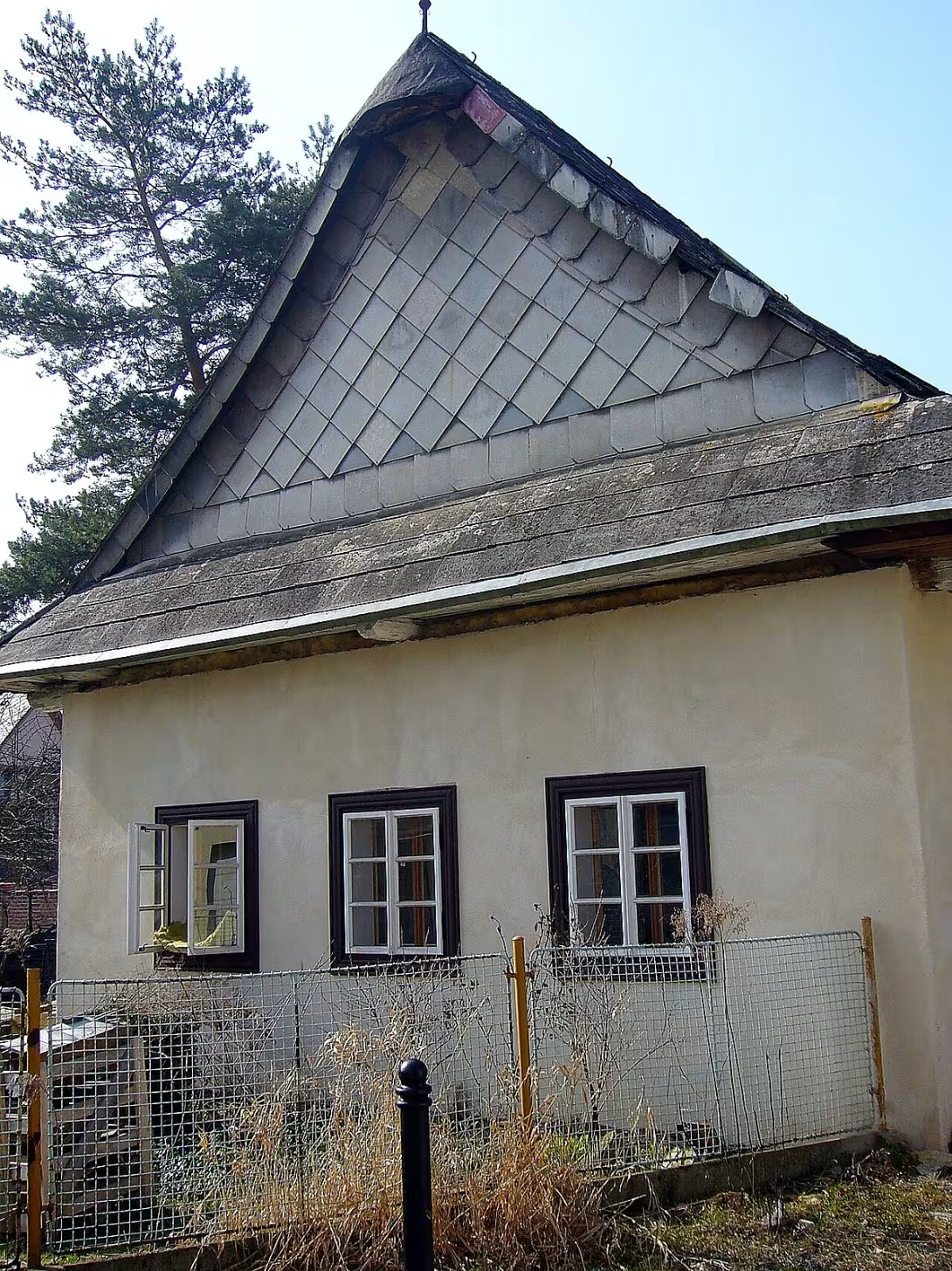
Dům čp. 313 in Ústí nad Orlicí is a preserved example of rural Baroque architecture from the second half of the eighteenth century. Located on Lukes Street and since 2002 it has been protected as a cultural monument. Its importance lies in a well-preserved chamber arrangement, sandstone threshold and internal availability that reflects the life of the rural family of that time. The house also combines the personality of an important Czech music artist.
The construction was probably created in the second half of the eighteenth century as a residential and economic building. At that time, rural architecture developed with regard to the practicality and use of local materials. Baroque influences have also occurred in rural houses, albeit less significantly than in urban buildings. Dům čp. 313 typically represents the rural building of the time, serving as a dwelling, warehouse and economic building.
It is a ground-floor grafted construction with a three-part chamber arrangement. Orientation to Lukes Street is a shaky side, which is typical of rural houses. The saddle roof is covered with shingles or wooden roofing and is supplemented by a small conical cabin, a rudder and a formwork shield. The interior is divided into a skylight, black kitchen and chamber. The skyscraper has a topside ceiling with beams and lacquered plates, while the black kitchen is decorated with an oblique vaulted vault and a pipe chimney. The chamber is elevated to the half-floor, which allowed better use of space. The ladder staircase leads from the chamber to the attic, which served as a storage space or as a summer sleeping room.
The threshold is built from large sandstone boards, which is a rare and characteristic feature for the region. The entrance door is cassette, double wing and located in a wooden frame with a skylight. A small barn is added to the chamber, which was used to store livestock. These elements point to the practicality and adaptation of the construction to rural life.
In the house was born an important Czech supporting singer Jan Ludevít Lukes, who was among the leading interpreters of his time. Its connection to this construction adds another historical value to the building.
In 2002 the house was declared a cultural monument. In 2010, a correction was made for the financial support of the Ministry of Culture programme for the restoration of cultural monuments. The aim was to preserve the original character of the building and ensure its stability for future generations.
Today House No. 313 is open to the public and represents a rare example of preserved rural architecture. The visit allows you to look into the life of the 18th century rural family and understand how the buildings were adapted to practical needs. The house is part of the cultural heritage Ústí nad Orlicí, which offers other interesting monuments. For lovers of history and architecture it is a valuable source of information about the region.
Then and now
Drag the slider to compare how the landmark may have looked when it was built with the view today.
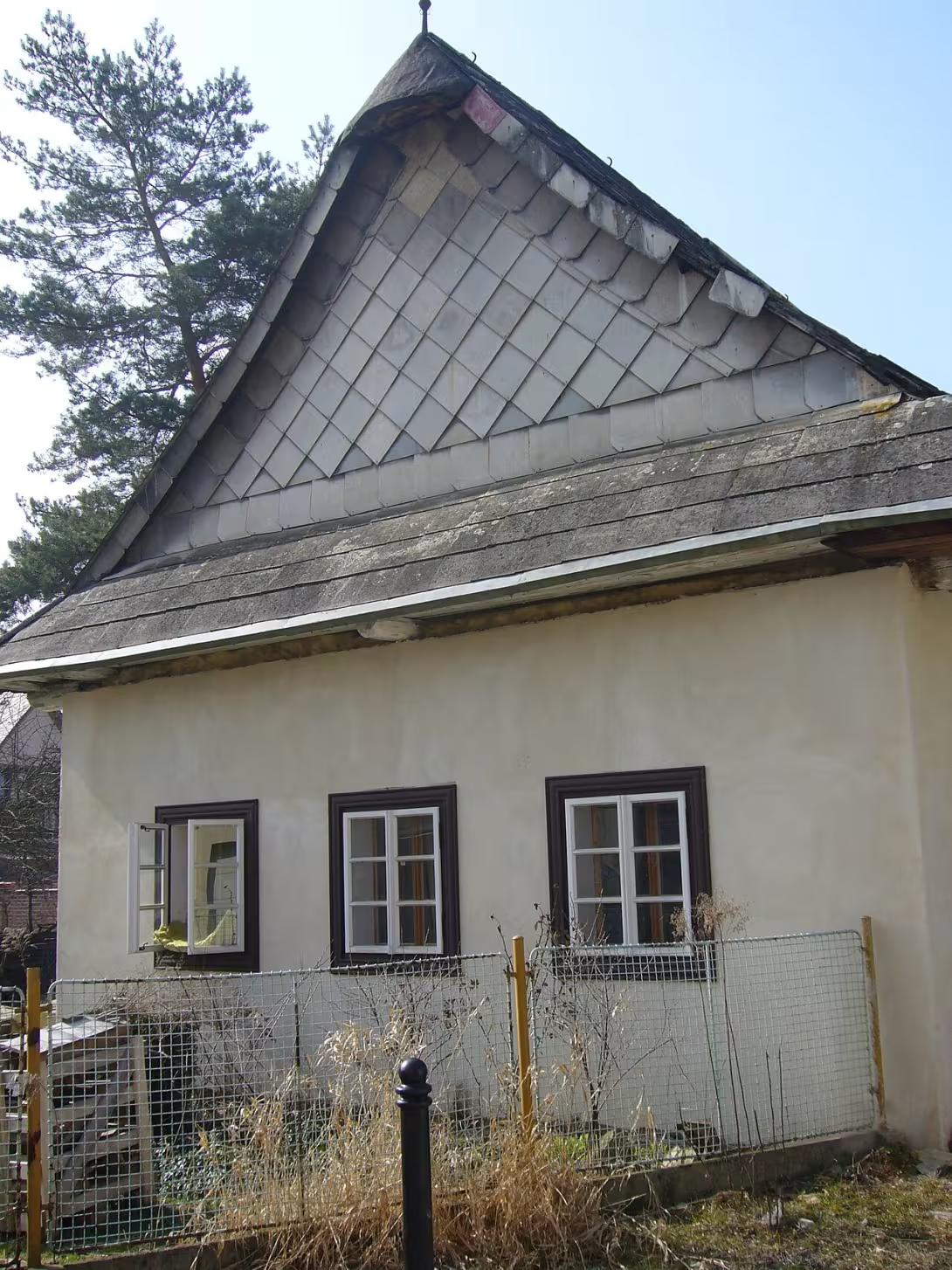

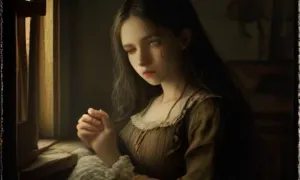
The historical appearance on the left is an AI-generated visualisation and serves as inspiration only.
Historical milestones
- 1750
- The creation of a house as a rural residential and economic building.
- 2002
- Declaration for the cultural monument of the Czech Republic.
- 2010
- Financed repair with support from the Ministry of Culture of the Czech Republic.
Architectural development
The original building from the second half of the 18th century is grafted, with typical chamber layout. In the 20th century there were maintenance and repairs that preserved the original character. The materials include wood for grafted construction, sandstone for threshold and shield formwork. The roof is covered with shingles or wooden roofing. A reconstruction was carried out in 2010 in order to preserve the historical nature and ensure the stability of the construction.
Historical events
- 1750
- Built as a country house in the second half of the 18th century, probably as a residential and economic building for the local family.
- 2002
- Declared by the Ministry of Culture of the Czech Republic as a cultural monument to the Czech Republic.
- 2010
- Repair with financial support of the Ministry of Culture programme for the restoration of cultural monuments.
Points of interest
- Dům čp. 313 is a preserved example of rural Baroque architecture from the second half of the eighteenth century.
- The building has a well-preserved chamber arrangement with a skylight, black kitchen and chamber raised to the half-floor.
- The interior layout reflects the life of the rural family of that time, including the use of the attic as a storage space or a summer sleeping place.
- The threshold is built from large sandstone boards, which is a rare element for the region.
- In the house was born an important Czech supporting singer Jan Ludevít Lukes.
Guide
Show guide text
This text was created by artificial intelligence and has not been editorially reviewed. It may contain inaccuracies.
Welcome to the beautiful city of Ústí nad Orlicí. Right now, thanks to your headphones, we're taking you on a journey through time. You're standing right in front of one of the rarest treasures in this place, in front of the house bearing the number three hundred and thirty-three. Before we go into his secrets, stop for a moment and just watch. Feel the atmosphere radiating around you. It's not just an ordinary wooden building. He's a living witness to history who's been standing here watching the changing world for over two and a half centuries. At first glance, you are likely to be interested in the warm, rustic beauty and the way this house is humbly, yet with dignity, entered into the current environment.
But to really understand why this house is so special, we need to go back deep into the past together. Imagine the second half of the eighteenth century. The world around us was completely different, the rhythm of life was determined by sunrise and sunsets and field work. It was the year of the thousand seven hundred and fifty that this house was created. It was not built as a luxury residence for nobility, but as a practical, rural residential and economic building. It was a home for a family that needed to have everything under its control - both a place to sleep and a place to store crops and equipment. So this house is the embodiment of the life of ordinary people at the time, their diligence and their relation to the soil.
Now pay attention to what you see right in front of you. Look at these massive wooden walls. It is a grafted construction, a technique that requires great skill and a sense of material. These beams are not just an element, they're stories carved into wood. Notice how the whole building is oriented. Her gutter side is heading straight for Lukes Street. Now, if you raise your eyes higher, you'll see the roof. It has a classic saddle shape, which is typical of the rural architecture of this period. And if you look very carefully at the very top of the roof, you can see a small, conical element, a little cab that gives the whole house a fine, almost playful detail. And look at the shield that crowns the house. It is boarded, which is another beautiful example of how the artisans could work with the wood to create not only a functional but also an aesthetically impressive structure.
Even if you're standing outside now, let me take you to my fantasy world and show you what's inside. The architecture of this house is not random. The entire interior is divided into so-called three-piece chamber layout. This means that space was very logically and strictly divided into different parts for different needs. Imagine the main room, the skylight. That was the heart of the house where everything important was done. If you would have entered, you would have seen a fascinating tilting ceiling, which was a very practical solution at the time. There was a black kitchen right next to the closet. Why black? Because at the time, the ventilation in the kitchen didn't work out the way we do today. The smoke from the fire pit settled on the walls and ceiling, creating the characteristic, darker atmosphere. And it is here that you can see one of the most beautiful elements - the Valen Vault, which gives the room an unusual shape and beautifully spreads the heat. And finally there was a chamber that was very important to the economy. It was raised up to the half-floor, which meant that people had much more storage space at their disposal than you could at first glance admit. This use of space was absolutely crucial for the survival of the rural family throughout the year.
A person named Jan Ludevít Lukes is closely connected to this place and to the surrounding street. Although we do not have detailed records of his direct relation to the construction itself, his name in this area was of importance and helped to match the identity of this place. The history of this house is not only about wood and stone, but about the people who lived here, worked and dreamed.
Perhaps now you're interested in one very interesting thing that makes this house a real one. Most of these grafted buildings from the second half of the eighteenth century have long since died. Many of them were either converted into more modern brick houses, or simply went into oblivion over time. However, this house is a rare, preserved example of rural Baroque architecture. It's like a little time capsule that allows us to look into reality over 200 years ago. It is proof that even simple rural construction can have its soul and its high artistic value.
This value was officially recognised in the year two thousand and two when the house was declared a cultural monument of the Czech Republic. That gave him new protection and dignity. And in order for this treasure to continue to be presented beautifully, in the year two thousand and ten it went through a thorough repair. This reconstruction was perhaps thanks to the great support of the Ministry of Culture, which shows us how much we value these remains of our history as a society.
Now that you have recognized the face of this house and understood its inner and outer world, I suggest you stop for a while. Don't be hasty. Just look at the structure of the wood, the roof lines and try to imagine the hundreds of days this house has lived. Every crack in the wood, every detail of the formatted shield has its meaning.
Thank you for joining us on this short journey through history. We hope that this view of the house number three hundred thirty-three has brought you new views and that you will enjoy the rest of your walk on Ústí nad Orlicí. We wish you a beautiful and inspiring day.
Tips for visitors
The ideal period for visiting is in spring or autumn, when there is pleasant weather outside and fewer tourists. In summer avoid hot noon hours, when the interior of the grafted house can be too hot. Winter moons offer a quiet atmosphere, but some outdoor activities in the area may be limited.
Dům čp. 313 is a typical example of 18th century rural architecture, which shows rural life in the past. His visit will allow you to know the historical craft and way of life of the ancestors. Besides, it's a great opportunity to explore the surrounding nature of the Orlich Mountains.
The house is located in the centre of Ústí nad Orlicí, so it is easily accessible by car or public transport. The location is traceable in navigation.
It is recommended to check the connection in the transport search engine.
When visiting, wear comfortable shoes because you will be walking through the historical part of the city and surrounding nature. The interior of the house can be cold, so you will bring a light sweater or jacket. If you are planning a trip to the Orlické Mountains, don't forget the appropriate clothes according to the weather and plenty of water.
If you are interested in photography, bring a battery or an external energy source, because there is often less lighting in historical buildings.
The best time to photograph the interior of the house is in the morning when the light is pleasant and natural. The outdoor facade of the house is the most beautiful at sunset, when the lighting highlights the details of the wooden structure. If you want to photograph the surrounding nature, go to the peaks of the Orlické Mountains early in the morning or in the evening when the light is softer.
When shooting historical objects, avoid strong shading, which can distort colors. If you are shooting in the interior, ask for permission because some parts can be protected.
There are several interesting places around the house No. 313 that are worth visiting. For the first stop you can choose the Church of the Assumption of the Virgin Mary, which is just a few minutes' walk away. Another interesting thing is the castle Ústí nad Orlicí, which is about 10 minutes away by car or 30 minutes by walking. For nature lovers are the ideal Eagle Mountains where you can enjoy hiking or walking forests.
All these locations are available within 30 minutes of the house No. 313, so you can plan a day trip.
For families with children, visiting the house No. 313 is a great opportunity to learn history. Children can look at typical rural architecture and find out how people lived centuries ago. In the Orlické Mountains they will find plenty of possibilities for movement activities - from simple walks to hiking trails. In the Church of the Assumption of the Virgin Mary, children can explore historical interiors and learn more about the religious heritage of the region.
Prepare for children some small reward for attention, such as a notebook for painting historical objects or finding differences between photographs of old and new houses. In the Orlich Mountains, children can try collecting forest fruits or bird watching.
Frequently asked questions
Can the monument be visited?
This is a residential or farm building, not a museum with opening hours. Please view it from public space and respect the owners' privacy. We have no information about access to the interior.
Where is the monument?
Location: Ústí nad Orlicí, Pardubický kraj. The map on this page shows the exact spot.
Why is the monument protected?
It is listed in the Central List of Cultural Monuments of the Czech Republic as a cultural monument (register no. 1000472049).
Businesses nearby
Do you run a restaurant, accommodation, shop, museum, rental, wellness or other visitor service near this monument? Show yourself directly to the people heading to it — this is how they will see you in the app and on the web:
Events nearby
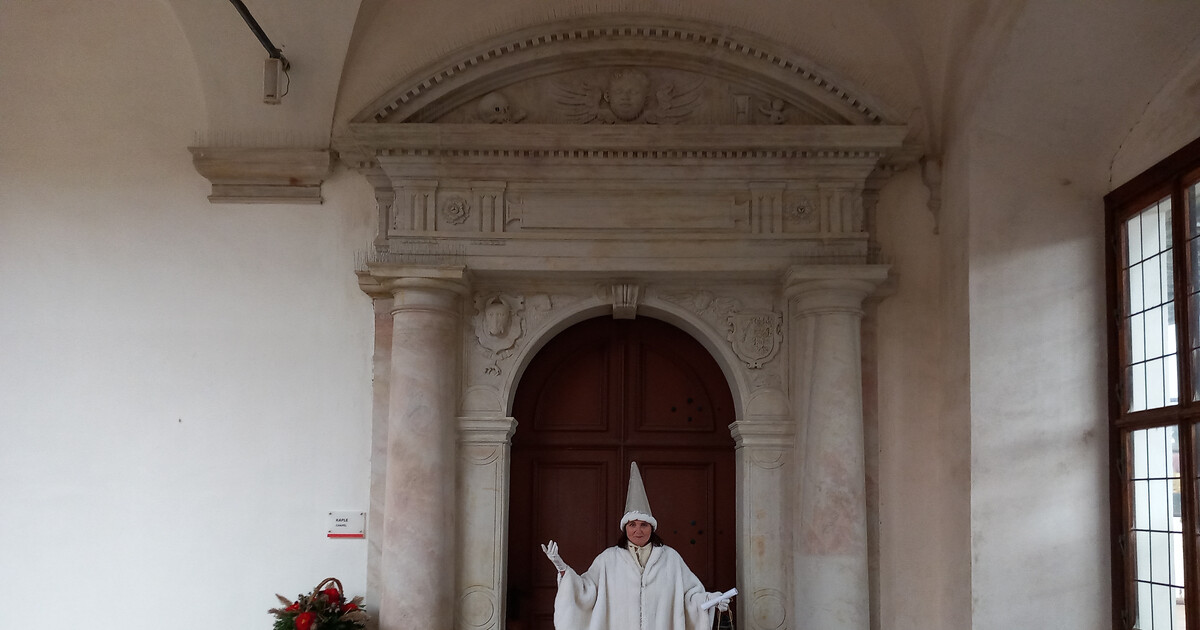
Zdroj akcí: otevřená data měst a obcí ČR (Národní katalog otevřených dat) a kalendář akcí Národního památkového ústavu.
Nearby
- Historicke město s řadou kulturních památek, jako je kostel Nanebevzetí Panny Marie nebo zámek Ústí nad Orlicí, které jsou vzdáleny jen několik kilometrů od domu.
- Přírodní krajina s lesy a vrcholy, která obklopuje město a nabízí možnosti pro turistiku a přírodní výlety.
Accommodation nearby
Themed route
The daily tourist route around House No. 313 in Ústí nad Orlicí * * * *
1. Dům čp. 313 - historical object This is an interesting 19th-century building that retains an authentic architectural style. It is interesting for its original interiors and historical essence that reflects local cultural traditions.
2. Church of the Assumption of the Virgin Mary - cultural monument Near the house stands a Baroque church with rich decoration and historical interior. It is an important place for the local religious community and offers a beautiful architectural view.
3. Castle Ústí nad Orlicí - historical castle There is a castle about 2 km from the house with a large area. It is interesting for its historical equipment and exhibitions that represent regional history.
4. Tanks and surroundings of the house No. 313 - natural and cultural surroundings There is a small park or garden area around the house where you can relax and admire the surrounding landscape. It is ideal for a short walk and knowledge of the surroundings without leaving the centre.
Recommended routes: - Church → Castle (about 3 km, 15-20 min walk) - Castle → Tanks of House No. 313 (approx. 2 km back, 10-15 min walk)
Length of the route: approx. 5 km, total time approx. 2-3 hours.
Seasonal recommendations
Spring
At this time, the life of nature manifests itself - the bloom of trees and the blooming of the first flowers creates a pleasant, but sometimes slightly moist atmosphere. In the morning, it is advisable to visit a memory where fewer visitors and the light of the sun are still warm. Suitable clothes should be light but ready for a more sudden change of weather, for example for a short rainy season. It is recommended to avoid late afternoon hours when crowds may increase.
Summer
In the main summer season there are the most visitors, therefore it is best to come in the morning when the temperature is pleasant and the crowds are not yet so dense. The atmosphere is warm and sunny, but in some times it can be very hot. Suitable clothes should be light and worn to minimise the feeling of heat. The monument is open all day, but in the hottest hours it is possible that some parts will be less visited.
Autumn
At this time nature is rich in colour, leaves start to change and create a pleasant but sometimes colder atmosphere. It is convenient to visit a memory in the morning or afternoon when there are fewer visitors. Clothes should be warmer than in the summer, but at the same time light to adjust to variable weather. It is also recommended to take light hot water with you to avoid sudden changes in temperature.
Winter
In winter the atmosphere is calm and quiet, but in some parts it can be cold and snow covers the landscape. It is convenient to visit a monument when the opening time is shorter, for example in the morning. Clothes should be warm and laminated to avoid cooling. It is also convenient to bring warm drinks to help keep the heat up. The atmosphere is often magical thanks to lights and snow, but some parts of the monument may be less accessible.
Visualizations and artistic views


The visualisations are generated by artificial intelligence and serve as inspiration.
Photos from the area
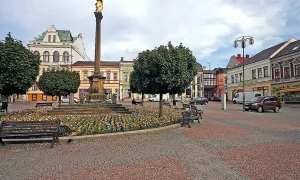
Real photos taken near the monument


Zdroj a licence jsou uvedeny u každého snímku.
Tips from visitors
No tips yet. Be the first!
Log in and add your tip.
Sources and literature
Photos: NGO Rozrazil (Czech Republic) — collection of authors; picture taken during a photosession organised by Czech NGO Rozraz / CC BY-SA 3.0 — Wikimedia Commons. The author and licence also appear when you hover over the image.
Faktickým podkladem tohoto textu byl článek na Wikipedii, jehož autory jsou přispěvatelé Wikipedie. Článek je dostupný pod licencí CC BY-SA 4.0.
Location on the map



Příběhy a pověsti
Legendy, pověsti a příběhy spjaté s touto památkou
Fotografie návštěvníků
Zatím žádné fotografie. Buďte první, kdo přidá fotografii z návštěvy!
Log in a přidejte svou fotografii nebo hodnoťte.
Za ověřenou návštěvu v aplikaci získáte víc bodů — poznáme podle GPS, že jste na místě.
Reviews and comments