






Roškotovo divadlo Theatre
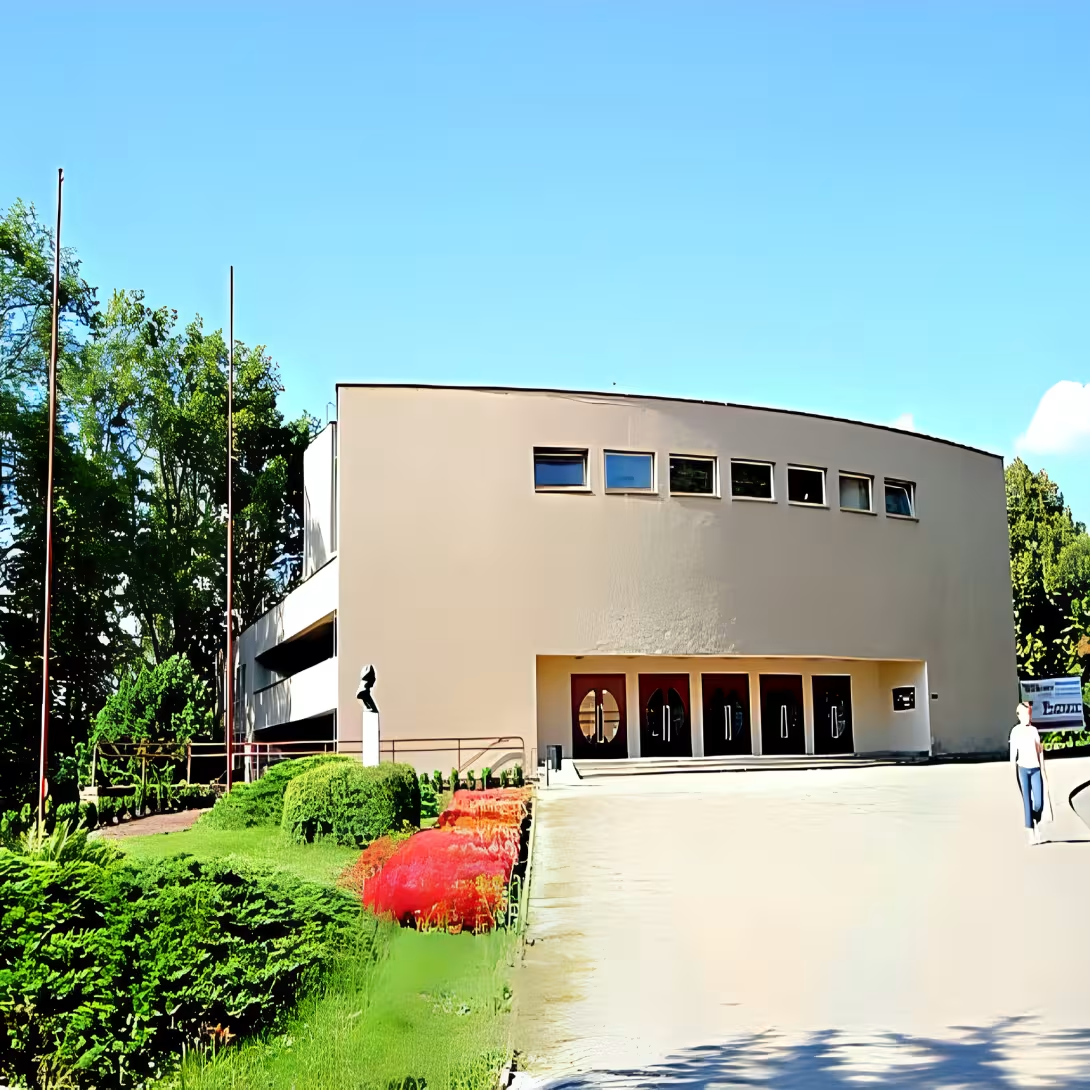
Roškotovo divadlo in Ústí nad Orlicí is not just an ordinary building. This is the work of Kamil Roškot, an architect whom Europe knew as "Czech Le Corbusier" and who became famous for the generous projects of theatres, exhibition pavilions and other monumental buildings. The theatre, located at the address Husova 1062, was built in 1935-1936 and is today protected as a national cultural monument.
The beginnings of theatrical life in Ústí date back to 1836, when there was a theatre in addition to traditional singing and music. For a long time, however, she had a modest background - it was played in a pharmacy house, in a pub or in temporary rooms. The vision of her own theatre building remained a long dream. Only in 1896, when Vicena was founded, the situation began to change. In June 1919 Vicena initiated the formation of the Cooperative for the construction of a theatre building whose main task was to collect funds. Ten years later, when the cooperative had free land at the courthouse, negotiations began on the architectural competition. At this point, Professor Josef Cibulka, an important art historian and an esteemed native who recommended a competition between local builder Jaroslav Radechovský and Prague architect Kamil Roškota. Onion knew Roškot from the time they worked together to maintain the tomb of the Czech Kings in St. Vitus Cathedral.
The jury clearly preferred architect Roškot. Although expert members of the jury - architect Josef Gočár, Antonín Ausobský and theorist Zdeněk Wirth - clearly voted in favour of the Roškot proposal, long negotiations followed. Finally, the cooperative approved its revised project on 4 November 1934. The foundation stone was laid on July 5, 1935 and a year later, on September 26, 1936, the theatre was held with a ceremonial opening. It was prepared to celebrate the century of amateur theatre in Ústí and the 40th anniversary of the founding of Vicena. As the beginning of a new era, Smetana's secret was mentioned.
Architectural theatre is a brilliant composition of elementary geometric forms. The wedge cubus of the auditorium ends with the excess mass of the rope on the ground plan. This mass is being poured into the lower prism section with the party ships. The main entrance is elegantly embedded in a nice convex facade, the building is harmoniously adapted to a slightly sloping terrain. He tried out the principles of this composition earlier when he designed the Imperial Theatre for the industrial complex of the Škoda plants in Tehran, but it was the Ústí Theatre that he was able to design as a small building with monumental effect. She was nominated for the 10th century architecture competition in the category of 20th century buildings.
During the years the theatre underwent necessary reconstruction. In 1978, for security reasons, electrical installations were completely reconstructed, new seats were laid and new lighting was installed for the author of the academic sculptor Alexia Appla, which came from Ústí. On the ground floor by the locker room, the muse sculpture was placed by sculptor Michal Tomšej. Further reconstruction took place from autumn 1981 to spring 1982. All adjustments were made in such a way as not to disturb the original architecture.
The theatre stands as a half-century: the long tradition of amateur performances and the triumph of modern functionalist architecture. The visit promises not only a performance but also a meeting with the work of one of the largest Czech architects.
Then and now
Drag the slider to compare how the landmark may have looked when it was built with the view today.
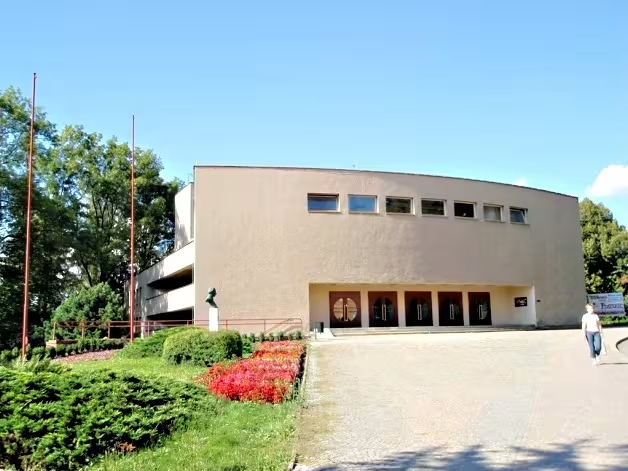

The historical appearance on the left is an AI-generated visualisation and serves as inspiration only.
Historical milestones
- 1896
- The establishment of the amateur association Vicena, which became the initiator of the theatre construction.
- 1919
- The establishment of the Cooperative for the construction of a theatre building, which opened a collection to finance the construction.
- 1934
- Approval of the Roškot design of the theatre by the cooperative after long negotiations with the professional jury.
- 1936
- The ceremonial opening of the theatre with the introduction of the opera * Secrets * by
Architectural development
The theatre was built in 1935-1936 according to Roškot's design, which was based on his previous studies for the Imperial Theatre in Tehran. The main materials are concrete and steel, the facades are decorated with horizontal belts of logbooks. The reconstruction took place in 1978, in which electrical installations, sound and lighting technology were modernised, without interference with the original architecture. The interior was supplemented with sculptures (e.g. muse sculpture by Michal Tomšej).
Historical events
The establishment of the amateur association Vicena in 1896, which initiated the construction of the theatre.
Ceremonial opening of the theatre on September 26, 1936 at the 100th anniversary of the amateur theatre in Ústí nad Orlicí.
First reconstruction in the years 1978- 1979 due to modernization of technical equipment and safety regulations.
Points of interest
- The theatre was built in 1935-1936 according to the design of architect Kamil Roškot, known as "Czech Le Corbusier.".
- The building was used to celebrate the century of amateur theatre in Ústí nad Orlicí and the 40th anniversary of the establishment of the amateur association Vicena.
- The theatre was nominated in the competition * Ten centuries of architecture * in the category of buildings of the 20th century.
- In 1978 the reconstruction took place with new wiring, seats and lighting from academic sculptor Alexia Appla from Ústí.
Guide
This guide is narrated by a synthetic voice generated by artificial intelligence.
Show guide text
This text was created by artificial intelligence and has not been editorially reviewed. It may contain inaccuracies.
Welcome to the Rock Theater in Ústí nad Orlicí!
You are standing in front of one of the most prominent works of Czech functionalist architect Kamil Roškot, a construction which, with its geometric purity and monumental impression, emerges from the surroundings as if it had been cut out of a modern urban dream. In front of you is a small but incredibly expressive building from 1935-1936, which still serves its enrichment culture. Notice how its clean lines and smooth surfaces form harmoniously with the surrounding space - the theatre as if it did not want to be torn away from it, but it dialogues with it. It is a building that looks at the city and the city at it - and that is what makes it so unique.
Let's look a little deeper into its origin. This pearl of modern architecture was created as a result of a long dream and effort of local supporters. Already in 1896 there was an amateur association Vicena, which became the root of what you see today. After World War I, it developed the Cooperative for the construction of a theatre building, which started a collection to finance this dream building. It was only after decades of negotiations and persuading the expert jury in 1934 that Kamil Roškot - an architect who became the Czech equivalent of the famous Le Corbusier. His proposal was approved and turned into reality in a short time.
The theatre was ceremoniously opened in 1936 by the performance of the opera * Secrets * by Bedřich Smetana. This event was of double importance - it celebrated the 100th anniversary of the amateur theatre in Ústí nad Orlicí and at the same time the 40th anniversary of the foundation of Vicena. Roškotovo divadlo is not only a construction, but also a symbol of local cultural life and its long-standing efforts.
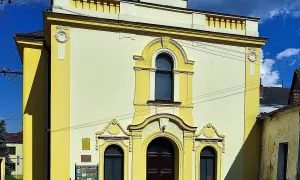
Now pay attention to the architecture itself. There's a construction in front of you that proves that modern design doesn't have to be cold and soulless. On the contrary, the Roškot was able to combine functionality with artistic value. Look at the facade - its pure geometric shapes and smooth surfaces are typical of functionalism, but at the same time you will find fine details that make the construction more distinctive. Note how windows and inputs are designed to make the theatre look like a whole, but at the same time that each part fulfils its specific function. That's the ingenuity that makes Roschutz's work so fascinating.
Let's look at some key personalities associated with this place. Among them is the architect Kamil Roškot, whose name is associated with many important buildings throughout the Republic. His theatre in Ústí nad Orlicí, however, is one of those that best illustrates his approach to architecture - a combination of modern techniques with human scale. Other important personalities are Josef Cibulka and Jaroslav Radechovský, who participated in the implementation of this project and its cultural life.
Now let's look at something that makes this building even more interesting. Roškotovo divadlo was built as a call for modernisation and development of cultural life in the region. Its architecture is such that it always seems to be up-to-date - despite more than 80 years since its inception. The first major reconstruction took place only in 1978 when the theatre was modernized and prepared for the next decade. And although much has changed in it since then, its foundation - with the Roškov vision - remains unchanged.
The interesting thing is that the theatre was originally designed as part of a wider cultural complex. The school planned to join another building, such as a cinema or club. Unfortunately, these plans have not been implemented, but the theatre itself is such a strong construction that it has become an icon of the city and region.
There is a national cultural monument before you, which is not only an important part of the history of architecture, but also a living place where dozens of cultural events take place every year. From theatre performances to concerts, from movie evenings to exhibitions - this theatre is the heart of the cultural life of Ústí nad Orlicí.
If you want to look inside, don't hesitate. Behind these clean lines and smooth surfaces is a world of theatre where artists and viewers meet, where emotions and memories are born. Whether you are here as a visitor or as a participant in one of the performances, you will be able to feel the unique atmosphere that Roškotovo divadlo creates.
Before leaving, see his facade again and note how the building is projected into the surrounding area. Roškotovo divadlo is not just a building - it's a place that tells the story of a dream, an effort and a love of culture. Whether you get here by accident or on purpose, I'm sure you'll take something from this place that will accompany you.
Thank you for stopping by this important work. If you have the chance, visit him again - whether as an audience or just as an architect lover. Roškotovo divadlo awaits you with open doors and full rooms. When I see you!
Tips for visitors
{'text': 'The best time to visit the Roskot Theatre is in the summer months, especially in June to September, when the outdoor atmosphere is pleasant and the theatre is often open for tours. Cultural events are also often held in these months, which can make the visit even more interesting. If you prefer a quieter environment, go to the theatre on spring or autumn days when there are fewer tourists and you can enjoy the tour in peace.'}
{'text': 'The theatre is available by car and public transport. If you arrive by car, it is recommended to find a parking lot near Husova Square, where the theatre is only a short walk away. If you travel by bus or train, stops and stations are close to the city centre, from where you can easily walk. The current connection and departure times can be found in the transport search engine.'}
{'text': 'When visiting, wear comfortable shoes because the tour of the theatre includes the outside part of the building. It is also convenient to take a map or mobile navigation to make it easy to navigate around. If you are planning to take pictures, do not forget enough memory or external disk because the theatre architecture offers many interesting details. It is also appropriate to wear sunglasses and a hat if it is sunny.'}
{'text': 'The best places for photography are especially the facade of the theatre and its inner spaces, which are characteristic of the functionalist style. For quality images is ideal light in morning or afternoon hours when the sun is not directly above your head. The inner spaces of the theatre are often well lit, so you can take pictures during the day.'}
{'text': 'In the vicinity of the theatre there are several interesting places worth visiting. For the first stop you can choose Hus Square, where there is a historic town hall and houses from the 19th century. Another interesting thing is the Park by the River Orlice with a promenade and monument of the fallen in the First World War. The Ústí nad Orlicí Castle with its Baroque architecture and museum is an interesting choice for natural enthusiasts. If you like nature, go to the Natural Reservation Catcher, which is only a few kilometers away.'}
{'text': 'For families with children, a visit to the Roškov Theatre is a great opportunity to get to know modern architecture. Children can look at interesting shapes and details of the theatre and see what the theatre looked like at the time of its creation. In the vicinity of the theatre it is also possible to visit the Park near the river Orlice, where children can enjoy themselves on the promenade or visit the monument. For those who like nature, there is an ideal trip to the Natural Reservation Cheetah where children can observe local flora and fauna.'}
Frequently asked questions
Is Roškotovo divadlo open to the public?
Yes, it's open to the public.
How do I get to the place by car / public transport?
You can use the parking lot near the theatre or bus line No. 1 from the city centre. The bus stop is right by the theatre.
How much is the entrance fee and is it paid on the spot?
Admission is paid on site, the current price list can be found on the official site of the sights.
Is the tour suitable for children and seniors?
Yes, it's also suitable for families with children. For seniors, some parts of the theatre are accessible by stairs or elevator.
How long does the tour take?
The tour takes about 30-45 minutes, but you can also extend it by visiting the area.
What are the opening times and booking is required?
The opening hours are 9: 00 to 5: 00. Reservation is not necessary, but it is recommended for larger groups.
What's interesting in the immediate vicinity?
The historic centre of Olomouc is located in the immediate vicinity with many other monuments and cultural institutions such as churches, museums or galleries.
For kids
Imagine going back to when Olomouc was a small town with walls and towers. This place was once a secret where people from rich families and poor city providers lived.
Who lived here? They were butchers, bakers, carpenters, but also aristocrats and lords of the House of Roskots. The last of them built this very theatre! And it happened at the end of the 19th century.
But what was the most important thing? This theater wasn't just for fun, no! There was also a scene for a musical performance and it was the first construction of its kind in the whole city.
Businesses nearby
Do you run a restaurant, accommodation, shop, museum, rental, wellness or other visitor service near this monument? Show yourself directly to the people heading to it — this is how they will see you in the app and on the web:
Events nearby
Zdroj akcí: otevřená data měst a obcí ČR (Národní katalog otevřených dat) a kalendář akcí Národního památkového ústavu.
Nearby
Husovo Square (about 300 m) with city hall and historical houses from the 19th century.
Park by the river Orlice (about 500 m) with the promenade and monument of the fallen in World War I.
Castle Ústí nad Orlicí (about 1 km) with Baroque architecture and museum.
Natural reservation Sensor (about 8 km) with unique flora and fauna.
Accommodation nearby
Themed route
Roškotovo divadlo Type: Theatre This place is the heart of the cultural life of the city and offers visitors a view of the history of the regional theatre. For art lovers, this is the ideal start of a trip where architectural details and atmosphere can be appreciated.
Hus Square Type: Historical Square Located just 300 metres from the theatre, which makes it an ideal destination for a short walk. The town square attracts city hall and a number of historic houses from the 19th century, which illustrate the rich history of the city and offer great photographic motifs.
Park at the Orlice River Type: Park and Promenade About 500 metres from the square, this park provides a quiet place to relax after a tour of the historical centre. After the promenade you can stop at the memorial of the fallen in World War I and enjoy the quiet atmosphere along the river.
Castle Ústí nad Orlicí Type: Castle and Museum It lies approximately 1 km from the centre and represents another important stop on the route. The Baroque architecture of the castle and its museum exhibition allow a deeper insight into the history of the region and the life of the nobles in the region.
Natural Reservations Chihadlo Type: Natural Reservations This more remote stop, located about 8 km from the city, is ideal for the end of a trip for nature lovers. The unique flora and fauna of this reservation offer contrast to urban development and allow relaxation in nature.
Seasonal recommendations
Spring During the spring season, Roškotovo divadlo offers a unique atmosphere associated with the waking surroundings - green parks and mild temperatures create a pleasant environment for visitors. There is also a soft, scattered light that penetrates the glass facades and gives the theatre interior a gentle, almost romantic touch. At this time there are often smaller, intimate performances or concerts that require booking. It is recommended to visit the theatre in the morning, where there are fewer visitors and you can easily see the exhibitions. Clothes should be layered - spring weather in the Pardubice region can be variable, from sunny days to cold rainy days. Light jackets, scarves or coats are suitable to protect against sudden winds.
Summer The summer visit of the Roškov Theatre is ideal for those who appreciate the combination of cultural experience with pleasant outdoor seating in the surrounding gardens. This season the theatre is often lit with artificial light from dusk, which creates a dramatic contrast between historical architecture and evening sky screen. In the main summer season, it is recommended to come early in the morning to avoid crowds, which are mainly collected at popular exposures. Hot clothes, light shoes and sunglasses are the basic equipment - in summer the theatre and its surroundings are hot, and some rooms have no air conditioning. If you plan to visit in the afternoon, do not forget the water and sun protection.
Autumn Autumn brings golden shades and a quiet, almost nostalgic atmosphere to the Roškot Theatre, underscored by splashing leaves in nearby parks. At this time the theatre is often lit with warm bulbs that create a cozy, intimate mood in the interior. Specific are also smaller but high quality exhibitions that focus on historical and artistic topics. It is recommended to visit the theatre in the morning or in the afternoon, where there are fewer tourists and you can explore the details of the architecture in peace. Clothes should be warm, but not too mass - autumn weather in Ústí nad Orlicí is usually cold, but sunny days take turns with rainy days. Tracksuits, sweaters or light coats that protect against wind are suitable.
Winter The winter visit to the Roštět Theatre is magical thanks to the snow sheet surrounding the historic building and gives it a fabulous look. In advent time, the theatre is often lit by shining decorations that create a festive atmosphere. The opening time is shorter in winter, so it is advisable to check the timetable in advance. It is recommended to visit the theatre in the afternoon, when there is enough light outside and you can enjoy the interior. Warm, layered clothing is essential - temperatures in this area often fall below the freezing point, and the winds can be steep. Hot jackets, gloves, caps and waterproof shoes are suitable to protect against snow and ice. If you choose to visit the evening, do not forget the flashlight, because some parts of the theatre may be less illuminated in winter.
Visualizations and artistic views


The visualisations are generated by artificial intelligence and serve as inspiration.
Photos from the area
Real photos taken near the monument


Zdroj a licence jsou uvedeny u každého snímku.
Tips from visitors
No tips yet. Be the first!
Log in and add your tip.
Sources and literature
Fotografie: Votoja / CC BY-SA 3.0, rozlišení zvýšeno umělou inteligencí — Wikimedia Commons. The author and licence also appear when you hover over the image.
Faktickým podkladem tohoto textu byl článek na Wikipedii, jehož autory jsou přispěvatelé Wikipedie. Článek je dostupný pod licencí CC BY-SA 4.0.
Location on the map

Příběhy a pověsti
Legendy, pověsti a příběhy spjaté s touto památkou
Fotografie návštěvníků
Zatím žádné fotografie. Buďte první, kdo přidá fotografii z návštěvy!
Přihlaste se a přidejte svou fotografii nebo hodnoťte.
Za ověřenou návštěvu v aplikaci získáte víc bodů — poznáme podle GPS, že jste na místě.
Reviews and comments