






Socha svatého Floriána (Ústí nad Orlicí) Statue
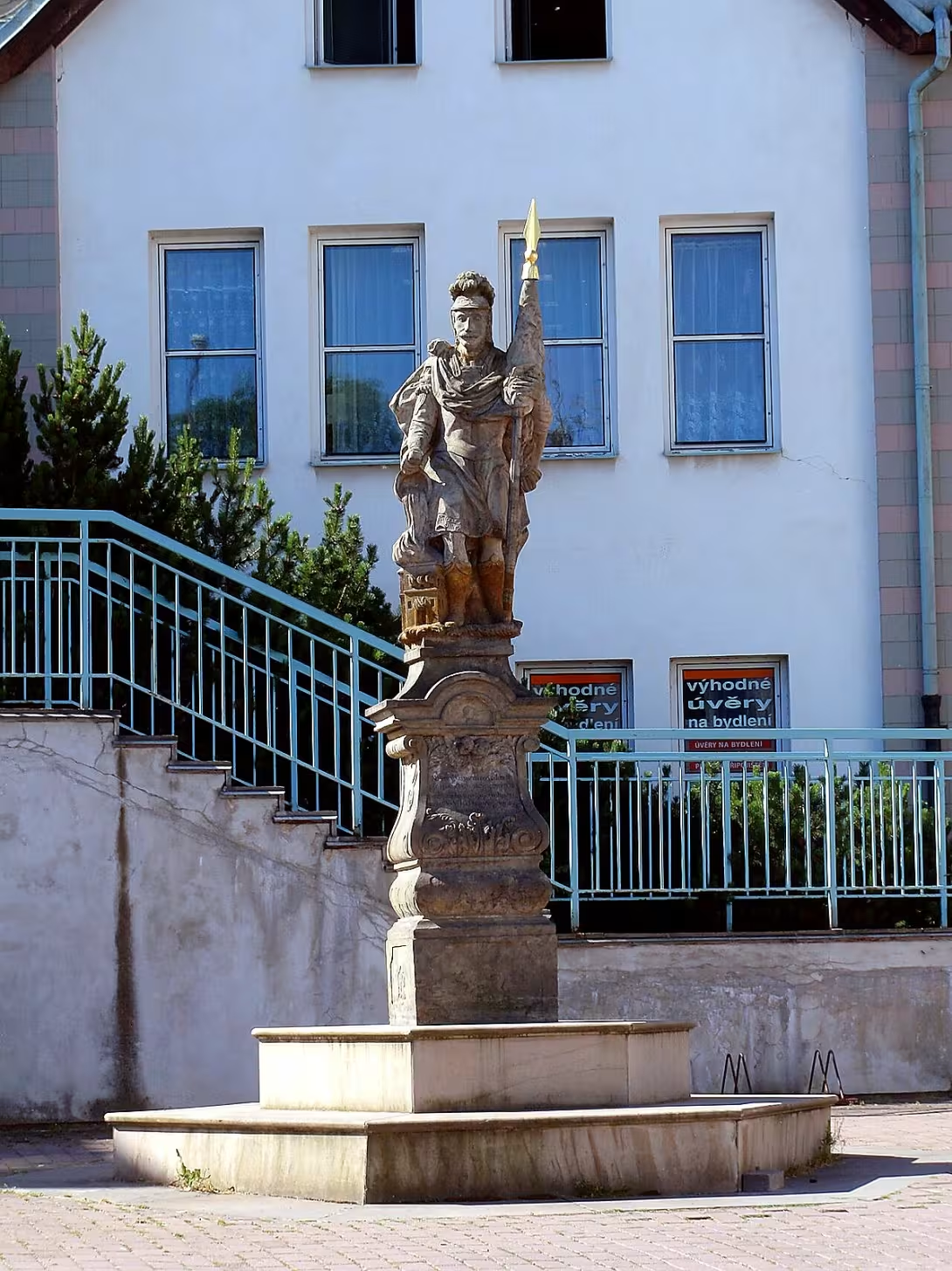
The Statue of Saint Florian in Ústí nad Orlicí is a sandstone sculpture that has stood watch over the town since 1852. Initially placed in front of a local inn, it was later moved to the municipal cemetery in 1982 and restored to its current location in Hakenova Street in 2003. This cultural monument of the Czech Republic is notable for its historical significance and artistic value.
The statue was created in 1852, but little is known about its early history. It is believed to have been erected to commemorate Saint Florian, the patron saint of firefighters, often depicted saving people from burning buildings. The statue's original purpose was to serve as a reminder of the importance of fire safety and protection.
The statue stands on two stone steps in front of the fire station in Hakenova Street. The base is a low, sloping block with voluted pilasters on either side. The front of the pilaster features an acanthus motif with cherub heads and a segmental arch. The inscription reads: "Our town, take under your protection / from flood, from burning flames, / your blessing for our defense, / our refuge be strong and mighty." The back bears a chronogram with the inscription: "Saint Florian, protector against fire, to be revered and celebrated / and to the glory of God, this statue was created by the devoted / artist."
The statue depicts Saint Florian in traditional Roman attire, holding a flag in his left hand and a bucket of water in his right, with a burning house at his feet. The statue has undergone significant changes in its location over the years, but its artistic value and historical significance remain unchanged.
The statue is a cultural monument of the Czech Republic, protected since 1958. It is located in the town of Ústí nad Orlicí, surrounded by residential buildings and the fire station. Today, the statue remains an important part of the town's heritage and a reminder of the importance of fire safety and protection.
Visitors to Ústí nad Orlicí can view the statue in its current location in Hakenova Street. The statue's historical significance and artistic value make it a worthwhile stop for anyone interested in local history and culture.
Then and now
Drag the slider to compare how the landmark may have looked when it was built with the view today.
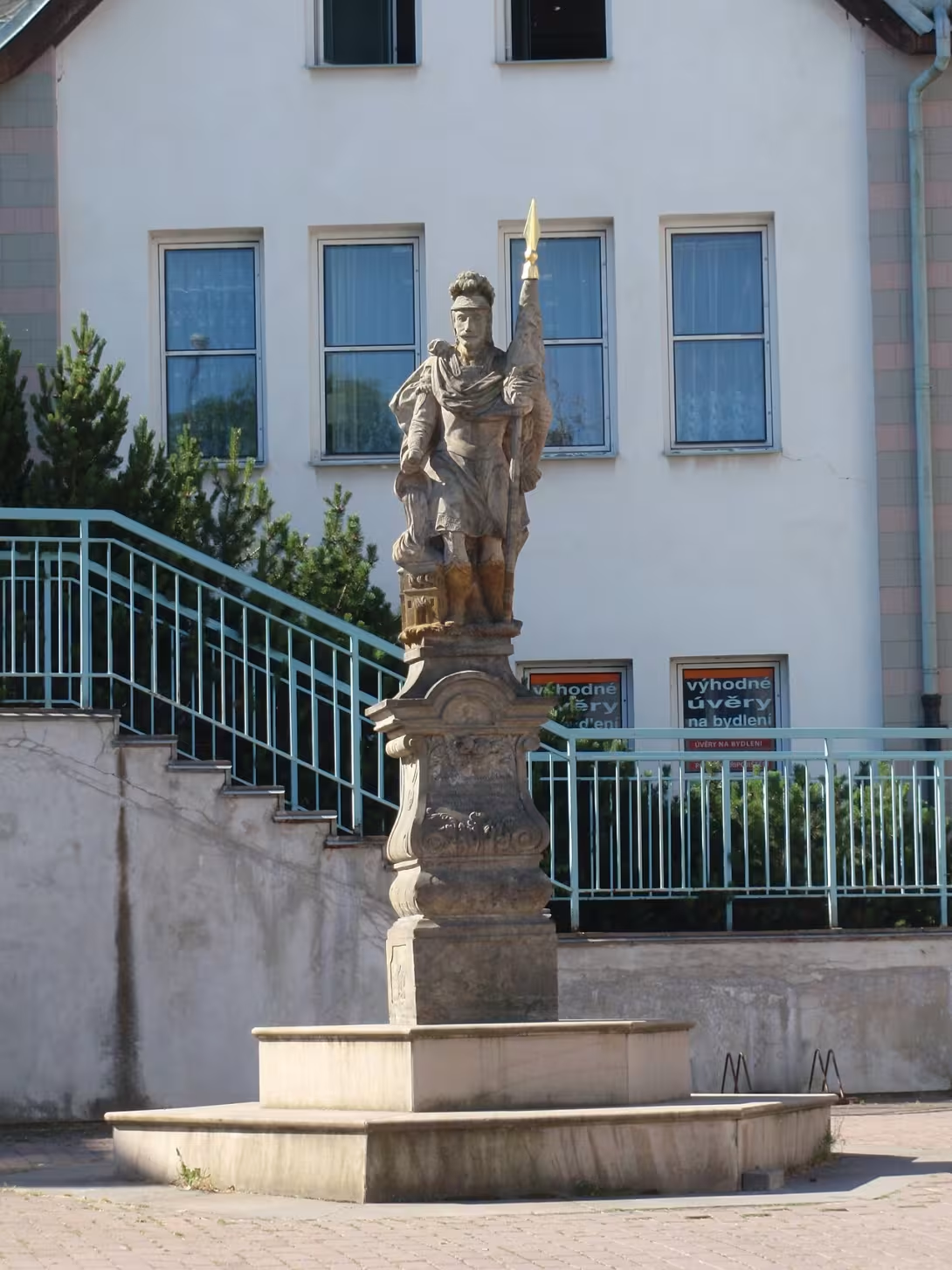
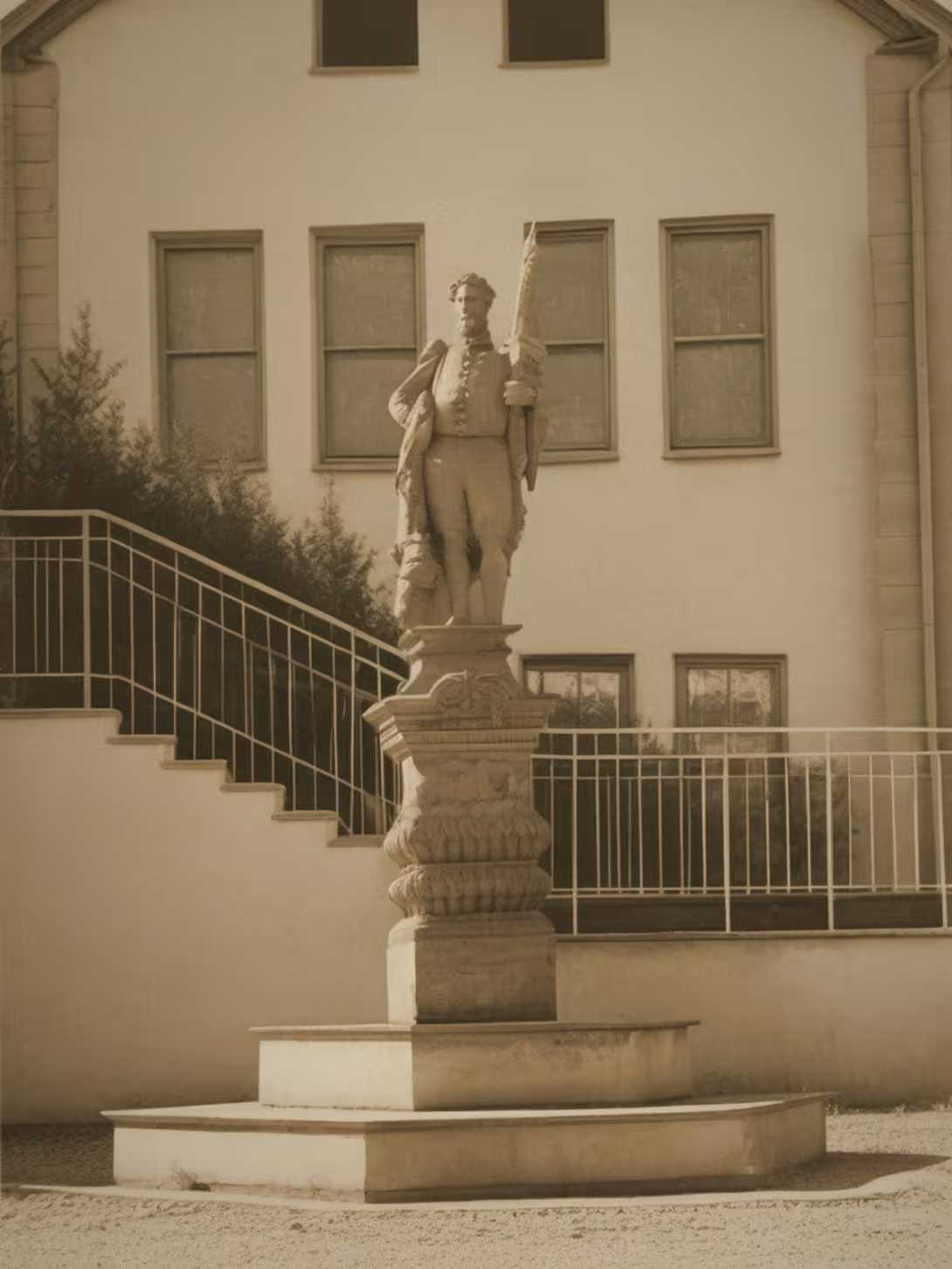
The historical appearance on the left is an AI-generated visualisation and serves as inspiration only.
Historical milestones
- 1852
- The Statue of Saint Florian was created
- 1958
- The statue was protected as a cultural monument
- 1982
- The statue was moved to the municipal cemetery
- 2003
- The statue was restored to its current location in Hakenova Street
Historical events
- 1852
- The statue was originally placed in front of a local inn.
- 1982
- The statue was moved to the municipal cemetery.
- 2003
- The statue was restored and moved to its current location in Hakenova Street.
Points of interest
– The Statue of Saint Florian in Ústí nad Orlicí is a sandstone sculpture that has stood watch over the town since 1852.
– The statue was created in 1852, but little is known about its early history.
– The statue is a cultural monument of the Czech Republic, protected since 1958.
– The statue is located in the town of Ústí nad Orlicí, surrounded by residential buildings and the fire station.
– The statue's historical significance and artistic value make it a worthwhile stop for anyone interested in local history and culture.
Guide
Show guide text
This text was created by artificial intelligence and has not been editorially reviewed. It may contain inaccuracies.
Welcome to Ústí nad Orlicí. As you stand here in the heart of our town, take a moment to simply breathe and settle into your surroundings. You are currently standing before a silent witness to the passing of time, a figure that has watched the streets of this town evolve through decades of change, through seasons of snow and summer sun, and through the many lives of the people who have walked these same paths. Before you is the Statue of Saint Florian. Even in its stillness, there is a sense of presence, a quiet dignity that commands your attention.
Take a moment to look closely at the sculpture. Notice the texture of the material. This is sandstone, a medium that is both beautiful and deeply connected to the earth. Because it is sandstone, the statue carries a certain organic quality; it feels as though it has grown from the landscape itself. As you observe the surface, you might see the subtle marks left by the elements over the years—the gentle weathering that tells the story of its long life. This is not a cold, sterile piece of modern art, but a living piece of history that has aged alongside the community of Ústí nad Orlicí.
To truly understand what you are looking at, we must travel back in time to the year 1852. Imagine the town as it was then, nearly two centuries ago. The world moved at a different pace, and the social fabric of the community was woven around local gathering places. When this statue was first created and placed in the world, it did not stand here on Hakenova Street. Instead, it held a much more social position, standing guard in front of a local inn. In the mid-19th century, the inn was the heartbeat of the town—a place of news, laughter, and connection. The Statue of Saint Florian would have been a familiar sight to travelers and locals alike, a landmark for those meeting friends or seeking rest.
As the years turned into decades, the town changed, and so did the placement of this monument. The statue has lived several different lives in different settings. For a long period, it was moved away from the bustling social life of the inns and relocated to the municipal cemetery in 1982. This move changed the atmosphere surrounding the sculpture, shifting it from a public social landmark to a more solemn, reflective figure amidst the quiet of the graves. It became a part of the town's landscape of memory and mourning.
However, the story of the statue did not end in the silence of the cemetery. There was a renewed appreciation for its historical and artistic value, leading to a significant turning point in 2003. Following a careful restoration process, the statue was brought back into the public eye, finding its current home here in Hakenova Street. This restoration was not just about repairing the stone, but about reclaiming a piece of the town's identity. It was a way of bringing the history of Ústí nad Orlicí back into the daily lives of its citizens.
You might wonder why this particular sculpture is so highly regarded. The answer lies in its status as a protected cultural monument of the Czech Republic. This recognition was granted back in 1958, long before its recent move. Being a protected monument means that this statue is more than just a piece of carved stone; it is a piece of the national heritage, a treasure that must be preserved for the generations that will follow us. It serves as a tangible link to the year 1852, connecting the modern person standing here today with the craftsmen and the townspeople of the mid-19th century.
While the names of the specific architects and the hands that carved this sandstone remain lost to the shadows of history, the impact of their work is undeniably present. They created something that has endured. In a world where so much is temporary and quickly replaced, the Statue of Saint Florian stands as a symbol of permanence. It has survived the transition from the era of horse-drawn carriages to the era of the automobile; it has survived the shifting political landscapes of the last century, and it remains here, steadfast.
As you continue to look at the statue, try to imagine the many eyes that have rested upon it over the last 172 years. Think of the people who stood exactly where you are standing now, perhaps in the 1800s, or the 1950s, or the early 2000s. Each person brought their own era, their own worries, and their own joys to this spot, yet the statue remained, unchanging in its essence.
There is a certain mystery in its longevity. How many stories has it overheard? How many changes in the town's skyline has it observed from its various locations? While we may not have a written diary of the statue, its very existence is a narrative of resilience.
As you prepare to move on and continue your journey through Ústí nad Orlicí, carry this sense of continuity with you. The Statue of Saint Florian is a reminder that we are all part of a much larger, ongoing story. It invites us to slow down, to look closer, and to appreciate the enduring beauty that can be found in a simple piece of weathered sandstone.
Thank you for taking this moment to connect with our history. Please, continue your walk and enjoy the many other wonders that this beautiful town has to offer. There is much more to discover around every corner.
Businesses nearby
Do you run a restaurant, accommodation, shop, museum, rental, wellness or other visitor service near this monument? Show yourself directly to the people heading to it — this is how they will see you in the app and on the web:
Events nearby
Zdroj akcí: otevřená data měst a obcí ČR (Národní katalog otevřených dat) a kalendář akcí Národního památkového ústavu.
Nearby
The statue is located in the town of Ústí nad Orlicí, surrounded by residential buildings and the fire station.
Accommodation nearby
Themed route
1. Socha svatého Floriána Type: Statue Why: This is the main landmark of the route and the primary destination for your visit.
2. Fire station Type: Public building Why: Located in the immediate vicinity of the statue, this building is a key part of the local surroundings.
3. Residential buildings Type: Local architecture Why: Walking through this area allows you to experience the quiet, local atmosphere of Ústí nad Orlicí.
Seasonal recommendations
In spring, the surroundings of the Socha svatého Floriána in Ústí nad Orlicí come alive with fresh greenery and the first blooms of the season. The lighting is soft and gentle, which is ideal for capturing clear photographs of the monument without harsh shadows. Visitors should be prepared for unpredictable weather by wearing layers, such as a light jacket or a sweater, to accommodate shifting temperatures. Since the crowds are typically minimal during this period, it is a perfect time for a quiet stroll.
Summer brings a vibrant and energetic atmosphere to Ústí nad Orlicí, characterized by long days and bright, intense sunlight. The warmth of the season makes the town feel lively, but the midday sun can be quite strong. To avoid the heat and the most direct glare on the statue, it is best to visit in the early morning or during the late afternoon. Wear light, breathable clothing and consider bringing water if you plan to explore the surrounding area.
Autumn offers a nostalgic and calm mood, with the landscape turning into shades of gold and amber. The misty mornings can create a mystical atmosphere around the Socha svatého Floriána, adding a sense of historical depth to the site. It is advisable to wear warm, windproof clothing to stay comfortable as the air turns crisp. Visiting during the midday hours is recommended to take advantage of the soft, diffused light that beautifully highlights the details of the sculpture.
Winter transforms the area into a quiet and serene setting, often accompanied by frost or a blanket of snow. The atmosphere is much more tranquil and still than in the warmer months, offering a peaceful experience for those seeking solitude. Because the days are shorter and the temperature can be quite low, it is essential to wear heavy, insulated clothing and sturdy footwear. Plan your visit during the limited daylight hours to ensure you can see the monument clearly before the early dusk.
Visualizations and artistic views


The visualisations are generated by artificial intelligence and serve as inspiration.
Photos from the area
Real photos taken near the monument


Zdroj a licence jsou uvedeny u každého snímku.
Tips from visitors
No tips yet. Be the first!
Log in and add your tip.
Sources and literature
Fotografie: Isolda11 / CC BY-SA 3.0 — Wikimedia Commons. The author and licence also appear when you hover over the image.
Faktickým podkladem tohoto textu byl článek na Wikipedii, jehož autory jsou přispěvatelé Wikipedie. Článek je dostupný pod licencí CC BY-SA 4.0.
Location on the map



Příběhy a pověsti
Legendy, pověsti a příběhy spjaté s touto památkou

Fotografie návštěvníků
Zatím žádné fotografie. Buďte první, kdo přidá fotografii z návštěvy!
Přihlaste se a přidejte svou fotografii nebo hodnoťte.
Za ověřenou návštěvu v aplikaci získáte víc bodů — poznáme podle GPS, že jste na místě.
Reviews and comments