




Dům čp. 4 (Bubeneč) Building
Objekt se nedochoval — na místě dnes nestojí. Následující text popisuje jeho historii, ne současnou návštěvu.
House No. 4, known as the Kocínovský Court, was located in the centre of the village Bubeneč in Prague and was an important historical monument of its time. This early Baroque economic court, the oldest known owner of which was Jan Kocín z Kocinétu, became an important place for the inhabitants of Bubeneče. Thanks to its location on the former village west of St. Gotthard's Church, the court was a key part of the local community.
The formation of the Kocinovsky Court dates back to the 17th century, when there was an early baroque economic residence with several buildings, including the saber's house, stables and hay. After 1845, the yard was converted into a residential house, reflecting changes in local society and economy. This transformation was often characteristic of similar objects at a time when rural areas became more urban.
Architecturally, Kocinev's backyard was a two-wing corner building with a diverse appearance. The southern wing had a classical origin, while the eastern part was built after the mid-19th century. This combination of architectural elements reveals changes in building trends and technologies over the years.
The history of the court is rich in change. After Jan Kocín from Kocinét, the site was moved to the hands of other owners before being bought by Rudolf Herget, owner of the local brick factory in 1857. This purchase reflects the economic development of Bubeneče and the importance of industrial activity in this area.
The court went through various stages of its existence, from the economic center to the residential house. From 1958 to 1973 the complex was protected as a real-estate cultural monument of the Czech Republic, which highlights its historical value. However, after 1948 he began to decay and in 1975 he was demolished. In his place was built a school for the Soviet Embassy, which symbolizes a new era in the history of Bubeneče.
Today, the Kocin Court no longer exists in its original form. However, its history remains an important part of the cultural memory of the village Bubeneč. Although physical traces of this object have disappeared, its presence is still felt in history and local traditions.
The visit to the place where the Kochinev Court once stood offers a unique opportunity to explore the rich history of Bubeneče. Even without a physical object, its past may be a valuable source of knowledge about the transformations the region has experienced over the centuries. This monument is a reminder of the importance of preserving historical sites and their stories for future generations.
Historical milestones
- 1857
- Rudolf Herget bought a converted residential building.
- 1958
- The beginning of the site protection as a real cultural monument.
- 1975
- The demolition of the remaining buildings of the court.
Architectural development
The originally baroque economic court was converted into a residential building after 1845. The southern wing had a classical origin, while the eastern part came from the period after the mid-19th century.
Historical events
17th century: the acquisition of the name of the Court of Kocinev; 1857: purchase of the house by Rudolf Herget; 1958-1973: protection as a cultural monument; 1975: demolishing the object.
Owners
Jan Kocín z Kocinétu (17th century), Rudolf Herget (since 1857).
Points of interest
- It was an early Baroque economic court whose oldest known owner was Jan Kocín z Kocinétu. - In the 17th century there was a mansion with several buildings, including the saber's house, stables and hay. After 1845, the yard was converted into a residential building. - Architecturally, it was a two-wing corner building with a classic south wing. - From 1958 to 1973 the complex was protected as a real-estate cultural monument of the Czech Republic.
Guide
Show guide text
This text was created by artificial intelligence and has not been editorially reviewed. It may contain inaccuracies.
Welcome to the place where history and architecture form a unique symphony - you are standing in front of the remains of Kocin Court in Bubeneči. This complex, which once addressed its Baroque beauty, today tells the story of time through remnants and memory.
Let's dive into his history. The early Baroque economic court was in the past the heart of the village Bubeneč, where a number of buildings such as stables, hay and the saber's house were grouped together. In the 17th century there was Jan Kocín z Kocinétu, whose name is inextricably linked to this location. After 1845, this court was converted into a residential house, reflecting the transformation into living conditions and needs of that time.
The architecture of the yard, although it had already disappeared, could originally have been characterized as a two-wing corner building. When you walk through this place, notice the atmosphere and structure of the remains that are still talking about his past.
The key person in the history of this complex was Rudolf Herget, the owner of the brick house, who took over the house in 1857. His interventions and investments in the building reflected the dynamics of the business life of that time.
The interesting thing is that the entire complex was protected as a cultural monument in the middle of the 20th century. This status points to its historical and cultural value, although the remaining buildings were eventually demolished in 1975.
Now, most interesting, observe the local landscape and imagine how this place once appeared. There is something mysterious about how even after the demise of the buildings their spirit can still be felt.
I invite you to explore the surrounding streets of Bubeneče and discover other historical hiding places. I hope this guide has given you the opportunity to enjoy not only this place but also its rich past. With God on your next journey!
Businesses nearby
Do you run a restaurant, accommodation, shop, museum, rental, wellness or other visitor service near this monument? Show yourself directly to the people heading to it — this is how they will see you in the app and on the web:
Events nearby

Zdroj akcí: otevřená data měst a obcí ČR (Národní katalog otevřených dat) a kalendář akcí Národního památkového ústavu.
Nearby
Kostel svatého Gottharda v Bubenči.
Visualizations and artistic views

The visualisations are generated by artificial intelligence and serve as inspiration.
Photos from the area
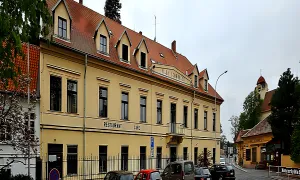
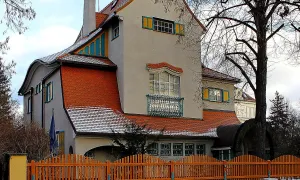
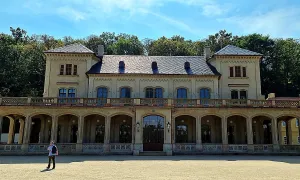
Real photos taken near the monument

Zdroj a licence jsou uvedeny u každého snímku.
Tips from visitors
No tips yet. Be the first!
Log in and add your tip.
Sources and literature
Faktickým podkladem tohoto textu byl článek na Wikipedii, jehož autory jsou přispěvatelé Wikipedie. Článek je dostupný pod licencí CC BY-SA 4.0.
Location on the map


Příběhy a pověsti
Legendy, pověsti a příběhy spjaté s touto památkou
Fotografie návštěvníků
Zatím žádné fotografie. Buďte první, kdo přidá fotografii z návštěvy!
Log in a přidejte svou fotografii nebo hodnoťte.
Za ověřenou návštěvu v aplikaci získáte víc bodů — poznáme podle GPS, že jste na místě.
Reviews and comments