






Dům čp. 51 House
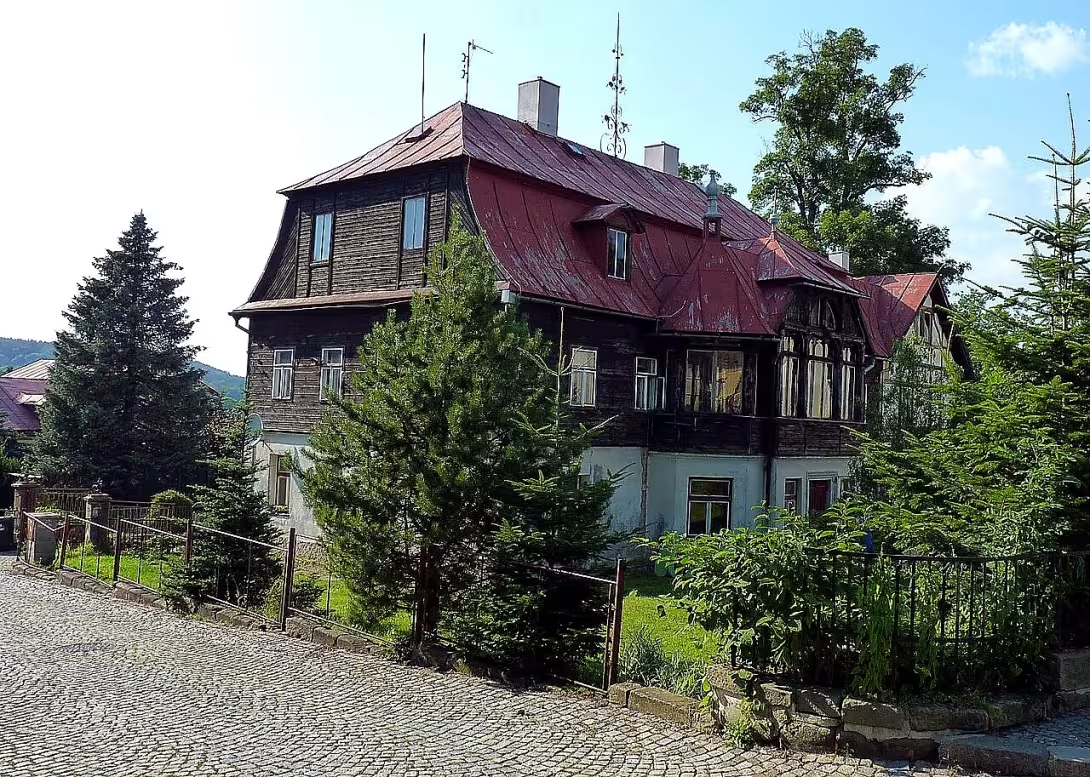
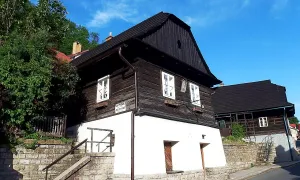
Dům čp. 51 is a grafted building from the first half of the 19th century, which stands in the street Kopec in Štramberk on Novojičín. The building is part of the town conservation and thanks to its almost original form represents an important example of folk architecture in the region.
The history of the house dates back to the first half of the 19th century, when gradually industrialization and conversion of rural buildings took place in Czech countries. At that time, modern historical care and interest in folk construction began to form. Štramberk itself has undergone significant development over the centuries - from 22 wooden houses in 1558 to 53 houses in the mid-17th century. The year 1855 was an important turning point for local housing, when the city was hit by a massive fire, burning down 40 houses and two barns.
The construction is a ground floor object of a rectangular plan, built from roughly carved balls. The house is based on a tall stone suspect that equalizes the inequality of the narrow terrain. It contains arched spaces with its own entrance from the left gutter side. The entrance to the residential area leads through a formatted annex on the west side. While the northern shield side is walled, the southern shield oriented into the valley is vertically painted, ended with a cabin and broken at the heel. The saddle roof is divided by two pairs of skylights and on the west side passes smoothly to the input port.
The building was entered into the Central List of Cultural Monuments of the Czech Republic before 1988. They are currently used for recreational purposes.
Dům čp. 51 is a valuable piece of traditional construction which, despite historical changes, has been preserved in almost unchanged form. A visit to this monument within a tour of the Štramberk reservation offers an authentic view of the 19th century folk architecture.
Historical milestones
- 1558
- 22 houses registered in Štramberk with wooden arch.
- 1650
- The number of houses in Štramberk has increased to 53.
- 1800-1850
- Construction of the grafted house No. 51 in the first half of the 19th century.
- 1855
- Extensive fire in Štramberk, which burned down 40 houses.
- 1988
- Object registered to the Central List of Cultural Monuments.
Architectural development
The construction is grafted from roughly carved balls with a formatted access port on the west side. The north shield side is walled, while the south shield is vertically painted and ended with a cabin. The saddle roof is divided by two pairs of skylights.
Historical events
Before 1988 the house was entered in the Central List of Cultural Monuments of the Czech Republic.
Points of interest
- Dům čp. 51 is a grafted building from the first half of the 19th century, which has been preserved in almost unchanged form. - The object stands on a tall stone suspect that equalizes the inequality of the narrow terrain. - The north shield side of the house is walled, while the south shield is vertically painted and ended with a stall. - The building is part of the city conservation and was entered in the Central List of Cultural Monuments of the Czech Republic before 1988. The house is currently used for recreational purposes.
Guide
Show guide text
This text was created by artificial intelligence and has not been editorially reviewed. It may contain inaccuracies.
Welcome to Štramberk, a city that carries the unique atmosphere of old times and traditions. Right now, you're on one of those paths that leads you straight to the heart of history, and there's an object standing before you that's been a silent witness for centuries. Look at house number 51. This grafted building, located directly on Kopec Street, can at first sight satisfy you with its modesty and incredible integrity. Feel the presence of wood and stone radiating from this house. It's a building that seems to be perfectly compatible with the surrounding terrain, like it's always been here. Looking at her face, you can imagine how life was changing here, how characters were changing walking through this street, while this house remained a fixed point in a constantly changing world.
Now let's go back to the past together to understand what world this house was built in. But in order to fully realize the importance of this building, we need to look at a wider picture of the whole city. Štramberk was already in the Middle Ages, namely in the year one thousand five hundred and fifty-eight, a living and developing place where twenty-two houses with characteristic wooden linings were registered. The city grew gradually, and by the year one thousand six hundred fifty, there were already fifty-three houses. But the house you're watching now belongs to another era. His history dates back to the first half of the nineteenth century. It was during this period, between a thousand eight hundred and a thousand eight hundred fifty, that this grafted building was built. It is a fascinating period when the popular architecture of Zd reaches its peak in how it managed to use local resources to create resilient and beautiful homes. However, we must also be aware of the dangers of life at that time. In the year of a thousand eight hundred fifty pięt, shortly after this house was probably already finished or under construction, the Štramberk hit an extensive and devastating fire. Forty houses burned in the flames, and the city was in heavy distress. However, this house survived, became a symbol of resistance and, thanks to its design and location, resisted the fates that many other buildings in the surrounding area prepared.
Now pay attention to the details that are right in front of your eyes, because that is where the real beauty of folk construction lies. Look down on the base of the house. See that tall stone suspect? It is not only an aesthetic element, but an absolutely necessary element that allows construction to exist in this challenging environment. The terrain here is narrow and uneven, and it is this stone structure that serves to balance the inequality of the hill and create a solid, flat base for living spaces. Note that this suspect contains arched spaces that have been used in the past for various practical purposes, possibly for storage or as cooling rooms. Now, lift your eyes above and look at the very body of the house. Notice the interesting contrast in his side walls. If you look at the northern shield side, you'll see it's walled. This material gives the house a sense of stability and protection. However, when you turn to the south side, you will see a completely different view of the traditional craft. There's a clear-cut shield, and it ends with a stall. This detail of wood lining is not only for beauty, but it serves as a protection against rain and wind, which is absolutely crucial in this position. This combination of walled and grafted design creates a fascinating visual rhythm that is typical of this area.
Although the historical records do not mention the name of any famous architect, nor do we know the names of the individuals who built or lived in this house, their presence is seen in every detail. You can imagine them as a great craftsman who carefully selected every board and every stone to sustain his work for generations. Even though their names are lost in the abyss of time, their work speaks for them. Every crack in the grafting and every curve in the stone suspect is proof of human efforts and efforts to create something lasting. This house is a monument to unknown builders who proudly built their homes in accordance with nature.
What is really unusual about this place and what you should be interested in is its incredible preservation. Most of the similar buildings from this time were either rebuilt into more modern, brick forms, or completely destroyed in the fire fires that visited the city in the past. However, house number fifty-one was preserved in almost unchanged form. It's like stopping time at one particular moment in the nineteenth century. When this object was entered in the Central List of Cultural Monuments in the year one thousand nine hundred eighty, it was a clear confirmation of its uniqueness. It stands here as living proof of what true folk architecture looked like at a time when everything was handled by hands, wood and stone. It's a rare piece of history that allows us to see the world as it was over 150 years ago.
Now that you have seen this fascinating piece of history and perceive its architecture, I suggest you continue your walk along the Hill Street and explore Štramberk further. Any next step can lead you to other attractions, other historical details and other views of this beautiful city monument reservation. Don't forget to stop by the other buildings you find here because each one has its own story. Thank you for spending this moment at this very house and paying attention to its details. I wish you a beautiful and inspirational journey through the town's restaurant. I will say goodbye and wish you many other pleasant experiences in discovering the beauty of our country.
Tips for visitors
We recommend a visit in the morning during the working week when you avoid crowds of tourists and enjoy the quiet atmosphere of the historic building on Kopec Street.
Do Štramberka can be easily reached by car and public transport. Parking is possible on reserved detention areas under the city, from where it is a short walk up the hill to grafted houses; Check the exact connection in the traffic search engine.
Take fixed shoes suitable for walking on steep and paved streets. Don't forget the camera because the grafted architecture offers unique details, and in the summer you will appreciate the headgear due to direct sun.
The best light for capturing the authentic atmosphere of the chute No.51 is in the morning when the sun gently illuminates the wooden beams. Ideal composition can be obtained from a slight perspective when climbing the streets of Kopec.
With children go to explore the urban conservation, which is perfect for adventurous walks. Within 30 minutes' walk visit the castle Štramberk with the tower Trúba, from where is a wonderful view of the surroundings.
Businesses nearby
Do you run a restaurant, accommodation, shop, museum, rental, wellness or other visitor service near this monument? Show yourself directly to the people heading to it — this is how they will see you in the app and on the web:
Nearby
City Monument Reservation Štramberk, castle Štramberk with tower Truba.
Accommodation nearby
Themed route
1. City Monument Reservation Štramberk (Type: Historical Center) - Walk through picturesque streets with traditional collateral. 2. Dům čp. 51 (Type: Memorial) - Main stop of the route where you can admire specific architecture. 3. Castle Štramberk with Tower Truba (Type: Castle and Tower) - Output to the dominant tower with panoramic views of the city.
Seasonal recommendations
Spring: In the spring Štramberk awakens to life and around the historical house No. 51 the first flowers begin to bloom. The lighting is delicate and rough during this period, which gives the construction a very pleasant look. We recommend wearing layered clothes because the morning cold changes quickly with afternoon heat. It's the perfect time for a quieter tour before the main summer season breaks.
Summer: The summer months bring to the town the greatest excitement and bright, strong sun lights that highlight historical details. The atmosphere is alive and full of energy. Due to the larger crowds of visitors, it is best to arrive first thing in the morning so that you enjoy the tour without any unnecessary haste. Do not forget the protective headgear and plenty of fluids, because in narrow alleys can be uncomfortable during today's heat.
Autumn: Autumn season offers a nostalgic atmosphere and colors that are beautifully reflected in the surrounding landscape. The morning mist brings the memory of the mystery, and the autumn sun creates long, dramatic shadows on the facade. It is advisable to wear firmer shoes on reindeer, as local paving cubes may be slippery after rain. The best time to visit is the afternoon when the light is most interesting for observing details.
Winter: In winter, the house operates in a quiet and quiet atmosphere, especially if the landscape is covered with snow. The light is weaker in this period and requires shorter daily time to observe details. Prepare for very warm clothes and warm accessories. In advent time or cold days, the visit will be very intimate and quiet, but also with a limited time of light.
Visualizations and artistic views

The visualisations are generated by artificial intelligence and serve as inspiration.
Photos from the area
Real photos taken near the monument

Zdroj a licence jsou uvedeny u každého snímku.
Tips from visitors
No tips yet. Be the first!
Log in and add your tip.
Sources and literature
Faktickým podkladem tohoto textu byl článek na Wikipedii, jehož autory jsou přispěvatelé Wikipedie. Článek je dostupný pod licencí CC BY-SA 4.0.
Location on the map
More monuments – Štramberk
Show all in the municipality
Příběhy a pověsti
Legendy, pověsti a příběhy spjaté s touto památkou
Fotografie návštěvníků
Zatím žádné fotografie. Buďte první, kdo přidá fotografii z návštěvy!
Přihlaste se a přidejte svou fotografii nebo hodnoťte.
Za ověřenou návštěvu v aplikaci získáte víc bodů — poznáme podle GPS, že jste na místě.
Reviews and comments