



dům Jany a Jana Brummelových Family house
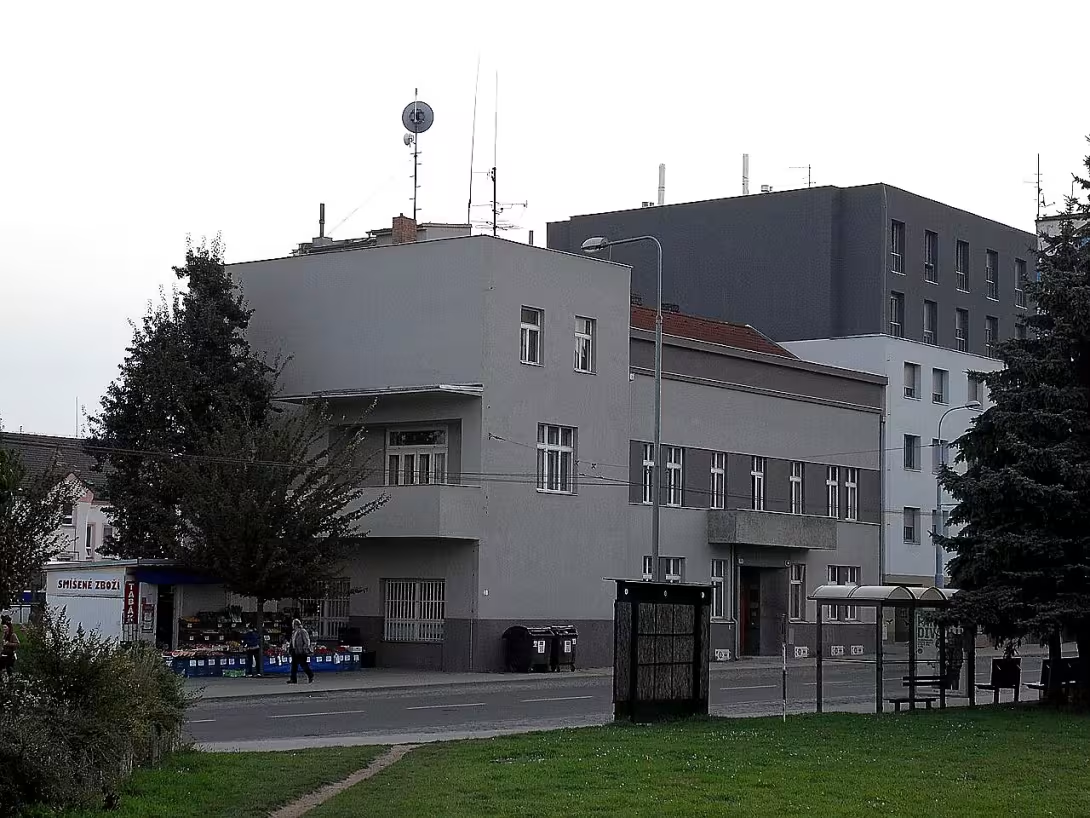
The Brummel house is a residential building in Pilsen, South Suburb, Husova Street. In 1929 it was rebuilt by architect Adolf Loose for the family of trader Jan Brummel. The building is protected as a real cultural monument of the Czech Republic. It is written in the international catalogue Iconic Houses, which brings together extraordinary works of 20th century world architects accessible to the public.
The original building with the historic facade dates back to 1886. It was brought out by Pilsen builder Eduard Kroha. In 1912, a garage was added to the west front. A major change took place in 1929. The architect Adolf Loos then designed a two-storey superstructure, complete interior reconstruction and customization of the original facade of the new part of the house.
The monument has a rectangular plan. Its main facade is oriented south on the north side of the Hus class. The object consists of two parts. The eastern part is three-way, underpaved and was created by the reconstruction of the original one-storey row house with a saddle roof. The west part of 1929 is two storey, unfolded, has two tracts and a flat roof. The facade is smooth and simple. The right part of the street facade with seven axes shows two combined outer windows.
There is a private five-bedroom apartment on the first floor, which is led by a wide staircase. The entrance to the staircase hall and the small hall is followed by a living room and a private part with a bedroom and a bathroom. The living room is connected to the dining room, which is separated from the dining room by wooden columns. Behind the dining room there is a salon and bedroom Hedvika Liebstein. The interiors are taken out of noble trees: the dining room is surrounded by a dark yellow root of the Canadian Topola and a room with stained dark oak. The common rooms form an enfilade which ends with a four-part door to a spacious terrace.
In 1939, both the house and the adjacent wood storage facility reached German hands. The Brummel family was moved to the second floor, where originally from the hall led a spiral staircase to the roof. In 1942, family members were deported to the Terezin concentration camp. There, in 1943, Jane Brummel's mother, Hedvika Liebsteinová, died. Mr and Mrs Brummel returned to the house in October 1945.
After 1948 the apartment was divided for new tenants and local heating of individual rooms was introduced. In 1962, the building was taken over by the state and was based here by the Club of Architects. In 1986 he acquired the entire house after the death of the last descendant of the original owners. The building was in very bad shape at the time. According to the project by architect Straňáka was therefore built and rebuilt for the club's needs. During this period she also survived the planned demolition in connection with the construction of the bus station.
In 1991, the house was returned to the original family under restitution. Comprehensive reconstruction took place between 2001 and 2015 and the building was opened to the public. The importance of the interior was confirmed in 2003 during the international symposium. It was noted in the Plzeň memorandum that Loose's Pilsen interiors are the cornerstones of modern world architecture and an unmemorable part of Europe's cultural heritage.
The House of Jana and Jan Brummelova presents a unique example of functionalism and Adolf Loose Championship in work with material and space. It's a place where the architectural significance combines itself with the dramatic history of the owners. The visit to this building offers direct insight into one of the most important stages of modern European architecture.
Then and now
Drag the slider to compare how the landmark may have looked when it was built with the view today.
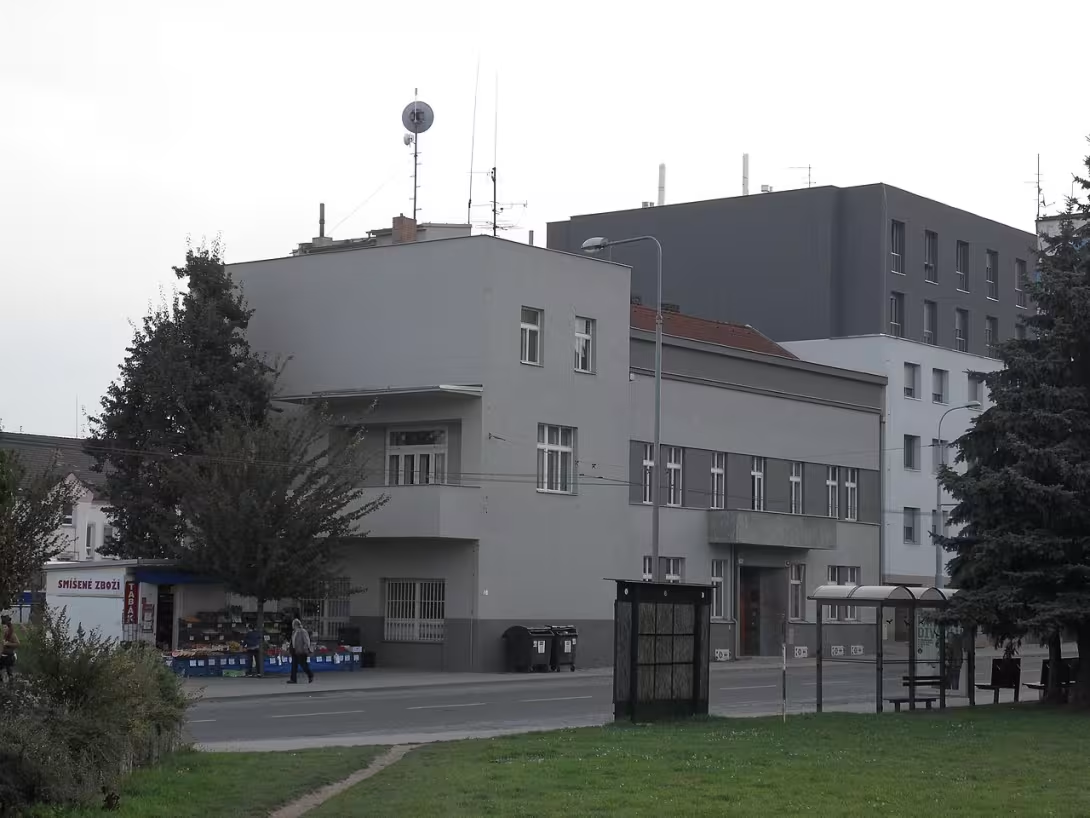
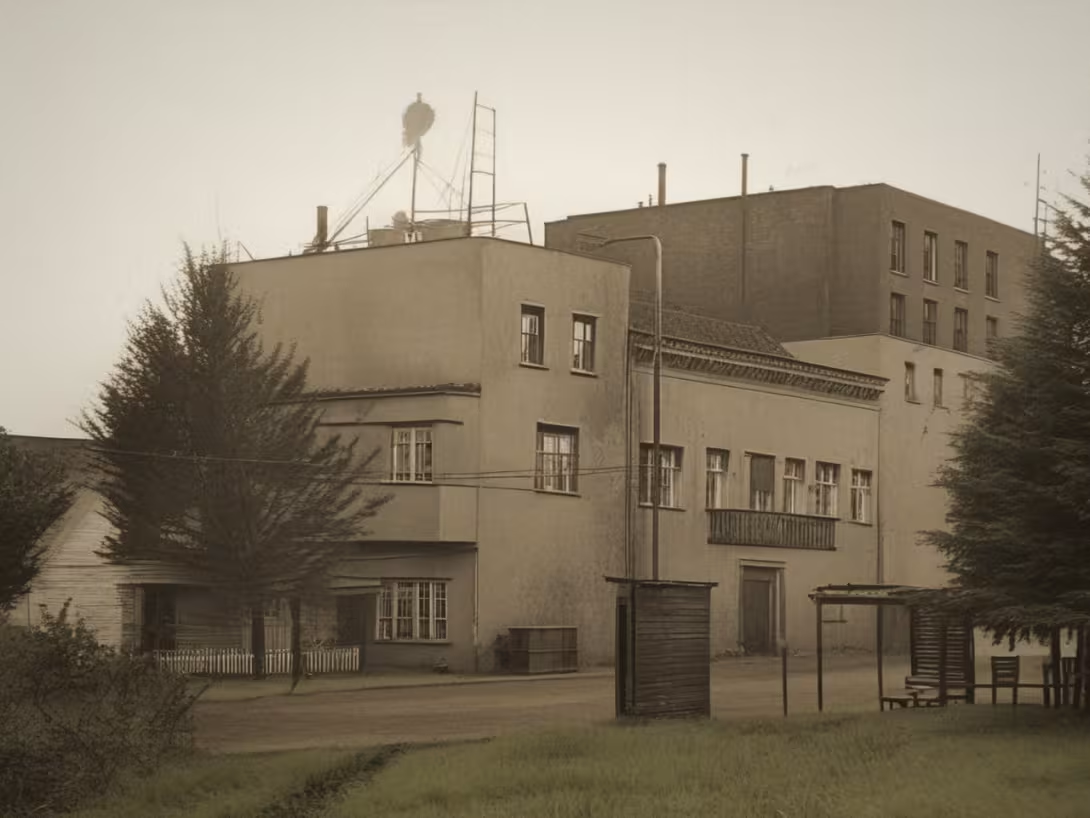
The historical appearance on the left is an AI-generated visualisation and serves as inspiration only.
Historical milestones
- 1886
- construction of the original house of Pilsen builder Eduard Krohou
- 1929
- rebuilding the house according to the design of architect Adolf Loose
- 2002
- starting protection as a real cultural monument of the Czech Republic
Architectural development
The original historical house from 1886 was extended by two floors in 1929 and the facade was adapted to a new part. Interiors have been modified using noble trees such as Canadian Topola and pickled oak. In 1986 there was a construction adjustment for the needs of the Club of Architects.
Historical events
1929: Reconstruction of the house by architect Adolf Loos. 1942: Deportation of members of the Brummel family to the concentration camp Terezin. 1991: House restitution to the original family.
Owners
The Jan Brummel family (until 1939), the German administration (1939- 1945), the Brummel family (1945- 1948), the State (from 1962), the Club of Architects (from 1986), the Brummela family (from 1991).
Points of interest
- Brummel's house is protected as a real-estate cultural monument of the Czech Republic. - It is written in the international catalogue Iconic Houses, which brings together extraordinary works of 20th century world architects accessible to the public. - Architect Adolf Loos designed two storeys and interior modifications in 1929. - Interiors are drawn from noble trees such as the dark yellow root of the Canadian Topola and the stained dark oak. - After 1991, the house was returned to the original family as part of the restitution.
Guide
Show guide text
This text was created by artificial intelligence and has not been editorially reviewed. It may contain inaccuracies.
Welcome, esteemed visitors, to one of the most interesting parts of our city in South Suburbia. Please stop for a moment, take a breath and focus fully on the building that is now standing right in front of you. You are standing in front of the house of Jana and Jan Brummel, a construction that may at first glance appear to be subtle, but in detail and its history hides a fascinating story of courage, modernity and search for a new identity in the architecture of the twentieth century. Look at the total silhouette of the house and perceive its presence in the street space. It is a place where two distinct ages meet, two different approaches to what home should look like, and it is this contrast that makes this memory so special.
To understand what we are seeing, we need to go back more than a hundred and thirty years together. The original history of this place begins in 1886. Then the Pilsen builder Eduard Kroha brought the first version of the house to the realization. At that time, Pilsen was a city in rapid development, full of energy and ambition, and houses in this area reflected the period spirit of the late nineteenth century. So imagine this street in 1886, with its facades and atmosphere back then. The house was the classic representative of its time at the time, providing security and stability, but in 1929 everything changed fundamentally.
The year 1929 is crucial for this construction. This year, a man whose name is known to anyone interested in world architecture, Adolf Loos, joined the project. He was an architect with a very strong and uncompromising view, who, at that time, radically thought about space and form. The family of merchant Jan Brummel has decided that their house will no longer be just an ordinary apartment, but will be an expression of modern lifestyle. So Loos didn't just come up with minor modifications, but he did a radical reconstruction. If you look at the building now, notice the structure. Adolf Loos designed the superstructure of two whole floors and completely redesigned the interiors. This change was not only a matter of increasing the area, but it was an intellectual operation that made the original house from 1886 a modern work of art.
Now pay attention to the front of the house. Look at his lines and see how the building relates to the surrounding area. Loos was known for his resistance to unnecessary decorations, which he considered unnecessary. In his concept was beauty in purity, authenticity of material and in the functionality of space. When you look at the Brummel house, try to perceive this simplicity, which is actually very complicated to finish. It's an architecture that doesn't scream, but it speaks in a calm and confident voice. It's fascinating to think that under the modern form of 1929, the foundation of Eduardo Kroha is still asleep. It's like a layered story where each layer tells about different centuries and different values.
But who were the people for whom this house was created? The main figures are Jan Brummel and his wife Jana. Jan Brummel was a successful businessman, a man of his time who had sufficient taste and courage to invite such a controversial and respected architect as Loos. Imagine what it must have been like in 1929 when this new, modern style began to appear in the neighborhood of traditional houses. It was basically a declaration of modernity. The story of the house also includes Hedvika Liebsteinová, another person connected to this place, which was part of the social and family context of this house. These people lived here, worked, and made up a history that is today impaled into the walls of the building itself. The house was not just a building piece, it was a living organism in which a business life with family peace intertwined.
Now let's think about why this house is so important today. You may think it's just one of the many houses on the street, but the truth is much deeper. In 2002 this building was officially recognised and its protection started as a real-estate cultural monument of the Czech Republic. That means the state has recognised its irreplaceable value for our national heritage. But the value of the Brummel house goes beyond our borders. Note that the building is registered in the international catalogue of iconic houses. That is truly extraordinary recognition. This catalogue brings together only the most important works of the world architects of the twentieth century, which are also accessible to the public. By being here dům Jany a Jana Brummelových, Pilsen becomes part of the global map of modern architecture. It is a confirmation that in our city there is a space that is from the point of view of world-class design and thinking.
The interesting thing that may interest you is the relationship between the exterior and the interior. While we see a radical change from the outside and the superstructure of the floor, the real treasure is hidden inside. Interiors are considered unique and are the main reason why the house is in the international list of iconic buildings. Adolf Loos applied its theories about space where the internal disposition adapted to the needs of the population, not vice versa. Even if we are standing outside now, try to imagine what it must be like to enter a space where every detail, every horn and every surface has been thought out to serve a man while acting harmonically. It's an architecture that doesn't solve the surface, but it solves the essence of being in space.
When you look at this house today, you see the result of the collaboration of several names. In addition to Eduardo Kroha and Adolf Loose, the name Straňáka appears in connection with the building. Each one of them brought something different into the building, yet they form one whole. It's a reminder that architecture isn't static, but it's evolving. The house from 1886 became a modern palace in 1929 and in 2002 it became a protected monument. It's a journey from practical living through an art experiment to a historical document.
Now, before we say good-bye and you go on, I suggest you go around the building again slowly or look at it from different angles. Feel how the impact of the facade changes depending on the light and how the house is inscribed in the rhythm of the Southern Suburb. Try to imagine the discussions that took place here in 1929 when the neighbors first looked at the radical changes that Loos made in the house. It was probably shocking, bold and incomprehensible to someone, but it is this courage that is why we are here today and why this house is recognized worldwide.
The House of Jana and Jan Brummel shows that modernity is not only about new materials, but above all about new ways of thinking. It's where the Pilsen tradition meets the vision of a world architect. I hope that this short trip to history and architecture has helped you see this building in a new light and that you will take away the sense of respect for the courage of people who wanted to live in the space that has been overtaken by time.
Thank you for your attention and I wish you a pleasant continuation in discovering the beauty and secrets of our city. Now I beg you to enjoy the rest of your walk and pay attention to other details that make up the unique face of the Pilsen Southern Suburb. Goodbye.
Tips for visitors
The best time to visit is the late afternoon when the sun hits the facade at an angle that highlights the purity of the lines and geometric elements typical of Adolf Loose. The morning light can be too sharp and create hard shadows, while the evening atmosphere in South Suburb offers a quieter environment for observing architectural details without crowds of tourists.
Access to home is ensured for both cars and public transport. If you arrive by public transport, check the current connections and stops in the search engine to get as close as possible to the destination.
For a comfortable tour, bring comfortable shoes, because the surrounding area of the monument is made up of pavement and pavement, which can be uneven. Although the state of the monument is listed as excellent, the outdoor tour requires solid shoes. We also recommend adding water, especially in warmer months, and light clothes according to current weather.
When shooting, focus on the contrast between the original construction from 1886 and the radical reconstruction from 1929. The best light to capture the texture of plaster and windows occurs at low sun.
Since there are no specific places in the area in the background, we recommend that you take a walk around the South Suburb, where you can enjoy the atmosphere of the historic Pilsen district. For families with children, this monument is suitable as a short stop to show them what modern architecture can look like. Children can be fascinated by simple shapes and clean building lines that are easy to understand even for younger visitors.
Frequently asked questions
Can the monument be visited?
Some buildings of this kind are open for guided tours, others serve another purpose or are privately owned. We have not verified whether and when this monument is open – please ask the operator.
What are the opening hours and admission?
We have not verified the opening hours or admission. Current information is published by the operator. Official website: https://www.brummelhouse.cz/historie.html
Where is the monument?
Location: Jižní Předměstí, Plzeňský kraj. The map on this page shows the exact spot.
Why is the monument protected?
It is listed in the Central List of Cultural Monuments of the Czech Republic as a cultural monument (register no. 1000472036).
Businesses nearby
Do you run a restaurant, accommodation, shop, museum, rental, wellness or other visitor service near this monument? Show yourself directly to the people heading to it — this is how they will see you in the app and on the web:
Events nearby

Zdroj akcí: otevřená data měst a obcí ČR (Národní katalog otevřených dat) a kalendář akcí Národního památkového ústavu.
Nearby
🏰 Historic sites (273)
- Galerie Aukce 0.3 km +420704444004 web
- Adolf Burg 0.4 km
- Julie Burgová 0.4 km
- Arnoštka Adelová 0.4 km
- Věra Kohnová 0.5 km
- Věra Kohnová 0.5 km
- Hana Kohnová 0.5 km
- Melanie Kohnová 0.5 km
- Otokar Kohn 0.5 km
- Vendelín Budil 0.5 km
- Hedvika Hermannová 0.6 km
- Emil Glaser 0.6 km
- Irma Saxlová 0.6 km
- Judr. Adolf Rudnik 0.6 km
- Zikmund Naschauer 0.6 km
- Arnošt Saxl 0.6 km
- Edita Sedláková - rozená Hermannová 0.6 km
- Pavla Naschauerová 0.6 km
- Vinyl Gallery 0.6 km
- Rudolf Pereles 0.6 km
🍽️ Restaurants and dining (573)
- Club Racek 0.2 km
- Čajovna Svět 0.2 km Krátká 1003/2 +420 605 319 643
- Jídelna U JUNÁKA 0.3 km Plachého 1923/54 +420 732 490 906 web
- Chopstix 0.3 km
- Jídelna Tylovka 0.3 km Tylova 2725/26 +420 603 475 179
- Restaurace U Krátkých 0.4 km +420606605264 web
- Pizza Kebab Pasta 0.4 km
- ACW Saloon 0.4 km +420 604 522 359 web
- Pivnice V Plachovce 0.4 km Plachého 951/31 +420 728 230 198 web
- KAVANA – Jídelna v Divadelní 0.4 km Divadelní 1511/16 +420 775 136 351 web
- Sushi Wok Budilovka 0.4 km Budilova 243/9
- Hotel Plzeň 0.4 km +420 377 224 034 web
- Music Cafe Mlýn 0.5 km Radčická 60/40 web
- Gepard Burger 0.5 km Kollárova 7
- Kalikovský mlýn 0.5 km
- Hostinec Na Potravinách 0.5 km Radčická 2394/4 +420 773 910 181 web
- Costa 0.5 km
- Massimo 0.5 km
- UGO 0.5 km
- Restaurace Cardinál Club 0.5 km Kardinála Berana 1027/10 web
🏨 Accommodation (47)
- Emma 0.3 km Husova 430/22 +420606605264 web
- Wallis 0.6 km Palackého 74/11
- Ubytovna Palackeho 6 0.6 km +420377537864 web
- Hotel Victoria 0.8 km Borská 1155/19
- Slovan 0.8 km
- Hotel Central 0.9 km web
- pension v Solní 0.9 km
- enjoy inn 1.0 km
- Hotel Continental 1.1 km Zbrojnická 312/8 +420 377 221 746 web
- Riverside 1.1 km
- Hotel Rango 1.1 km +420377221188
- Pension City 1.2 km sady 5. května 301/52 +420728501710 web
- U Zvonu 1.2 km
- Courtyard by Marriot 1.3 km
- Hotel Green gondola 1.3 km
- Hotel Roudná 1.4 km +420 377 259 926 web
- Avenue Pallova 1.4 km Pallova 2814/28
- Astory 1.6 km
- Vienna House Easy by Wyndham Pilsen 1.6 km U Prazdroje 6 +420 378 016 111 web
- Kolej Bolevecká, Univerzita Karlova 1.7 km
🚲 Rentals and sport (108)
- Pro Fighter 0.4 km +420 777 939 321 web
- Lezecké centrum V16 0.4 km Kollárova 19 +420 725 889 568 web
- Kalikovský mlýn 0.5 km
- Banner 0.5 km
- A3 0.5 km
- Dům sportu 0.6 km
- Gazza sport 0.6 km +420377441393 web
- Krav Mága gym 0.6 km
- Lyže Král 0.6 km
- ARMED army shop 0.7 km +420 212 812 160 web
- Scoobike sharing 0.8 km web
- Scoobike sharing 1.0 km web
- SK Radbuza 1.1 km
- Scoobike sharing 1.1 km web
- Prodej jízdních kol a elektrokol 1.2 km Prokopova 336/30 +420 603 897 773
- TJ Sokol Plzeň-Slovany 1.2 km
- Ski Bike Centrum 1.3 km +420770111712 web
- Husky 1.3 km +420 378 770 003
- Rock Point 1.3 km
- Specialized 1.3 km web
🥾 Hiking and nature (225)
- Husovo náměstí 0.1 km
- Park Miroslava Horníčka 0.6 km
- park Výstaviště 0.8 km
- Smetanovy sady 0.8 km Smetanovy sady
- Země 0.9 km web
- Andělíček "ošahánek" 1.0 km
- Venuše 1.0 km web
- Mars 1.1 km web
- Slunce 1.1 km web
- Šafaříkovy sady 1.1 km Šafaříkovy sady
- Merkur 1.1 km web
- Pražský most 1.2 km
- sady 5. května 1.3 km sady 5. května
- gepardi 1.3 km
- Pavilon hrošíků 1.3 km
- guerézy 1.3 km
- prasata savanová 1.3 km
- ptakopyskové 1.4 km
- afričtí brodiví ptáci 1.4 km
- lvi 1.4 km
Accommodation nearby
Trips and activities nearby
Guided tours, tickets and activities nearby from GetYourGuide
Affiliate link: if you buy from the partner, we may receive a commission. The price for you does not change.
Search tours and activities →Themed route
1. courty, the complex, serves as an ideal place for introduction to the atmosphere of the object and observation of its external appearance. internal exposition , exhibition, offers a detailed view of the history and personality associated with this house. 3. dům Jany a Jana Brummelových, a monument, the main objective of the tour, which represents the very core of the whole complex.
Seasonal recommendations
In spring the home of Brummel September accompanied by awakening vegetation. The soft spring light gently decorates the facade and the surrounding green gives the place freshness. We recommend that you dress in layered clothes so that you don't get caught by the variable weather, and plan a visit to the morning when the air is the cleanest.
The summer season brings intense colors and sharp sun, which highlights the details of the construction in its excellent condition. The atmosphere is full of energy and life. Because of the season and the expected crowds, it's best to arrive first thing in the morning. Don't forget light, breathable clothes and plenty of fluids.
Autumn covers Jižní Předměstí with golden robes and melancholy mood. Low sun creates long shadows, which is ideal for the atmosphere of the house. It is practical to carry a waterproof coat and choose the late afternoon when the light is the most golden.
In winter, the monument is quiet and quiet, especially if snow covers it. The contrast of the white landscape and the carefully maintained house creates a unique visual impression. In advent time we recommend warm clothes and thermal bra. Pay attention to the shorter opening times that are common during this period.
Visualizations and artistic views


The visualisations are generated by artificial intelligence and serve as inspiration.
Photos from the area
Real photos taken near the monument


Zdroj a licence jsou uvedeny u každého snímku.
Tips from visitors
No tips yet. Be the first!
Log in and add your tip.
Sources and literature
Photos: Jik jik / CC BY-SA 4.0 — Wikimedia Commons. The author and licence also appear when you hover over the image.
Faktickým podkladem tohoto textu byl článek na Wikipedii, jehož autory jsou přispěvatelé Wikipedie. Článek je dostupný pod licencí CC BY-SA 4.0.
Location on the map
More monuments – Jižní Předměstí
Show all in the municipality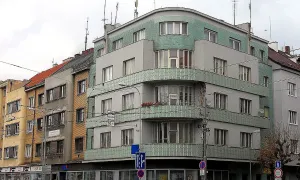


Příběhy a pověsti
Legendy, pověsti a příběhy spjaté s touto památkou
Fotografie návštěvníků
Zatím žádné fotografie. Buďte první, kdo přidá fotografii z návštěvy!
Log in a přidejte svou fotografii nebo hodnoťte.
Za ověřenou návštěvu v aplikaci získáte víc bodů — poznáme podle GPS, že jste na místě.
Reviews and comments