



Stará synagoga v Plzni Synagogue
Stará synagoga v Plzni is the oldest preserved synagogue in this city. It was built in 1857-1859 in the New Romanesque style. It is located in Smetana orchards in the Southern suburb and represents an important symbol of the growing Jewish community in the 19th century.
In the middle of the 19th century Pilsen underwent an intensive industrial transformation, which contributed to the growth of the Jewish population. At this time, the regional rabbinate from Švihov also moved to the city. A religious community of 41 families was granted permission to build in December 1854. On 17 June 1857 the base stone was ceremonially laid, in whose ceremony Rabbi Angelus Kafka spoke. A copper document with the names of the emperor's family, then-officials and builders was inserted into the foundations.
The building was designed by architect Martin Stelzer and the builder was Wenzel Wiesner. It is a new Romanesque, one-sided and flat-stricken building of a rectangular plan with dimensions of 20 × 14 metres and a height of 12 metres. The interior is decorated with a wooden cassette ceiling and two women's galleries on the columns. These galleries can be accessed either by side turning steps or by an external single-arm staircase at the north wall, which also serves as an escape exit. The layout of the space corresponds to a reform model with rows of benches in the middle and an elevated reading point from the Torah in front of the halo at the east wall.
After the consecration of the synagogue on April 8, 1859, the community continued to grow, leading to the construction of the Auxiliary Synagogue in 1875. With the construction of the Great Synagogue in 1893, however, the importance of the Old Synagogue began to decline and the building gradually faded without use. In 1939, members of the Flag movement tried to bomb the synagogue, but the action failed. Following the removal of the building in 1995, there were gradual repairs, including the repair of the roof and roof in 1997, to which the Rudolf Löwy Foundation and the Pilsen Jews were invested to save the Pilsen synagogue. Between 2010 and 2014, the monument underwent extensive reconstruction within the project of 10 stars, which gave her her original face back.
Historical attractions include an organ from C. L. Edenhofera of Regen, which had been in the synagogue since 1869. However, these instruments have not been preserved; During the First World War, they were destroyed and their pipes melted. There is also an Auxiliary Synagogue, Rabbi House, House of Shamese and Garden of Memories with a monument to the victims of the Shoa.
The building is owned by the Jewish village Pilsen and is open to the public year round. The old synagogue serves services and its inner space is divided into three whole parts. The main hall is used for short-term exhibitions and concerts, while in both women's galleries there is a permanent exhibition dedicated to the history of Jews in Pilsen Region and Jewish customs and traditions. Since 2019, the synagogue has been part of the European ways of Jewish cultural heritage and has been certified the Cultural Path of the Council of Europe.
This monument offers a deep insight into the history and culture of the region. Her visit is an opportunity to know the rich heritage that still lives in the heart of Pilsen.
Then and now
Drag the slider to compare how the landmark may have looked when it was built with the view today.
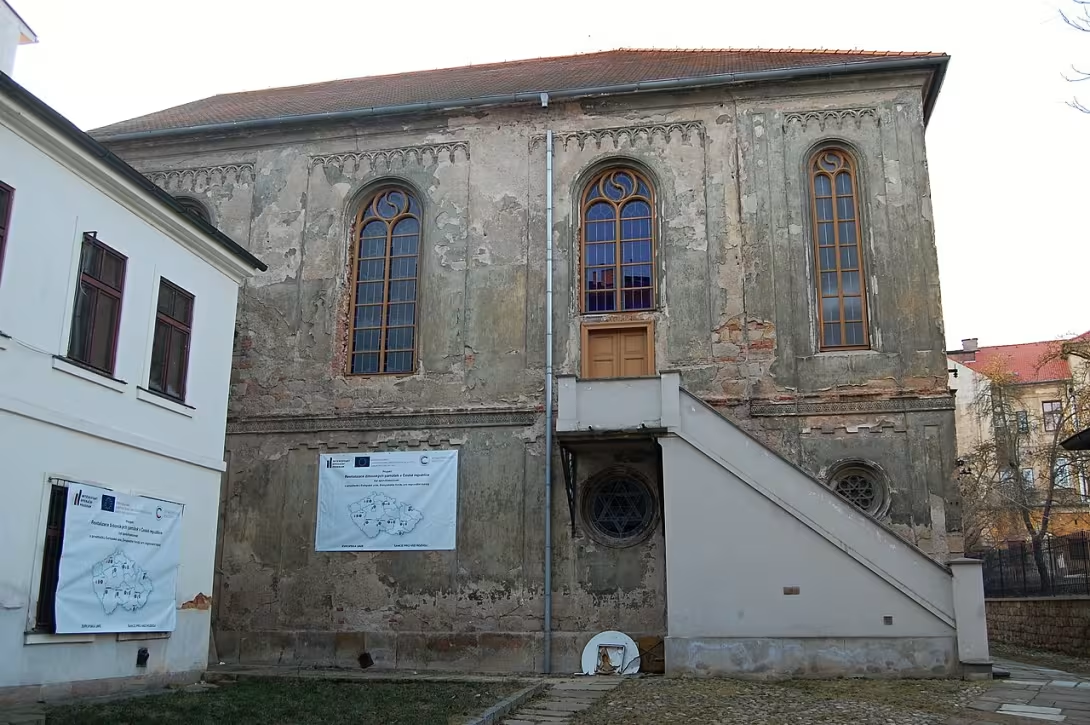
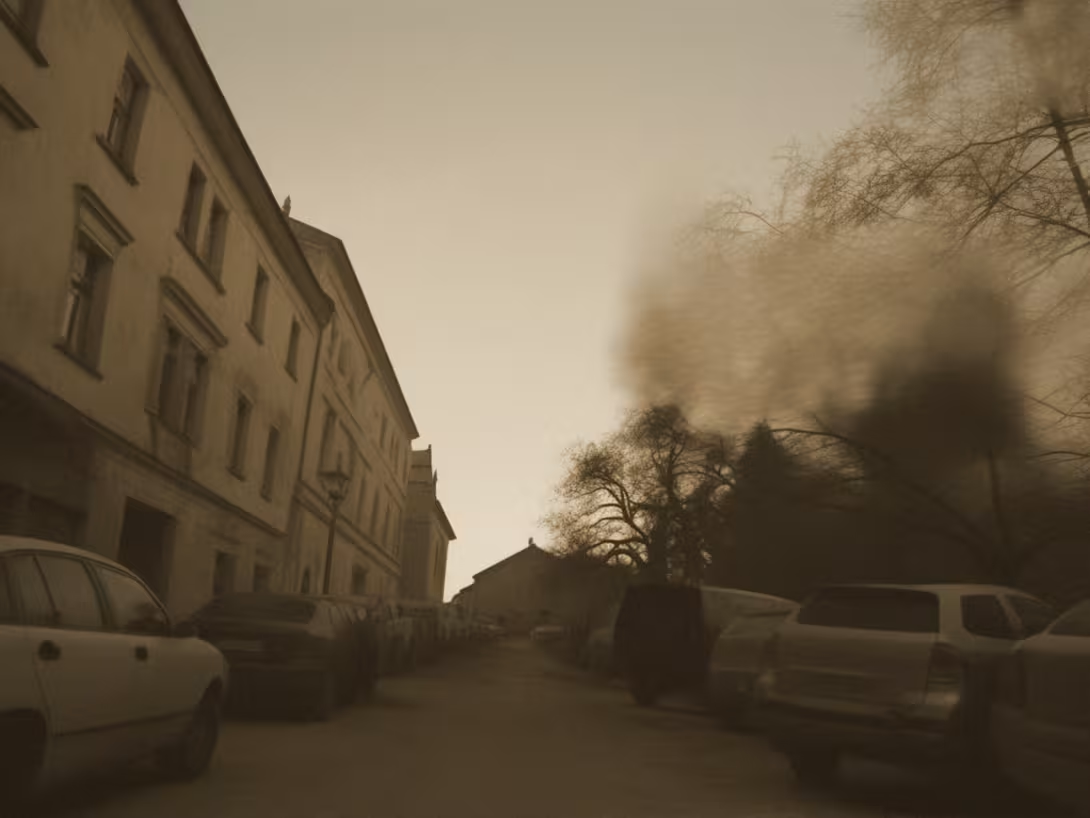
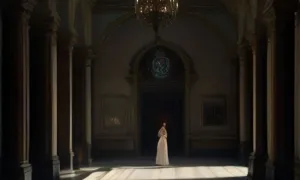
The historical appearance on the left is an AI-generated visualisation and serves as inspiration only.
Historical milestones
- 1857
- The ceremonial laying of the base stone.
- 1859
- The consecration of the newly built synagogue.
- 1869
- Synagogue equipment with new organ from C.L. Edenhofer.
Architectural development
It is a new Romanesque, one-sided and flat-stricken building with a rectangular plan. The interior is decorated with wooden cassette ceiling and contains two women's galleries on the columns. The builder was Wenzel Weisner.
Historical events
on 17 june 1857 the laying of the base stone, on 8 april 1859 the consecration of the synagogue, on 14 may 1869 the equipment of the new organ.
Owners
Jewish Municipality of Plzeň
Points of interest
- Stará synagoga v Plzni is the oldest preserved synagogue in this city. - It was built in 1857-1859 in the New Romanesque style. - On 17 June 1857 the base stone was ceremonially laid, in whose ceremony Rabbi Angelus Kafka spoke. - After the consecration of the synagogue on April 8, 1859, the community continued to expand, leading to the construction of the Auxiliary Synagogue in 1875. - Between 2010 and 2014 the monument underwent extensive reconstruction within the project of 10 stars, which gave her her original face back.
Guide
Show guide text
This text was created by artificial intelligence and has not been editorially reviewed. It may contain inaccuracies.
Welcome to Pilsen. Right now, at this moment, you're facing one of the most important and oldest religious structures in the city. Before your eyes stands the Old Synagogue, who is a silent but deeply speaking witness to the history of South Suburbia. Feel this atmosphere surrounding you. Can you feel the weight of history floating in this space? This building is not just a wall and a roof, it is a symbol of identity, endurance and the growing power of the people who have found their home in this city. You are standing in front of the oldest preserved synagogue in Pilsen, and it is thanks to this recording that you can try to live her story deeper than you would allow a mere view of the street.
Let us return together to the mid-nineteenth century, when Pilsen was changing and developing. In this period, the Jewish community in our city was constantly growing. It needed space that was not just a place for prayer, but that reflected its growing importance and stability within Pilsen society. It is this need that has led to the decision to build this monumental object. The whole construction process began in 1857 when the foundation stone was ceremonially laid. Imagine the hope and excitement that people felt at the ceremony. The building was subsequently built between 1857 and 1859 and its completion meant a new chapter for the entire local community. The consecration of the synagogue took place on 8 April 1859, and from that moment this place became the heart of spiritual life.
Now pay attention to the architecture itself, which is now addressing you. The architect Martin Stelzer prepared the whole design. If you look at the overall scope of the building, you'll notice its new Romanesque style. This style is characterized by its robustness and balance, which gives the synagogue a sense of unwavering and lasting. The building has a rectangular plan, which creates a clear and harmonious structure that you can perceive from the outside. If you choose to enter the interior, prepare yourself for an experience that will completely consume you. Note above your heads. The ceiling is decorated with a beautiful wooden cluster ceiling, which gives space depth and a sense of grandeur. The inner space is also arranged to respect the religious traditions and social order at the time. Notice two women's galleries that are located on the upper floors. You can reach them by side-spinning steps, which is a fascinating architectural element that combines functionality with elegance. This whole space was designed to make every visitor feel dignity and peace.
The history of this place is not only about stones and wood, but above all about the people who left their mark. Speaking of beginnings, there's no forgetting the name of Rabbi Angelus Kafka. In June 1857, in the ceremonial ceremony to lay the foundation stone, he gave a speech which gave the initial quite and direction to the whole project. His words were a symbol of faith in the future prosperity of this community. In the history of this place there are also other important personalities such as Adolf Poznanski or Wenzel Weisner. These people were part of the living organism that this synagogue formed. Every name you hear here represents a piece of human destiny that was inextricably linked to this place.
Now I want to tell you one interesting thing that gives this place another dimension. The synagogue was still a living and evolving place after its ordination in 1859. In 1869 there was another significant change that affected not only the sound but also the whole spiritual atmosphere of the interior. A new organ was installed in the synagogue by master C. L. Edenhofer. Imagine the moment when for the first time the sound of these instruments sounded as the echoes of music spread across the rectangular space and filled the wooden ceiling with a sound that at that time had to be absolutely heavenly. The organ became an integral part of the identity of this place and gave it a musical dimension that lasted for many years.
Now that you know the basics, the architecture and the soul of this place, I suggest you let yourself be carried away by the atmosphere that exists here. The old synagogue is not just a historical object, it is a living symbol of the growth and endurance of the Jewish community in the nineteenth century. Feel her peace, look at the details you see, and try to imagine the people who stood here over a century ago in the same place as you. I wish your next steps after Pilsen were as rewarding as this moment spent on this monument. Thank you for your attention and have a wonderful journey on.
Tips for visitors
For the best experience we recommend a visit in the morning, when the interior is usually a quieter atmosphere suitable for a tour of architecture. You can easily reach the monument by public transport or walking; The current connections and routes are best checked in the traffic search engine.
When visiting, it is recommended to carry with you comfortable shoes and, if necessary, small means of use. If you are planning to photograph, the best light for capturing the neonatal details of the building is during clear days when the lighting is natural and balanced. The inner spaces with rectangular plan offer interesting perspectives for lovers of detail.
After a tour of the Old Synagogue you can continue for a walk in the surrounding area, which is rich in historical places. Within walking distance you will find the Auxiliary Synagogue, the Great Synagogue, the Rabbi House or the Shamese House. For a quieter moment and nature, Smetana's orchards are ideal, while history attracts you to the Old and New Jewish Cemetery.
Families with children can use the proximity of parks to relax after sightseeing. It is advisable to prepare a short story for children about the history of the Jewish community in Pilsen in order to make their visit educational and interesting. The whole area is very accessible for family trips.
Frequently asked questions
Can the monument be visited?
Religious buildings are usually open mainly during services; at other times a visit is normally arranged with the parish or the operator. We have not verified specific times.
Where is the monument?
Location: Jižní Předměstí, Plzeňský kraj. The map on this page shows the exact spot.
Why is the monument protected?
It is listed in the Central List of Cultural Monuments of the Czech Republic as a cultural monument (register no. 1000162856).
Businesses nearby
Do you run a restaurant, accommodation, shop, museum, rental, wellness or other visitor service near this monument? Show yourself directly to the people heading to it — this is how they will see you in the app and on the web:
Events nearby

Zdroj akcí: otevřená data měst a obcí ČR (Národní katalog otevřených dat) a kalendář akcí Národního památkového ústavu.
Nearby
The auxiliary synagogue, the Great Synagogue, the Rabbi House, the House of Shames, the Old and New Jewish Cemetery, the Smetana Sets.
Accommodation nearby
Trips and activities nearby
Guided tours, tickets and activities nearby from GetYourGuide
Affiliate link: if you buy from the partner, we may receive a commission. The price for you does not change.
Search tours and activities →Themed route
1.Stará synagoga v Plzni (Type: Monuments) - The main destination of the trip, which reveals the rich history of the local Jewish community. 2. Auxiliary Synagogue (Type: Building) - Smaller religious space in the immediate surroundings. 3. Great Synagogue (Type: Monument) - An impressive building that dominates the whole neighborhood with its size. 4. Old and New Jewish Cemetery (Type: Cemetery) - A historic place reminiscent of the life and traditions of the ancient inhabitants. 5. Smetan sets (Type: Park) - Ideal space for relaxing and ending walks.
Seasonal recommendations
In spring, the surroundings of the synagogue awaken to life and the soft sunlight falling on the historical facades seems very gentle. In this period there is a pleasant freshness in South Suburb, which accompanies walks around the monument. We recommend taking layered clothes because morning temperatures can still be low. It is an ideal time to visit because tourists are still relatively few and you can view the monument in peace.
Summer months bring intense sunlight and long days to Pilsen, giving architecture a very distinctive look. In the main summer season, however, there are more people around, which is why it is best to arrive immediately after opening to avoid the greatest excitement and heat. Dress lightly and don't forget enough fluids. Shadows near the building provide a pleasant hiding place during the hottest hours of the afternoon.
Autumn season offers a melancholy and calm atmosphere where the colors of the surrounding trees turn into golden and brown shades. The lighting is low at this time, which is excellent for shooting details of the historical building. Comfortable shoes and waterproof jackets are suitable for walking around the sights. We recommend a visit in the afternoon when the sun creates interesting and deep shadows on the facade.
In winter, the atmosphere around the old synagogue is quiet and deliberate, especially in advent time or during freezing days. The days are short, so the light seems muted and cozy. It is necessary to take very warm clothes and solid shoes in case of snow or ice. Always check the current opening times before travelling, which are usually shorter in winter months than in other periods.
Visualizations and artistic views


The visualisations are generated by artificial intelligence and serve as inspiration.
Photos from the area
Real photos taken near the monument


Zdroj a licence jsou uvedeny u každého snímku.
Tips from visitors
No tips yet. Be the first!
Log in and add your tip.
Sources and literature
Photos: Ladislav Faigl / CC BY-SA 3.0 — Wikimedia Commons. The author and licence also appear when you hover over the image.
Faktickým podkladem tohoto textu byl článek na Wikipedii, jehož autory jsou přispěvatelé Wikipedie. Článek je dostupný pod licencí CC BY-SA 4.0.
Location on the map
More monuments – Jižní Předměstí
Show all in the municipality


Příběhy a pověsti
Legendy, pověsti a příběhy spjaté s touto památkou
Fotografie návštěvníků
Zatím žádné fotografie. Buďte první, kdo přidá fotografii z návštěvy!
Log in a přidejte svou fotografii nebo hodnoťte.
Za ověřenou návštěvu v aplikaci získáte víc bodů — poznáme podle GPS, že jste na místě.
Reviews and comments