



dům U Opic Building
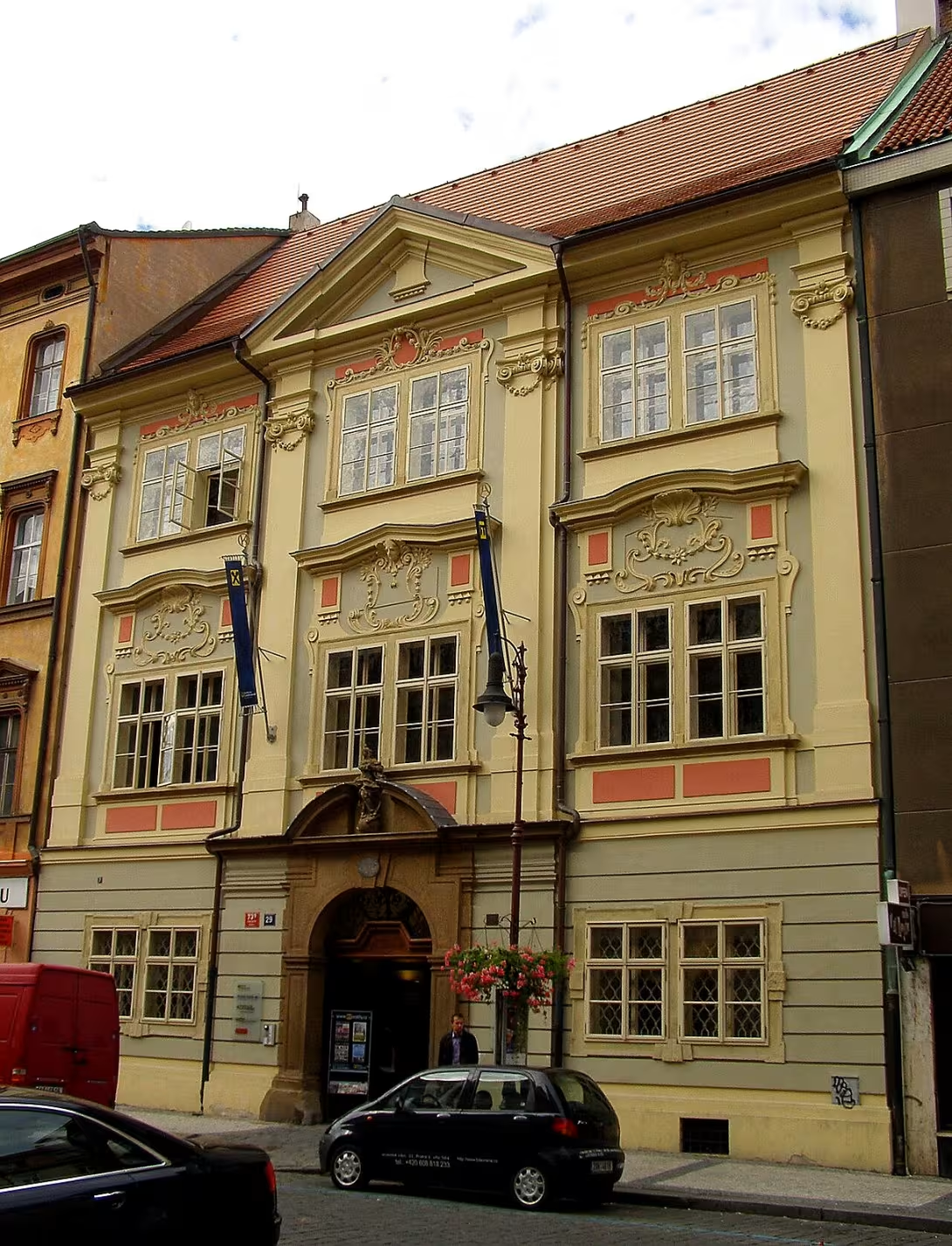
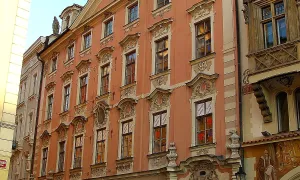
The House U Opic, located on Long street in Prague 1, is a Baroque palace with a rich history dating back to 1403. This building is not only a cultural monument of the Czech Republic, but also part of the UNESCO list for the Historical Centre of Prague. Its importance lies in the architectural character and history, which reflects the changes of the Old Town from the Middle Ages to the Baroque era.
The oldest news about the house dates back to 1403, but already in 1405 its home sign "The Monkey." Originally there were two Gothic houses whose cellars and parts of the masonry were preserved. In the 16th century a Renaissance townhouse was built, which in 1689 suffered a fire during the so-called French fire. After this tragic event, the Baroque reconstruction took place in the years around 1725 and then after 1760, which meant transformation into a four-wing palace type with representative halls and a palace staircase. In 1806 the roof pavilion behind the main wing was added, while in 1905 there was an increase in the left wing.
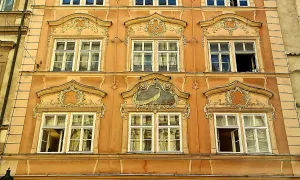
Architectural dům U Opic is a nice example of baroque art. Its six-axis facade with shallow two-axis risalite and a triangular shield is decorated with Pilasters with Ion header. The ground floor is decorated with belt brass, while the stone portal above the statue of the Virgin Mary Immaculata carved from the sandstone is located in the centre.
The history of ownership of the Monkey House is rich and complicated. In 1621, the house was moved by the royal chamber to the free lord Alexander zu Grotte. After the fire in 1689, the building became the property of the Knights of Losenau around 1760. In 1876 it was purchased by the Procházky family, followed by the Kohn family in 1928. After confiscation in 1941 the house was nationalized in 1946 and since 1964 it has been protected as a cultural monument. In 2007, Raiffeisen Landesbank Oberösterreich purchased the Austrian bank, which renovated it for its office needs.
The Monkey House is not only an architectural work, but also a witness to many historical events. Its name comes from the Latin term "domus simiae sunt in longa platea," which refers to frescoes of monkeys on the facade, which were common in the 15th century. The price of the house was 44 kicks of grossk at the time, which was significantly more than in neighbouring buildings.
Today dům U Opic is accessible to visitors and serves as an office building. Its historical and architectural significance makes it not only a monument, but also an inspirational place that resembles the rich history of Prague. Visiting this palace offers a unique view of the city's changes and its architectural heritage.
The Monkey House is a reminder not only of history, but also of the art and culture that shaped Prague. His visit offers valuable insight into the past and inspiration for the future.
Then and now
Drag the slider to compare how the landmark may have looked when it was built with the view today.
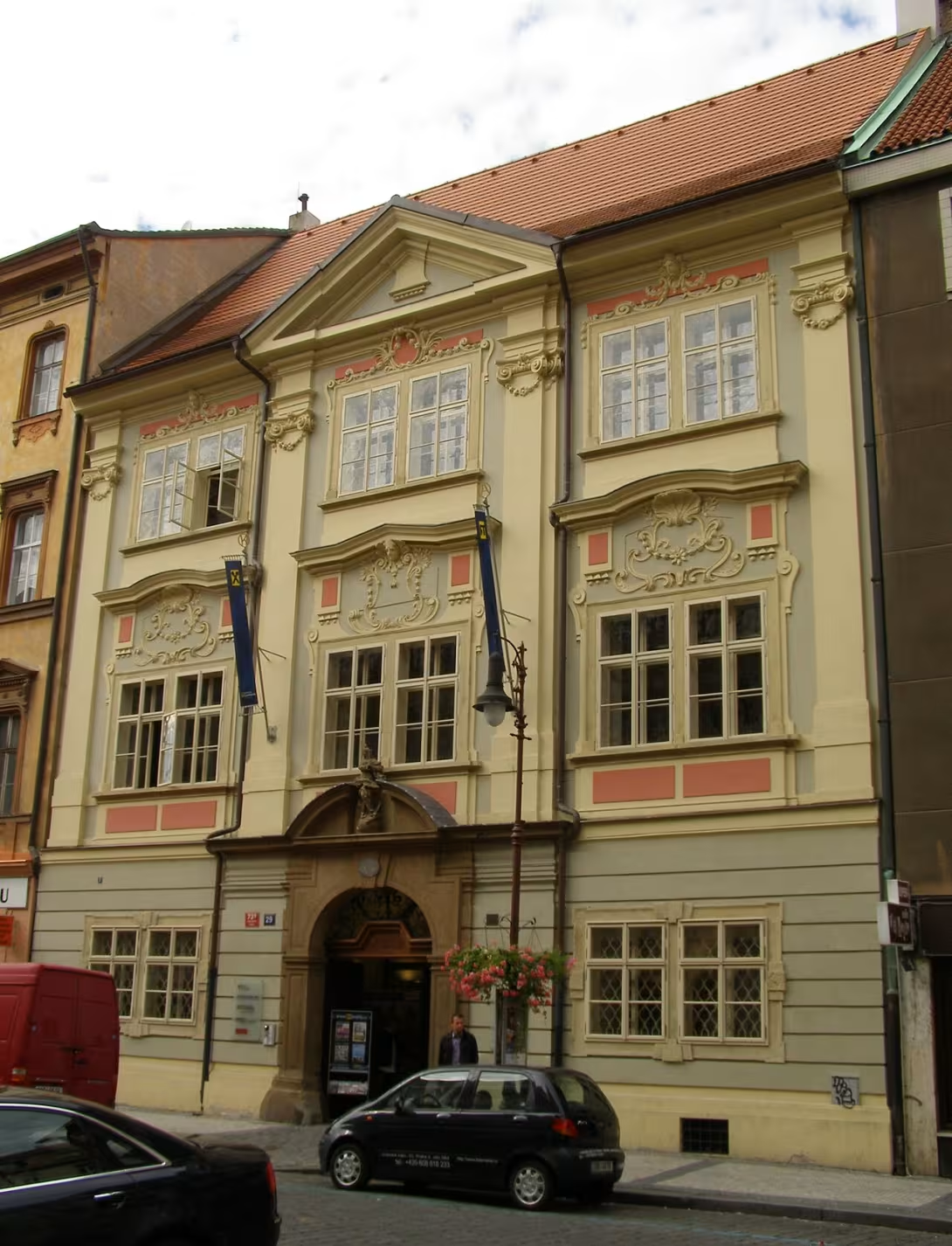

The historical appearance on the left is an AI-generated visualisation and serves as inspiration only.
Historical milestones
- 1403
- Oldest news about the house
- 1405
- Proof of home signs In monkeys
- 1689
- House fire in so-called French fire
- 2007
- Purchased by Raiffeisen Landesbank Oberösterreich and renovated
Architectural development
The original Gothic houses were replaced by a Renaissance house in the 16th century. After the fire in 1689, the Baroque reconstruction was followed by a four-wing palace in 1725 and after 1760. In 1806 the roof pavilion was added and in 1905 the left wing was raised.
Historical events
1689 French fire, 1964 declaration of cultural monument, 1995 entry on the UNESCO list.
Owners
1621 Alexander zu Grotte, 1760 Knights of Losenau, 1876 family Procházky, 1928 family Kohn, 1941 confiscated, 1946 nationalized, 2007 Raiffeisen Landesbank Oberösterreich.
Points of interest
- The home sign "At the Monkey" is documented in 1405. - There were originally two Gothic houses from which cellars and parts of masonry were preserved. - The name of the building refers to frescoes of monkeys on the facade, which were common in the 15th century. - The price of the house in the 15th century was 44 kicks of grosches, which was significantly more than in neighbouring buildings. - The ground floor is decorated with belt brass and stone portal with sandstone statue of Our Lady Immaculata.
Guide
Show guide text
This text was created by artificial intelligence and has not been editorially reviewed. It may contain inaccuracies.
Welcome to the heart of old Prague. You are standing on one of the oldest and most lively streets of our royal city, on Long Street, which immediately transmits you to another era. In front of your eyes is an impressive building, which immediately attracts the attention of every bystander with its elegance and baroque palace character. Feel this atmosphere. Can you feel the weight of history floating in these narrow alleys? This house is not just an ordinary building made of stone and mortar. He is a living witness to hundreds of years of Prague's life, a witness to ups and downs, fires and renewal. Look at his facade and try to imagine how many generations of people have stopped here, how many shops have been closed and how many secrets these walls have kept.
But in order to understand what you are seeing right now, we need to go back deep into the past together. The history of this place is much older than it might seem. The oldest mention of this object dates back to 1403. At that time, however, this Baroque palace did not exist, as you know it today. There were originally two separate Gothic houses in this place. Imagine Prague in the early 15th century. The streets were full of hoof sounds, the smell of artisanal workshops and the voices of people who built the foundations of the future city. But in the 16th century, the city's needs and lifestyle change. On the basis of the old Gothic buildings, a new Renaissance townhouse was built. This building was a symbol of a new era, an era of bloom and new architectural ideas.
But history can be unpredictable and sometimes cruel. In 1689, Prague was affected by a devastating disaster that people then called the French fire. It is this fire that has fundamentally changed the face of this place. Many buildings in the area were destroyed or badly damaged after this event. This tragic event led to the house being rebuilt. What you admire today is the result of this subsequent reconstruction which breathed into the building its present, beautiful baroque appearance. So what you see is actually layered history where baroque elegance tries to cover up and celebrate the older ages.
Now pay attention to the architecture itself and the details you have right in front of you. Although the building has a baroque character, its roots are deep in the past. If you had the chance to descend to the depths of the earth, you would have encountered an incredible treasure. In the underground of this house there were still preserved cellars and parts of masonry from those original Gothic houses. It is fascinating that while the styles of Gothic across the Renaissance were changing above the earth, the oldest foundations remained here, silence resembles the beginnings of this place.
Now look up at the facade. Notice how the building looks monumental. Now focus on what gives this house its unique identity. The name of the Monkey House is not just a random label. It refers to frescoes of monkeys that decorate the facade. This may seem unusual to you, but in the 15th century, this layer of decoration on the facade was quite common. These paintings served as a visual identification for people who moved in the streets. At a time when there were no descriptive numbers and addresses were not as clear as today, home signs were key to the orientation in space. And right here, it's an incredibly powerful sign.
And here comes one of the most interesting things I can tell you. This homegrown sign, that is, the name "At the Monkey," has been documented in our historical documents since 1405. Consider the incredible continuity. Imagine this name and this symbol have been accompanying this place for over six centuries! This is absolutely extraordinary in a changing world. This house has kept its name through fires, reconstructions and changes to political regimes.
Speaking of the importance of this place, we can't forget the people who lived here or lived here. The history of this house and its prestigious status in the past was associated with a name like Alexander zu Grotte. Although every detail of his life in this particular house does not need to be written in every textbook, his presence reminds us that these houses were not just ordinary houses for craftsmen, but inhabited personalities who had their meaning and influence in Prague.
And if you're interested in history, maybe the economic side of things will surprise you. Do you know how much this building was valued in the 15th century? According to historical records, this house at the time cost an incredible forty-four grosches. To imagine it, it was at that time a very high amount, which was significantly higher than many other neighboring buildings. This clearly shows that in the 15th century it was one of the most prestigious addresses in the city. People wanted to live here because this place had status and value.
Today, this house is renovated again and serves as proof that after centuries history can be preserved and revived for generations to come. It is a place where old Prague meets modern life and yet retains its nobility.
I hope that this short journey over the centuries has at least caught your eye a little bit and helped you better understand what you're seeing in front of you. The Monkey House is just one of many pearls you can find in Prague. Every building in this neighborhood has its own story, its own soul and its own secrets. I suggest you continue your walk around the old town. Look up at the facades, pay attention to the details, look for home signs, and let the magic of this city consume you. Every other street can surprise you with something new. Thank you for the moment and I wish you a beautiful and inspiring visit to Prague.
Tips for visitors
For the best experience we recommend a visit in the morning when the Baroque details of the building illuminate the natural light beautifully. It is advisable to choose the time away from the main tourist peaks to make the atmosphere of the historic alley quieter.
You can easily reach the location by public transport; check current connections and timetables in the search engine or mobile application of the transport undertaking.
When shooting, focus on the facade from the angles in Long Street, where the Baroque character of the object excels best. Take with you comfortable shoes suitable for historical surfaces and possibly your own drink.
Near is the Church of St. Hashtala, which is an ideal place for a short stop. It is advisable for families with children to plan a visit in less busy times, allowing a more peaceful tour of historical details without a great rush.
Frequently asked questions
Can the monument be visited?
The building is in use (offices, a school, shops and the like). The interior is generally accessible only during operating hours and tours are not usually offered; we have not verified the details. You can see the exterior from the street.
Where is the monument?
Location: Praha 1, Hlavní město Praha. The map on this page shows the exact spot.
Why is the monument protected?
It is listed in the Central List of Cultural Monuments of the Czech Republic as a cultural monument (register no. 1000150761).
Businesses nearby
Do you run a restaurant, accommodation, shop, museum, rental, wellness or other visitor service near this monument? Show yourself directly to the people heading to it — this is how they will see you in the app and on the web:
Events nearby

Zdroj akcí: otevřená data měst a obcí ČR (Národní katalog otevřených dat) a kalendář akcí Národního památkového ústavu.
Nearby
Church of St. Hashtala
Accommodation nearby
Trips and activities nearby
Guided tours, tickets and activities nearby from GetYourGuide
Affiliate link: if you buy from the partner, we may receive a commission. The price for you does not change.
Search tours and activities →Themed route
Thematic cruise route: The Monkey House and the Around
1. The Monkey House (Palace) * Type: * Historical Palace * Why is it worth visiting: * This Baroque house, known as "dům U Opic," is one of the oldest and most interesting buildings in Prague's Old Town. Its history dates back to the 16th century and today serves as a seat of the National Museum in Prague. It is a great example of Baroque architecture with rich interiors that deserve the attention of every lover of history and art.
2. Church of St. Hashtala * Type: * Church * Why is it worth visiting: * This Baroque church is not only a spiritual centre but also an architectural pearl of the Old Town Quarter. Built in the 18th century, it offers an attractive interior with rich decoration and original altar. Its location on the square is ideal for relaxing moments after a tour of the palace.
3. Old Town Square * Type: * Square * Why is it worth visiting: * This historic heart of Prague is famous for its beautiful architecture and atmosphere. After a tour of the church you can walk around old houses, shops and restaurants that deliver the square unique character. It's also where important historical events took place.
4. Old Town Hall * Type: * Council * Why is it worth visiting: * This Gothic building is one of the most famous monuments in the Old Town Square. It is famous for its tower, which offers panoramic views of Prague. The interior with Gothic elements and historical decoration is also very attractive.
5. Dust gate * Type: * Gate * Why is it worth a visit: * This Gothic gate structure was an important element of the Old Town's defence. Today it is famous for its history and architecture, which attracts the attention of visitors from all over the world. It's an ideal place to end a trip after a tour of other monuments.
This route offers a view of the rich history and architecture of the Old Town District, each of the points visited has its unique meaning and beauty.
Seasonal recommendations
In spring, the palace is dominated by a fresh atmosphere and a waking city. The soft spring light highlights the details of the facade and the surrounding greenery in the streets of Prague 1 give a refreshing impression. We recommend visiting the memory in the morning when the air is the cleanest. Due to the variable weather, it is advisable to choose light but laminated clothing.
The summer season brings intense sun and high contrast that gives the building a very dynamic look. In the centre of the city there is a loud and energetic rush of the main season. To avoid the biggest crowds and heat, it's best to come first thing in the morning at the opening. Remember light, breathable clothes and plenty of fluids.
Autumn is a time of golden light and quieter pace. The atmosphere around the house U Monkey is more melancholic at this time, which underlines the colorful leaves around. An ideal visit in the afternoon is when the sun falls and creates pleasant shadows. The practical recommendation is to bring a waterproof jacket and comfortable shoes.
In winter, the palace is very cozy, thanks to the contrast between freezing outdoor air and warm indoor lighting. Short days and advent time give the place a special magical mood. It is necessary to choose really warm clothes and to count on the possible shortened opening time in the planning care.
Visualizations and artistic views


The visualisations are generated by artificial intelligence and serve as inspiration.
Photos from the area
Real photos taken near the monument


Zdroj a licence jsou uvedeny u každého snímku.
Tips from visitors
No tips yet. Be the first!
Log in and add your tip.
Sources and literature
Photos: Michal Kmínek / CC BY-SA 3.0 — Wikimedia Commons. The author and licence also appear when you hover over the image.
Faktickým podkladem tohoto textu byl článek na Wikipedii, jehož autory jsou přispěvatelé Wikipedie. Článek je dostupný pod licencí CC BY-SA 4.0.
Location on the map
Příběhy a pověsti
Legendy, pověsti a příběhy spjaté s touto památkou
Fotografie návštěvníků
Zatím žádné fotografie. Buďte první, kdo přidá fotografii z návštěvy!
Log in a přidejte svou fotografii nebo hodnoťte.
Za ověřenou návštěvu v aplikaci získáte víc bodů — poznáme podle GPS, že jste na místě.
Reviews and comments