






Dům U slona Building
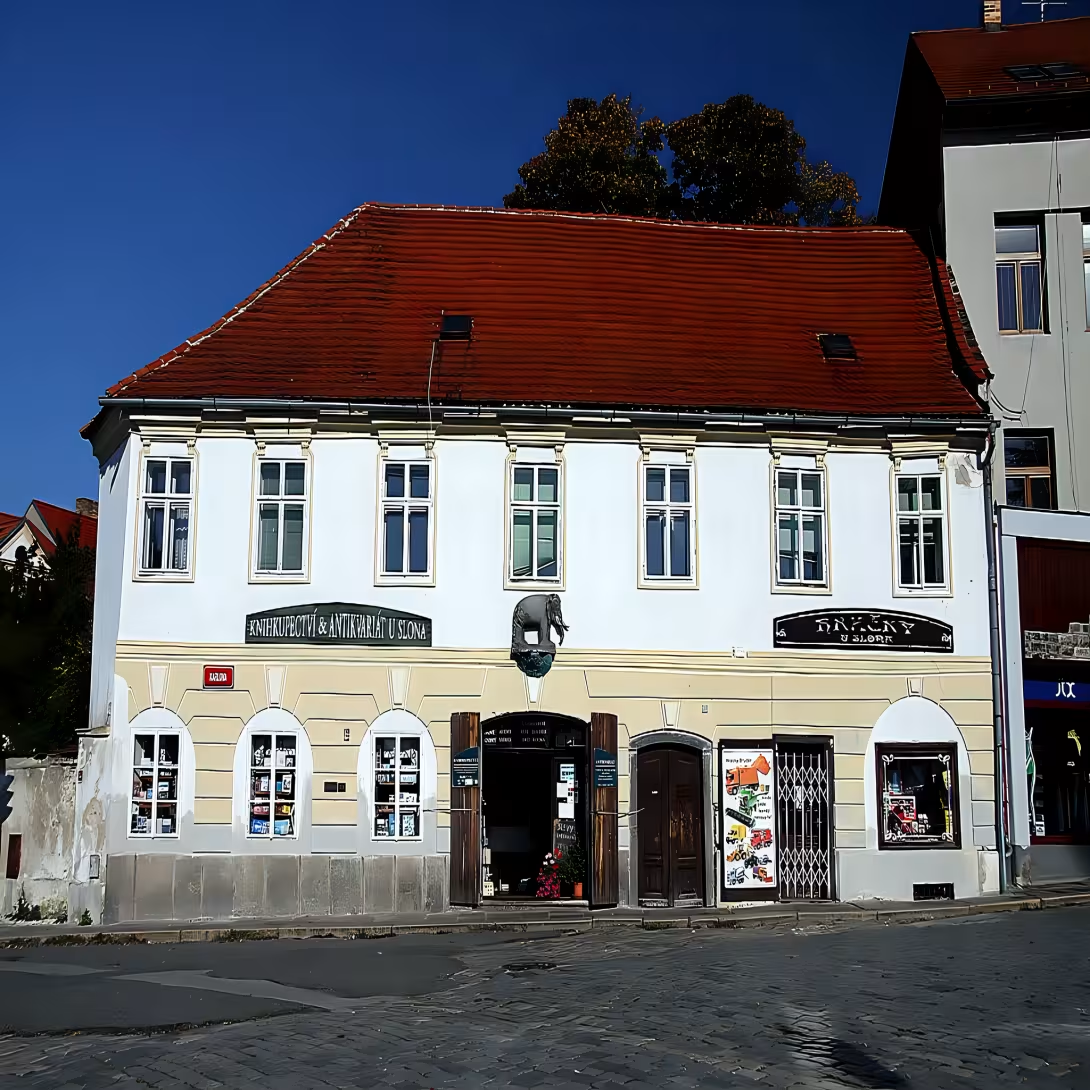
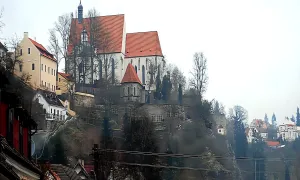
The House U Elephant is a historic building in Budejovice Suburb in the centre of Sand. It's on the list of cultural monuments. The core of the building dates back to the third quarter of the 13th century and the current form dates back to 1824. The monument is remarkable by its specific triangular plan, which is given by the wall. It also captures the preserved Gothic cellars, the Empire facade and, above all, the original home sign of the elephant.
At the site of today's building there was originally a house of a guard outside Prague Gate. It probably came from the third quarter of the 13th century. Around 1824 this older building was replaced by a contemporary townhouse. The creation of today's form of the building falls within the period when the period of classicism and empir developed in Habsburg monarchy and Czech countries. All this took place in an atmosphere beginning with the industrial revolution and national renewal.
The construction has a specific triangular plan given by the course of the adjacent wall wall. The Gothic cellars are preserved in the building. The exterior of the building is decorated with an Empire facade and the original home sign of an elephant from 1824, which is one of the most famous Spanish home signs.
For a long time, the fate of the object was uncertain. In 1982, however, the house was purchased by a kunsthistorian JUDr. et PhDr. Jaromír Stach Černín. By doing so, he saved the building from being demolished and forced its entry into the protected buildings, thereby starting its renewal. The Stach family currently owns the house.
The local Society of Friends of the House U Elephant is also actively seeking to save and restore the monument. The funding for these activities comes from cultural events and from a public collection. The future use of the house is considered to include the setting up of the Stone Bridge Museum or the permanent exhibition of paintings of the academic painter Franz Roman Dragoon.
Currently, the building is located in the historical core of the Sand in the immediate vicinity of the Stone Bridge and the Otava River. Visiting this place offers a valuable example of classical architecture with Gothic foundations and unique home signs. Saving this monument is the result of the efforts of experts and the public. Come to discover this remarkable part of written history and support its other fates.
Then and now
Drag the slider to compare how the landmark may have looked when it was built with the view today.
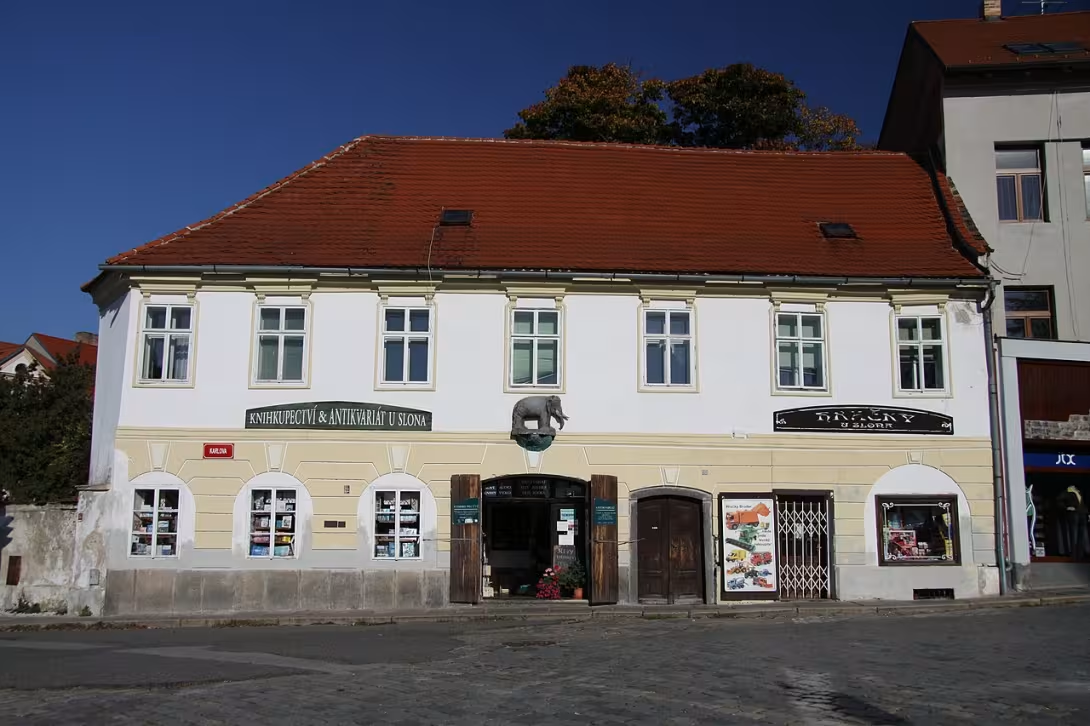
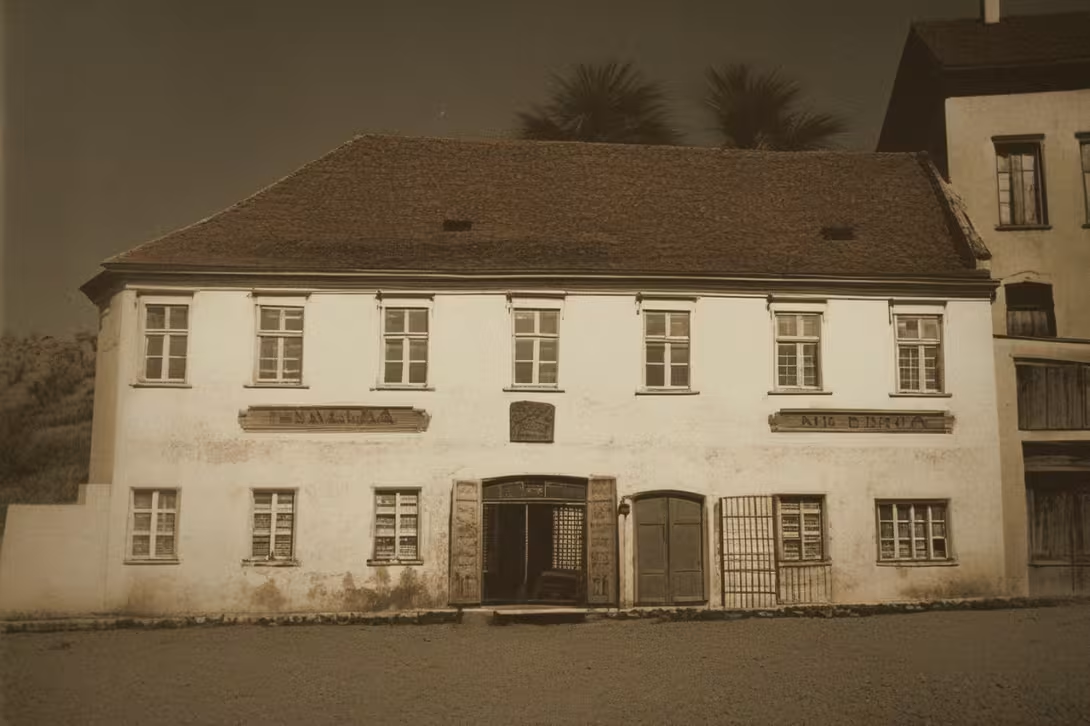
The historical appearance on the left is an AI-generated visualisation and serves as inspiration only.
Historical milestones
- 1824
- The present township's Classicist house was built and the original home sign of the elephant was created.
- 1982
- Kunsthistorian Jaromír Stach Černín purchased the house, saved it from being demolished and enforced its registration among the protected objects.
Architectural development
The original building from the 13th century was replaced by a contemporary classical townhouse built around 1824. The building has a specific triangular plan given by the passage of the wall and preserved in the Gothic cellars. The exterior is decorated with an Empire facade and the original home sign of an elephant.
Historical events
Third quarter of the 13th century - the original house of the guard used to stand on the spot; 1824 - the construction of a contemporary classical house and the creation of an elephant's home sign; 1982 - the house was purchased by Jaromír Stach Černín, thereby saving it from being demolished and enforcing its monument protection.
Owners
The Stach family (since 1982 when the house was purchased by a kunsthistorian Jaromír Stach Černín).
Points of interest
- The core of the building dates back to the third quarter of the 13th century and the current form dates back to 1824. - The monument is remarkable by its specific triangular plan, which is given by the wall. - Gothic cellars, Empire facade and the original home sign of the elephant from 1824 were preserved in the building. - In 1982, the house was purchased by a kunsthistorian, which saved him from being demolished and forced his entry into the protected buildings. - The future use of the house is considered to include the setting up of the Stone Bridge Museum or the permanent exhibition of the paintings of the academic painter Franz Roman Dragoun.
Guide
Show guide text
This text was created by artificial intelligence and has not been editorially reviewed. It may contain inaccuracies.
Welcome to Budejovice Suburb in Sand. Right now you're standing in front of a remarkable historical building known as Dům U slona. Take a moment of this first impression and let yourself breathe into history, which is literally tangible here. In front of you is a building whose current form will impress you at first sight with its specific triangular plan. This unconventional shape was not created by accident, because it was given by the adjacent wall which once defined and protected the city. Let's dive together into the story of this place and explore its deep roots and interesting fates.
If we go against the flow of time, we'll find that the history of this place goes incredibly deep into the past. The core of the building has its roots in the third quarter of the 13th century. Originally in this place, before the former Prague Gate, the house of the guard was built. The sand developed dynamically at the time, and this strategic place at the walls was of great importance. The original medieval building was transformed over the centuries, until it reached its next big chapter in the nineteenth century. Around 1824, a contemporary townhouse was built which gave the building a face that we still admire in the main features. It is this year that the original home sign of the elephant comes from, which gave the entire object its unmistakable name and soul.
Now, when you look directly at the building itself, notice the details that make up its unique character. The architects, whose names were unfortunately not preserved, left an unmistakable manuscript on the facade. The building boasts a beautiful Empire facade that gives the whole house a noble and elegant atmosphere. Take a look at this facade and see the proportions of classical architecture that has harmoniously merged with the historic city centre. Although the modern visitor sees mainly the above-ground part of the house, there are witnesses of ancient times under you and inside the building. On the ground floor and underground, ancient Gothic cellars have been preserved, which remember the times long past, and remind us that today's appearance of the house has grown on solid foundations dating back to the Middle Ages.
Every old house has stories of people who have linked their lives to it, and Dům U slona is no exception. In modern history, the fates of the personalities who saved this memory from ruin bind to it. In 1982, a crucial moment took place to save the entire building. The art historian Jaromír Stach Černín purchased the house at a time when he was threatened with a sad fate in the form of demolition. Thanks to his enormous efforts and professional enthusiasm, he managed to save this valuable historical structure for future generations. It is Jaromír Stach Černín that has also promoted its registration among the protected objects, thereby ensuring that Dům U slona remains a permanent part of the Spanish cultural heritage. The artist František Roman Dragoun is also associated with this place, which underlines the fact that Dům U slona attracted creative souls and people with feelings for beauty.
When you think about it, it's fascinating how the house could resist the transformation of centuries. It bears its name after the home sign of an elephant that was placed here in 1824. At that time, it was a common way to mark a house in a building where descriptive numbers were not enough or were not so common, but the elephant on the house was and still is something exceptional and exotic that attracts the views of bystanders. Imagine the people who came through here 200 years ago when the facade was new, or even before, when the medieval army house was here.
I believe a tour of the Elephant House has enriched you with a new view of the history of the sand. When you set out on the next town tour, remember the story of saving this monument and the people who breathed in her new life. Thank you for your attention, I wish you a wonderful rest of your stay in Písek and see you at the next historic stops.
Tips for visitors
A tour of the historical house With the elephant we recommend planning for the morning hours, when the atmosphere in Budějovice Suburb is quieter and the city is still alive. Use the train or bus to Písek for transport and then head to the centre on foot; Check the current connection in the search engine. If you stop travelling by public transport and choose a car, parking is possible on reserved city parking lots within walking distance of the monument. With you take comfortable shoes to walk on historic tiles and camera, because the exterior of the house and its surroundings offer great details to record. The best light for shooting facade and picturesque alleys is during morning sun or late afternoon lighting. In the immediate vicinity within 30 minutes walk do not miss a visit to the historic centre of Písek, the famous Stone Bridge in Písek, which is the oldest preserved bridge in the Czech Republic, and a pleasant walk along the picturesque bank of the river Otava. Families with children will appreciate a modest walk through the historic heart of the city associated with feeding birds by the river Otava and discovering local corners.
Businesses nearby
Do you run a restaurant, accommodation, shop, museum, rental, wellness or other visitor service near this monument? Show yourself directly to the people heading to it — this is how they will see you in the app and on the web:
Events nearby
Zdroj akcí: otevřená data měst a obcí ČR (Národní katalog otevřených dat) a kalendář akcí Národního památkového ústavu.
Nearby
The historic centre of the city of Písek, the Stone Bridge in Písek and the Otava River.
Accommodation nearby
Themed route
1.Dům U slona Type: Other Why is worth a visit: This main destination in Budejovice Suburb represents an important historical building with a unique atmosphere. He bears his name after home signs and forms an interesting part of local architecture.
2. Historical Center of Písek Type: Historical Center Why is it worth a visit: The historical core of the city attracts to walks through its picturesque streets and ancient buildings. It is located close to the starting point of the trip.
3. Stone bridge in Sand Type: Bridge Why is it worth a visit: It is the oldest preserved stone bridge in the Czech Republic, which has huge historical significance. With its architecture, it connects the shores and forms a symbol of the city.
4. River Otava Type: River Why is it worth a visit: The water flow flowing through the city gives the whole route a picturesque character and a calm atmosphere. Along its shores it is possible to relax and admire views of historical monuments.
Seasonal recommendations
Spring: During the spring season, Dům U slona is opened in the glow of new flowers that add to the atmosphere a touch of freshness and life. The sun rays illuminate historical architecture in a fascinating way, which is the perfect time to take photos. Views of flowering trees and shrubs are unforgettable. Visitors are advised to wear light clothes, but also bring an umbrella or coat, because spring weather can suddenly be variable. The best time to visit is usually an eccentric day when the crowd is fewer people.
Summer: Summer brings long sunny days and warm evenings, causing a visit to Dom U Elephant to be full of light and life. The sun lights up the historic house in a breathtaking atmosphere, supplemented by flowering gardens around the monument. In the main summer season more visitors may appear, so it is advisable to come earlier afternoon or in the morning to avoid long fronts. It is recommended to wear light and light clothes, sunglasses and plenty of drinking drinks.
Autumn: In autumn, Dům U slona offers a unique atmosphere with colorful tree leaves and warm colours of shining sunlight. The view of historical buildings that are transformed in the background of a fine autumn colorimetric is extremely engaging. This season the weather may be irregular, so visitors are advised to wear more layers of clothing and bring an umbrella. The best times to visit are usually eccentric days when there are slightly fewer people.
Winter: Winter visit Home With the elephant, it offers beautiful views covered with snow and illuminated with ice rays. Historical architecture radiates a slight silence during this period, which can be ideal for a peaceful walk. In winter, opening hours are usually shorter and visitors are advised to wear warm clothes, including hats and gloves. The best time to visit is in the morning or eccentric day to avoid too long fronts and enjoy a quieter atmosphere.
Visualizations and artistic views


The visualisations are generated by artificial intelligence and serve as inspiration.
Photos from the area
Real photos taken near the monument

Zdroj a licence jsou uvedeny u každého snímku.
Tips from visitors
No tips yet. Be the first!
Log in and add your tip.
Sources and literature
Photos: Chmee2 / CC BY 3.0, rozlišení zvýšeno umělou inteligencí — Wikimedia Commons. The author and licence also appear when you hover over the image.
Faktickým podkladem tohoto textu byl článek na Wikipedii, jehož autory jsou přispěvatelé Wikipedie. Článek je dostupný pod licencí CC BY-SA 4.0.
Location on the map
More monuments – Budějovické Předměstí
Show all in the municipality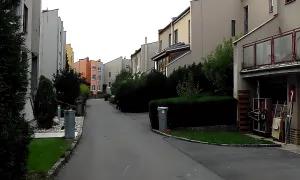
Příběhy a pověsti
Legendy, pověsti a příběhy spjaté s touto památkou
Fotografie návštěvníků
Zatím žádné fotografie. Buďte první, kdo přidá fotografii z návštěvy!
Log in a přidejte svou fotografii nebo hodnoťte.
Za ověřenou návštěvu v aplikaci získáte víc bodů — poznáme podle GPS, že jste na místě.
Reviews and comments