






Raabova vila Villa
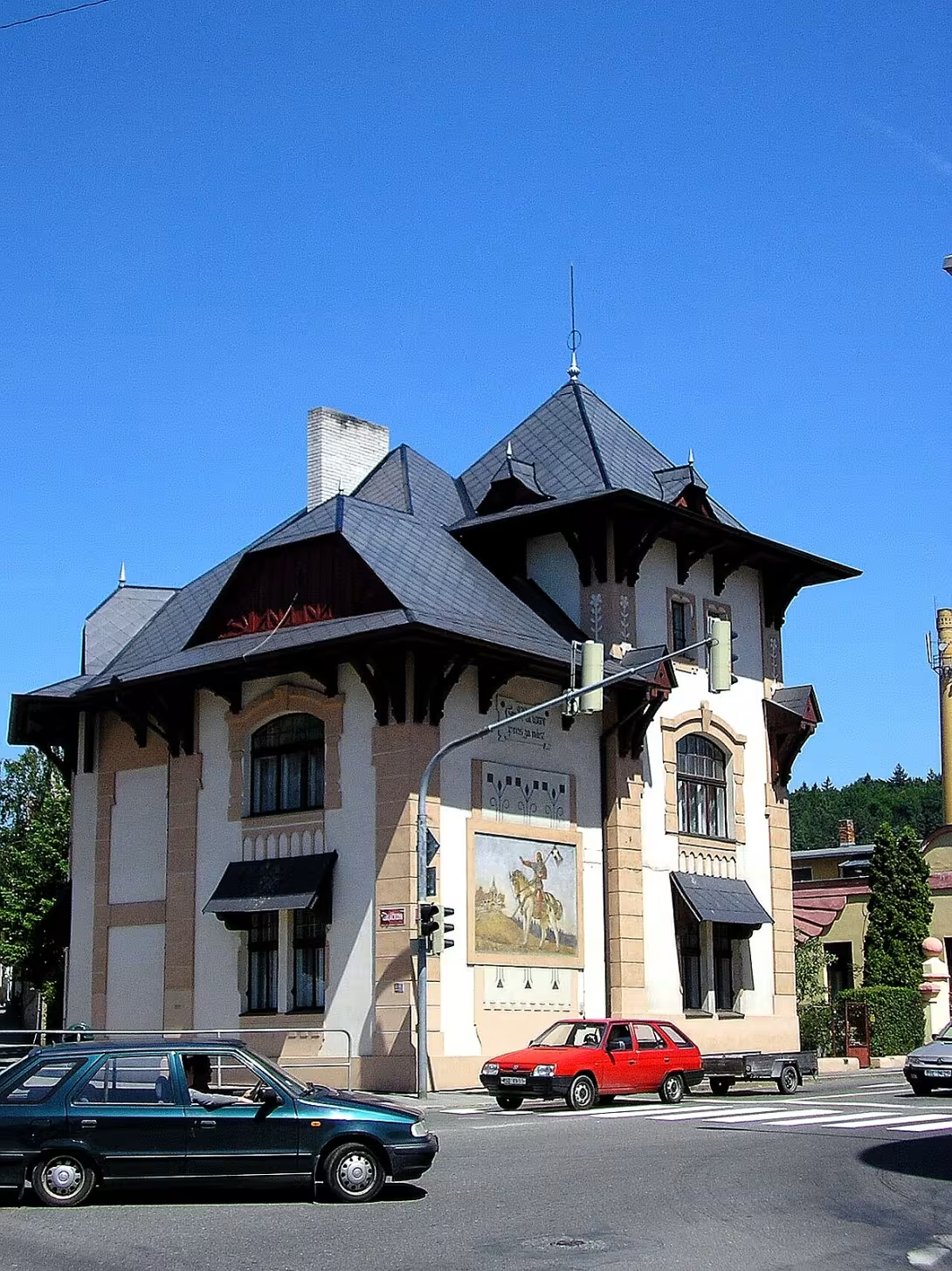
Raabova vila in Písek is an important Art Nouveau cultural monument built in 1901 according to the design of architect Dusán Jurkovic. The building is located in the northeast of the town at Sedláčkova 434 / 1. It represents a unique combination of elements of Slovak and Swiss folk architecture with a revolutionary facade.
The villa was established at the turn of the 19th and 20th centuries, i.e. in the period when modern architecture seeking inspiration in folk art and national traditions began to be promoted in Czech countries. The industrialist Adolf Raab had the building built near his factory and station Sand city. It is assumed that the architect chose to recommend his colleague, industrialist Antonín Kunz, for whom Jurkovic had previously designed a factory in Hranice. Raabova vila was the first separate construction that Dušan Jurkovič designed.
The construction was used for living the owner's family as an administrative facility for factory workers. The property has three apartments and one attic room. Architecturally, the house is remarkable with a fragmented roof supported by wooden carved beams. The dominant element of the exterior is the painting of St. Wenceslas with the inscription "St. Wenceslas, pray for us!." Although Jurkovic combined folk motives in the design, he also advocated a revolutionary mechanical facade for the time being.
Adolf Raab has owned a villa since its completion in 1901. In 1958 it was included in the list of cultural monuments, confirming its historical and architectural value. The area where the building is located today serves as an industrial site.
At present Raabova vila is a protected object which is not accessible to the public. The early creation of Dusan Jurkovic and the period industrial development of Písek remains an important proof of architecture. When visiting the city, it is worth seeing this unique house at least from the outside and appreciating its specific architectural manuscript.
Historical milestones
- 1901
- The exhibition of the villa according to the design of Dusana Jurkovice.
- 1958
- Entry of the object into the list of local cultural memories.
Architectural development
The villa was designed as the first separate building of Dusan Jurkovic. The construction uses wooden carved beams to support a broken roof. Architecture combines folk motifs with the requirement for a moderate facade.
Historical events
1901: Completion of the building of the villa according to the design of Dusan Jurkovic. 1958: Entry of the object into the list of cultural monuments.
Owners
Adolf Raab (since 1901)
Points of interest
- The villa represents a unique combination of elements of Slovak and Swiss folk architecture with a revolutionary facade. - This is the first separate construction designed by architect Dušan Jurkovič. - The construction was used for the owner's family and as administrative facilities for factory workers. - The dominant element of the outer part of the house is the painting of St. Wenceslas with the inscription begging for intercession. - A remarkable architectural element is a broken roof supported by wooden carved beams.
Guide
Show guide text
This text was created by artificial intelligence and has not been editorially reviewed. It may contain inaccuracies.
Welcome to a unique and historically important monument, Raab's villa, which stands as a testament to architectural art from the early 20th century. You are now facing an elegant building built in 1901, when the villa was completed according to the design of the famous architect Dusan Jurkovic. The villa boasts a unique combination of elements of Slovak and Swiss folk architecture, which are an excellent example of the revolutionary style of the time with a sharp facade. Looking at the hair roof and elegant line of the building you can feel the air of the past, when this architectural gem became home to the industrialist Adolf Raab.
Raabova vila was built on the territory of Budejovice Suburb near the factory led by Adolf Raab. This building was not only a beautiful home for the Raaba family, but it also served as an administrative centre for factory employees. In this context, you can imagine how life and work intertwined within these walls. This villa was not only the first independent project of Dusan Jurkovic, but also embodied his visionary mind and ability to combine functional needs with aesthetic ambitions.
Now pay attention to the architecture of this beautiful building. Note how the elements of Slovak and Swiss folk architecture are embodied in the form of roofs and facades. The dominant element of the exterior is the painting that gives the building its unique identity. On closer inspection you can feel how each detail has been carefully thought out and placed to create a harmonious whole.
The key personality associated with this monument is of course Dušan Jurkovič. His work on Raab's villa not only began his career as an architect, but also laid the foundations for his later achievements. Adolf Raab, owner of the factory and first inhabitants of the villa, was an important figure in the local economy and social life of that time.
The interesting thing about Raab's villa is its unique architecture. The villa represents a unique link between the elements of Slovak and Swiss folk architecture and the then revolutionized mechanical facade, making it unique among the monuments of this time. This architectural experiment is proof of how traditional elements could be reinterpreted in a modern context.
Before you look any further, you might also be interested in the idea that this object was recognised as a cultural monument in 1958. This shows its long-term importance and lasting value for the history of architecture.
I hope your visit to Rabe's villa was inspiring. You can remember this beautiful monument and its rich historical context during further tours of Budejovice Suburb. And now, with enthusiasm for future discoveries, I bid you farewell.
Tips for visitors
We recommend a visit in the morning during the working week, where there is a quieter operation in the surroundings and the light better depicts architectural details of the facade designed by Dusan Jurkovic.
The building is located near the railway station Sand city, which allows easy access by train. If you choose to travel by car, find parking in adjacent streets in Budějovice Suburb; Check the current standing possibilities according to local traffic signs.
Take comfortable shoes and a camera to view the exterior. If you are planning a longer stay, do not forget to have a snack and drink, as refreshments may not always be available in the immediate vicinity of the industrial area.
The best pictures of the villa are taken from the opposite side of the street, where the overall composition of the building stands out. Ideal lighting conditions for the capture of Jurkovic's manuscript arise during the side sun, which highlights the plastic elements on the facade.
The nearby station is Písek city and industrial area. For families with children the location is more suitable as a stop while walking through the city where children can admire interesting shapes of historical architecture from the beginning of the twentieth century.
Businesses nearby
Do you run a restaurant, accommodation, shop, museum, rental, wellness or other visitor service near this monument? Show yourself directly to the people heading to it — this is how they will see you in the app and on the web:
Events nearby
Zdroj akcí: otevřená data měst a obcí ČR (Národní katalog otevřených dat) a kalendář akcí Národního památkového ústavu.
Nearby
Nádraží Písek město, průmyslový areál v Písku.
Accommodation nearby
Themed route
1. Railway station Sand city, transport node. It's a good place to start your journey. 2. industrial complex in Písek, technical area. This part of town shows the history of local industry. 3. Raabova vila, apartment building. The main destination of the trip, which represents beautiful architecture.
Seasonal recommendations
Spring: During the spring season Raabova vila appears in a special light, when the sun lights up garden treatments and flowering shrubs. The atmosphere is full of new life, with a lot of birds returning to the nesting landscape. It is recommended to visit in the morning or in the evening when the crowds are smaller and enjoy a quiet view of the blooming nature. The good time is noon, when the sun lights up everything around you, but at the same time you avoid the peaks of traffic. Clothes should be adapted to variable weather: mild with umbrella.
Summer: In summer Raabova vila is a popular destination for visitors looking for relief from urban heat waves. Green gardens and flowering grass provide a beautiful background for photography. Although this is the time when the most people are on a trip, it is recommended to come early in the morning to enjoy lighter temperatures and lower crowds. Clothes should be light and light, with sun protection such as a hat or a parasol.
Autumn: In autumn the Raabova vila becomes melancholic charm when leaves fall and gardens turn into colored mosaics. The atmosphere is calm and quiet, providing ideal conditions for relaxation and sightseeing without crowd overload. The best time to visit is at noon or afternoon when the sun still illuminates the landscape. Clothes should be mild, with the possibility to add layers for cooler moments.
Winter: The winter visit to Raab's villa offers unique views of the historic building, where it is illuminated from the inside and surrounding is a quiet snow blanket. The atmosphere is quiet and intimate, which allows you to enjoy the memory without the stress of large crowds. The best time to visit is at noon or afternoon when the sun lights up the snow and ensures a warmer feeling. Clothes should be warm with protection against cold, such as fur coats and blankets, and you must not forget quality shoes for snow ground.
Visualizations and artistic views

The visualisations are generated by artificial intelligence and serve as inspiration.
Photos from the area
Real photos taken near the monument


Zdroj a licence jsou uvedeny u každého snímku.
Tips from visitors
No tips yet. Be the first!
Log in and add your tip.
Sources and literature
Photos: Stanislav Ferzik / CC BY-SA 4.0 — Wikimedia Commons. The author and licence also appear when you hover over the image.
Faktickým podkladem tohoto textu byl článek na Wikipedii, jehož autory jsou přispěvatelé Wikipedie. Článek je dostupný pod licencí CC BY-SA 4.0.
Location on the map
More monuments – Budějovické Předměstí
Show all in the municipality
Příběhy a pověsti
Legendy, pověsti a příběhy spjaté s touto památkou
Fotografie návštěvníků
Zatím žádné fotografie. Buďte první, kdo přidá fotografii z návštěvy!
Log in a přidejte svou fotografii nebo hodnoťte.
Za ověřenou návštěvu v aplikaci získáte víc bodů — poznáme podle GPS, že jste na místě.
Reviews and comments