



Dušníky Church
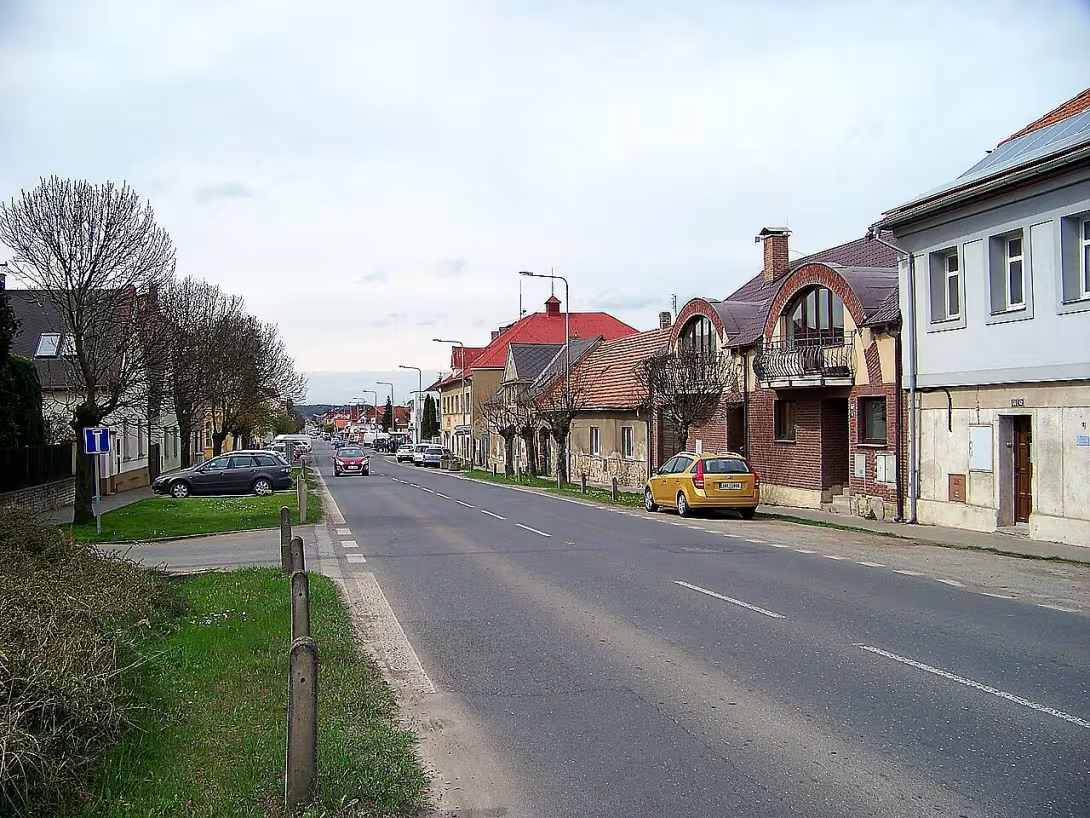
Dušníky is home to a notable Romanesque-style church dedicated to Saint George, located in Rudná village within the Středočeský kraj region of the Czech Republic. This monument stands on an artificial hill known as Homole and holds historical significance due to its architectural transformations and storied past. The current structure was built between 1908 and 1910 after its predecessor was demolished because of instability caused by nearby railway operations.
The origins of Dušníky trace back to a time when it was part of the Holy Roman Empire, experiencing significant political and religious changes, including the Hussite Wars. Initially gifted to a female Benedictine monastery by Václav II, the village later became associated with the Archbishop of Prague around 1378. It returned to the chapter of St. Vitus Cathedral in 1410 but changed hands several times during the tumultuous Hussite period before reverting to ecclesiastical control in 1628.
Architecturally, the church on Homole has undergone significant transformations over the centuries. Initially a chapel dedicated to Saint George since at least the 13th century, it was rebuilt in baroque style between 1687 and 1688. However, due to instability from railway operations, this structure was demolished in 1904. The current Romanesque-style church replaced it, constructed between 1908 and 1910.
Ownership of Dušníky has seen dramatic changes throughout its history. After being part of a Benedictine monastery's holdings, the village became associated with the Archbishop of Prague and later returned to the chapter of St. Vitus Cathedral in Prague. During the Hussite Wars, it changed hands among several secular owners before reverting to ecclesiastical control in 1628.
The history of Dušníky is marked by significant events that shaped its community. In 1649, a plague epidemic claimed many lives, and in 1753, a fire destroyed half the village's houses, with the remaining structures burned two days later. During the Thirty Years' War, Dušníky was completely plundered. Additionally, there is a legend suggesting that Homole was created as a burial mound for Hellich, a leader who fell at the Battle of Loděnice in 1179.
Today, the Romanesque-style church remains an important historical and architectural site within Dušníky. Its location near the railway line connecting Prague and Beroun makes it accessible to visitors interested in exploring the rich history and cultural heritage of this region. The church's storied past, marked by resilience through adversity, adds depth to its significance as a monument worth visiting.
Visiting Dušníky offers an opportunity to connect with a piece of Czech history that reflects both architectural evolution and historical endurance. Its Romanesque-style church stands not only as a testament to the community’s resilience but also as a beacon for those interested in exploring the layers of history embedded within this serene landscape.
Historical milestones
- 1179
- Battle of Loděnice where Hellich fell
- kolem 13. století
- Chapel dedicated to Saint George established
- 1378
- Village associated with Archbishop of Prague
- 1410
- Returned to chapter of St. Vitus Cathedral in Prague
- 1628
- Reverted to ecclesiastical control after Hussite Wars
- 1649
- Plague epidemic claimed many lives
- 1753
- Fire destroyed half the village's houses
- 1687-1688
- Church rebuilt in baroque style
- 1904
- Previous church demolished due to railway instability
- 1908-1910
- Current Romanesque-style church constructed
Architectural development
The church on Homole has undergone several transformations. Initially a chapel dedicated to Saint George since at least the 13th century, it was rebuilt in baroque style between 1687 and 1688. Due to instability from railway operations, it was demolished in 1904 and replaced with a new Romanesque-style church constructed between 1908 and 1910.
Historical events
In 1649, a significant number of inhabitants died during a plague epidemic.
A fire in 1753 destroyed half of Dušníky's houses, with the remaining structures burned two days later.
During the Thirty Years' War, Dušníky was completely plundered.
Owners
The village of Dušníky was initially owned by a female Benedictine monastery as a gift from Václav II. Around 1378, it became part of the estate of the Archbishop of Prague, and later returned to the chapter of St. Vitus Cathedral in 1410. During the Hussite Wars, it changed hands among several secular owners before reverting to the chapter in 1628.
Points of interest
- The artificial hill known as Homole, where the Romanesque-style church of Saint George is located, is steeped in legend; it's said to be a burial mound for Hellich, who perished at the Battle of Loděnice in 1179.
- Dušníky experienced dramatic shifts in ownership during its history. Initially part of a Benedictine monastery, it was later linked with the Archbishop of Prague and St. Vitus Cathedral chapter before undergoing secular changes during the Hussite Wars.
- The village faced severe adversity during the Thirty Years' War when it was completely plundered, reflecting the turbulent times that shaped this region's history.
- In 1753, a devastating fire destroyed half of Dušníky’s houses, with the remainder succumbing to flames two days later, highlighting the community's resilience in rebuilding and preserving its heritage.
- The church on Homole has seen multiple architectural transformations; originally a chapel dedicated to Saint George since at least the 13th century, it was rebuilt in baroque style before being replaced by the current Romanesque structure due to railway-induced instability.
Guide
This guide is narrated by a synthetic voice generated by artificial intelligence.
Show guide text
This text was created by artificial intelligence and has not been editorially reviewed. It may contain inaccuracies.
Welcome to Dušníky, a captivating historical site nestled within the charming town of Rudná in the Středočeský kraj region. As you stand here before us, take a moment to absorb your surroundings: an intriguing Romanesque-style church dedicated to Saint George majestically perched atop an artificial hill known as Homole. This serene setting invites you into a narrative rich with history and legend.
The origins of Dušníky trace back centuries, weaving through pivotal moments in Bohemian history. In 1179, the Battle of Loděnice marked a significant event here, where Hellich met his end—a figure whose legacy is intertwined with this land. By around the 13th century, a chapel dedicated to Saint George was established, signifying religious devotion and community growth. Over time, Dušníky saw various shifts in control; by 1378, it came under the patronage of the Archbishop of Prague. The village's allegiance shifted again in 1410 when it returned to the chapter of St. Vitus Cathedral in Prague. Following the Hussite Wars in 1628, ecclesiastical control was reinstated, and in 1649, a devastating plague swept through, leaving an indelible mark on its history.
As you gaze upon this Romanesque church, notice its sturdy structure standing resiliently against time. The architecture speaks of a period between 1908 and 1910 when the current building replaced its predecessor, which was demolished due to instability from nearby railway operations. While specific architectural details remain unnamed, the essence of its design is evident in the harmonious blend of form and function.
The hill upon which this church stands carries with it tales shrouded in mystery and legend. It's said that Homole is a burial mound for Hellich, adding an aura of mystique to your visit. This site has witnessed dramatic shifts in ownership over the centuries, reflecting its strategic importance and enduring significance through time.
As you continue to explore Dušníky, let these stories inspire a deeper appreciation for this historical gem. We invite you to wander further, perhaps along paths less traveled, where every step reveals more of this rich tapestry woven by history. Thank you for joining us on this journey; we hope it has sparked your curiosity and left you with lasting memories.
Farewell for now, but remember that Dušníky's stories are waiting for you to discover them anew each time you return.
Frequently asked questions
Can the monument be visited?
Religious buildings are usually open mainly during services; at other times a visit is normally arranged with the parish or the operator. We have not verified specific times.
Where is the monument?
Location: Rudná, Středočeský kraj. The map on this page shows the exact spot.
Businesses nearby
Do you run a restaurant, accommodation, shop, museum, rental, wellness or other visitor service near this monument? Show yourself directly to the people heading to it — this is how they will see you in the app and on the web:
Events nearby



Zdroj akcí: otevřená data měst a obcí ČR (Národní katalog otevřených dat) a kalendář akcí Národního památkového ústavu.
Nearby
Dušníky is located near the railway line connecting Prague and Beroun. The surrounding landscape includes natural features such as Dalejské údolí, through which the railway passes.
Accommodation nearby
Trips and activities nearby
Guided tours, tickets and activities nearby from GetYourGuide
Affiliate link: if you buy from the partner, we may receive a commission. The price for you does not change.
Search tours and activities →Themed route
Thematic Walking Tour: Dušníky and Surroundings
1. Dušníky Church - Type: Historical Church - Why Visit: The church of St. John the Baptist in Dušníky is a remarkable example of Gothic architecture, featuring stunning frescoes and intricate stonework that reflect its historical significance. It's an ideal starting point for exploring the rich cultural heritage of this area.
2. Dalejské Údolí (Dalej Valley) - Type: Natural Landscape - Why Visit: Located nearby, Dalejské Údolí offers a serene natural setting with its picturesque valley and lush greenery. The railway line running through the valley provides a unique perspective on how nature and infrastructure coexist harmoniously in this region.
3. Railway Line Viewpoint - Type: Scenic Spot - Why Visit: A short walk from Dušníky, there are several spots along the railway line where visitors can enjoy panoramic views of the surrounding landscape. This is a perfect place to appreciate the blend of natural beauty and historical engineering that characterizes this area.
This tour provides a balanced experience of cultural history and natural beauty in the vicinity of Dušníky, making it an enriching journey through time and nature.
Seasonal recommendations
Spring: Visiting Dušníky Church during spring offers a picturesque experience as the surrounding landscape begins to bloom with vibrant wildflowers and lush greenery, creating a serene backdrop for the historic site. The gentle warmth of the season allows visitors to comfortably explore both the church and its natural surroundings without the need for heavy clothing. However, it's advisable to wear layers that can be adjusted as temperatures may vary throughout the day. This time also sees an increase in local flora enthusiasts and photographers, making early morning visits ideal to avoid larger crowds and capture the site in softer light.
Summer: The summer months bring a lively atmosphere to Dušníky Church, with long daylight hours perfect for extended exploration of its architectural details and historical significance. During this peak tourist season, the church is often bustling with visitors, so arriving early can help secure a more peaceful experience. It's recommended to wear light clothing and comfortable footwear due to warmer temperatures and increased outdoor activity around the area. The vibrant greenery and sunlit ambiance enhance the beauty of both the church and its natural setting, making it an ideal time for those who enjoy lively environments.
Autumn: Autumn transforms Dušníky Church into a stunning canvas of warm hues as leaves change color in the surrounding landscape, providing a magical backdrop that enhances the historical charm of the site. The cooler temperatures make it comfortable to stroll around and explore without the need for heavy layers. This season is less crowded than summer, offering a more tranquil visit, although some visitors may still come to enjoy the picturesque scenery. Wearing layered clothing can help accommodate fluctuating temperatures throughout the day, ensuring comfort during your exploration.
Winter: Winter at Dušníky Church offers a unique and serene experience as snow blankets the landscape, creating a peaceful and almost mystical atmosphere around the historic site. The shorter daylight hours mean that visits are best planned for earlier in the day to make the most of the available light. It's essential to dress warmly with layers, including hats, gloves, and insulated footwear, to stay comfortable during your visit. While fewer visitors typically explore the church during this season, its quiet charm makes it a special time for those who appreciate the beauty of winter landscapes intertwined with historical architecture.
Visualizations and artistic views


The visualisations are generated by artificial intelligence and serve as inspiration.
Photos from the area
Real photos taken near the monument


Zdroj a licence jsou uvedeny u každého snímku.
Tips from visitors
No tips yet. Be the first!
Log in and add your tip.
Sources and literature
Photos: ŠJů / CC BY 4.0 — Wikimedia Commons. The author and licence also appear when you hover over the image.
Faktickým podkladem tohoto textu byl článek na Wikipedii, jehož autory jsou přispěvatelé Wikipedie. Článek je dostupný pod licencí CC BY-SA 4.0.
Location on the map






Příběhy a pověsti
Legendy, pověsti a příběhy spjaté s touto památkou
Příběh: Dušníky
Bylo to v pondělí ráno, kdy Petr zjistil, že jeho život se zhroutil pod nástrahami osudu. Během bouře, která mrazila až do krevních žil, postavil se na Homol…
Číst příběh
Pověst: Dušníky
Podle místní pověsti nestojí kostel svatého Jiří v Dušníkách na přirozeném pahorku, jak by se mohlo zdát. Homole, ten nápadný kopec uprostřed vsi, nebyl stvo…
Číst příběhFotografie návštěvníků
Zatím žádné fotografie. Buďte první, kdo přidá fotografii z návštěvy!
Log in a přidejte svou fotografii nebo hodnoťte.
Za ověřenou návštěvu v aplikaci získáte víc bodů — poznáme podle GPS, že jste na místě.
Reviews and comments