



evangelický kostel v Janských Lázních Church
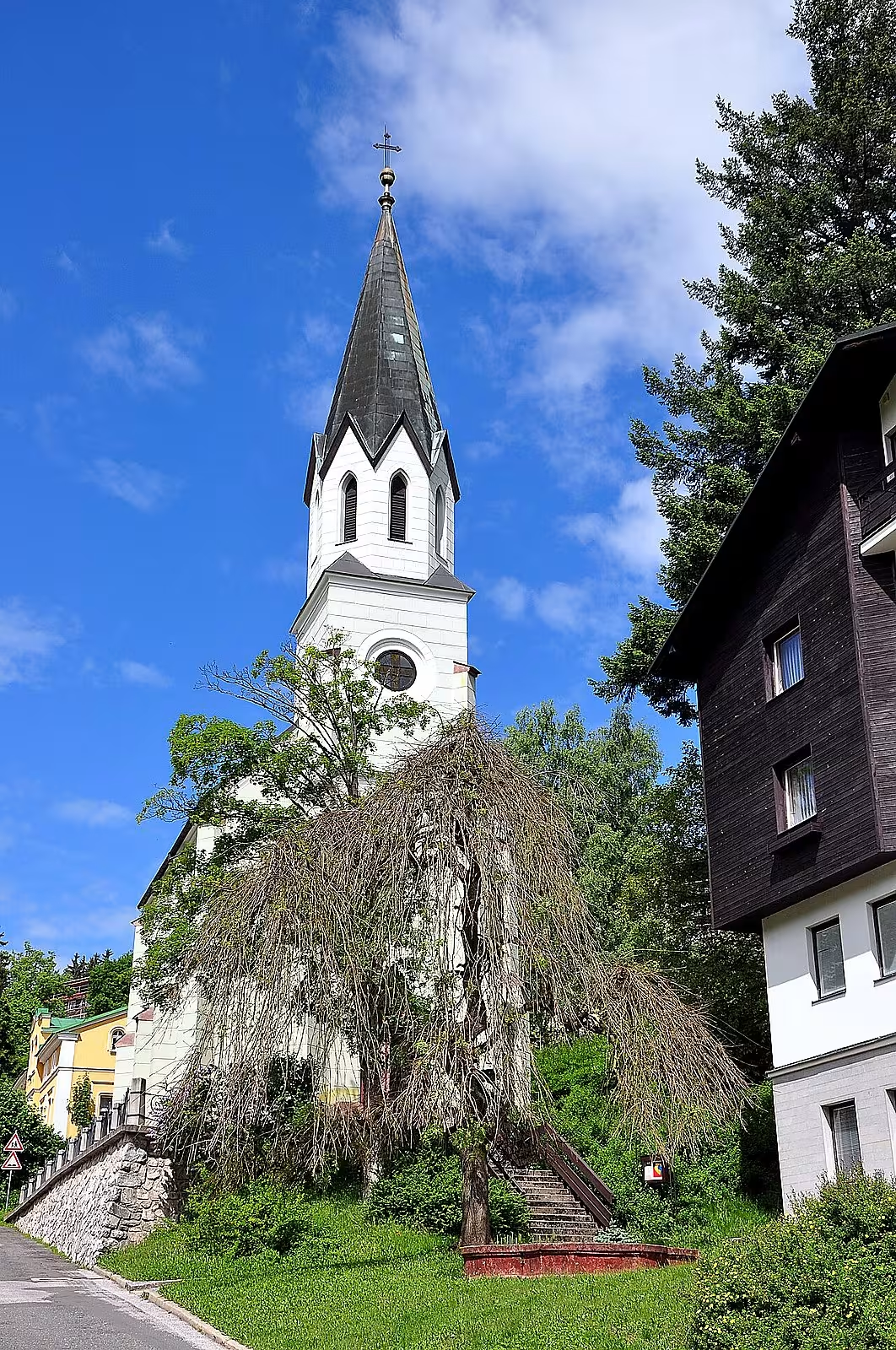
The Evangelical Church in Janské Lázně is a significant historical monument on Černohorská Street, east of the town center in Trutnov district, Královéhradecký kraj. Built between 1872 and 1879, this pseudogothic structure serves as an important place of worship for evangelicals, reflecting both architectural style and religious needs of its time. Its prominence is further underscored by its role in the development of spa tourism during the 19th century.
The church's origins are deeply intertwined with Janské Lázně's growth as a spa destination. In the latter half of the 19th century, the town expanded significantly due to its reputation for health tourism. This period also marked increased religious freedoms following an imperial patent in 1861 that granted equal rights to evangelicals and Catholics. The newfound equality prompted plans for constructing a dignified place of worship for evangelicals in Janské Lázně, leading to the establishment of this church as part of the Trutnov district of the Czech Brethren Church.
Architecturally, the Evangelical Church is a single-nave pseudogothic building that aligns with Černohorská Street. It features a distinctive tower above its entrance, transitioning from a square base to an octagonal shape at its highest level. The presbytery of the church inclines slightly towards the north and concludes with three bays covered by a star-shaped vault typical of new gothic architecture. In contrast, the nave boasts flat ceilings, showcasing a blend of traditional and innovative design elements.
Ownership and administration of the church have seen notable changes over time. Initially serving the Evangelical Augsburg Confession community in Heřmanovy Sejfy, it later became part of the Czech Brethren Church following World War II. This transition occurred after the expulsion of German-speaking residents from Janské Lázně, marking a significant shift in its administration.
Throughout its history, the church has been central to key events and developments within the community. Its construction between 1872 and 1879 was driven by the need for an appropriate place of worship amidst the town's spa tourism boom. Additionally, Jan Kupka, an evangelical pastor from Heřmanovy Sejfy, contributed to the area's development by building a house nearby intended as his retirement home and accommodation for spa guests.
Today, the Evangelical Church in Janské Lázně remains accessible to visitors, offering insight into its historical and architectural significance. Its preservation allows contemporary audiences to appreciate the blend of religious history and architectural style that characterizes this monument. Visitors are invited to explore this site, which not only serves as a testament to 19th-century evangelical worship but also stands as an enduring symbol of Janské Lázně's rich cultural heritage.
Then and now
Drag the slider to compare how the landmark may have looked when it was built with the view today.
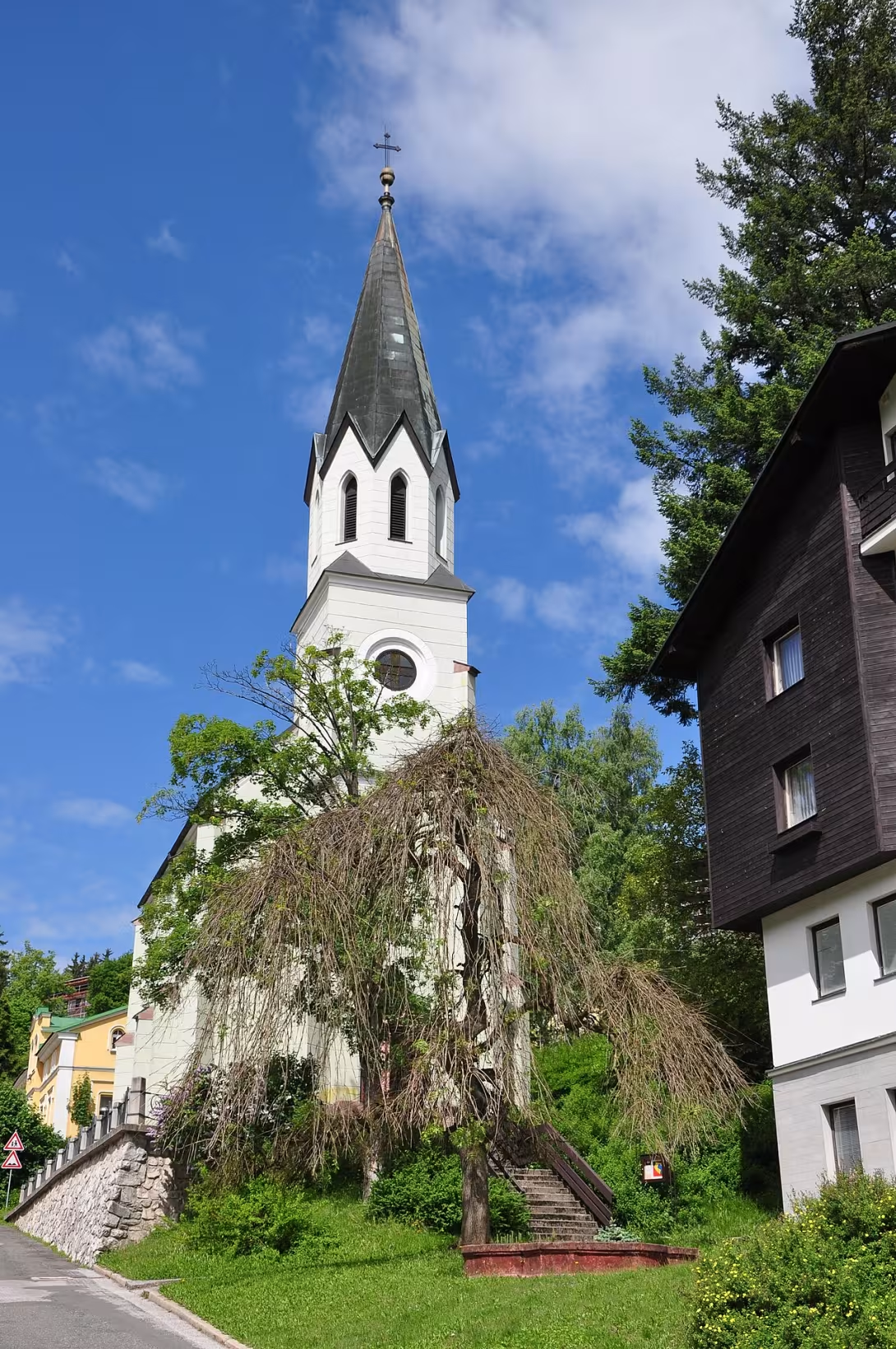
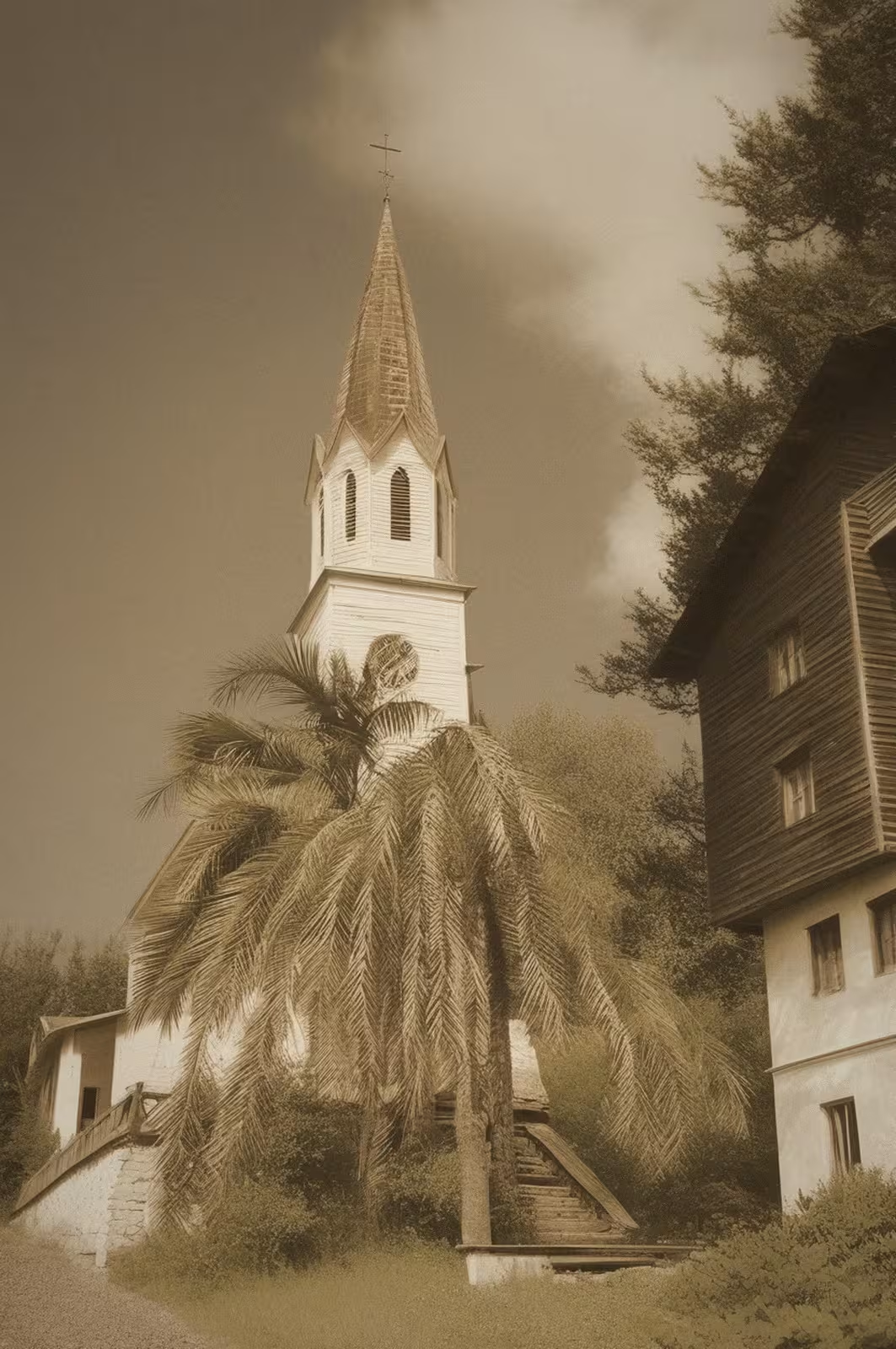
The historical appearance on the left is an AI-generated visualisation and serves as inspiration only.
Historical milestones
- 1861
- Imperial patent grants equal rights to evangelicals and Catholics.
- 1872
- Construction of the Evangelical Church in Janské Lázně begins.
- 1879
- Completion of the Evangelical Church construction.
- kolem 1945
- Church becomes part of the Czech Brethren Church post-WWII.
Architectural development
The Evangelical Church is a single-nave pseudogothic building aligned along Černohorská Street. It features a narrower square tower transitioning into an octagonal shape at its highest level. The presbytery, slightly inclined to the north, concludes with three bays and is covered by a star-shaped vault typical of new gothic architecture, while the nave has flat ceilings.
Historical events
The church was built between 1872 and 1879 as part of efforts to provide a dignified place for evangelical worship amidst growing spa tourism in Janské Lázně.
In 1861, an imperial patent granted equal rights to evangelicals with Catholics, prompting plans for the church's construction.
Owners
Originally served by the Evangelical Augsburg Confession community in Heřmanovy Sejfy; after World War II, ownership transferred to the Czech Brethren Church following the expulsion of German-speaking residents.
Points of interest
- The Evangelical Church in Janské Lázně was built between 1872 and 1879 as a pseudogothic structure on Černohorská Street. – Its construction was influenced by increased religious freedoms following an imperial patent in 1861, allowing equal rights for evangelicals and Catholics. - The church played a significant role in the development of spa tourism during the 19th century, aligning with Janské Lázně's growth as a health destination. – Architecturally, it features a distinctive tower transitioning from a square base to an octagonal shape, with a presbytery inclining north and covered by a star-shaped vault. - Initially serving the Evangelical Augsburg Confession community in Heřmanovy Sejfy, the church became part of the Czech Brethren Church after World War II following the expulsion of German-speaking residents.
Guide
This guide is narrated by a synthetic voice generated by artificial intelligence.
Show guide text
This text was created by artificial intelligence and has not been editorially reviewed. It may contain inaccuracies.
The evangelical church in Janské Lázně stands on Černohorská ulice, to the east of the city center. It serves as a preaching station for the Trutnov congregation of the Evangelical Church of the Czech Brethren. It is not listed as a protected monument.
The preaching station was established here in the nineteenth century. Originally it belonged to the evangelical congregation of the Augsburg Confession in Heřmanovy Sejfy. In the second half of the century, spa activities developed rapidly in Janské Lázně and the local evangelicals needed a dignified place for worship. They began planning the construction of a church after the imperial patent of eighteen sixty-one put them on equal footing with Catholics. The church was then built between eighteen seventy-two and eighteen seventy-nine.
The evangelical vicar from Heřmanovy Sejfy, Jan Kupka, had a house built next to the church. He wanted to retire there and partly the spa guests were also to live in it.
After nineteen forty-five, the German-speaking population was expelled and the church passed into the ownership of the Evangelical Church of the Czech Brethren. Janské Lázně became a preaching station of the congregation in Trutnov. The congregation in Heřmanovy Sejfy ceased to exist entirely.
The church is a single-nave structure in the neo-gothic style. By its position it respects the axis of Černohorská ulice. The presbytery, that is the space around the altar, therefore does not lie to the east as is usual, but points to the west with a slight deviation to the north. In front of the entrance facade stands a narrower four-sided tower, which in the highest story transitions into an eight-sided shape.
The presbytery is narrower than the nave and is closed off by a three-sided termination. It is vaulted with a neo-gothic star vault, whereas the nave has a flat ceiling.
Frequently asked questions
Can the monument be visited?
Religious buildings are usually open mainly during services; at other times a visit is normally arranged with the parish or the operator. We have not verified specific times.
Where is the monument?
Location: Janské Lázně, Královéhradecký kraj. The map on this page shows the exact spot.
Businesses nearby
Do you run a restaurant, accommodation, shop, museum, rental, wellness or other visitor service near this monument? Show yourself directly to the people heading to it — this is how they will see you in the app and on the web:
Nearby
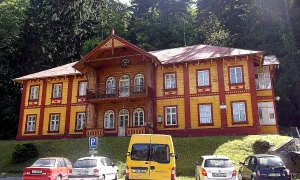
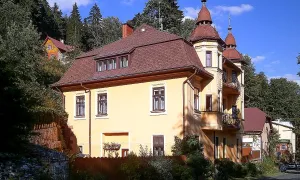
The church is situated on Černohorská Street, east of the town center. Nearby, a house was built by Jan Kupka for his retirement and to accommodate spa guests.
Accommodation nearby
Themed route
Trasa: Janské Lázně
1. Evangelický kostel (hlavní cíl): This historic church is a must-visit for its beautiful architecture and serene atmosphere. The church is a great example of a well-preserved Gothic Revival building.
2. Janovo Dům (0,2 km): This house was built by Jan Kupka for his retirement and to accommodate spa guests. It's a great example of a well-preserved Art Nouveau building.
3. Nádraží Janské Lázně (0,5 km): The train station is a charming example of a historic railway station building. It's a great place to learn about the history of the area and its transportation.
4. Kolonáda (0,7 km): This beautiful colonnade is a great place to relax and enjoy the surroundings. It's a great spot to take a break and enjoy the scenery.
5. Vodní pramen (1 km): The water spring is a natural source of water that has been used for therapeutic purposes for centuries. It's a great place to learn about the history of the area and its spa traditions.
Seasonal recommendations
Jaro
Spring is the ideal time to visit the Evangelical Church in Jesenice because nature around the church inspires life and abundance. The moist soil and blooming shrubs create a pleasant atmosphere that complements the historical ambiance of the church. The best time for a visit is in the morning or early afternoon when the sun shines, and the church remains peaceful. We recommend arriving early to avoid crowds of tourists who come to the spa during peak season.
Léto
In summer, the church in Jesenice is surrounded by blooming flowers and greenery. The best time for a visit is in the morning or early afternoon when the sun shines, and the church remains peaceful. We recommend arriving early to avoid crowds of tourists who come to the spa during peak season. Don't forget to bring sunglasses and sunscreen, as the sun can be very strong in Jesenice.
Podzim
The autumn period is an ideal time to visit the church in Jesenice because nature is full of colors and magic. The church is surrounded by shrubs and trees that create a beautiful atmosphere. The best time for a visit is in the morning or early afternoon when the sun shines, and the church remains peaceful. We recommend arriving early to avoid crowds of tourists who come to the spa during peak season.
Zima
Winter is a quiet season in Jesenice, but the church is still open and awaits visitors. The best time for a visit is in the morning or early afternoon when the church is peaceful and sunny. Don't forget to bring warm clothing and sunscreen, as winter in Jesenice can be very cold.
Visualizations and artistic views


The visualisations are generated by artificial intelligence and serve as inspiration.
Photos from the area
Real photos taken near the monument


Zdroj a licence jsou uvedeny u každého snímku.
Tips from visitors
No tips yet. Be the first!
Log in and add your tip.
Sources and literature
Photos: Ben Skála, Benfoto / CC BY-SA 3.0 — Wikimedia Commons. The author and licence also appear when you hover over the image.
Faktickým podkladem tohoto textu byl článek na Wikipedii, jehož autory jsou přispěvatelé Wikipedie. Článek je dostupný pod licencí CC BY-SA 4.0.
Location on the map

Příběhy a pověsti
Legendy, pověsti a příběhy spjaté s touto památkou
Fotografie návštěvníků
Zatím žádné fotografie. Buďte první, kdo přidá fotografii z návštěvy!
Log in a přidejte svou fotografii nebo hodnoťte.
Za ověřenou návštěvu v aplikaci získáte víc bodů — poznáme podle GPS, že jste na místě.
Reviews and comments