



evangelický kostel v Trutnově Church
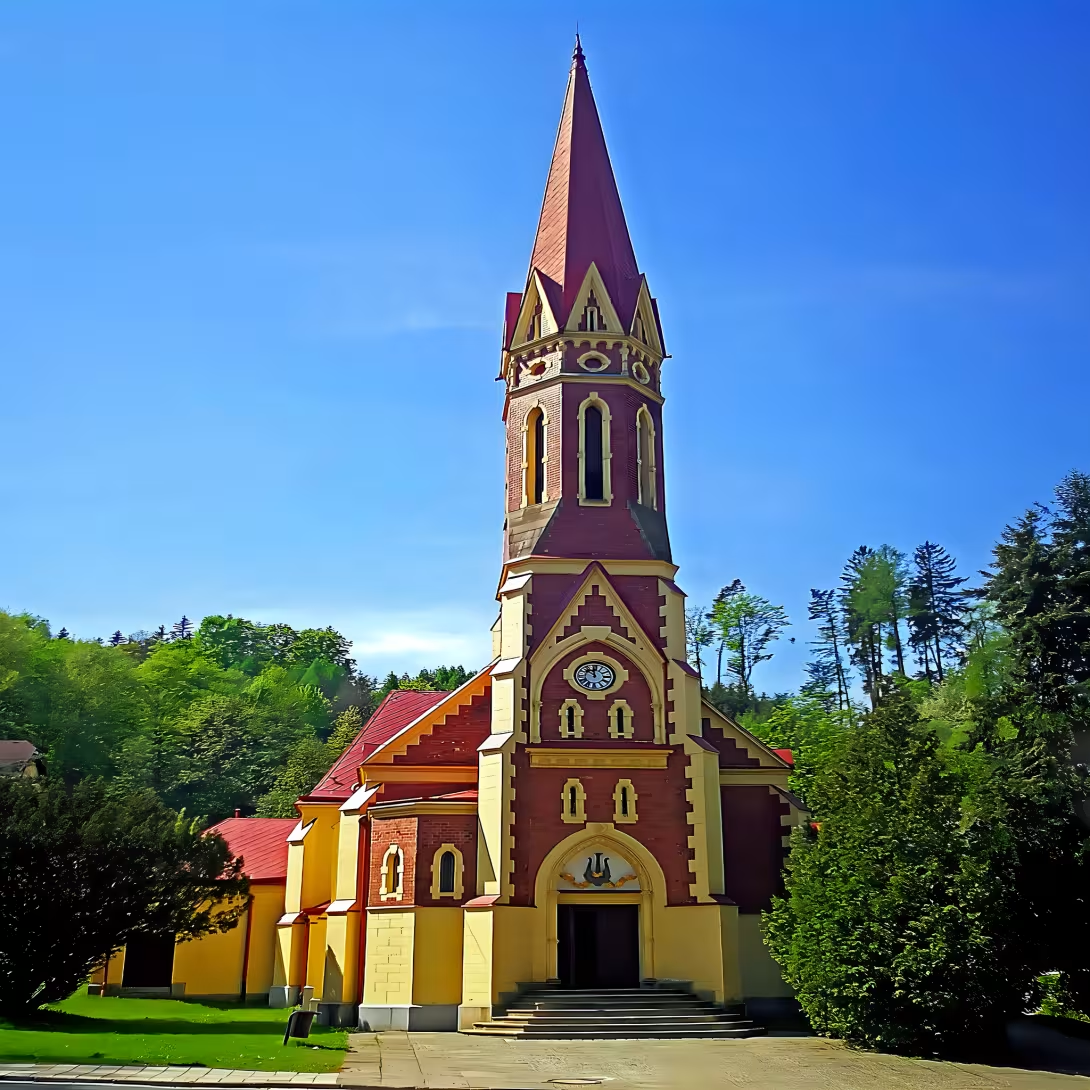
The Evangelical Church in Trutnov, now known as the Bohuslav Martinů Concert Hall, exemplifies architectural beauty and cultural evolution. Situated at Úpická Street in eastern Czech Republic's Trutnov, this neogothic structure was completed in 1900. Originally consecrated as Christuskirche (Christ's Church) on October 7 of that year, it served religious purposes until 1957. It later became a concert hall named after the esteemed Czech composer Bohuslav Martinů following renovations in 1980. Today, this historical monument hosts both concerts and religious services.
The church was conceived during a period when Bohemia was part of the Austro-Hungarian Empire, an era marked by cultural flourishing and national awakening. The neogothic style reflects a broader European trend of reviving medieval architectural forms popular at the turn of the 20th century. Architect Karel Steinhofer designed this structure under Karl Rieger's supervision. This choice signifies an embrace of historical aesthetics while catering to contemporary needs.
Architecturally, the Evangelical Church is notable for its neogothic design elements. The building features a striking eight-sided brick wall that reaches 43 meters in height at its façade, making it a prominent landmark in Trutnov. Inside, visitors can admire sculptures titled 'Hlas' (Voice) and 'Naslouchání' (Listening), crafted by artist Olbram Zoubek. These artistic elements enhance the building's historical and cultural significance.
Throughout its history, the church has undergone significant transformations. Initially serving as a place of worship until 1957, it fell into disrepair before being revitalized in 1980. The renovation transformed it into the Bohuslav Martinů Concert Hall, preserving its architectural integrity while adapting to new uses. This transition highlights the building's resilience and adaptability over time.
The monument has witnessed key events that underscore its historical importance. Its consecration as Christuskirche on October 7, 1900, marked the beginning of its religious function. The cessation of this role in 1957 paved the way for its later transformation into a concert hall. These milestones reflect broader cultural shifts and the evolving needs of the community it serves.
Today, the Bohuslav Martinů Concert Hall remains an integral part of Trutnov's cultural landscape. It is accessible to both locals and visitors, offering a unique blend of historical architecture and modern functionality. The building's dual role as a concert venue and place for religious services makes it a site worth visiting for those interested in history, architecture, or music.
The Evangelical Church in Trutnov stands as a remarkable example of architectural adaptation and cultural continuity. Its journey from a church to a concert hall encapsulates the dynamic interplay between tradition and modernity. Visitors are invited to explore this historical monument, where they can experience its rich heritage and appreciate its ongoing contribution to the community's cultural life.
Then and now
Drag the slider to compare how the landmark may have looked when it was built with the view today.
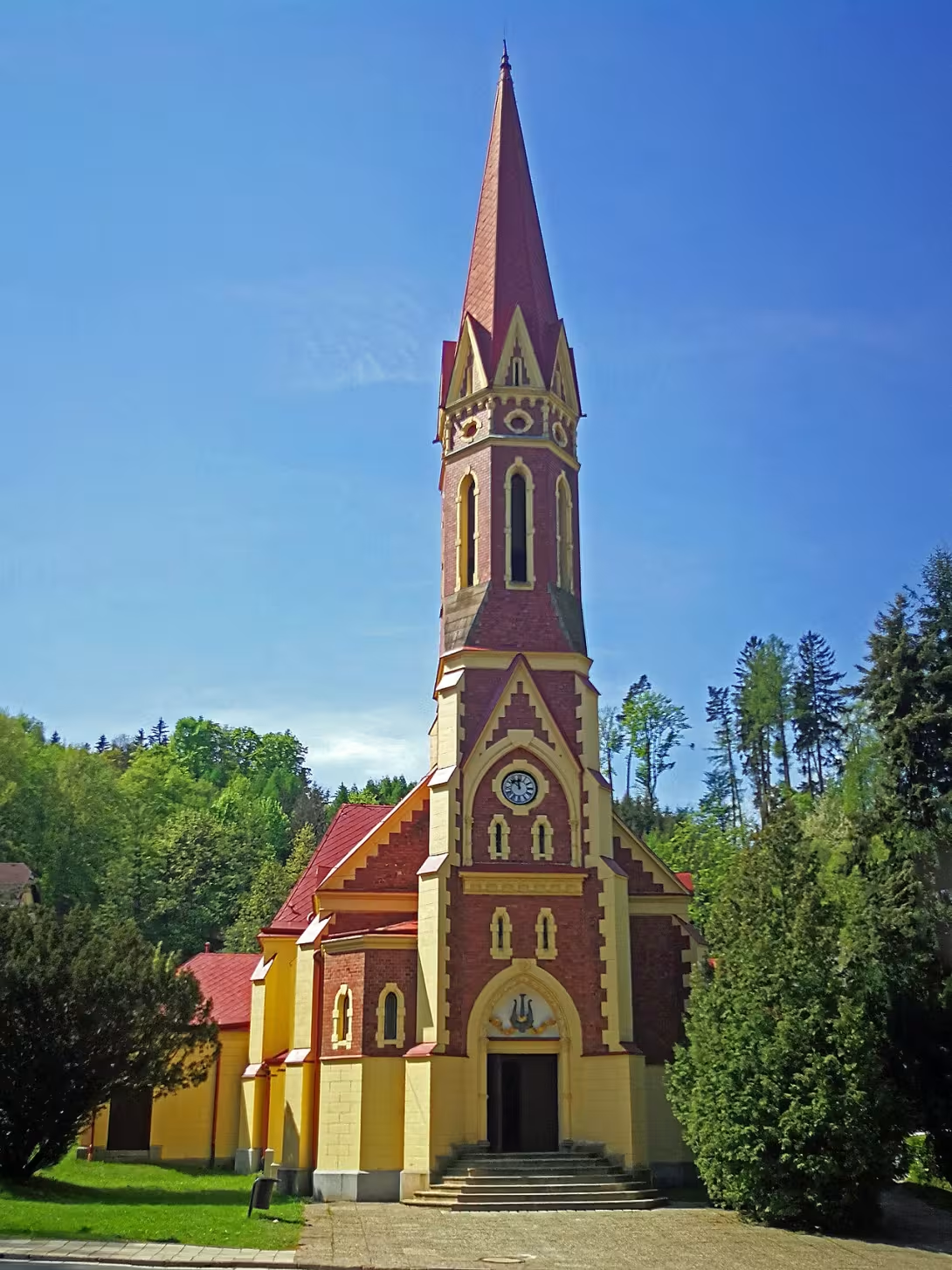
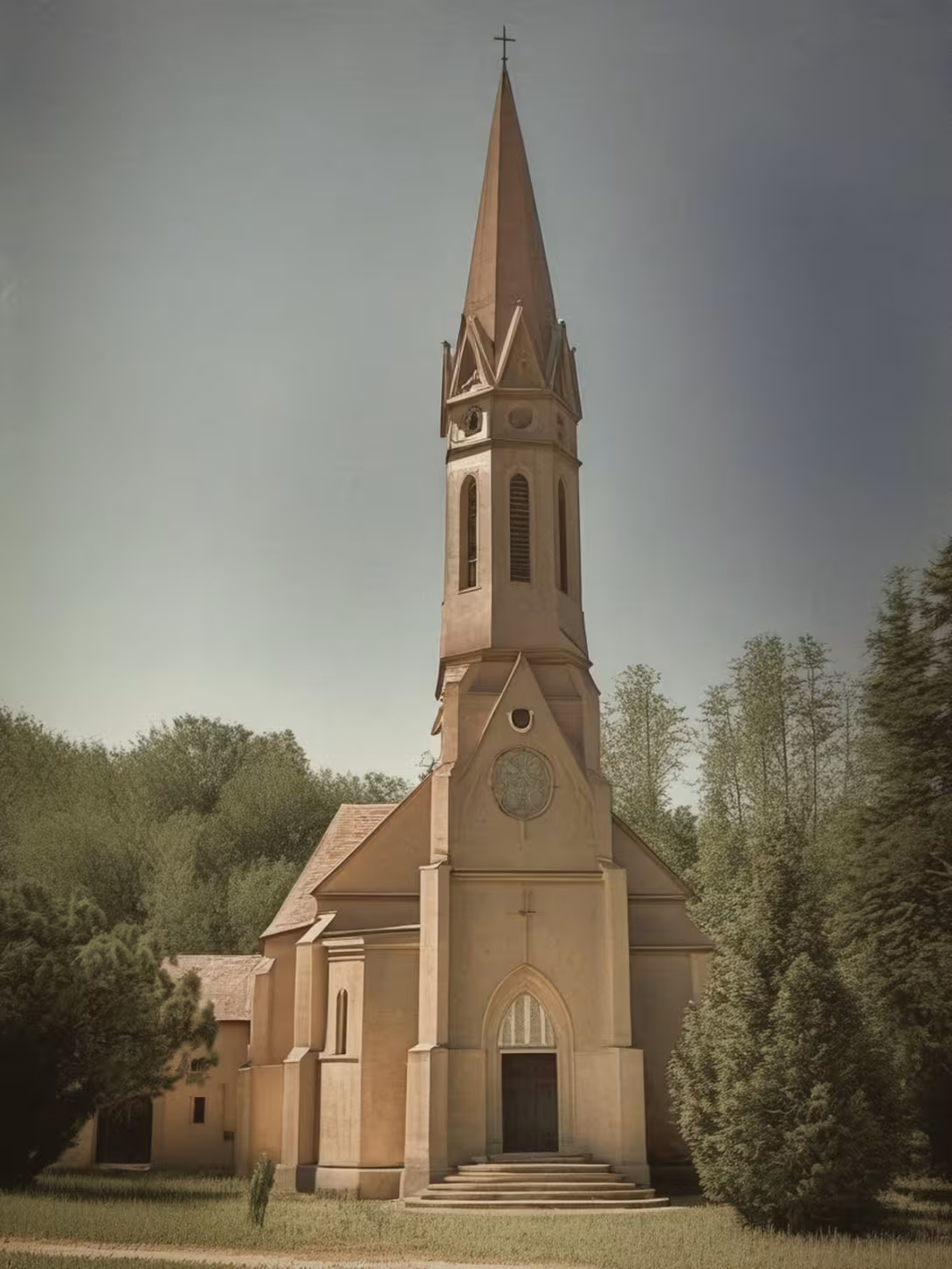
The historical appearance on the left is an AI-generated visualisation and serves as inspiration only.
Historical milestones
- 1900
- The church was consecrated on October 7 as Christuskirche.
- 1957
- Stopped serving as a church.
- 1980
- Renovated into the Bohuslav Martinů Concert Hall.
Architectural development
The Evangelical Church was designed in the neogothic style by Karel Steinhofer and built under Karl Rieger's supervision. Initially serving as a church, it later transitioned into a concert hall after renovation in 1980. The building features an eight-sided brick wall standing 43 meters high at its façade.
Historical events
Consecrated as Christuskirche on October 7, 1900.
Served as a church until 1957.
Renovated into the Bohuslav Martinů Concert Hall in 1980.
Points of interest
- The Evangelical Church in Trutnov was originally named Christuskirche, reflecting its German-speaking congregation during a time when the region was part of the Austro-Hungarian Empire. This name signifies the multicultural and multilingual history of the area.
- Architect Karel Steinhofer designed the church under Karl Rieger's supervision, highlighting an interesting collaboration where the architect's vision met the practical needs of a religious institution during that era. Their work exemplifies how architectural projects often involved complex partnerships.
- The sculptures 'Hlas' (Voice) and 'Naslouchání' (Listening), created by Olbram Zoubek, are not just decorative but also symbolize themes of communication and attentiveness within the church's interior space, adding layers of meaning to its cultural significance.
- Before becoming a concert hall in 1980, the building fell into disrepair after ceasing religious services in 1957. This period of neglect is a testament to the challenges faced by historical buildings in maintaining relevance and structural integrity over time.
- The church's transformation from a place of worship to a concert hall named after Bohuslav Martinů illustrates how cultural landmarks can be repurposed to meet contemporary needs while preserving their historical essence, thus bridging past traditions with modern uses.
Guide
This guide is narrated by a synthetic voice generated by artificial intelligence.
Show guide text
This text was created by artificial intelligence and has not been editorially reviewed. It may contain inaccuracies.
On Úpická Street in Trutnov stands a neo-Gothic evangelical church from the year 1900. It was built by Karel Rieger according to a design by architect Karel Steinhofer. It was consecrated on October 7th, 1900 and was given the name Christ Church.
It served for religious services until 1957. Then it began to deteriorate. In 1980 it was converted into a concert hall and named after the composer Bohuslav Martinů. Today religious services are held there again.
The facade of the building is formed by an octagonal brick wall that is 43 meters high. Inside there are two sculptures by Olbram Zoubek. They are called Voice and Listening.
Frequently asked questions
Can the monument be visited?
Religious buildings are usually open mainly during services; at other times a visit is normally arranged with the parish or the operator. We have not verified specific times.
Where is the monument?
Location: Trutnov, Královéhradecký kraj. The map on this page shows the exact spot.
Businesses nearby
Do you run a restaurant, accommodation, shop, museum, rental, wellness or other visitor service near this monument? Show yourself directly to the people heading to it — this is how they will see you in the app and on the web:
Accommodation nearby
Themed route
Troutsmere Sightseeing Route
1. Evangelical Church in Troutsmere (Church) Start your tour at the main attraction, the Evangelical Church in Troutsmere. This historic church is known for its architectural beauty and rich history. It's an ideal spot for those interested in spiritual architecture and the city's history.
2. Czechoslovak Army Memorial (Monument) After visiting the church, head over to the nearby Czechoslovak Army Memorial. This monument serves as a reminder of wartime sacrifices and commemorates the region's important history. It is a place for quiet reflection on the past.
3. Old Town Square (Square) The next stop is Old Town Square in Troutsmere, located near the church. This historic square offers a beautiful view of ancient architecture and is an ideal spot for relaxation or exploring shops and cafés often housed in historical buildings.
4. Troutsmere Castle (Castle) Make your way to Troutsmere Castle, which is close to Old Town Square. The castle provides views of the city and its surroundings, making it a perfect place for photography or spending a peaceful moment in the adjacent park.
This route offers a combination of history, architecture, and relaxation, making it ideal for a full-day tour around Troutsmere.
Seasonal recommendations
Spring: Visiting the Evangelical Church in Trutnov during spring offers a unique experience as nature begins to awaken. The surrounding landscape is adorned with blooming flowers and fresh greenery, creating a vibrant atmosphere that complements the historic architecture of the church. As daylight extends, the natural light beautifully illuminates both the interior and exterior of the church, enhancing its intricate details. During this time, it's wise to dress in layers as temperatures can fluctuate between cool mornings and warmer afternoons. While spring is generally less crowded than summer, visiting early on weekends or weekdays ensures a more peaceful experience.
Summer: Summer at the Evangelical Church in Trutnov is characterized by long days and warm weather, making it an ideal time for outdoor exploration before entering the church. The lush surroundings are perfect for leisurely walks, with vibrant greenery providing a picturesque backdrop to the historic site. However, this season also attracts more visitors due to its popularity for travel and tourism, so arriving early in the day can help avoid larger crowds. Comfortable walking shoes and light clothing are recommended to stay cool, and carrying water is advisable during warmer months.
Autumn: Autumn brings a magical transformation to the Evangelical Church in Trutnov with its warm hues of reds, oranges, and yellows painting the landscape. The changing leaves create a stunning contrast against the church's architecture, making it an excellent time for photography enthusiasts. As days begin to shorten, lighting inside the church becomes more subdued, offering a cozy atmosphere perfect for reflection or quiet visits. Cooler temperatures mean dressing in layers is essential, and visiting on weekdays can provide a quieter experience compared to weekends.
Winter: The winter season envelops the Evangelical Church in Trutnov with a serene and tranquil ambiance as snow blankets the surroundings, transforming it into a picturesque scene reminiscent of a fairytale. Shorter days result in softer lighting inside the church, creating an intimate atmosphere ideal for contemplation or enjoying holiday-themed events that often occur during this time. Visitors should dress warmly to enjoy their visit comfortably, with thermal layers and waterproof footwear being essential.
Visualizations and artistic views


The visualisations are generated by artificial intelligence and serve as inspiration.
Photos from the area
Real photos taken near the monument


Zdroj a licence jsou uvedeny u každého snímku.
Tips from visitors
No tips yet. Be the first!
Log in and add your tip.
Sources and literature
Photos: al.trcka / CC BY-SA 3.0, rozlišení zvýšeno umělou inteligencí — Wikimedia Commons. The author and licence also appear when you hover over the image.
Faktickým podkladem tohoto textu byl článek na Wikipedii, jehož autory jsou přispěvatelé Wikipedie. Článek je dostupný pod licencí CC BY-SA 4.0.
Location on the map

Příběhy a pověsti
Legendy, pověsti a příběhy spjaté s touto památkou
Příběh: evangelický kostel v Trutnově
Bylo to v pondělí ráno, kdy se Jan Kudrna, mladý a rozhořčený obchodník ze Trutnova, ocitl na zádech před nevysokou ochozu kostela. Sluneční paprsky hořely j…
Číst příběh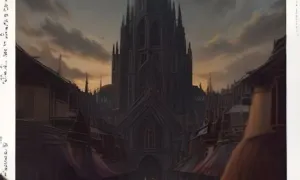
Pověst: evangelický kostel v Trutnově
Traduje se, že v dobách, kdy se cihlová věž evangelického kostela na Úpické ulici tyčila nad střechami Trutnova ještě jako živá, sbíral se každou neděli před…
Číst příběhFotografie návštěvníků
Zatím žádné fotografie. Buďte první, kdo přidá fotografii z návštěvy!
Log in a přidejte svou fotografii nebo hodnoťte.
Za ověřenou návštěvu v aplikaci získáte víc bodů — poznáme podle GPS, že jste na místě.
Reviews and comments