



Okresní soud v Trutnově (budova) Building
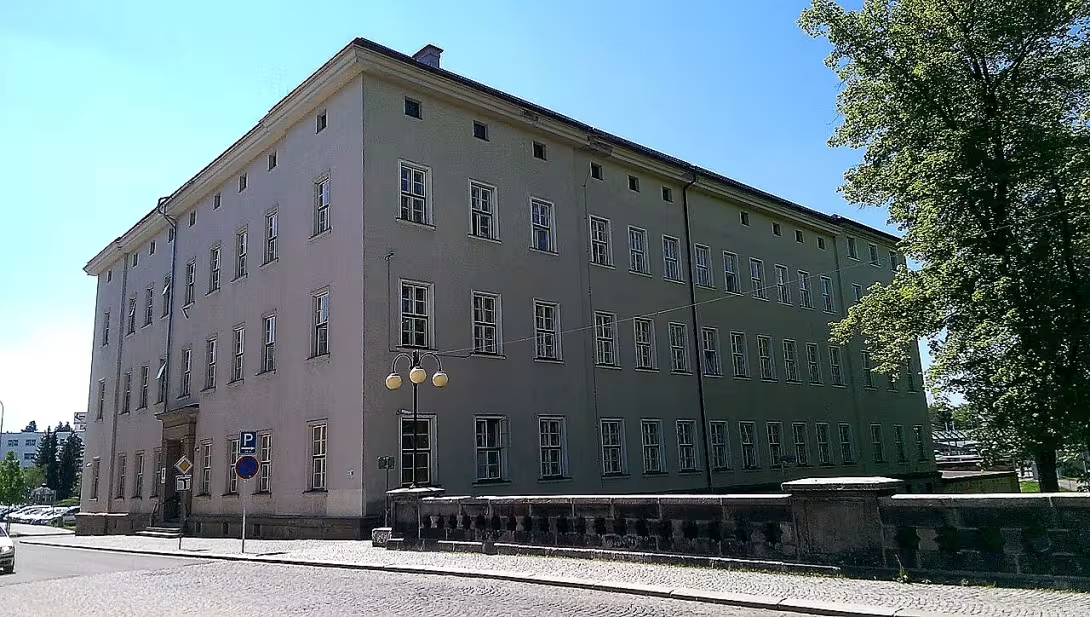
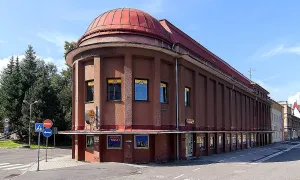
The District Court in Trutnov, situated on the Railway Street near the river Úpa, represents a classical building with a rich history and cultural significance. Originally built as a Union hotel in 1874 by former mayor Trutnova MUDr. Antonín Porák, this building served various purposes during its long-term operation. Today there is a district court and is protected as a cultural monument.
The construction was created in an era of expansion of national education and building cultural institutions in Central European countries. Trutnov, a city with a strong Czech and German population, has become an important centre for both communities. The name of the Union Hotel symbolized the desire for unity and cooperation between Czechs and Germans in the region. Although the hotel was mainly intended as an inn, there were also 20 apartments and served as a centre of cultural activities of the Czech minority.
Architecturally it is a classicist two-storey construction with a valb roof and an inner courtyard. The original stucco decoration was removed in the second half of the 20th century, but the rich interior was preserved. The most striking elements include decorative terracote tiles and Corinthian columns in the entrance hall, which still attract visitors' attention.
The building has undergone many changes in owners and purposes. After its establishment as a Union hotel, the building was used as a post office in 1888-1906. In 1908 he became property of the city Trutnov, which opened the way for further transformation. From 1909 to 1918 there was a commercial school and shortly after the creation of Czechoslovakia, namely from 25 November to 29 November 1918, a German regional court worked. In 1920, the first barracks had a border battalion 2 and since 1935 was the seat of the Genius Group Command VI, which organized construction of fortifications in Trutnov. Since 1938, the building has served the needs of justice.
Today the District Court in Trutnov is not only a functional office of the first degree, but also a monument to the rich history of the city and region. The preservation of classical architecture and unique interior makes this building an important cultural heritage worth visiting.
The trip to the District Court in Trutnov offers an opportunity not only to explore the history of Czech justice, but also to appreciate the architectural majesty of Classicism. This monument is witnessed by many changes and events that shaped today's Trutnov and its surroundings. A place where history and modernity also remind visitors of the importance of preserving cultural heritage for future generations.
Historical milestones
- 1874
- Completion of the Union hotel construction
- 1888
- Location of mail in the building
- 1908
- Transfer of the building to the property of the city
- 1958
- Writing the building into the list of cultural monuments
Architectural development
It is a classicist two-storey building with a valb roof and an inner courtyard. The original stucco decoration was removed in the second half of the 20th century, but the decorative interior with terracot tiles and Corinthian columns was preserved.
Historical events
In 1874 the building was built as a Union hotel. In 1888-1906 there was a post office. Since 1938, the building has served the needs of the judiciary.
Owners
City of Trutnov since 1908.
Points of interest
- The building was built in 1874 as a Union hotel by former mayor Trutnov and Antonín Porák. - The name of the Union symbolized the desire for unity and cooperation between Czechs and Germans in the region. - The entrance hall of the building contains Corinthian columns and decorative teracote tiles. - The object served at different times as a post office, business school and barracks of the border battalion. - Since 1935, the Genius Group Command VI has been based here, which organized the construction of the fortifications in Trutnov.
Guide
Show guide text
This text was created by artificial intelligence and has not been editorially reviewed. It may contain inaccuracies.
Welcome to Trutnov. You are standing in front of a building that carries a vast number of stories, memories and changes that have accompanied this city for decades. In front of your eyes is an impressive object, which today serves as the seat of the district court, but whose history is much richer and more diverse than it might seem. Please feel the seriousness and calm this building radiates. It is a building that witnessed the flourishing, social life and important historical twists in our region.
Let's go back in time together to understand why this place is so special. Imagine 1874. Trutnov is going through a period of growth and expansion. This year the building was completed and its original purpose was not to make legal decisions, but to offer comfort and facilities to passengers and residents. The building was built as a hotel called Union. This name was not chosen by chance and carried deep symbolic meaning. At that time, the name should have expressed a desire for unity, cooperation and harmonious coexistence between the Czech and German inhabitants of this region. It was a symbol of hope for a common future within a city.
A man named Antonín Porák was behind all of this magnificent intent. If you look at the overall size and dignity of this building, perhaps you can smell its vision. Spora was not just a builder, he was the then mayor of Trutnova, a man with great ambitions and a deep love for his development. It was thanks to his decisions and investments that this part of the city acquired such an important building element, which became the heart of local social life. The Union Hotel was not just a simple place for a sleepover, it was a key cultural and social centre where various groups of people met, where news was exchanged and local identity was created.
Now pay attention to how the roles of this building have changed over the years, which is a fascinating example of how society itself is changing. The building was constantly alive and adapted to the needs of the city. Already in 1888, the post office settled in its premises, which meant it became a centre of communication and connection with the outside world. People came here with letters, newspapers, information. Later there was a business school that formed future generations of local experts and traders. At different times there were also military units, which gave the place a completely different, stricter atmosphere. This building was like a living organism breathing with the city.
In 1908 he transferred the building to the property of the city, which allowed further development of its functions. Until much later, in 1958, its historical value was officially recognised by being included in the list of cultural monuments. This gives us a clear signal that this is not just an ordinary house, but an inheritance that we have an obligation to protect.
If you look at the architecture of the object itself, notice its style. The building shows significant elements of classicism. This style is known for its balance, order and dignity, which perfectly corresponds to the place the building became in later years. Classicism places emphasis on symmetry and harmony, which gives the visitor a sense of stability and certainty. Even though justice is taking place in the building today, its architecture has long prepared the ground for this role.
If you have the opportunity to enter the inner spaces, especially the entrance hall, prepare for a real experience. Notice the beauty there that will consume you. There you will find Corinthians columns, which are one of the most rudimentary and richest types of columns in architecture, with their typical decorative leaves. Under your steps, a decorative terracotta tile would then be spread, which provides space of warmth and artistic touch. These details show how high levels of quality and aesthetics were established by the then builders and owners.
But there is one interesting thing that you may not know about. Even though the building is now perceived as a solid and immutable part of the city, its path to today's form was full of obstacles and constant adaptation. It's fascinating to see people laughing, hosting, and resting after a long journey become a place where people's rights and responsibilities are decided. The change in atmosphere is huge, but the spirit of the building, the pursuit of order and social stability, remains the same.
You stand before a witness to a history that has survived many épolies, many people and many changes in political and social conditions. The District Court building in Trutnov is not just a wall and a roof, it's a city memory. It is a reminder of the time when it was built with a vision of unity, and it is also proof of the continuity of our legal and social order.
I hope this short journey through the history of this place has brought you new views of what you see before you. Before you go further on your tour of Trutnova, stop for a while, feel the atmosphere of this place and try to imagine all the faces that have passed here over the years. Trutnov has many other secrets and beauty waiting for you. I wish you a beautiful continuation of your journey around our city and enjoy every moment you spend exploring its history. Goodbye.
Tips for visitors
The best time to visit the District Court building in Trutnov is during spring and autumn when the weather is pleasant and light suitable for photography. The building is located by the river Úpa, which makes it a beautiful background for photographs.
When you visit, remember the camera to capture the historical appearance of the building. The best light for photography is usually in the morning or in the evening when the sun joins the facade from an angle.
The surrounding area is the river Úpa, which you can visit and look at its natural beauty. You can also see other historical buildings in the city while walking by the river.
Frequently asked questions
Can the monument be visited?
The building is in use (offices, a school, shops and the like). The interior is generally accessible only during operating hours and tours are not usually offered; we have not verified the details. You can see the exterior from the street.
Where is the monument?
Location: Trutnov. The map on this page shows the exact spot.
Why is the monument protected?
It is listed in the Central List of Cultural Monuments of the Czech Republic as a cultural monument (register no. 1000124737).
Businesses nearby
Do you run a restaurant, accommodation, shop, museum, rental, wellness or other visitor service near this monument? Show yourself directly to the people heading to it — this is how they will see you in the app and on the web:
Nearby
Budova se nachází u řeky Úpy v Trutnově.
Accommodation nearby
Themed route
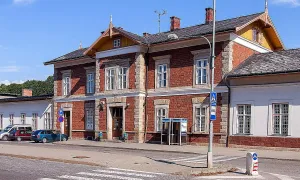
1. Okresní soud v Trutnově (budova): Architectural element. The main objective of the visit, which represents an important building at the site. 2. Railway station of the District Court in Trutnov (area): The immediate surroundings. Location for detailed observation of the exterior appearance of the building. 3. River Upa (water flow): Natural interest. Tok flows right at the courthouse and offers a pleasant walk.
Seasonal recommendations
Spring in Trutnov brings to the surrounding court building awakening nature and changing light conditions. The sun rises higher, creating dynamic shadows on the facade and reviving the surrounding green surfaces. This period is ideal for visitors to observe architectural details in soft spring light, which does not shine as intensely as the summer sun. It is practically advisable to wear layered clothes because spring weather is variable and temperatures may vary significantly during the day. I recommend visiting the location in the morning when the air is fresh and the surrounding parks or streets are quieter before full work is started in the offices.
Leto brings the longest days and the most intense lighting to the city. The sun shines almost vertically in the morning, which can cause strong contrasts and shadows on historical buildings. The surrounding trees are in full bloom and provide a natural shade that makes walking on the square or streets leading to the building more pleasant. For a comfortable stay outside it is crucial to equip yourself with light, breathable clothes, hat and plenty of water, especially if you plan a longer walk. The best time to observe the monument is in the morning or late afternoon when the temperature is more tolerable and the light is less sharp, which allows you to better capture the texture of the stone or bricks on the facade.
Autumn in Trutnov offers a unique atmosphere thanks to changing leaf color and gradually shortening the day. The golden and red tones of surrounding vegetation create a beautiful contrast with the neutral colors of the historic building. The lighting is softer and warmer, which gives the whole space a calm and thoughtful character. For the visitor this period is ideal for photography because autumn light is often considered the most beautiful. Practical advice includes putting on warmer clothes, jackets and possibly an umbrella, because autumn weather is getting wetter and colder. I recommend going out in the afternoon when the light is the most pronounced and the temperature still allows longer stay outside without the need for a quick return to the heat.
Winter in Trutnov brings a specific, often quiet atmosphere with snow cover. The white landscape highlights architectural lines and building shapes, while short days and low sun create long shadows and dramatic light effects. For a visitor, winter is a time of contextualization and observation of details that are less obvious in other seasons. Practically, it is essential to equip yourself with quality winter shoes, warm jackets, gloves and hats, because outdoor temperatures can be very low and the wind can be unpleasant. The best time for a short walk is around noon, when the day is the hottest and the sun is the highest, which minimizes the feeling of cold and allows safer movement along possibly slippery corridors.
Visualizations and artistic views

The visualisations are generated by artificial intelligence and serve as inspiration.
Photos from the area
Real photos taken near the monument


Zdroj a licence jsou uvedeny u každého snímku.
Tips from visitors
No tips yet. Be the first!
Log in and add your tip.
Sources and literature
Photos: Dagmar Čevelová / CC BY-SA 4.0 — Wikimedia Commons. The author and licence also appear when you hover over the image.
Faktickým podkladem tohoto textu byl článek na Wikipedii, jehož autory jsou přispěvatelé Wikipedie. Článek je dostupný pod licencí CC BY-SA 4.0.
Location on the map
Příběhy a pověsti
Legendy, pověsti a příběhy spjaté s touto památkou
Fotografie návštěvníků
Zatím žádné fotografie. Buďte první, kdo přidá fotografii z návštěvy!
Log in a přidejte svou fotografii nebo hodnoťte.
Za ověřenou návštěvu v aplikaci získáte víc bodů — poznáme podle GPS, že jste na místě.
Reviews and comments