



evangelický kostel ve Kšelích Church
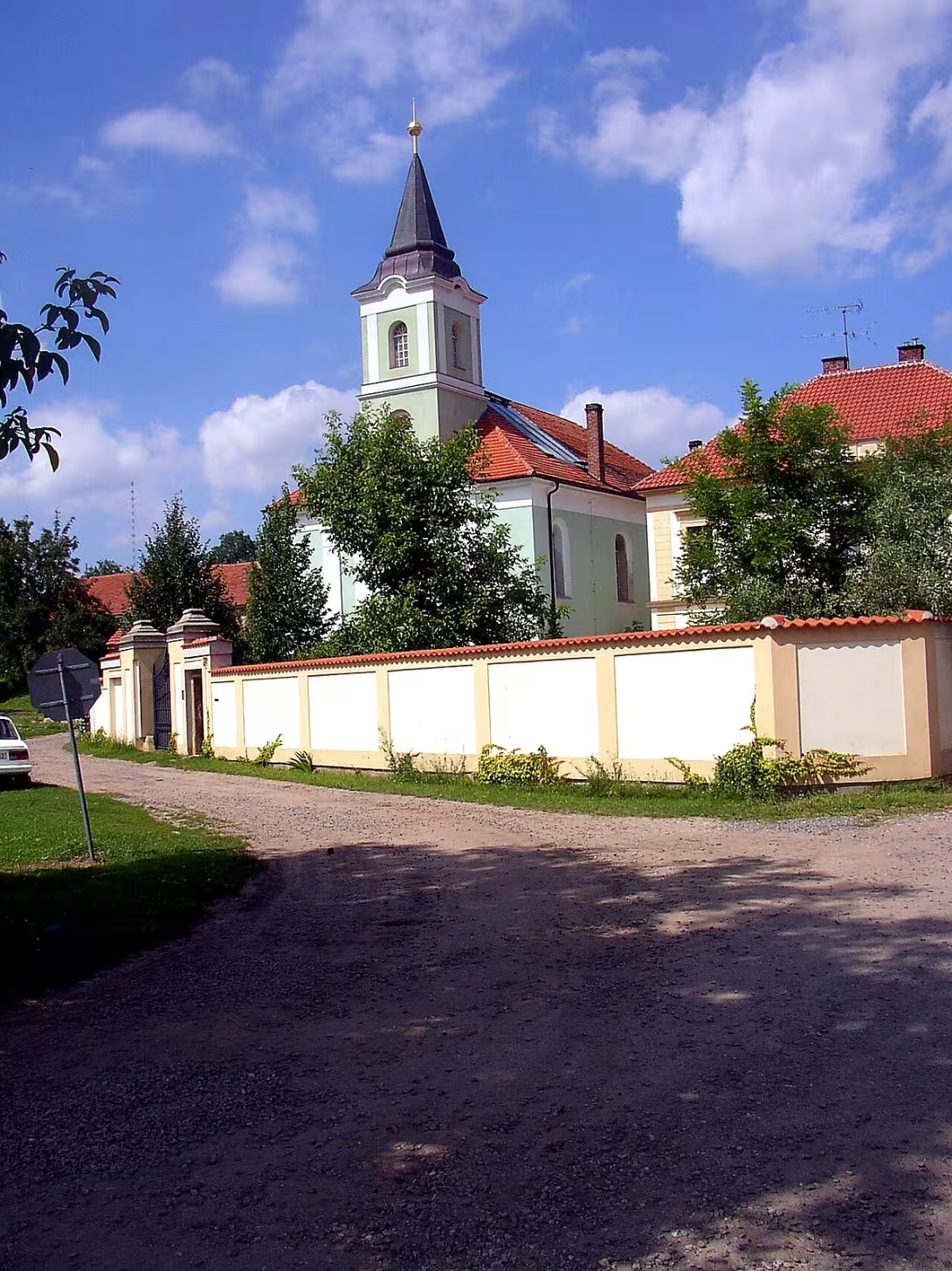
The Evangelical Church in Kšelí is a former shrine of the Czech Brotherhood Church of the Evangelical Church situated in the centre of the village. This neoclassical building from 1851 replaced the original tolerance object. In the history of Czech evangelism, it occupies an important place as the venue of the Assembly, which initiated the creation of a Protestant patent.
The formation of the Evangelical congregation in Kšelí is closely related to the tolerance patent of Emperor Josef II from 1781, which allowed the legal existence of non-Catholic beliefs. As of 8 August 1782, the parish choir of the Evangelical Church of Helvetian religion was established in the municipality. In 1783, the first preacher became the Hungarian Bohoslov A. Kovács. The original tolerance prayer house was built in March 1786 with the financial support of its members and Hungarian friends. The rough building was sanctified on 27 January 1787.
The current form of the church dates back to 1851, when a new building in neoclassical style grew up in place of the older building. A number of original elements have been preserved in the interior, including doors, windows, pulpit rooms, table of the Lord, benches for preachers and believers and original paintings. The site also includes an evangelical rectory from 1788, which was rebuilt in 1909 in neoclassical style and served as a school in the past. The site also includes the evangelical cemetery established in 1844.
At the beginning of the 19th century, the Kšelas were the seat of the entire Prague seniority. The important event in the history of the building was the year 1848, when all evangelists from Bohemia and Moravia took place here. The incentives from this meeting led to the issue of a Protestant patent. After the transfer of the registered office to Český Brod, the church was sold out in 1969. Part of the equipment, namely organ and bell, was subsequently transferred to the church in Český Broda.
The object was in the past owned by the Evangelical Church of the Helvetic Religion, after 1969 switched into private hands. In 2014 a proposal was made for the declaration of the church by a cultural monument, which was rejected in March 2015. The Foundation Fund of Pivonka is currently in charge of the building.
The Evangelical Church in Kšelí presents an important testimony about religious and social development in Czech countries during the period of national renewal. Visiting this place offers the opportunity to become acquainted with the history of the evangelical community, which has shaped spiritual and cultural life here for centuries.
Then and now
Drag the slider to compare how the landmark may have looked when it was built with the view today.
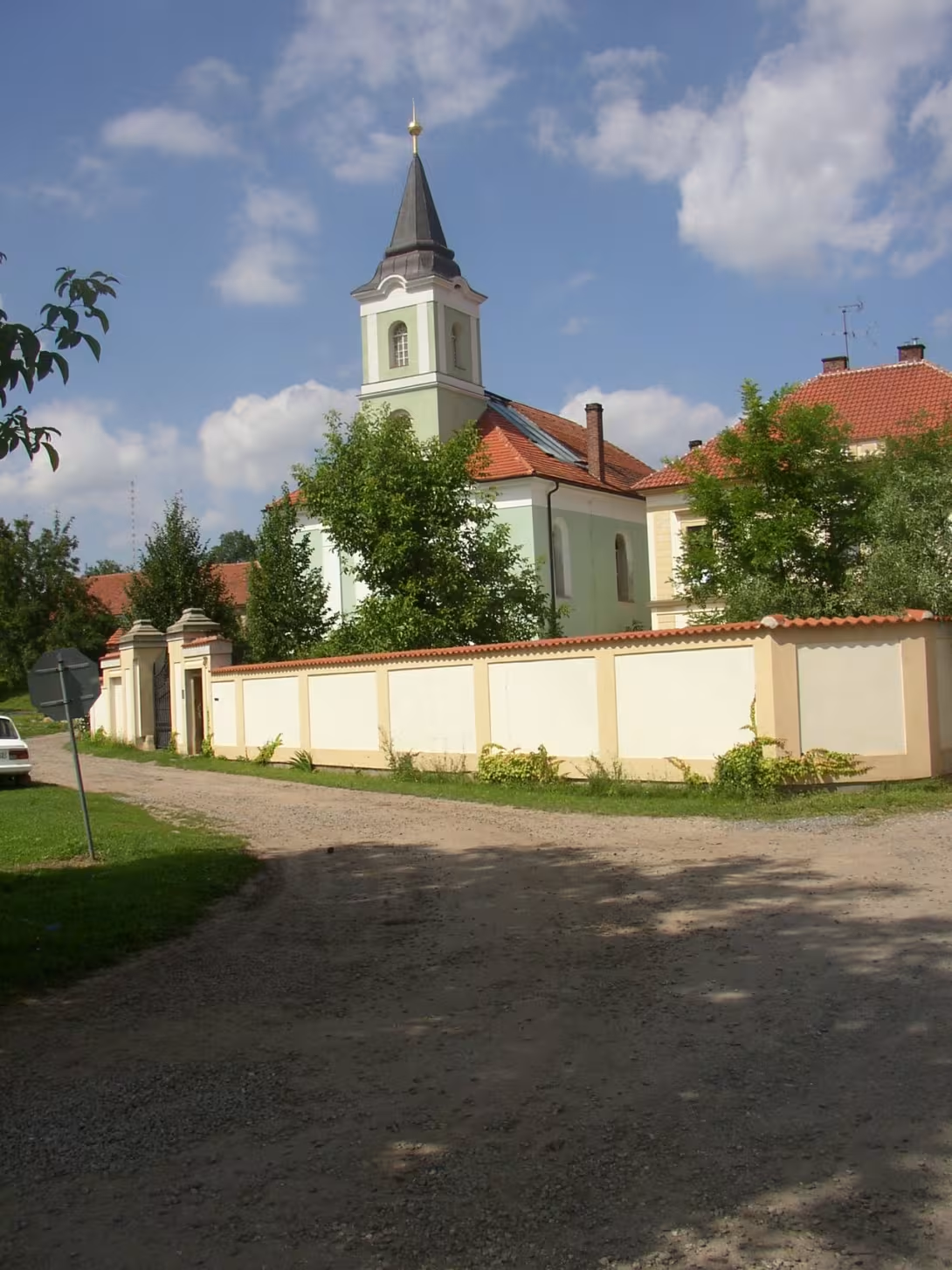
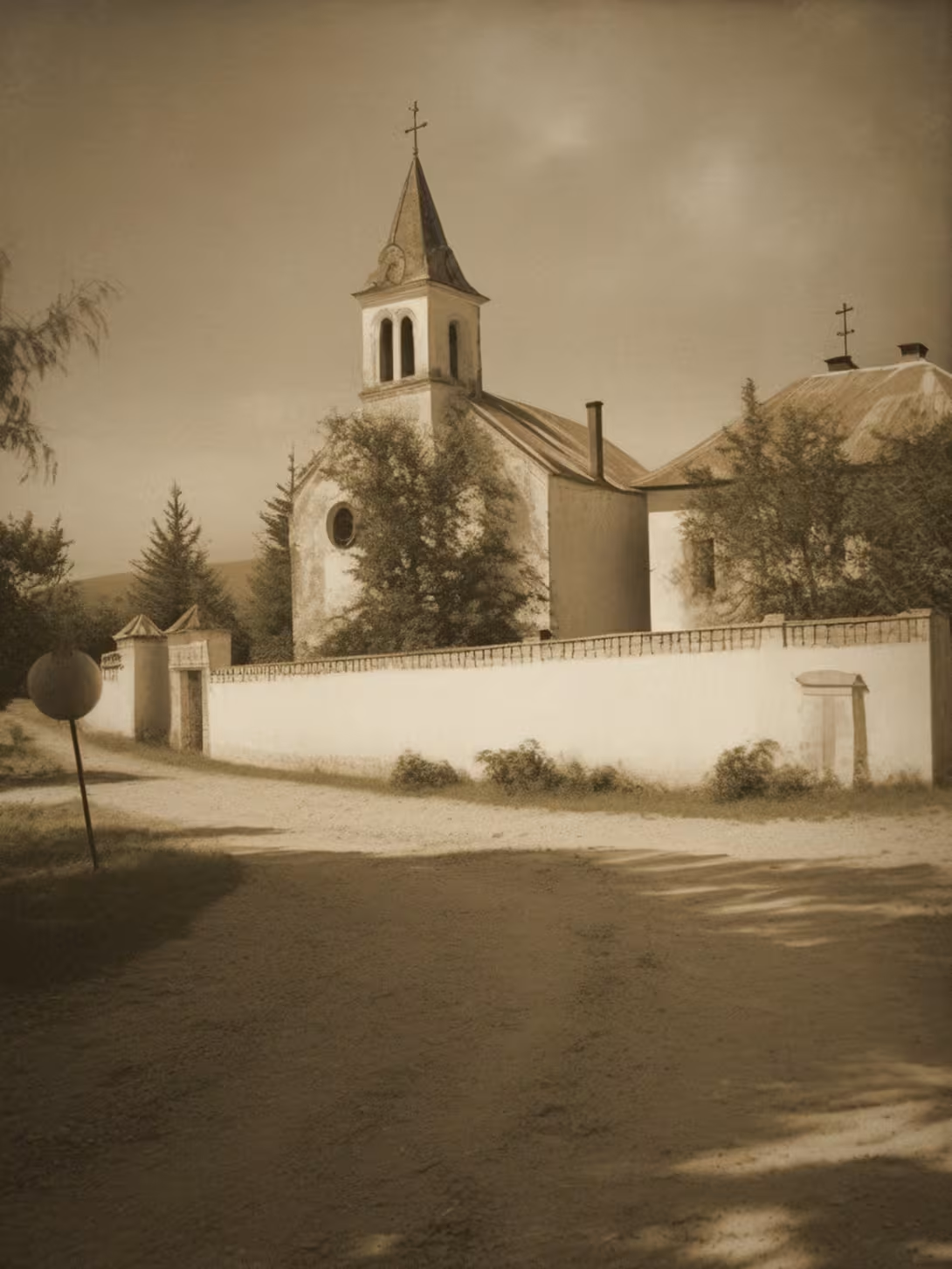
The historical appearance on the left is an AI-generated visualisation and serves as inspiration only.
Historical milestones
- 1786
- Starting construction of the original tolerance church.
- 1848
- Doing a meeting of all evangelists from Bohemia and Moravia.
- 1851
- Construction of a new neoclassical church in the old place.
- 1969
- Sale of the church after transfer of the headquarters of the congregation to Český Brod.
Architectural development
The original tolerance church was built in 1786. In 1851 it was replaced by a new construction in neoclassical style. The interior has preserved historical elements such as the original door, painting and part of the mobility.
Historical events
1782: Provisions of the congregation. 1848: Meeting of Evangelists from Bohemia and Moravia. 1851: Construction of a new church. 1969: Sale of the church after the transfer of the choir.
Owners
Evangelical Church of Helvetian Religion (until 1969), private owners, Foundation fund of peonies (care).
Points of interest
- The neoclassical building from 1851 replaced the original tolerance object. - A number of original elements, such as doors, pulpit, table of the Lord, bench and painting, have been preserved in the interior. - In 1848 there was a meeting of all evangelists from Bohemia and Moravia, whose stimuli led to the issue of a Protestant patent. - Part of the complex is a rectory from 1788, which was later rebuilt and served as a school, and a cemetery founded in 1844. - After 1969 the church was sold into private hands and part of its equipment, namely organ and bell, was transferred to Český Brod.
Guide
Show guide text
This text was created by artificial intelligence and has not been editorially reviewed. It may contain inaccuracies.
Welcome to the village of Kšely. You're standing right in front of a building that's known for its significance and its quiet power all around. Looking at this object immediately brings you to a time when the history of our countries began to change and when faith began to fight its way to greater freedom. Feel the presence of this building, which stands right in the middle of the village and which served as a spiritual centre for many generations of people. It has a sense of peace, but also the weight of the events that have taken place here.
The story of this place is deep and goes far back. To understand why this building is so important, we have to go back to the 1970s. At that time there was an original tolerance church. In a period of tolerance, freedom of religion was not as broad as we know it today, and people had to find ways to practice their religion within the framework of the then laws. This first church was a symbol of perseverance and pursuit of spiritual life in difficult conditions. But time passes and the needs of the community change. The growing number of believers and the need for more modern space have led to the decision to rebuild. So it happened that in the year one thousand eight hundred fifty-one, the original building was replaced by what you see right in front of you. This new building was built in neoclassical style, which at that time meant an effort to balance, order and beauty, which reflected the new ideas of the time.
Now pay attention to the architecture itself and to what you can see. This neoclassical building was designed to be dignified and harmonious. Although you are now looking at the building from the outside, its true nature and historical treasure are hidden inside. If you have the opportunity to enter the interior, you will see things that are absolutely unique to this place. A number of original elements have been preserved in these premises, allowing you to reach a connection with the people who were before you. Note that inside there are still original doors, a pulpit on which there was once a word, a table of the Lord and a bench on which people sat in times of great excitement. Even the painting on the walls tells you stories that are carved into the memory of this place. These interior decorations and equipment are not just decorations, they are living witnesses to history that have survived changes in political and religious influences.
But if we look deeper below the surface of architecture, we will encounter the most important thing this place has to offer. It's not just a building made of stone and wood, it's a place where many people's fate was decided. Let's move forward in time to the year one thousand eight hundred forty eight. Imagine the atmosphere. The whole country was shaking in its foundations, new times are coming, and people want rights and freedom. In these premises was held the assembly of all evangelists from all Bohemia and Moravia. It wasn't just an ordinary meeting of the local choir. It was a moment of great importance for the whole country. People were gathered here to speak with their voices and to work together to determine the direction of their future lives. It is these discussions and initiatives that have taken place here in these areas that were the key engine that led to the issue of the Protestant patent. This document was absolutely crucial to the Protestant religion because it gave him legal recognition and opened the way to religious freedom. So when you stand here, you stand in the place where the freedom that we take for granted today was born.
In connection with this history and the importance of this place, the name A. Kovács appears in documents and in people's memory. Even if his name doesn't have to come up right away, he's part of the story that tells this place. This church has been the heart of the evangelical community for decades, until the year one thousand nine hundred sixty-nine. In 1969 there was a big change when the church was sold and the choir had to move to Český Brod. This meant that this building stopped being the primary centre for worship, but its historical significance remained unquestionable. Although the choir is no longer officially sitting here, the building still stands as a monument to honor those who once prayed and decided on the future of their faith.
You may find it interesting how much this place has changed and yet remain so faithful to its role. It is fascinating that while the world was changing around, the building went through a transformation from a small tolerance building to a larger neoclassical building that became a political and spiritual centre. It is a strange force that the place that arose from the need for a secret religion has become a place where the rights of the entire nation were publicly and loudly fought for. This contrast between the silent beginning and the spectacular historical contribution is what makes this church so special in the Kšel.
Now that you've learned more about what this building means and what it carries, I suggest you continue your walk around. Feel the atmosphere of this village and imagine what faces the people who sat here in 1848 were looking forward to the future. Thank you for stopping by and taking the time to understand this important place. We wish you a beautiful rest of the day and another pleasant discovery of history that is around us everywhere.
Tips for visitors
The most suitable time for the tour is late spring or summer, when the surrounding area of the church is modified and sunlight highlights the neoclassical elements of the building. We recommend a visit in the morning for the best front lighting.
You can easily get to the village by car. To travel by public transport, use the national search engine for connections that will show you the current possibilities of transportation to this location.
Take comfortable shoes to move on the premises. For photography it is best to use the morning or evening light that is reflected from the facade. Focus on detailed architectural elements of neoclassical style.
Directly in the neighbourhood of the church you can visit the historical evangelical parish with a descriptive number of 27 and also the evangelical cemetery, which was founded in the middle of the nineteenth century and offers a quiet place to contemplate.
For families with children the location is suitable as a stop during a trip around the area. The area around the church is open, but remember, it is a historic place, so it is advisable to lead children to the memory of the adjacent cemetery.
Frequently asked questions
Can the monument be visited?
Religious buildings are usually open mainly during services; at other times a visit is normally arranged with the parish or the operator. We have not verified specific times.
Where is the monument?
Location: Středočeský kraj. The map on this page shows the exact spot.
Why is the monument protected?
It is listed in the Central List of Cultural Monuments of the Czech Republic as a cultural monument (register no. 1044504203).
Businesses nearby
Do you run a restaurant, accommodation, shop, museum, rental, wellness or other visitor service near this monument? Show yourself directly to the people heading to it — this is how they will see you in the app and on the web:
Nearby
Evangelická fara čp. 27, evangelický hřbitov založený roku 1844.
Accommodation nearby
Trips and activities nearby
Guided tours, tickets and activities nearby from GetYourGuide
Affiliate link: if you buy from the partner, we may receive a commission. The price for you does not change.
Search tours and activities →Themed route
1. Evangelical cemetery founded in 1844 Type: cemetery Why to visit: Offers a quiet environment and shows the history of the local community.
2. Evangelical Church in Kšelí Type: church Why to visit: The main destination of the trip, which represents the spiritual center of the area.
3. Evangelical parish No. 27 Type: building Why to visit: Historical building directly connected with the church.
Seasonal recommendations
Spring: Nature wakes up around the church in the spring and the surrounding area begins to bloom. The light is fine and does not shine during this period, which allows beautiful observation of tiny elements of the construction. We recommend wearing layered clothing because the morning cold can quickly rotate with the heat of noon. The best time to visit is in the morning when the air is the cleanest.
Summer: The summer moons bring full sun and thick, lush green to the surroundings. The mood is alive and the days are very long, giving room for longer walks. Because of the higher temperatures and possible groups of visitors, it is better to come right after opening to enjoy peace and shade. Don't forget the light clothes and plenty of fluid.
Autumn: Autumn offers a special mood thanks to golden leaves and morning fog surrounding the building. The lighting is deep at this time and the colors seem very peaceful. It is advisable to prepare stronger shoes in case of wet surface and warmer top layer. The best is a visit in the afternoon when the sun creates beautiful shadows.
Winter: In winter there is peace and quiet around the monument, especially if snow covers the landscape. The day is short and light is weak, which gives the place a noble touch. It is necessary to dress thoroughly in warmer garments and plan a visit around noon to avoid darkness. At this time, there is a shorter time to access the building.
Visualizations and artistic views


The visualisations are generated by artificial intelligence and serve as inspiration.
Photos from the area
Real photos taken near the monument

Zdroj a licence jsou uvedeny u každého snímku.
Tips from visitors
No tips yet. Be the first!
Log in and add your tip.
Sources and literature
Photos: User:Miaow Miaow / Public domain — Wikimedia Commons. The author and licence also appear when you hover over the image.
Faktickým podkladem tohoto textu byl článek na Wikipedii, jehož autory jsou přispěvatelé Wikipedie. Článek je dostupný pod licencí CC BY-SA 4.0.
Location on the map
More monuments – Středočeský kraj
Show all in the region




Příběhy a pověsti
Legendy, pověsti a příběhy spjaté s touto památkou
Fotografie návštěvníků
Zatím žádné fotografie. Buďte první, kdo přidá fotografii z návštěvy!
Log in a přidejte svou fotografii nebo hodnoťte.
Za ověřenou návštěvu v aplikaci získáte víc bodů — poznáme podle GPS, že jste na místě.
Reviews and comments