



Fara (Chroustovice) Parish house
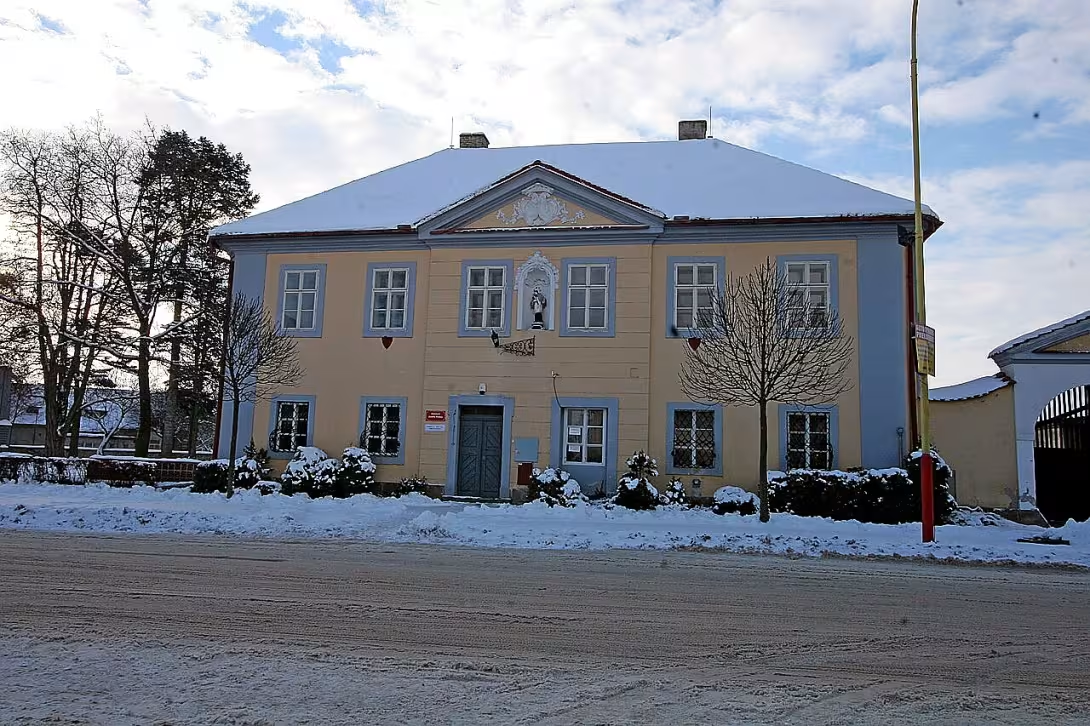
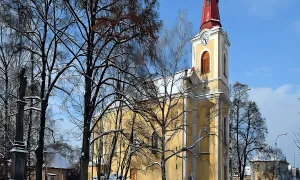
The farm in Chroustovice is a one-storey Baroque building from 1783. It is located in the centre of the town in the district of Chrudim next to the church of St. Jacob the Greater. Together with the gate and the fenced wall, the building has been protected as a real cultural monument of the Czech Republic since 1996.
The current construction replaced the original wooden rectory from 1660, which stood at the site of the former reactionary farms. The current Baroque building was built in 1783 and its construction was financed mainly by Filip Kinský.
It is a single-storey object with a valb roof covered with bombers. The ochre-coloured facade is divided into six axes with two-wing windows. They have grey champagne and are equipped with decorative metal bars on the ground floor. The dominant feature of the building is the forward central input risalite with two window axes. The ground floor preserved rectangular portals of two original entrances, one of which was partially walled up in the past and changed to a window.
The Rizalite ends with a triangular shield. In its centre is placed embossed by the family of Kinsky, surrounded by stucco decoration with the motif of oak branches. In the level of the first floor there is a polychrome rococo sculpture of St. John Nepomuk, which holds crucifix in the right hand and palm branch in the left. Under nothing, an iron forged attachment with lantern is drawn from the wall.
The building includes a wall with a semicircular gate, which has a low triangular front and wooden doors. On the right of the gate is a shield-oriented economic building.
The monument represents a valuable example of Baroque architecture from the end of the 18th century. At this time in the Czech Republic, the transition to classicism was taking place and the system of parish administrations was being modified. The preservation of the building in the centre of the city allows the study of period sacral administration and architecture. The visit to the parish in combination with the nearby church of St. Jacob the Greater offers insight into the historical core of the village.
Then and now
Drag the slider to compare how the landmark may have looked when it was built with the view today.
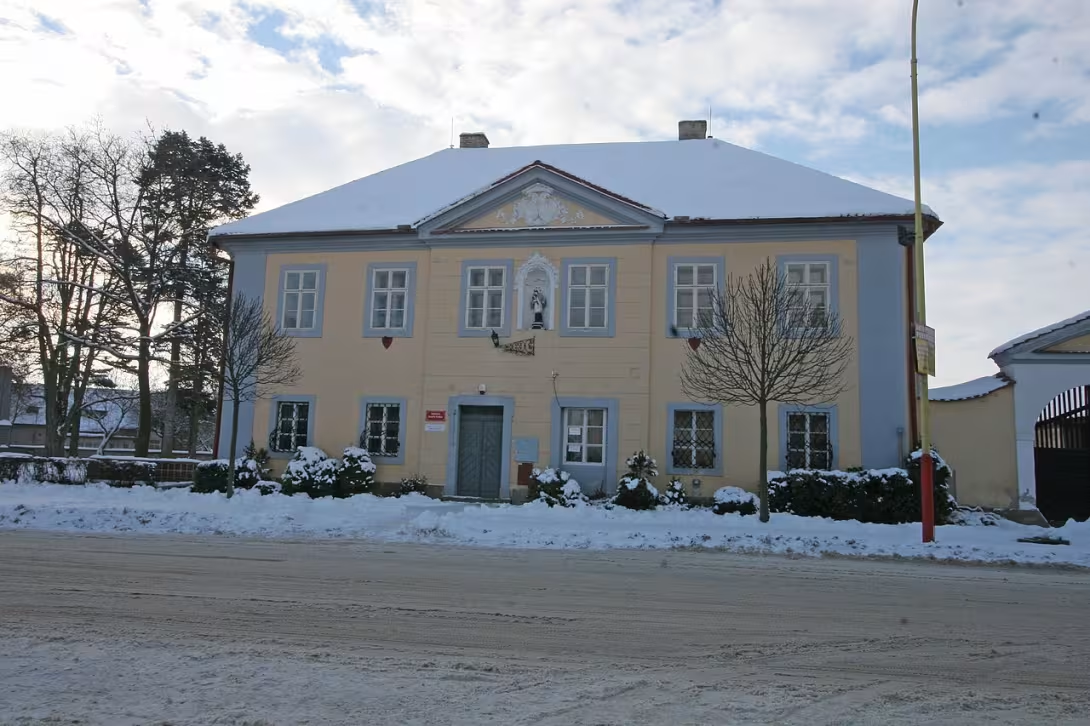
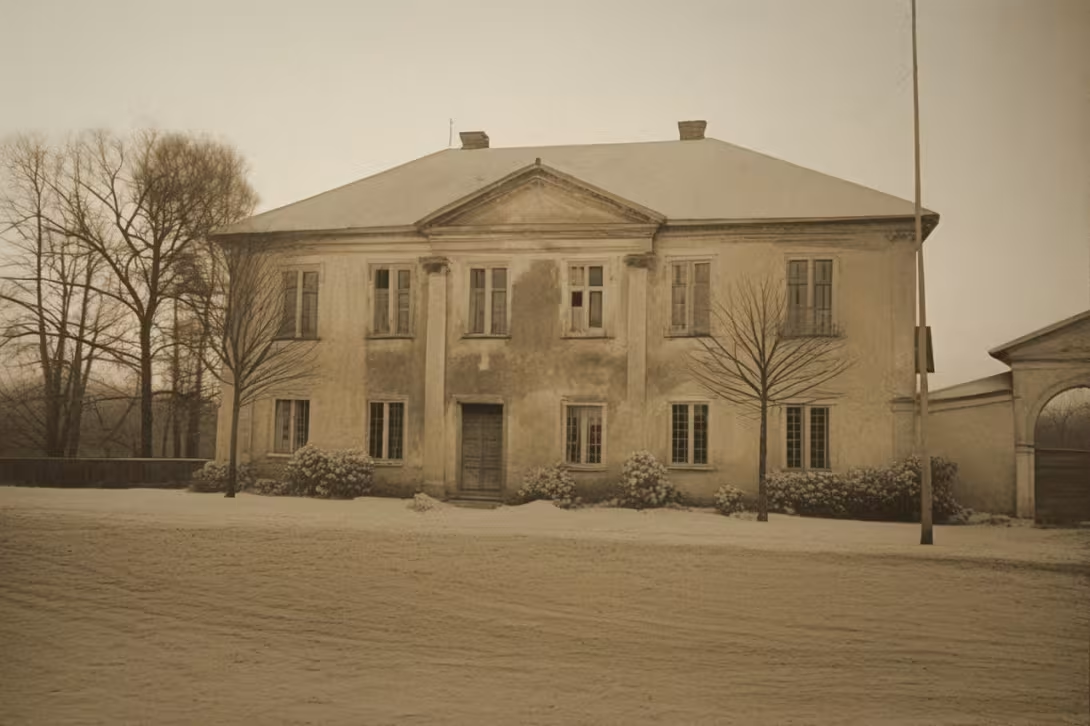
The historical appearance on the left is an AI-generated visualisation and serves as inspiration only.
Historical milestones
- 1660
- construction of original wooden farms
- 1783
- construction of the present baroque parish building
- 1996
- entry into the list of real cultural monuments of the Czech Republic
Architectural development
Originally, in 1660, there was a wooden rectory on the site of the Utraquist rectory. The present Baroque building was built in 1783 with a valb roof covered with bobbies. The facade is divided into six axes and contains an advance input risalite.
Points of interest
- It is a one-story Baroque building from 1783, financed mainly by Filip Kinský. - The current construction replaced the original wooden rectory from 1660, which stood at the site of the former reactionary farms. - In the triangle shield is placed embossed symbol of the Kinski family with motif of oak branches. - There is a colour Rococo sculpture of St. John Nepomucký with cross and palm branch. - Since 1996 the building has been protected as a real-estate cultural monument of the Czech Republic along with the gate and the wall.
Tips for visitors
The best time to visit is late spring or autumn, when the colors of surrounding nature complement the look of baroque facade. The building is located in the centre of the town, where it can be reached by car or public transport; Check the specific connection in the current timetables.
We recommend to take comfortable shoes for a walk around the centre. As it is a residential building, visitors are advised to stay in the area in front of the building and respect the privacy of the people.
For the best photos we recommend to come in the morning or late afternoon light, which best excels the details of central risality and triangular ending. The ideal angle of the image is from forward to maintain the symmetry of the building.
During the visit, remember to search for the church of St. Jacob the Greater in the immediate vicinity, which forms a historical whole with the parish. For families with children it is advisable to use the way to buildings as an opportunity to tell about the history of transition from wooden buildings to stone buildings.
Frequently asked questions
Can the monument be visited?
This is a residential or farm building, not a museum with opening hours. Please view it from public space and respect the owners' privacy. We have no information about access to the interior.
Where is the monument?
Location: Chroustovice. The map on this page shows the exact spot.
Why is the monument protected?
It is listed in the Central List of Cultural Monuments of the Czech Republic as a cultural monument (register no. 1000125202).
Businesses nearby
Do you run a restaurant, accommodation, shop, museum, rental, wellness or other visitor service near this monument? Show yourself directly to the people heading to it — this is how they will see you in the app and on the web:
Nearby
V bezprostřední blízkosti se nachází kostel svatého Jakuba Většího.
Accommodation nearby
Themed route
1. Church of St. Jacob the Greater (Religious Object): See the inner space and religious elements of the building. 2. Church of St. Jacob the Greater (Architecture): Admire the appearance and details of the building from the outside. 3. Fara (Chroustovice) (Historical building): Explore this object and its immediate surroundings.
Seasonal recommendations
In spring, the surrounding area of the building wakes up in green, and young tree leaves create a fresh frame for a view of the facade. Light is soft and natural in this period, which is ideal for observing details from the outside. We recommend shoes suitable for wet grass and visit in the morning when the air is the cleanest.
In the summer months, the landscape is dominated by green and bright sun, which hits the walls of the building and highlights its shapes. The atmosphere is warm and calm, typical of peak season. It is advisable to choose light summer clothes and a sun hat, the best time to arrive is early morning or late afternoon to avoid the greatest heat.
Autumn brings colour leaves and fog to the surroundings, which give the memory a mysterious and melancholy touch. The golden light of the setting sun hits the surface of the building beautifully. For a walk it is advisable to choose layered clothes and waterproof shoes because the path can be wet from morning dew.
During the winter, the construction works in contrast to the freezing air and possible snow layer, which highlights its silhouette. The atmosphere is quiet and steep, typical of cold months. It is necessary to wear warm winter clothes, gloves and hat, and we recommend visiting around noon when the most daylight is.
Visualizations and artistic views


The visualisations are generated by artificial intelligence and serve as inspiration.
Tips from visitors
No tips yet. Be the first!
Log in and add your tip.
Sources and literature
Photos: Petr1888 / CC BY-SA 3.0 — Wikimedia Commons. The author and licence also appear when you hover over the image.
Faktickým podkladem tohoto textu byl článek na Wikipedii, jehož autory jsou přispěvatelé Wikipedie. Článek je dostupný pod licencí CC BY-SA 4.0.
Location on the map
More monuments – Chroustovice
Show all in the municipality
Příběhy a pověsti
Legendy, pověsti a příběhy spjaté s touto památkou
Fotografie návštěvníků
Zatím žádné fotografie. Buďte první, kdo přidá fotografii z návštěvy!
Log in a přidejte svou fotografii nebo hodnoťte.
Za ověřenou návštěvu v aplikaci získáte víc bodů — poznáme podle GPS, že jste na místě.
Reviews and comments