



kostel svatého Jakuba (Chroustovice) Church
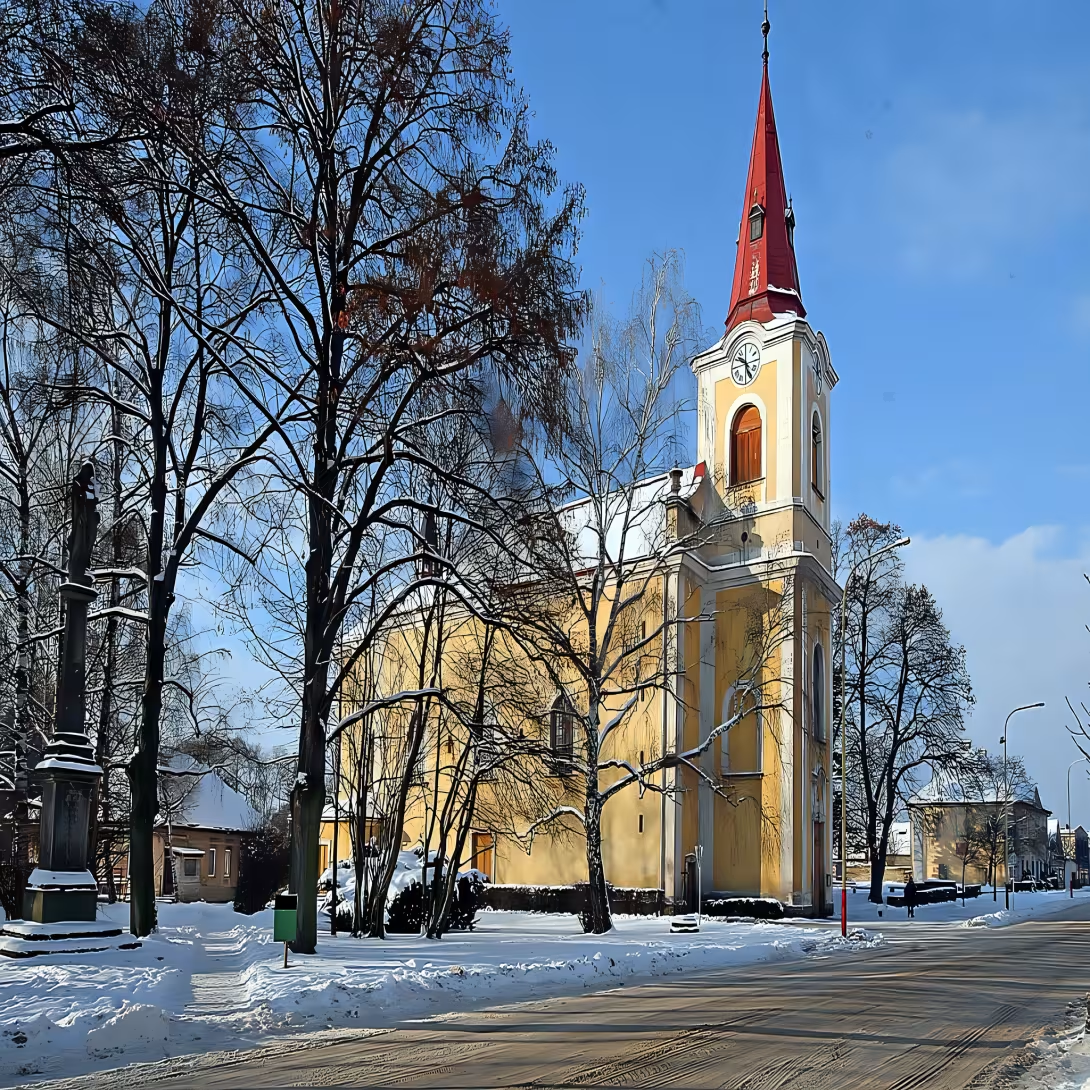
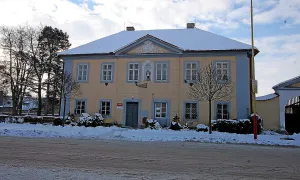
The Church of Saint James the Greater in Chroustovice is a notable Baroque sacred building constructed in 1744. Situated at the heart of this municipality within Pardubický kraj, it serves as a parish church and is recognized as a cultural monument of the Czech Republic. Its significance lies not only in its architectural style but also in its historical context and enduring presence in the community.
The origins of the Church of Saint James trace back to 1350 when it was first mentioned as a parish church. In 1744, the original structure was demolished and replaced by a new Baroque edifice funded by Marie Terezie Kinská, wife of Leopold Kinský. This period marked significant cultural and architectural developments in Bohemia under the Habsburg Monarchy's influence, characterized by a flourishing of religious architecture across Europe.
Architecturally, the church is a non-orientated Baroque structure with a single-nave rectangular layout. It features a polygonal belfry at the front and a semi-circular presbytery. The exterior boasts a gable roof adorned with Baroque pediments, while the interior is furnished in Rococo style. Noteworthy elements include a copper baptismal font from 1510, a main altar framed in Rococo style featuring an image of Apostle James flanked by angels, and Rococo-style side altars dedicated to Saint John Nepomucene and the Sorrowful Virgin Mary.
Throughout its history, the church has undergone several significant changes. In 1856, a fire destroyed its roof and belfry, which were subsequently restored in 1858 with funding from Maxmilián z Thurn-Taxisu. A major reconstruction occurred in 1898 to preserve its architectural integrity. Originally, four bells resided in the tower; however, only an umíráček remains after they were confiscated during wartime.
Today, the Church of Saint James the Greater stands as a testament to Baroque architecture and religious heritage. It continues to serve as a parish church and is accessible for visitors who wish to explore its historical and architectural significance. Its preservation as a cultural monument underscores its importance in Czech history, making it a worthwhile destination for those interested in exploring the rich tapestry of European religious art and architecture.
Then and now
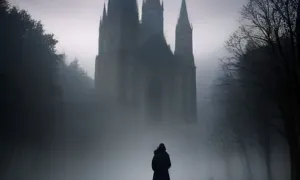
Drag the slider to compare how the landmark may have looked when it was built with the view today.
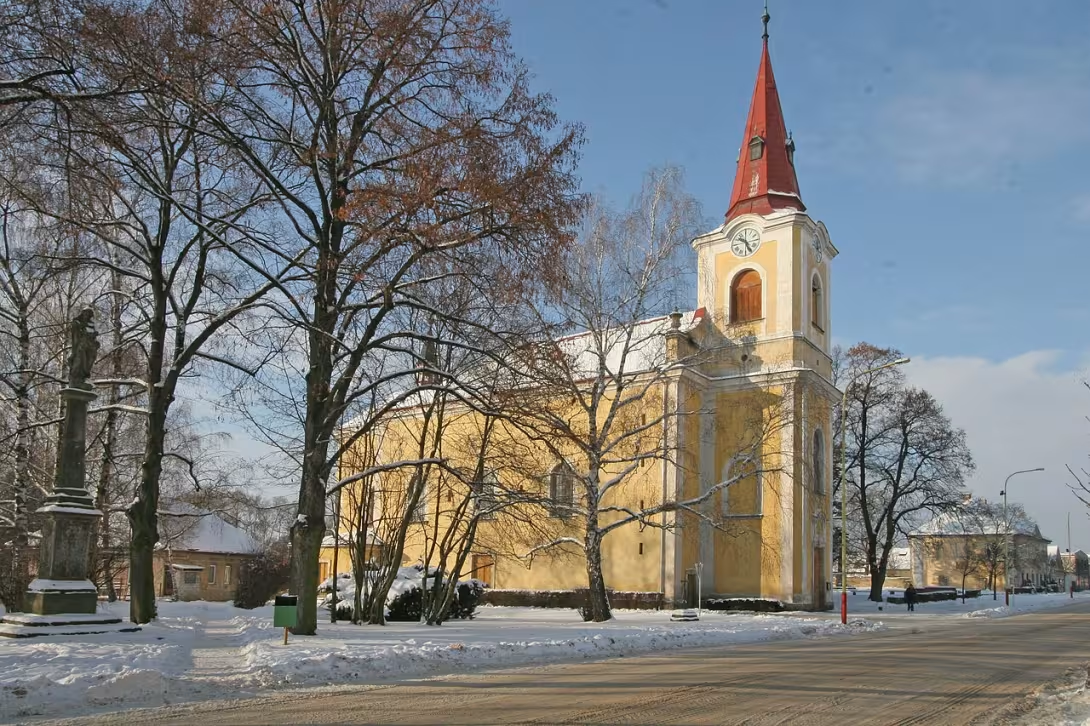
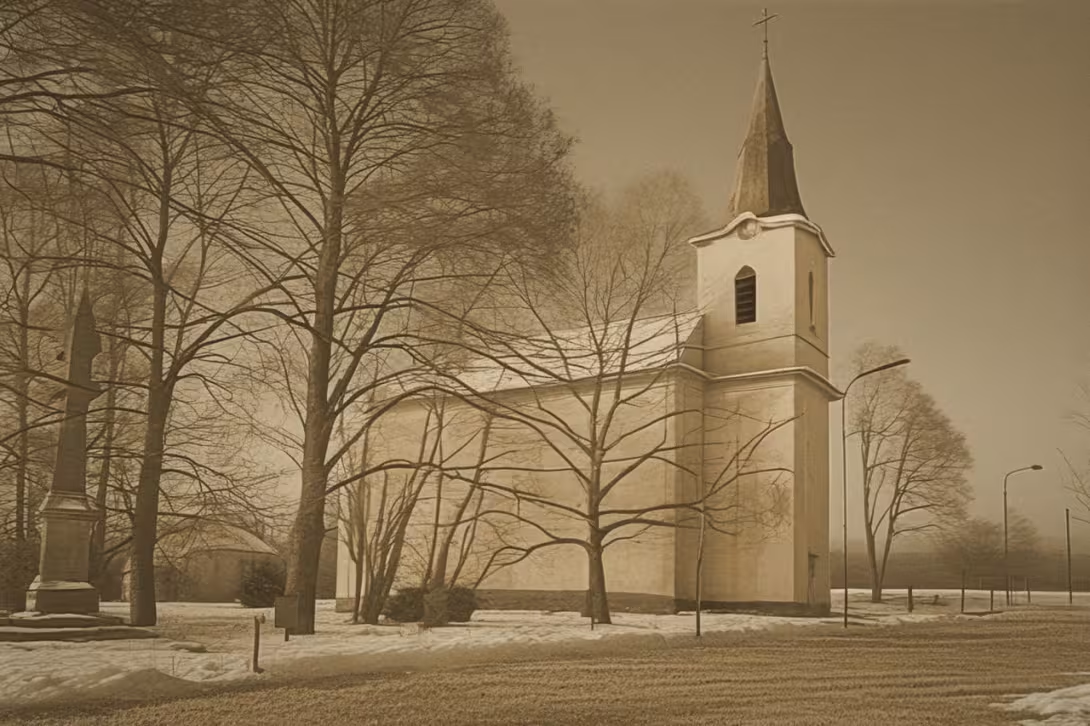
The historical appearance on the left is an AI-generated visualisation and serves as inspiration only.
Historical milestones
- 1350
- Church first mentioned as a parish church.
- 1744
- Original structure demolished and replaced by Baroque edifice.
- 1856
- Fire destroyed roof and belfry of the church.
- 1858
- Roof and belfry restored with funding from Maxmilián z Thurn-Taxisu.
- 1898
- Major reconstruction to preserve architectural integrity.
Architectural development
Constructed in 1744 as a baroque structure, the Church of Saint James the Greater has undergone several significant changes. After a fire in 1856 destroyed its roof and belfry, restoration occurred in 1858. A major reconstruction took place in 1898, ensuring the preservation of its architectural integrity.
Historical events
- 1744
- The original church was demolished and replaced by a new one funded by Marie Terezie Kinská.
- 1856
- A fire destroyed the roof and belfry of the church, which were restored in 1858.
- 1898
- The church underwent a major reconstruction.
Points of interest
- The Church of Saint James the Greater has a baptismal font dating back to 1510, crafted from copper, which is one of its oldest artifacts and predates the current Baroque structure by over a century.
- During World War II, the church's four bells were confiscated as part of wartime requisitions. Today, only an umíráček, or "death bell," remains in the tower, serving as a poignant reminder of this period.
- The church underwent a significant reconstruction in 1898 to preserve its architectural integrity, reflecting broader efforts during that time to maintain historical buildings amidst modernizing influences.
- In 1856, a fire destroyed both the roof and belfry of the church. These were restored two years later with funding from Maxmilián z Thurn-Taxisu, highlighting the community's commitment to preserving its cultural heritage.
- Marie Terezie Kinská played a crucial role in the church’s history by financing the construction of the current Baroque edifice in 1744, showcasing her influence and dedication to religious architecture during the Habsburg Monarchy.
Guide
This guide is narrated by a synthetic voice generated by artificial intelligence.
Show guide text
This text was created by artificial intelligence and has not been editorially reviewed. It may contain inaccuracies.
The Church of Saint James the Elder, the Apostle, stands in the center of the town of Chroustovice in the Chrudim district. It is the parish church and is protected as a cultural monument.
The church in Chroustovice is mentioned as a parish church as early as 1350. The original building was demolished in 1744 and that same year a new Baroque church was built. It was paid for by Countess Marie Thérèse Kinská of Vchynice and Tetov, born Capece de Rofrano, wife of Leopold Kinský. In 1856 the roof and tower with bells burned down. Maxmilián of Thurn-Taxis had them restored in 1858. The church underwent another major reconstruction in 1898.
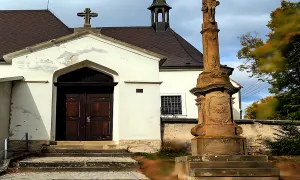
The building is not oriented in the usual way. The choir faces southwest and the main entrance is from the northeast. It is a single-nave church with a rectangular ground plan with a prismatic tower in the façade and a narrower, semicircularly closed presbytery. Through the ground floor of the tower, the church is entered by a right-angled portal, above which is a cornice stretching upward and a window that lights the gallery. On the tower floor are windows and above them are clock faces. The tower ends with a hexagonal pyramid with a cross. The nave is over twenty-three meters long and twelve meters wide. On each side it has only three windows and one portal. To the presbytery, a sacristy adjoins on one side and a princely oratory on the other. The gables on the sides of the tower are decorated with Baroque vases, and above the presbytery is a sanctus bell tower with a cross. The smooth walls with pilasters have an ochre color.
Inside, the nave and gallery are covered with a barrel vault with lunettes. The presbytery has a cross vault without ribs and ends with a conch. The vault is supported by pilasters.
The furnishings are Rococo. The main altar bears an image of the Apostle James in a frame held by angels. The side altars of Saint John of Nepomuk and Our Lady of Sorrows date from the mid-eighteenth century. The Marian altar is complemented by a statue of Our Lady of Sorrows from the seventeenth century. The pulpit with carved staircase is decorated with reliefs of the evangelists and a statue of the Good Shepherd. The oldest item is a tin baptismal font dated 1510.
Four bells once hung in the tower. Three of them were recast in 1858, including a bell from 1782 by Prague bell-maker Jiří Jan Kühner. During the war the bells were confiscated and only the death knell remained.
Frequently asked questions
Can the monument be visited?
Religious buildings are usually open mainly during services; at other times a visit is normally arranged with the parish or the operator. We have not verified specific times.
Where is the monument?
Location: Chroustovice, Pardubický kraj. The map on this page shows the exact spot.
Why is the monument protected?
It is listed in the Central List of Cultural Monuments of the Czech Republic as a cultural monument (register no. 26652/6-873).
Businesses nearby
Do you run a restaurant, accommodation, shop, museum, rental, wellness or other visitor service near this monument? Show yourself directly to the people heading to it — this is how they will see you in the app and on the web:
Accommodation nearby
Themed route
Thematic Vlog Tour: Chroustovice and Surroundings
1. Kostel svatého Jakuba (Chroustovice) - Church Begin your journey at the heart of Chroustovice with the Church of Saint James, a stunning example of Baroque architecture that captivates visitors with its intricate design and historical significance. This church is not only a spiritual center but also a testament to the rich cultural heritage of the region.
2. Chroustovický rybník - Pond A short walk from the church, you'll find the serene Chroustovický pond. This picturesque water body offers a tranquil setting perfect for reflection and relaxation. The surrounding greenery provides an ideal backdrop for capturing beautiful photographs or simply enjoying nature's calm.
3. Obecní úřad Chroustovic - Town Hall Continuing your exploration, visit the local Town Hall of Chroustovice. This building is a focal point in the community and offers insights into the administrative history and civic life of this charming village. It’s an excellent spot to learn more about the local governance and cultural events that shape daily life here.
4. Chroustovický park - Park Conclude your tour with a leisurely stroll through the nearby Chroustovice Park. This area provides a peaceful retreat where you can unwind amidst lush landscapes and well-maintained pathways. It's an ideal place to reflect on the beauty of Chroustovice and enjoy the natural surroundings.
This thematic vlog tour offers a comprehensive look at Chroustovice, highlighting its architectural marvels, natural beauty, and community life.
Seasonal recommendations
Spring: Visiting the Church of Saint James in Chroustovice during spring offers a unique experience as nature awakens around this historic site. The landscape is adorned with blooming flowers and fresh greenery, creating a picturesque setting that enhances the church's serene beauty. This time of year often brings mild weather, making it ideal for exploring the surrounding countryside on foot or by bike. Visitors should consider wearing comfortable layers to accommodate fluctuating temperatures throughout the day. Early mornings are particularly peaceful, allowing one to enjoy the site with fewer crowds and capture stunning photographs in the soft morning light.
Summer: Summer is a vibrant season to visit the Church of Saint James, characterized by lush surroundings and longer daylight hours that extend into the evening. The church often hosts various cultural events during this period, providing an opportunity for visitors to engage with local traditions and performances. However, it's advisable to arrive early in the morning or later in the afternoon to avoid peak tourist times when the site can become quite busy. Comfortable walking shoes and light clothing are recommended due to the warm weather, along with a hat and sunscreen to protect against the sun.
Autumn: Autumn brings a magical atmosphere to the Church of Saint James as the leaves change color, creating a stunning backdrop for this historic landmark. The cooler temperatures make it an ideal time for leisurely walks through the surrounding woods, where one can enjoy the crisp air and vibrant foliage. This season often sees fewer visitors compared to summer, allowing for a more intimate experience of the church's tranquil environment. Visitors should dress in layers to adjust to varying weather conditions throughout the day and consider bringing a light jacket or sweater as temperatures can drop in the evening.
Winter: The Church of Saint James exudes a quiet charm during winter, with snow often blanketing the area and transforming it into a serene, picturesque scene. This season provides a unique opportunity to appreciate the church's architecture against a backdrop of white landscapes and bare trees. However, visitors should be prepared for colder temperatures and potential icy conditions by wearing warm clothing, including coats, hats, gloves, and sturdy boots.
Visualizations and artistic views


The visualisations are generated by artificial intelligence and serve as inspiration.
Tips from visitors
No tips yet. Be the first!
Log in and add your tip.
Sources and literature
Photos: Petr1888 / CC BY-SA 3.0, rozlišení zvýšeno umělou inteligencí — Wikimedia Commons. The author and licence also appear when you hover over the image.
Faktickým podkladem tohoto textu byl článek na Wikipedii, jehož autory jsou přispěvatelé Wikipedie. Článek je dostupný pod licencí CC BY-SA 4.0.
Location on the map

Příběhy a pověsti
Legendy, pověsti a příběhy spjaté s touto památkou
Fotografie návštěvníků
Zatím žádné fotografie. Buďte první, kdo přidá fotografii z návštěvy!
Log in a přidejte svou fotografii nebo hodnoťte.
Za ověřenou návštěvu v aplikaci získáte víc bodů — poznáme podle GPS, že jste na místě.
Reviews and comments