



Fara (Nová Hradečná) Parish house
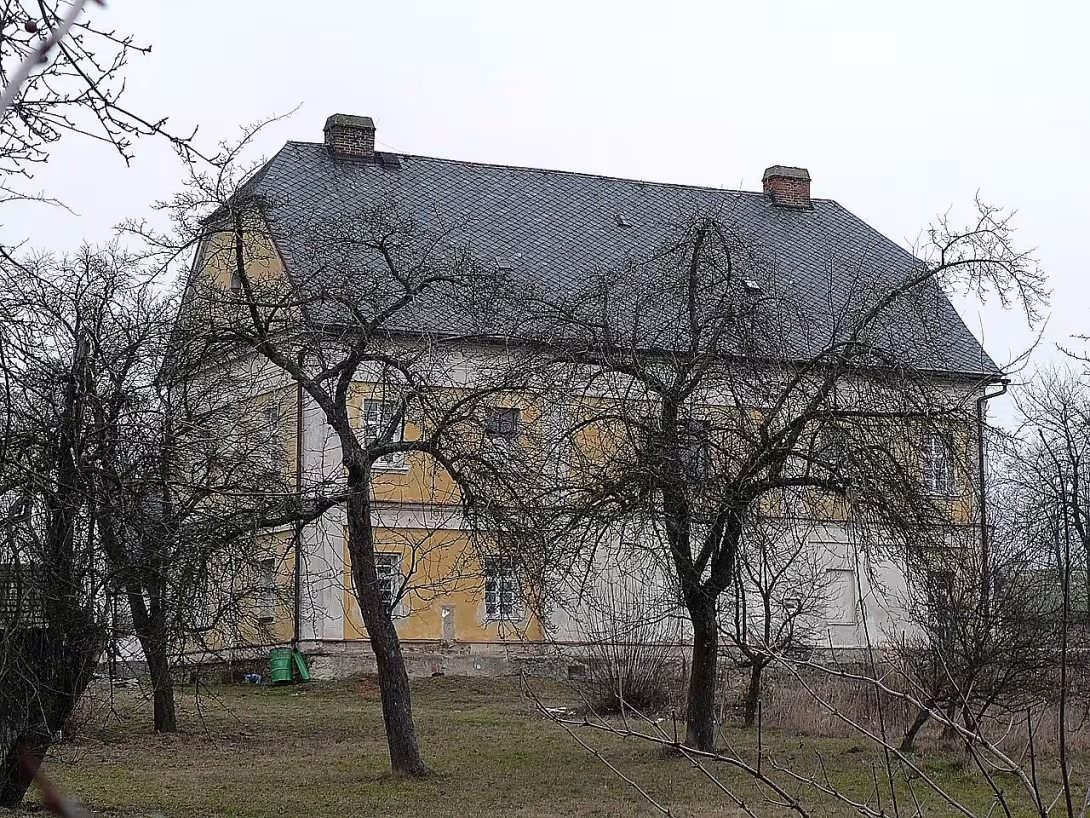
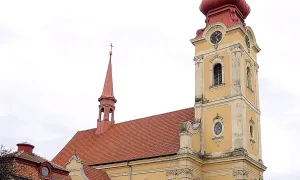
The Fara in Nové Hradec is a baroque monument protected building in the heart of the village, situated in the immediate vicinity of the church of St. Vavríce. The building was built between 1764 and 1768. It represents an important proof of Baroque architecture and has been included in the list of cultural monuments since 3 May 1958.
The building was created in the second half of the 18th century to order Josef Václav Vavránek from Liechtenstein. The historical context of the construction falls within the period of the maturing high baroque and emerging enlightenment under the rule of Marie Teresa, when Europe was in a post-war situation after a seven-year war.
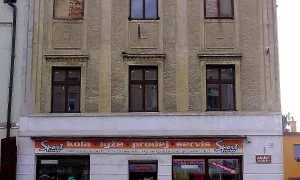
The construction has a rectangular floor plan and a half roof. The facade breaks the cordon ledge and the lisen frame, window axes decorated with champagne. Small circular windows are placed in the shields. Interiors combine flat-ceiling spaces with rooms sealed with Prussian vaults. The premises include an economic court which closes the ground floor. It was originally used as a stable for horses, shed, sheep's house and a barn for cows.
The historical rococo stove and portrait of the vicar Ondřej Miklík have been preserved inside the rectory until today. The important milestone in the operation of the building was 1919 when electricity was introduced. In modern history, namely in 2014, the roof has been repaired, which has been co-financed from the Emergency Programme of the Ministry of Culture of the Czech Republic.
This building together with the adjacent church of St. Vavrnice forms a complete historical whole. The preserved architectural elements and period equipment make the parish valuable proof of baroque administration and economic background of church buildings in the region. Visiting this place offers an opportunity to see the history of 18th century rural architecture.
Historical milestones
- 1764-1768
- Construction of baroque rectory for order of Josef Václav Vavríce from Liechtenstein.
- 1919
- Electricity was introduced into the rectory building.
- 1958
- The object was declared a cultural monument.
- 2014
- The roof of the rectory was repaired with the contribution of the Ministry of Culture Emergency Program.
Architectural development
The construction was carried out in the Baroque style in the second half of the 18th century. Interiors combine flat-ceiling spaces with rooms sealed with Prussian vaults. The area is supplemented by ground-level economic buildings closing the rectangular yard.
Historical events
In 1919 electricity was introduced into the building. Since 3 May 1958 the building is protected as a cultural monument. The roof was repaired in 2014 with the support of the Ministry of Culture Emergency Programme.
Points of interest
- The building was built in the years of a thousand seven hundred sixty-four to a thousand seven hundred sixty-eight to order Josef Václav Vavríce from Liechtenstein. - Since May 3rd of the year a thousand and nine hundred and fifty-eight the object has been listed in the list of cultural monuments. - Part of the area is the farm yard, where stables for horses, shed, sheep house and stables for cows were used. - The historical rococo stove and the portrait of the vicar Ondrej Miklek were preserved inside. - In the year one thousand nine hundred nineteen electricity was introduced into the building and in the year two thousand fourteen the roof was repaired.
Guide
Show guide text
This text was created by artificial intelligence and has not been editorially reviewed. It may contain inaccuracies.
Welcome to New Hradec. Stop for a moment, take a breath and feel the calm of this place. Right now, you're standing in front of a building that is a silent witness to many generations, a historical parish. If you look at her, you'll see the stability and dignity that radiates out of her after centuries. It is a building which, by its presence, immediately suggests that there were once people responsible for the spiritual and social life of the whole village. Notice how closely this rectory is linked to the church of St. Vavrnice, which is located in its immediate vicinity. This neighborhood was not random, the rectory was supposed to be the support of the church and the place where faith was linked to everyday life.
Now let's go back more than two walls in time. This Baroque building was not created in any short time. Its construction lasted four years, namely from a thousand seven hundred sixty-four to a thousand seven hundred sixty-eight. At that time, this area was under the influence of powerful generations, and that was the Josef Václav Vavřinec z Lichtenštejna. He was the one who banned this building and ensured its creation. Imagine the atmosphere at that time, the sound of the impact of stones, the work of carpenters and the vision of one of the most important nobles of his time, who wanted to leave a trail in the form of a functional and at the same time beautiful building. The Baroque was an era of grandeur and order, and this is very clear here.
Now pay attention to the architecture itself before you. Look carefully at the overall design of the building. Note that she has a rectangular plan, which gives her a sense of stability and balance. If you look up to the sky, you will see a half-wooden roof, which is a typical element of the time and helps the building to act harmonically in the landscape. Now focus on the facade details, the outer walls. Notice the so-called cordon ledge, which is the horizontal exiting strip that optically divides the building and gives it structure. and at the same time watch the mould frame, i.e. those flat vertical outputs on the walls that create rhythm and break the monotony of the surface. These elements are not only an ornament, but express a Baroque sense of geometry and aesthetics.
If you look around the main building, you'll see something we can hardly find in modern cities today. It's an economic court. This part of the campus tells us a very human story about what the life of a priest looked like in the eighteenth and nineteenth centuries. Fara wasn't just an office or an apartment, it was basically a small estate. The premises used to be continuously, sheep's house and stables. Imagine the morning noise of animals, the smell of hay and the daily work that was going on here. The priest and his helpers had to be not only educated in theology, but also proficient in the economy in order to be self-sufficient. This relationship between spiritual mission and earthly work on earth is still felt in this place.
There are specific personalities associated with this place. In addition to the already mentioned Josef Václav Vavríce from Liechtenstein, who had the building built, the name Ondřej Miklík appears in connection with the history of this place. Even though the architecture of the rectory remained in the hands of the unknown masters of its time, the influence of prominent figures and craftsmen left their prints. It is fascinating to think about how many people have lived in these areas, how many advice and reefs have been given here and how many important decisions have been made over the centuries.
But time didn't stop and the building had to adapt to new times. One such break was the year one thousand nine hundred nineteen, when electricity was first introduced into the rectory building. Imagine the contrast when the first electric light got into the baroque walls, which only remembered the light of candles and oil lamps. It was a symbol of the modern world that began to penetrate even these quiet corners. Another major milestone was May 3rd of the year one thousand nine hundred fifty-eight. On this very day, the rectory was officially declared a cultural monument. With this act, the state has recognised that this building is not just an old house, but a valuable piece of our common heritage that must be protected for future generations.
You may be wondering what state the building is in today. Historical buildings require constant care and time struggle. Several years ago, in particular in the year two thousand fourteen, there was an important repair of the roof. This repair was not only due to local efforts, but also helped the Ministry of Culture's Emergency Programme. Thanks to the fact that the roof was rebuilt in time, the building can continue to stand as a proud symbol of New Hradec and resist the weather discomfort.
Now that you're standing in front of this building, try to imagine how light changed here during days and nights for almost three centuries. Since the first work here on the foundations in the eighteenth century, through the flowering period, was carried out here, until today, when you are here. The rectory of New Hradec is not just a set of stones and mortar, it's a memory of the place. It is a reminder of a time when life was slower, when faith was the center of the community and when architecture tried to express the order and beauty of the divine world in earthly form.
Now let's invite you to look around in peace. Look around the economic court, see the texture of the walls, and think about how many stories these walls hide. You may hear echoes of the past, whispers of old books or the sound of footsteps in the halls. This rectory is a bridge between ancient times and present, and we're glad you found time to visit it.
Thank you for spending a moment with us at this beautiful Baroque monument. We hope you're interested in her history and architecture. Now you can continue to explore New Hradec and discover other hidden treasures of this region. We wish you a pleasant continued journey and many new experiences. Goodbye.
Tips for visitors
The best time to visit is during the sunny morning hours, when the Baroque facade of the rectory stands out in the natural light. Due to the location at the heart of the village, the quieter atmosphere is guaranteed in working days.
Use regional connections for public transport, the current timetable of which is checked in the search engine.
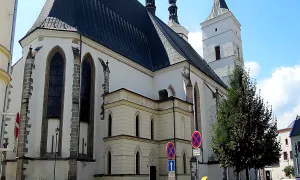
For photography I recommend to use the space between the rectory and the church of St. Lawrence, where both objects can be captured in one harmonious unit. The best light for pictures of details of Baroque architecture is shortly after sunrise.
In the immediate vicinity of the monument is the church of St. Vavríce, which with the rectory forms one historical whole. Walk around these two buildings is an ideal activity for families with children who appreciate a quiet environment in the centre of the village.
Take comfortable shoes to move around the historic building and the camera. Don't forget enough fluids, especially if you plan to stay longer around the church and rectory.
Frequently asked questions
Can the monument be visited?
This is a residential or farm building, not a museum with opening hours. Please view it from public space and respect the owners' privacy. We have no information about access to the interior.
Where is the monument?
Location: Nová Hradečná, Olomoucký kraj. The map on this page shows the exact spot.
Why is the monument protected?
It is listed in the Central List of Cultural Monuments of the Czech Republic as a cultural monument (register no. 1000131057).
Businesses nearby
Do you run a restaurant, accommodation, shop, museum, rental, wellness or other visitor service near this monument? Show yourself directly to the people heading to it — this is how they will see you in the app and on the web:
Nearby
V bezprostřední blízkosti se nachází kostel svatého Vavřince, který tvoří s farou historický celek v jádru obce.
Accommodation nearby
Trips and activities nearby
Guided tours, tickets and activities nearby from GetYourGuide
Affiliate link: if you buy from the partner, we may receive a commission. The price for you does not change.
Search tours and activities →Themed route
Thematic cruise route from Nové Hradec
1.Fara (Nová Hradečná)
Type: Historical monument
Why is it worth a visit: Fara is a key part of the cultural heritage of a village whose architecture testifies to rich history. It's the starting point for knowing local traditions and history.
2. Church of St. Lawrence
Type: Religious monument
Why is it worth visiting: The church is a historical whole with the parish and is a symbol of the spiritual life of the village. Its architecture and interior equipment attract visitors with their beauty and history.
3. Cave farms
Type: Historical area
Why is worth a visit: The tank offers a quiet space for relaxation and a view of the surrounding architectural monuments. It's an ideal place to walk and enjoy the outdoor environment.
4. Tower of the rectory
Type: Historical construction
Why is it worth a visit: The tower offers a view of the whole village and surrounding countryside, which is ideal for lovers of panoramic views. It is also a symbolic place with historical significance.
5. Exposure in the parish house
Type: Cultural space
Why is worth visiting: The exhibition provides insight into local traditions, history and culture. It is an excellent place to know the life of the inhabitants of Nové Hradec.
This route offers a view of the cultural and spiritual wealth of Nové Hradecná, allowing you to enjoy a quiet moment in the historical environment and explore local traditions.
Seasonal recommendations
Spring: In the spring season, the rectory in Nové Hradec is dazzled with sunlight, which shines on its white facades and emphasizes the details of architecture. Nature wakes up from winter sleep; flowering shrubs and trees are in full bloom, adding a beautiful green paradise to the atmosphere. It is advisable for visitors to go for a walk after the beginning of the day when fewer people and the temperature is pleasant. It is recommended to wear light clothes with the possibility to add a layer in case of cool windshield.
Summer: Summer offers long days of sunlight, which illuminates the rectory and its surroundings in a special atmosphere. The presence of crowds is high this season, especially during summer holidays. The best time to visit is in the morning or later in the evening, when the crowd is shrinking and you can enjoy a quieter tour. Suitable clothing should be light and light to prevent overheating; you must not forget the protective sun cream.
Autumn: Autumn season brings the rectory in incredible colors of gold and red when the leaves fall. The atmosphere is calm and quiet, which allows you to enjoy beautiful views without obstacles to the crowd. The best time to visit is yesterday or evening, when the temperature is mild and fewer people appear here. It is recommended to wear layered clothes that allow you to adapt to rapid weather changes.
Winter: Winter visit to the rectory offers unique views with a snow blanket that covers its surroundings and adds a romantic character to the atmosphere. Lighting is quieter and quiet, which creates a comfortable environment for relaxation. Due to the cold weather, it is advisable to visit the memory early in the morning to avoid closing due to the short hours today. It is important to wear warm clothes and more loyal shoes to enjoy a visit without discomfort caused by the cold.
Visualizations and artistic views

The visualisations are generated by artificial intelligence and serve as inspiration.
Photos from the area
Real photos taken near the monument


Zdroj a licence jsou uvedeny u každého snímku.
Tips from visitors
No tips yet. Be the first!
Log in and add your tip.
Sources and literature
Photos: Martin Vavřík / Public domain — Wikimedia Commons. The author and licence also appear when you hover over the image.
Faktickým podkladem tohoto textu byl článek na Wikipedii, jehož autory jsou přispěvatelé Wikipedie. Článek je dostupný pod licencí CC BY-SA 4.0.
Location on the map
Příběhy a pověsti
Legendy, pověsti a příběhy spjaté s touto památkou
Fotografie návštěvníků
Zatím žádné fotografie. Buďte první, kdo přidá fotografii z návštěvy!
Log in a přidejte svou fotografii nebo hodnoťte.
Za ověřenou návštěvu v aplikaci získáte víc bodů — poznáme podle GPS, že jste na místě.
Reviews and comments