



Fara (Slavonín) Parish house
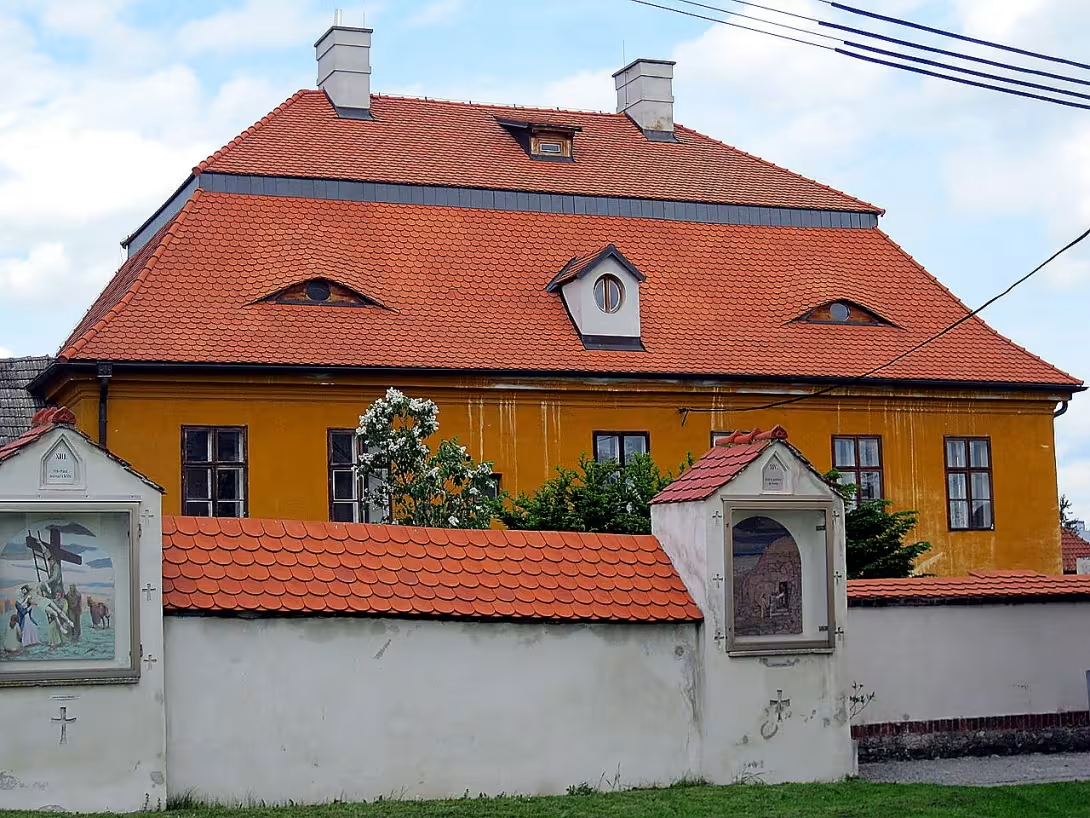
The rectory in Olomouci-Slavonín is a remarkable Baroque area near St. Andrew's Church. This cultural monument of the Czech Republic stands out with its history and architectural value. The complex consists of economic buildings, a courtyard, a garden, a fenced wall with a gate and a Baroque rectory building.
The first written mention of the rectory dates back to 1364, but the present Baroque building was created only in 1714-1721. After the fire in 1758 the building underwent reconstruction and in 1774- 1779 an internal painting with religious and historical motifs was carried out. During the failed siege of Olomouc, the rectory served as the command post of Prussian King Bedřich II.
The building is a free storey building with a rectangular ground plan with a mansard roof, which was previously covered with bags. The roof is decorated with windscreens with oval holes and oxen eyes. A smooth facade breaks the crown ledge. The main facade has seven window axes, the sides are three axes. The rectangular entrance in the third axis of the ground floor is lined by a shampoo with ears and drops.
In the interior, there is a central room encapsulated with a vaulted vault with lunettes over the corner and above the entrances to the adjacent spaces. The dining room in the northeast has a vaulted vault with five-sided lunettes. In the southeast part, in the northwest corner, there is a furnace reaching up to the ceiling. Other rooms have similar vaults and rich stucco decoration.
The area is surrounded by a stone wall. The entrance on the north side consists of a portal with tormented columns, volute headers and laying. The entrance ends with a compressed arch with a volute vault and a two-wing wooden door. The stone elements from the first half of the 18th century were transferred here from the abolished church of the Virgin Mary from the Prechran.
Fara in Slavonín represents an important example of Baroque architecture. Thanks to the rich stucco decoration and unique paintings from 1774- 1779, this is an exceptional monument. If you want to become familiar with the history and architecture of the Baroque, this parish is an ideal destination.
Historical milestones
- 1364
- First written mention of the parish.
- 1714
- The beginning of the Baroque rectory.
- 1758
- Rebuilding the rectory after the fire and residence of Prussian King Bedřich II.
- 1774
- Implementation of internal painting.
Architectural development
The original Baroque building from 1714- 1721 was modified after the fire in 1758. In 1774- 1779 there was an internal painting with religious and historical motifs. The stone portal near the wall was secondary to the site from the cancelled church of the Virgin Mary from the Prechran.
Historical events
The first written mention of the parish dates back to 1364. In May and June 1758, the rectory served as the main tent of the Prussian King Bedřich II during the siege of Olomouc.
Points of interest
During the failed siege of Olomouc, the rectory served as the command post of the Prussian King Bedřich's second. - The stone elements at the entrance to the premises come from the first half of the eighteenth century and were transferred from the abolished church of the Virgin Mary from the Prechran. - There's an oven in the southeast part of the building that goes up to the ceiling. - The present Baroque building was built between 1714 and 1721 and after the fire in 1758 it underwent reconstruction. - Internal painting with church and historical motifs was carried out between 1774 and 1779.
Guide
Show guide text
This text was created by artificial intelligence and has not been editorially reviewed. It may contain inaccuracies.
Welcome to Slavonín, where you are currently located on a historical monument that lures your beauty and rich past. You are standing in front of the Baroque parish, whose first half of the eighteenth century had been built by this impressive monument. Look up and you'll see a storey building with a distinctive Mansard roof that stands out against the background of the local sky. Also note the courtyard, gardens and a wall with historically valuable portals, which give the whole another nobility.
Let's dive into the formation of this rectory. The first written mention of the parish dates back to 1364, but its present Baroque form is the work of 1714 to 1721. After a tragic fire in 1758, there was a major reconstruction, also visited by Prussian King Bedřich II. At that time, the rectory became a place where key events took place.
Now pay attention to architectural details. The interiors of the rectory are beautifully decorated with rich stucco decoration and valed vaults with lunettes, which show the artistic taste of the time. Also note the stone elements at the entrance, which come from the first half of the eighteenth century and were transferred from the cancelled church of the Virgin Mary from the Prechran.
This complex also has an interesting history associated with key personalities. During the unsuccessful siege of Olomouc, the rectory served as the command post of Prussian King Bedřich II, which adds another layer of historical stories to the site.
Also interesting is the furnace located in the southeast part of the building, which you should remember to see. It is an element that gives the rectory another historical depth and points to its multifunctionality in the past.
I suggest you explore the whole area in more detail to enjoy every detail and feel the atmosphere of this place. May your visit be the beginning of a journey into the rich Slavonians' history. Thank you for letting us show you around this beautiful monument. When we meet again!
Tips for visitors
The best time to visit is during sunny days in the late afternoon, when the low sun lights up the baroque facade and the Mansard roof of the rectory beautifully, creating ideal conditions to capture the historic atmosphere.
You can easily reach the memory by car or public transport.
Use comfortable shoes to search for exteriors, as the area includes a yard and garden. If you are planning to photograph, do not forget the wide-angle lens that will help you capture the entire composition of the building in its historical context.
When visiting the rectory, do not miss the immediate adjacent church of St. Andrew, which forms a unified architectural complex with the rectory and offers other interesting views of the sacral buildings in this part of Olomouc.
The area is suitable for families with children thanks to the adjacent garden, where children can relax. We recommend to combine the tour with a walk around the area, which is easy and safe even for smaller visitors.
Frequently asked questions
Can the monument be visited?
This is a residential or farm building, not a museum with opening hours. Please view it from public space and respect the owners' privacy. We have no information about access to the interior.
Where is the monument?
Location: Slavonín, Olomoucký kraj. The map on this page shows the exact spot.
Why is the monument protected?
It is listed in the Central List of Cultural Monuments of the Czech Republic as a cultural monument (register no. 1000153851).
Businesses nearby
Do you run a restaurant, accommodation, shop, museum, rental, wellness or other visitor service near this monument? Show yourself directly to the people heading to it — this is how they will see you in the app and on the web:
Events nearby

Zdroj akcí: otevřená data měst a obcí ČR (Národní katalog otevřených dat) a kalendář akcí Národního památkového ústavu.
Nearby
Kostel svatého Ondřeje v Olomouci-Slavoníně.
Accommodation nearby
Trips and activities nearby
Guided tours, tickets and activities nearby from GetYourGuide
Affiliate link: if you buy from the partner, we may receive a commission. The price for you does not change.
Search tours and activities →Themed route
Thematic cruise route from the village Slavonín
1. Fara (Slavonín) - Religious monument Fara is a historical building that represents an important cultural and religious centre of the village Slavonín. Its architecture is dedicated to the past and offers a view of the traditions of the local church.
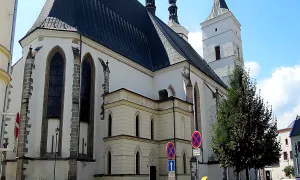
2. St. Andrew's Church in Olomouci-SlavonínA - Church This church is not only a spiritual centre but also an architectural treasure. His history and art equipment are an excellent example of the Baroque style.
3. Tanks of St. Andrew's Church Visiting the splendor offers the opportunity to see the outdoor elements and architectural details that complement the perception of the church. It's a place of calm and reflection.
4. Tower of St. Andrew's Church The trip to the tower offers not only a view of the surrounding landscape, but also an opportunity to explore the historical bells and their meaning. It's a unique perspective on local architecture.
5. Exposition of St. Andrew's Church The exhibition offers the opportunity to learn more about the history and importance of the church, its spiritual traditions and art treasures. It's an experience for every visitor.
This route offers a comprehensive view of the cultural and spiritual life of the village Slavonín, focused primarily on its church of St. Andrew.
Seasonal recommendations
Spring: In spring the surroundings of the farm in Slavonín awaken to life and the garden begins to green. The light is soft and pleasant in this period, which greatly highlights the historical details of the construction. It's an ideal time for quiet walks in the fresh air. I recommend wearing layered clothes because the morning cold can still feel while the afternoon is getting warmer. Visit the place in the morning, when the air is the cleanest.
Summer: In the summer months, the rectory has the most life and the surrounding vegetation is in full bloom. The sun burns hard, so it's good to have a headgear and plenty of fluids. Due to the increased number of visitors in the main summer season, I recommend that you arrive immediately after opening, so that you enjoy your peace and avoid the greatest heat. The shadow under the trees near the monument will give you the necessary relief.
Autumn: Autumn brings a magical atmosphere around the rectory and the colour of the leaves gives the place a golden touch. The morning mist can be mysterious and the light is very suitable for photography during this period. Prepare waterproof shoes and a warmer layer of clothing because wet and cooler air are a normal part of this time of year. The best time to visit is around noon when the light is most stable.
Winter: Winter makes the monument very quiet and distant, often in a grey or snowy environment. The day is short, so it is necessary to check the time possibilities of your visit in advance in order to avoid being closed. Dress very warm and robust enough because the cold can be more felt in open spaces. In this period you will find the most private, because the traffic is minimal.
Visualizations and artistic views

The visualisations are generated by artificial intelligence and serve as inspiration.
Photos from the area
Real photos taken near the monument


Zdroj a licence jsou uvedeny u každého snímku.
Tips from visitors
No tips yet. Be the first!
Log in and add your tip.
Sources and literature
Photos: Lehotsky / CC BY-SA 3.0 — Wikimedia Commons. The author and licence also appear when you hover over the image.
Faktickým podkladem tohoto textu byl článek na Wikipedii, jehož autory jsou přispěvatelé Wikipedie. Článek je dostupný pod licencí CC BY-SA 4.0.
Location on the map
Příběhy a pověsti
Legendy, pověsti a příběhy spjaté s touto památkou
Fotografie návštěvníků
Zatím žádné fotografie. Buďte první, kdo přidá fotografii z návštěvy!
Log in a přidejte svou fotografii nebo hodnoťte.
Za ověřenou návštěvu v aplikaci získáte víc bodů — poznáme podle GPS, že jste na místě.
Reviews and comments