






Kruhová cihelna Brick
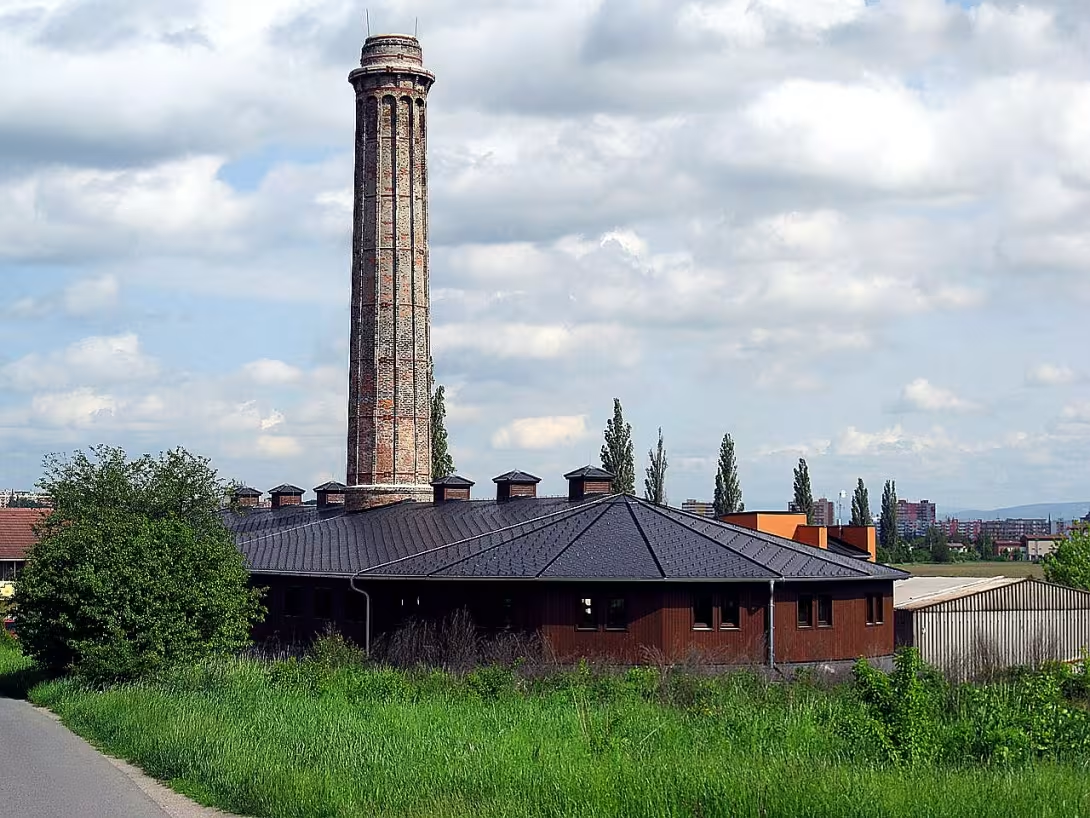
The Kruhová cihelna is a significant industrial historical monument located in Slavonín. Built starting in 1859 and modernized in the late 1880s, this circular brickworks was a progressive facility that supplied the majority of the bricks used in the construction of Olomouc. It is recognized as a unique technical monument in the Olomouc district.
Brick production in the Kyselov area dates back to at least the 16th century. Historically, the brickworks belonged to the city, and local subjects fulfilled their labor obligations there by producing bricks or maintaining access roads. In 1851, tenant Matouš Pelz took the facility under his own management. The construction of the current structure began in 1859, including the erection of the chimney.
A major turning point for the facility occurred between 1883 and 1884 when production was modernized through the installation of a Hoffmann-type circular kiln, which became operational in 1885. This modernization was facilitated by entrepreneur Heinrich Drasche von Wartinberg, who purchased the license, and Viennese builder Franz Breitenecker, who designed the new kiln.
The monument consists of a two-story oval building with a brick ground floor surrounded by a protruding wooden roof supported by wooden beams. The upper floor, which served as a drying kiln, features a wooden construction with wooden board cladding. This upper level overhangs the ground floor by approximately 1.5 meters and is supported by wooden posts.
The building is covered by a low saddle roof with semi-circular ends, featuring six rectangular ventilation turrets with pyramidal roofs. A central red-brick chimney rises from the ridge; it has a circular base with longitudinal indentations and a unique stepped shape reaching 37 meters in height. Inside, the facility contains an eighteen-chamber brick kiln.
The firing channel follows the building's perimeter and includes 18 arched loading openings, each between 0.9 and 1 meter wide. The kiln's vault contains five rows of coal feeding holes, known as sypáky. At the floor level, 18 arched openings lead to chimney flues that connect to a longitudinal smoke collection channel, which contains metal rods used to operate bell valves for closing the flues.
Following modernization, the brickworks became highly productive. In 1887, it produced 3 million bricks, and after the kiln was extended by four chambers in 1891 to reach a total of 18 chambers, annual production rose to 4 million bricks. The facility was nationalized in 1946.
Although it was protected as a cultural monument starting in 1958, production continued using clay from nearby Nemilane until the 1970s. After production ceased, the building fell into disrepair. In the 1990s, the site was owned by the city of Olomouc and was used by homeless individuals. In 2007, the city sold the property to the Profi-tisk group.
Beyond its industrial role, the site held social significance. In 1920, the local branch of the National Unity organization rented a room to establish a Czech school, aiming to influence the nationality of the predominantly German-speaking area. The facility also engaged in sand mining during the 1930s. The chimney's unusual stepped appearance is a result of it being built in stages.
After years of neglect, the building underwent a major reconstruction. While initial plans for a tourist pension and gallery were not realized, the owner began a reconstruction in 2010 to convert the site into an industrial facility for printing production. The reconstruction, carried out by the Zlín-based firm Průmyslové stavby, was completed in 2016.
This included the replacement of the dilapidated wooden drying kiln with a replica that maintains the original materials and structural design. The northern part of the replica is glazed to house printing operations, and the building has been connected to an adjacent warehouse. During the process, the chimney was repaired, though its top part was removed, which altered its original characteristic shape.
The Kruhová cihelna stands as a preserved example of industrial heritage and technical innovation. It offers a rare look at the specialized architecture required for large-scale brick production in the 19th century. Visitors interested in the industrial history of the Olomouc region will find this site a compelling destination.
Historical milestones
- 1851
- Matouš Pelz took the brickworks under his own management.
- 1859
- Construction of the current building and its chimney began.
- 1883-1884
- Modernization of the facility, including the installation of the Hoffmann circular kiln.
- 1885
- The new Hoffmann circular kiln was put into operation.
- 1891
- The kiln was extended by four additional chambers, increasing the total to 18.
- 1920
- The National Unity organization rented a room to open a Czech school.
- 1970s
- Brick production was terminated.
- 2016
- The building was restored following extensive reconstruction.
Architectural development
The structure consists of a two-story oval building with a brick ground floor and a wooden upper floor used as a drying kiln. The building features a low saddle roof with six ventilation turrets and a central 37-meter-high brick chimney with a unique stepped shape. The interior houses an eighteen-chamber brick kiln following the building's perimeter.
Historical events
Construction began in 1859; the facility was modernized with a Hoffmann kiln between 1883 and 1884; production ceased in the 1970s; the building was restored by 2016.
Owners
The brickworks belonged to the city, which leased it to private owners; in 1851, it was taken over by the tenant Matouš Pelz.
Points of interest
– The Kruhová cihelna is a significant industrial historical monument located in Slavonín.
– Built starting in 1859 and modernized in the late 1880s, this circular brickworks was a progressive facility that supplied the majority of the bricks used in the construction of Olomouc.
– The facility was nationalized in 1946.
– In 2007, the city sold the property to the Profi-tisk group.
Guide
Show guide text
This text was created by artificial intelligence and has not been editorially reviewed. It may contain inaccuracies.
Welcome to Slavonín. As you stand here today, take a moment to truly absorb the atmosphere of this place. You are standing before the Kruhová cihelna, a site that serves as a powerful testament to the industrial spirit that once defined this region. While it may appear as a silent monument today, if you listen closely to the history held within these walls, you can almost hear the echoes of the heavy machinery, the heat of the kilns, and the bustling energy of a facility that was once at the very forefront of technological progress. This is not just an old building; it is a significant piece of industrial heritage that played a vital role in shaping the landscape of the Olomouc district.
To understand why this site is so important, we have to travel back in time to the mid-19th century. The story of this brickworks as a major industrial force truly began to take shape in 1851, when Matouš Pelz took the enterprise under his own management. It was during his leadership that the foundations for what we see today were laid. By 1859, the construction of the current building and its prominent chimney had begun. This was a period of immense growth and change, and the Kruhová cihelna was positioned to be a central player in the industrialization of the area.
As you look around the site, try to imagine the scale of the operation during its peak. This facility was not merely a local workshop; it was a progressive, large-scale industrial plant. The bricks produced right here in Slavonín were the very building blocks of the surrounding region. In fact, this brickworks was a major supplier for most of the significant constructions in Olomouc. Every time you walk through the streets of Olomouc and see the sturdy, historic buildings that define its character, you are looking at the legacy of this very place. The bricks that form the walls, the foundations, and the structures of that great city were born from the labor and the technology housed here.
Now, let us turn our attention to the remarkable technological evolution of the site. If you look at the layout and the structural history, you will see that this was a place of constant innovation. The most transformative era occurred between 1883 and 1884. During these years, the facility underwent a massive modernization process. This was not a simple renovation; it was a complete technological leap forward. The centerpiece of this modernization was the installation of a continuous Hoffmann kiln. This was a cutting-edge piece of engineering for its time, a circular kiln that allowed for a much more efficient and continuous production process compared to older, traditional methods.
The installation of this Hoffmann kiln was completed and it was put into full operation in 1885. This advancement changed everything. It allowed the brickworks to meet the soaring demand of a growing Olomouc. The success of this technology was so evident that by 1891, the kiln was extended even further. Four additional chambers were added, bringing the total number of chambers to eighteen. This expansion solidified the Kruhová cihelna's status as a powerhouse of production. The architectural and engineering vision behind these developments was guided by the architect Franz Breitenecker, whose work helped define the technical and structural identity of this industrial monument.
As you contemplate the physical structure, it is worth considering the people who were part of this history. Industrial sites like this are never just about machines and bricks; they are about the people who managed them and the lives they touched. We find names like Heinrich Drasche von Wartinberg associated with this era, representing the complex social and economic layers of the time. The management and the ownership of such a massive facility required not just technical skill, but a deep understanding of the shifting economic tides of the late 19th century.
However, the history of the Kruhová cihelna is not solely one of industry and fire. As the decades passed and the industrial landscape changed, the building itself adapted, reflecting the changing social needs of the community. A fascinating chapter in its history occurred in 1920. In a move that shows how versatile these large industrial spaces could be, the National Unity organization rented a room within the facility to open a Czech school. This transition from a place of intense industrial heat and production to a place of learning and community growth is a remarkable detail. It reminds us that buildings, much like people, can evolve and find new purposes as the world around them transforms.
There is something almost mysterious about the way such a massive industrial engine can eventually fall silent, leaving behind only these impressive structures to tell its story. Think about the sheer volume of bricks that passed through these chambers—thousands upon thousands of them, destined to become homes, churches, and civic buildings. It is a thought that connects this quiet spot in Slavonín to the very heart of the city of Olomouc. You are standing at the source of a city's physical growth.
As you continue your walk and explore the surroundings, I invite you to look closely at the details. Notice the scale of the structures and the way they were built to withstand the rigors of heavy industry. Feel the weight of the history that surrounds you. The Kruhová cihelna stands as a unique technical monument, a survivor of an era that built the modern world.
Thank you for joining me on this brief journey through time. Please, take your time to explore the area at your own pace, and continue to discover the many layers of history that make this site so special. Enjoy the rest of your visit in Slavonín.
Tips for visitors
Best Time to Visit: The Kruhová cihelna is open year-round, but the best time to visit is during spring or autumn when the weather is mild and sunny. This allows you to fully appreciate the building's architecture and surroundings without the harsh conditions of winter or summer heatwaves.
Businesses nearby
Do you run a restaurant, accommodation, shop, museum, rental, wellness or other visitor service near this monument? Show yourself directly to the people heading to it — this is how they will see you in the app and on the web:
Accommodation nearby
Trips and activities nearby
Guided tours, tickets and activities nearby from GetYourGuide
Affiliate link: if you buy from the partner, we may receive a commission. The price for you does not change.
Search tours and activities →Themed route
Thematic Tour Route
Main Destination: Kruhová cihelna (other attractions)
Location: Slavonín village
Surroundings:
* Žižkovský vrch * Slavonínský rybník
Route:
1. Žižkovský vrch: A scenic hill offering panoramic views of the surrounding landscape. The hike to the top is moderately challenging, but the reward is well worth the effort. 2. Kruhová cihelna: Our main destination, this circular brickworks is an impressive example of industrial architecture from the past. Explore the unique structure and learn about its history. 3. Slavonínský rybník: A peaceful spot for a relaxing break or picnic. Take in the serene atmosphere and enjoy the views of the surrounding countryside.
Total Distance: Approximately 5-7 kilometers
This route offers a mix of outdoor activities, cultural experiences, and relaxation. Enjoy the scenic views from Žižkovský vrch, learn about the history of Kruhová cihelna, and unwind by the tranquil Slavonínský rybník.
Seasonal recommendations
Spring brings a sense of renewal to Kruhová cihelna in Slavonín. As the surrounding landscape awakens, the soft, warming sunlight highlights the textures of the historical structure against the fresh greenery. It is an ideal time for those who enjoy a peaceful atmosphere without the intense heat of the later months. Since the weather can be unpredictable during this season, it is wise to dress in layers. Visiting in the mid-morning is recommended to enjoy the gentle light and avoid any sudden spring showers.
During the peak summer months, the site is bathed in bright, direct sunlight, making the architectural details stand out vividly. The atmosphere is lively, as this is the primary season for visitors. To make the most of your trip, aim for an early arrival to beat both the midday heat and the larger crowds that typically arrive later in the day. Lightweight, breathable clothing and sun protection are essential for a comfortable experience at Slavonín.
Autumn transforms the area around Kruhová cihelna into a landscape of gold and amber. The misty mornings and the cooling air create a nostalgic and contemplative mood, perfect for photography. The light becomes softer and more directional, casting long shadows that emphasize the site's history. Because temperatures can drop quickly, wearing sturdy walking shoes and a medium-weight jacket is advisable. An afternoon visit often yields the most beautiful, warm-toned scenery.
In winter, the site takes on a quiet, almost desolate beauty. The starkness of the historical remains against a potentially frosty or snowy backdrop offers a unique, minimalist aesthetic. With fewer tourists around, you can enjoy a sense of solitude and stillness. However, because the days are much shorter, you should plan your visit around midday to maximize the available daylight. Be sure to wear heavy, warm clothing to protect yourself against the cold while exploring the grounds of Slavonín.
Visualizations and artistic views


The visualisations are generated by artificial intelligence and serve as inspiration.
Photos from the area
Real photos taken near the monument


Zdroj a licence jsou uvedeny u každého snímku.
Tips from visitors
No tips yet. Be the first!
Log in and add your tip.
Sources and literature
Fotografie: Lehotsky / CC BY-SA 3.0 — Wikimedia Commons. The author and licence also appear when you hover over the image.
Faktickým podkladem tohoto textu byl článek na Wikipedii, jehož autory jsou přispěvatelé Wikipedie. Článek je dostupný pod licencí CC BY-SA 4.0.
Location on the map
Příběhy a pověsti
Legendy, pověsti a příběhy spjaté s touto památkou
Fotografie návštěvníků
Zatím žádné fotografie. Buďte první, kdo přidá fotografii z návštěvy!
Přihlaste se a přidejte svou fotografii nebo hodnoťte.
Za ověřenou návštěvu v aplikaci získáte víc bodů — poznáme podle GPS, že jste na místě.
Reviews and comments