






kostel svatého Ondřeje (Slavonín) Church
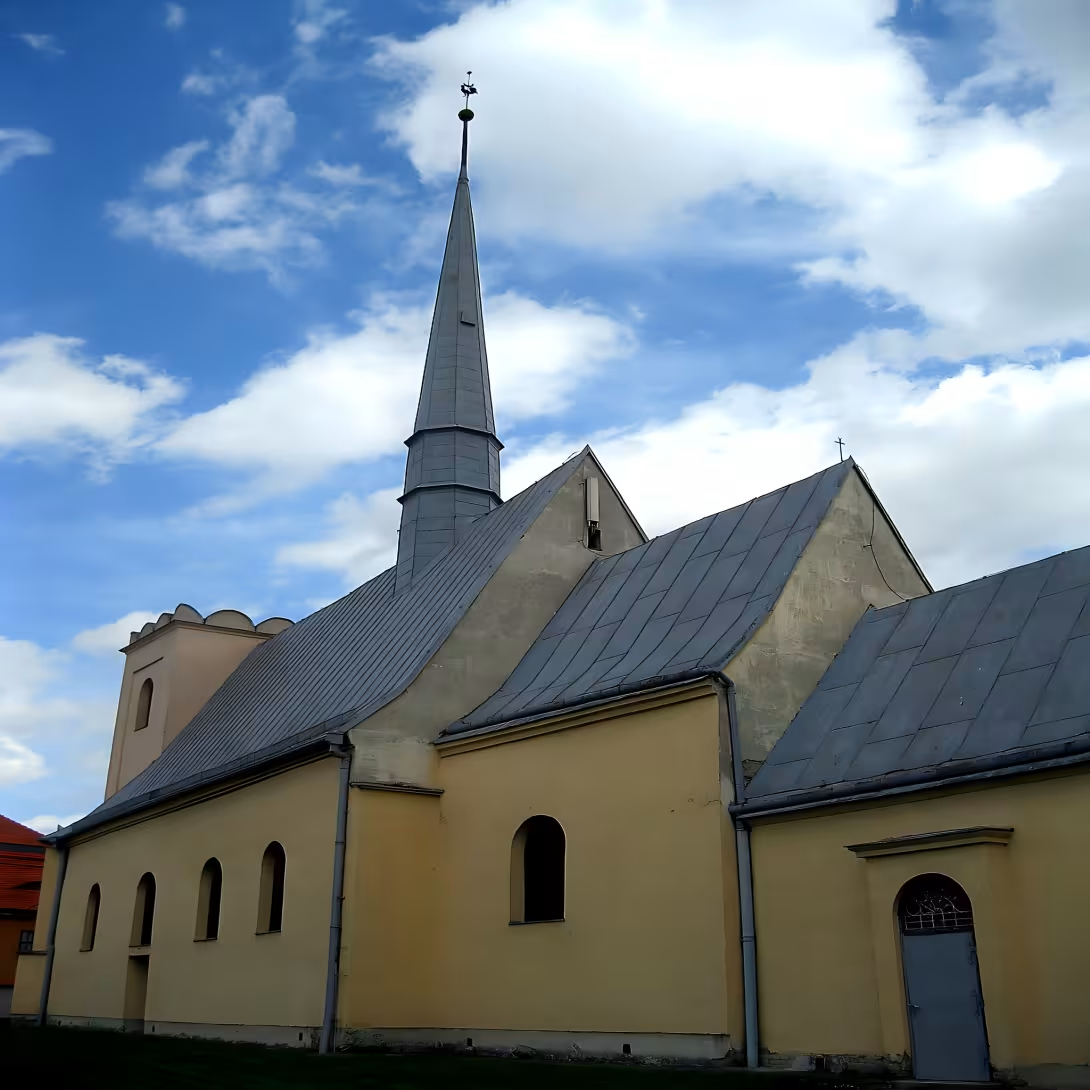
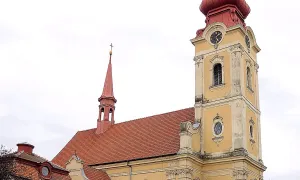
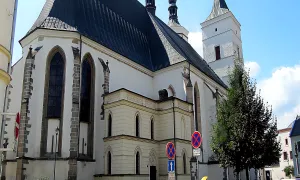
St. Andrew's Church is located in the south part of Slavonína on a mild surface. The archetura consists of a single-boat structure with a characteristic bell tower and a sanctiser that closes the roof ridge. The church is surrounded by a fenced wall and adjacent to the rectory, thus creating an urban ensemble of importance for the appearance of the entire village.
The oldest written mention of the parish church dates back to 1364, although the Gothic core of the building suggests origin from the 13th century. The oldest parts are the Gothic side chapel of the Holy Trinity and the Sanctum Tower. The main tower was rebuilt in the Renaissance at the end of the 16th century. Over the centuries, the church has undergone several other modifications and its present appearance is the result of a reconstruction from the turn of the 18th and 19th centuries.
The key milestone was moving the cemetery outside the village in 1806. The new wall has been built into a chapel with cross-road images. In the following years they covered the church with shale, paved the interior with stone tiles and built a circle on the north side. In 1929, a complete painting of the interior took place, involving Prague painter and architect Jaroslav Major together with Rudolf Adádek and Josef Urban. In the 1970s there were further repairs of roofs and facades; the original cross-road paintings from the painter and restorer Jan Zapetal, younger from Kroměříž, were removed from the wall at that time. In 2008, Dutch amateurs Rob van Dolron and Wima Barends created new paintings.
The church is built with a single boat with a main entrance in the prism tower on the north side. The rectangular boat is finished with a four-sided presbytery, to which two sacrists lie - a new one on the south side and an old one on the east side. On the east side of the tower is added a five-sided chapel with broken windows. The facades are smooth with a new plaster without decorative elements. The bell tower measures 12 fathoms in height, is three storeys with the closure of the arc aetik and a conical staircase on the west side. The bells that are dedicated to St. Andrew, the Virgin Mary and St. Anne were made in 1996 by the company Tkadlec in Halenkov. Of the older bells, there was only a small bell of a dying man from 1755.
The interior features a flat ceiling of the ship, on which are painted three large paintings from the life of St. Andrew. The presbytery is covered with a vault. The Chapel of the Holy Trinity has retained a gothic radiant rib arch. The main altar depicts St. Andrew, patron saint of the church, with statues of St. Peter and Paul on the sides.
Since 2004, there has been a memorial record of Father Louis Holain in the church, who was a composer of spiritual music in the parish between 1819 and 1906. In the southwest corner of the complex stands a free stone cross from the beginning of the 19th century and a monument with the names of priests who worked in the parish. The wall is articulated with 16 niche chapels with stops of the cross road. / p >
Then and now
Drag the slider to compare how the landmark may have looked when it was built with the view today.
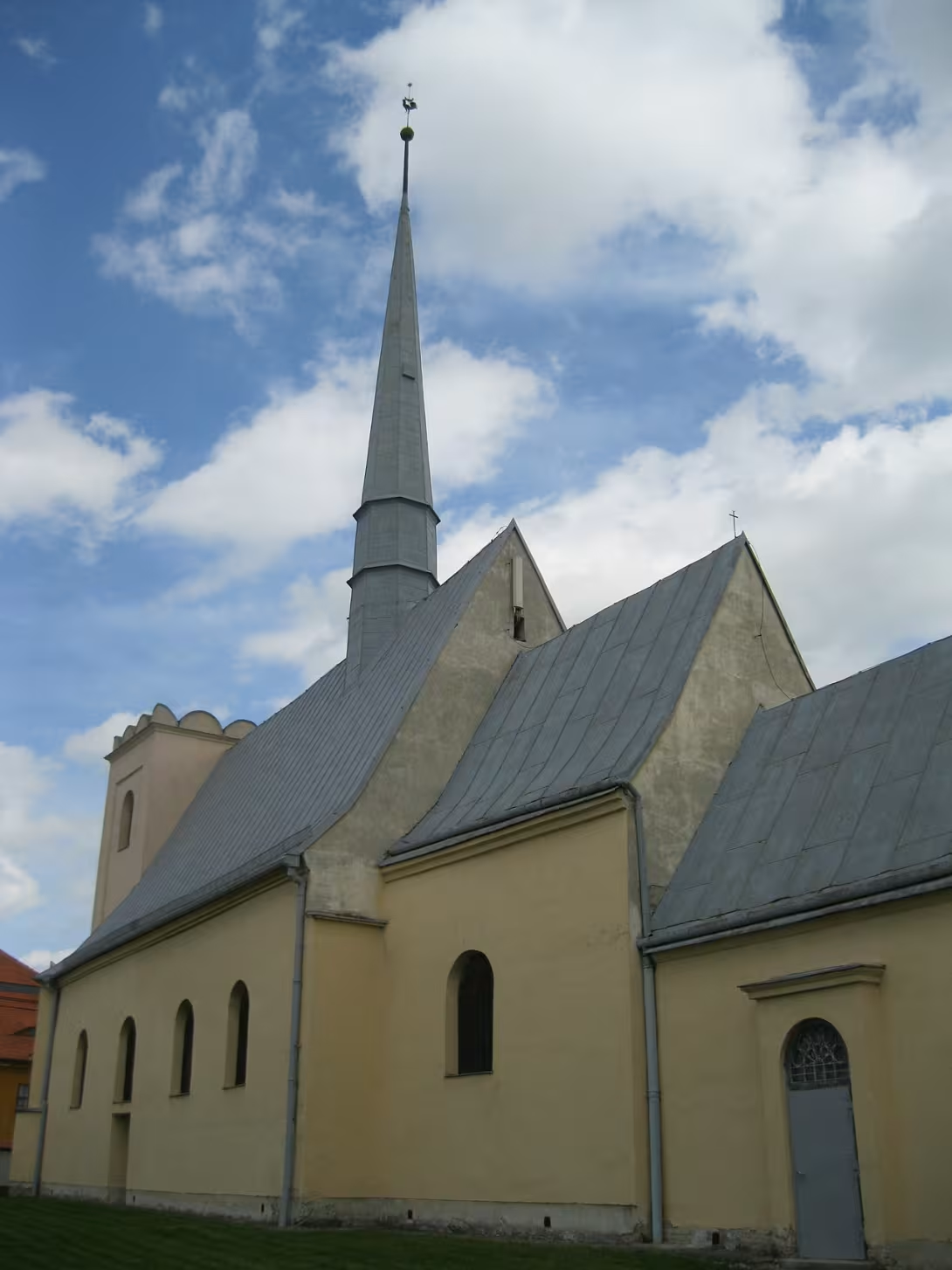
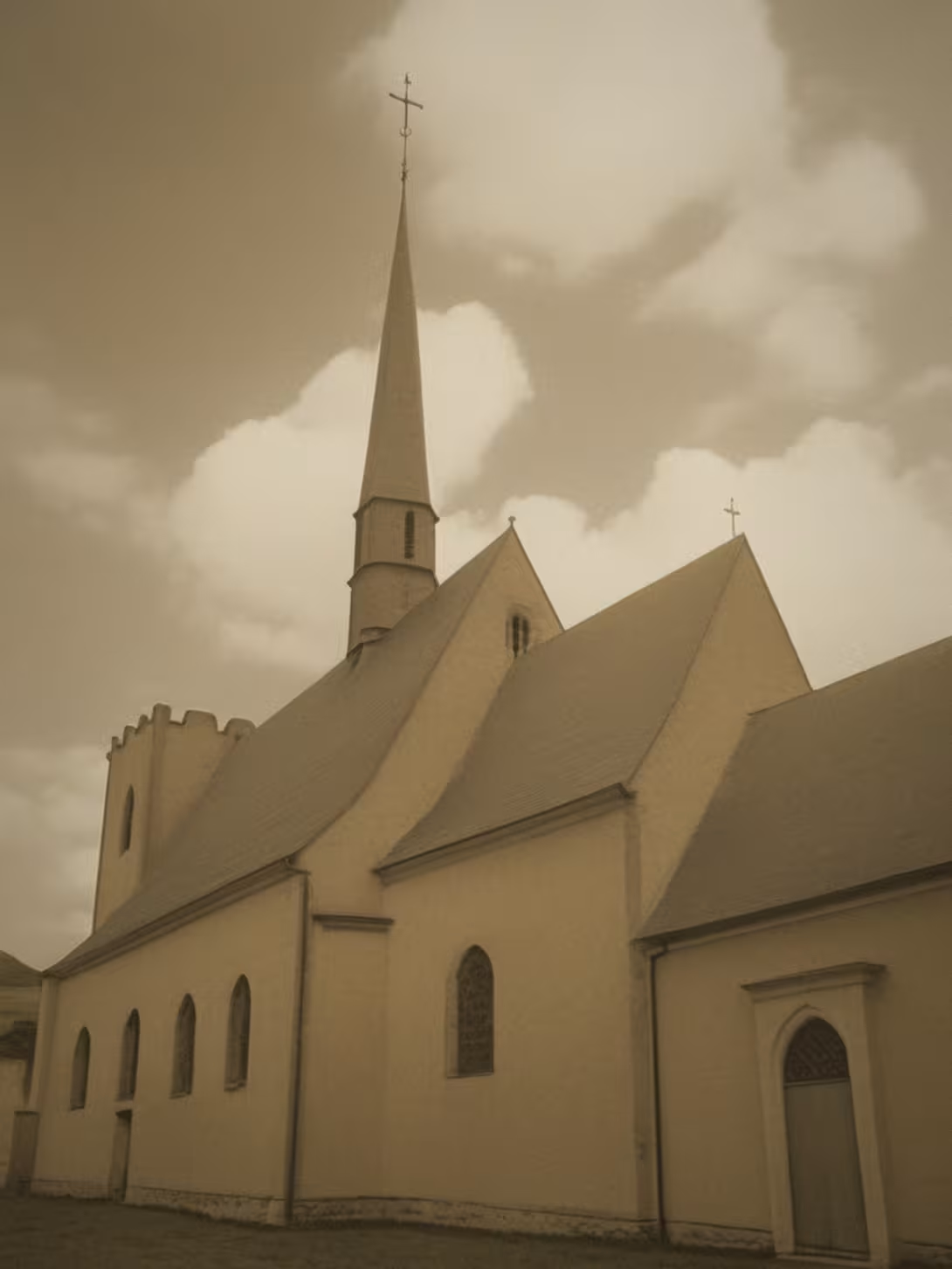
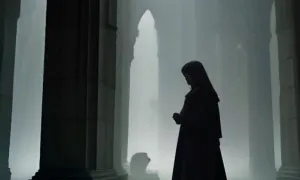
The historical appearance on the left is an AI-generated visualisation and serves as inspiration only.
Historical milestones
- 1364
- First written mention of the parish church.
- 1806
- Moving the cemetery and building a stop to the cross road in the wall.
- 1929
- Complete painting of the interior with participation of Jaroslav Major, Rudolf Adámek and Josef Urban.
- 2008
- Creating new cross-road paintings by amateur painters from Holland.
Architectural development
The basis is the Gothic core and chapel of the Holy Trinity, supplemented by a Renaissance tower from the end of the 16th century. In 1802 the church was modified in the spirit of historism. The interior consists of a combination of radiated rib, cross and flat arches.
Historical events
In 1364 was the first written mention of the parish church. In 1806 the adjacent cemetery was moved outside the village. A complete painting of the interior took place in 1929.
Points of interest
- The Gothic core of the building suggests the origin of the 13th century, although the oldest written mention dates back to 1364. - The bell tower measures 12 fathoms, is three storeys and has an arc athic with a snail staircase. - A small bell from 1755 was preserved in the church. - Three great paintings from the life of St. Andrew are painted on the flat ceiling of the ship. - There is a commemorative plaque of Father Louis Holain in the building, who acted as a composer of spiritual music.
Guide
This guide is narrated by a synthetic voice generated by artificial intelligence.
Show guide text
This text was created by artificial intelligence and has not been editorially reviewed. It may contain inaccuracies.
Welcome to St. Andrew's Church. You are standing right where time has stopped and where the history of Slavonín is intertwined with the spiritual life of the entire area. Look around you and perceive the atmosphere that surrounds you right now. Before your eyes, there is a monumental church structure whose face is the result of many centuries of transformations, repairs and modifications. Note how this sacral building harmoniously fits into its surroundings and adjacent to the nearby parish, which together creates a solid urban cell that determines the character of this whole part of the village. This entire area is defined by a wall that once surrounded the local cemetery. This wall is not just an ordinary interface, but it is part of the experience itself, because there is built in the chapel of the cross path that can accompany you as you walk.
In order to understand what you're seeing right now, we need to travel together in time deep into the past. Although the historical documents of this parish church for the first time appear in writing only in the year 13-64, its real roots are much older. If you look at the very essence of the building, you will find that its Gothic core suggests that the first prayers were made here in the third decade of the 13th century. This medieval foundation is the soul of the entire object, although its external form has changed substantially over the centuries. The current form of the temple you are now observing is the result of a massive reconstruction that took place at the turn of the eighteenth and nineteenth centuries. It is this transformation that has given the building its present character, but it has never forgotten what was here before, and it has retained the unwieldy power of the old walls.
Now pay attention to the architecture that is now directly addressing you. If you lift your gaze up, you will see the bell tower, which is one of the most significant elements of the entire complex. This tower measures twelve sockets and is built on three floors. Notice the upper part of it, the arch aetika that gives the construction a specific, elegant look. If you had the chance to enter and ascend to the height, you would have an unusual snail staircase that leads up to the sky. It is fascinating how this construction combines the practical function of the bell with the aesthetic beauty that is supposed to last for centuries.
Let's now look at how this space was changing throughout modern history. The church is not just stone matter, but it is a living organism that is constantly supplemented by new elements of art. In the year one thousand nine hundred twenty-nine there was a very important event when the interior of the church was completely painted. This important task was performed by sound artists, including Jaroslav Major, Rudolf Adámek and Josef Urban. Their work gave new life and color to the inner space. And history hasn't stopped in years to come. In the year two thousand and eight, other creators returned to the church, although this time they were amateur painters from Holland, who created new paintings for the cross road. This continuity in the care of the beauty of the temple, which dates from the Middle Ages to the present day, is truly exceptional.
When you pass by, you can also perceive the traces of human destinies associated with this place. History has left names that have still been embedded in local memory, such as Ludvík Holain. Every stone and every painting here reminds people who made sure this temple remained a noble place for prayer and meeting.
I have one more interesting thing that might make you stop and look at this whole building again. It's the invisible gap between what we know from the papers and what the stones themselves tell us. As I mentioned before, the first written reference dates back to the 14th century, but architecture clearly tells us that in the 13th century, someone stood here looking at the same stars as you. It's like a hidden message from the past that can only be read with an attentive eye. And if you ever hear a gentle, nostalgic sound in the silence of the church interior, it could be a dying man's voice. It is a small bell from the year one thousand seven hundred fifty-five, which was preserved in the church as a silent memory of all those who once sought solace here.
Now that you have gained a deeper insight into what is before your eyes, I want to invite you to further explore. Walk along the wall, stop at the individual stops of the cross road and feel the calm this place offers. If you choose to enter, pay attention to the paintings on the flat ceiling of the ship, which complement the general impression of this sacred space. Let the Slavonína atmosphere and the history that is felt in every detail. Thank you for your trip and I wish you a pleasant further tour of this beautiful place.
Tips for visitors
The best time to visit St. Andrew's church is in the morning or late afternoon when natural light best highlights the Gothic elements and the historical structure of the temple.
You can reach the memory by car or public transport; please check the search engine in advance for current traffic connections and parking options.
For a comfortable tour we recommend taking drinking water and shoes suitable for movement in historical objects.
For the best photos look for places where natural light falls on the oldest parts of the building, which creates excellent pictures of architecture.
Families with children can use a visit to educational familiarity with history if they follow a silent regime; in the surroundings you can visit the neighboring car.
Frequently asked questions
Is kostel svatého Ondřeje (Slavonín) open to the public?
Yes, the church is generally accessible to visitors. We recommend checking up-to-date information on accessibility on the official website or contacting local authorities.
How do I get to the place by car / public transport?
St. Andrew's Church is accessible both by car and public transport. For up-to-date information about routes and connections, we recommend using online search engines or consulting the public transport calendar.
How much is the entrance fee and is it paid on the spot?
Admission fees are usually paid when visiting, but specific prices may vary. The current price list can be found on the official site of the sights or on a personal visit.
Is the tour suitable for children and seniors?
Yes, the church is suitable for visiting both children and seniors. The space of the temple offers peaceful conditions and often special events or leadership focused on these groups are organized.
How long does the tour take?
The time of church visit may vary depending on the interest and speed with which visitors cross the space. Generally, a duration of 30 minutes to one hour may be expected.
What are the opening times and booking is required?
Opening hours may vary depending on the season. It is appropriate to check the actual opening times prior to the visit. Reservation is not usually necessary, but may be useful for special events.
What's interesting in the immediate vicinity?
In the vicinity of St. Andrew's Church you can visit other historical monuments and explore local culture. You can find current information about attractions in the region on official websites or at local tourist information stations.
For kids
Hello, dear adventurers! Prepare to travel back in time and discover the secret of St. Andrew's Church in Slavonín. It was like opening an old, flooded paper basket with precious gold coins - every memory stored here is filled with stories and hidden treasures.
Businesses nearby
Do you run a restaurant, accommodation, shop, museum, rental, wellness or other visitor service near this monument? Show yourself directly to the people heading to it — this is how they will see you in the app and on the web:
Nearby
Neighborhood rectory.
Accommodation nearby
Trips and activities nearby
Guided tours, tickets and activities nearby from GetYourGuide
Affiliate link: if you buy from the partner, we may receive a commission. The price for you does not change.
Search tours and activities →Themed route
1. Church of St. Andrew, sacral monument, explore the interior and spiritual importance of this historic place. 2. Church area, outdoor area, walk in the immediate vicinity of the building and enjoy a quiet environment. 3. Neighborhood rectory, building, visit the neighboring object that complements the religious character of this site.
Seasonal recommendations
Spring: In the spring period, St. Andrew's church in Slavonín is transformed into a haven full of life and sunlight. Green nature begins to bloom around the church, giving visitors the opportunity to explore the surrounding gardens and meadows in full beauty of spring. The atmosphere is calm and welcoming, ideal for relaxation and tours without many crowds. It is recommended to visit the church soon from the opening so that visitors enjoy mild temperatures and a slight presence of people.
Summer: Summer is the main season for visiting St. Andrew's Church. The sun illuminates the architectural elements of the church, which increases its beauty and attractiveness. When planning a visit, it is advisable to come early in the morning or later in the afternoon to avoid the hottest time of the day and crowds of tourists. Thanks to high temperatures we recommend to wear light clothes, protective sunglasses and plenty of drinking cloth.
Autumn: In autumn, St. Andrew's church in Slavonín is dressed in gold leaves. The atmosphere is calm and quiet, which offers an ideal environment for relaxation and reflective moments. When visiting this season we recommend wearing warmer clothes due to falling temperatures and preparing for possible rain. Visiting the church in the morning can be especially comfortable because it is usually calmer than later in the day.
Winter: Winter visit to St. Andrew's Church offers a unique experience. The church illuminated by evening light and natural atmosphere of frost creates a magical atmosphere that is ideal for romantic tours or peaceful moments. Due to lower temperatures and shorter daylight, it is important to be on time because the church can only be opened until a certain time. Wearing warm clothes, protective shoes and other clothes against cold is essential for comfort during the visit.
Visualizations and artistic views


The visualisations are generated by artificial intelligence and serve as inspiration.
Photos from the area
Real photos taken near the monument

Zdroj a licence jsou uvedeny u každého snímku.
Tips from visitors
No tips yet. Be the first!
Log in and add your tip.
Sources and literature
Fotografie: Lehotsky / CC BY-SA 3.0, rozlišení zvýšeno umělou inteligencí — Wikimedia Commons. The author and licence also appear when you hover over the image.
Faktickým podkladem tohoto textu byl článek na Wikipedii, jehož autory jsou přispěvatelé Wikipedie. Článek je dostupný pod licencí CC BY-SA 4.0.
Location on the map
Příběhy a pověsti
Legendy, pověsti a příběhy spjaté s touto památkou
Fotografie návštěvníků
Zatím žádné fotografie. Buďte první, kdo přidá fotografii z návštěvy!
Přihlaste se a přidejte svou fotografii nebo hodnoťte.
Za ověřenou návštěvu v aplikaci získáte víc bodů — poznáme podle GPS, že jste na místě.
Reviews and comments