



Flora Hotel building
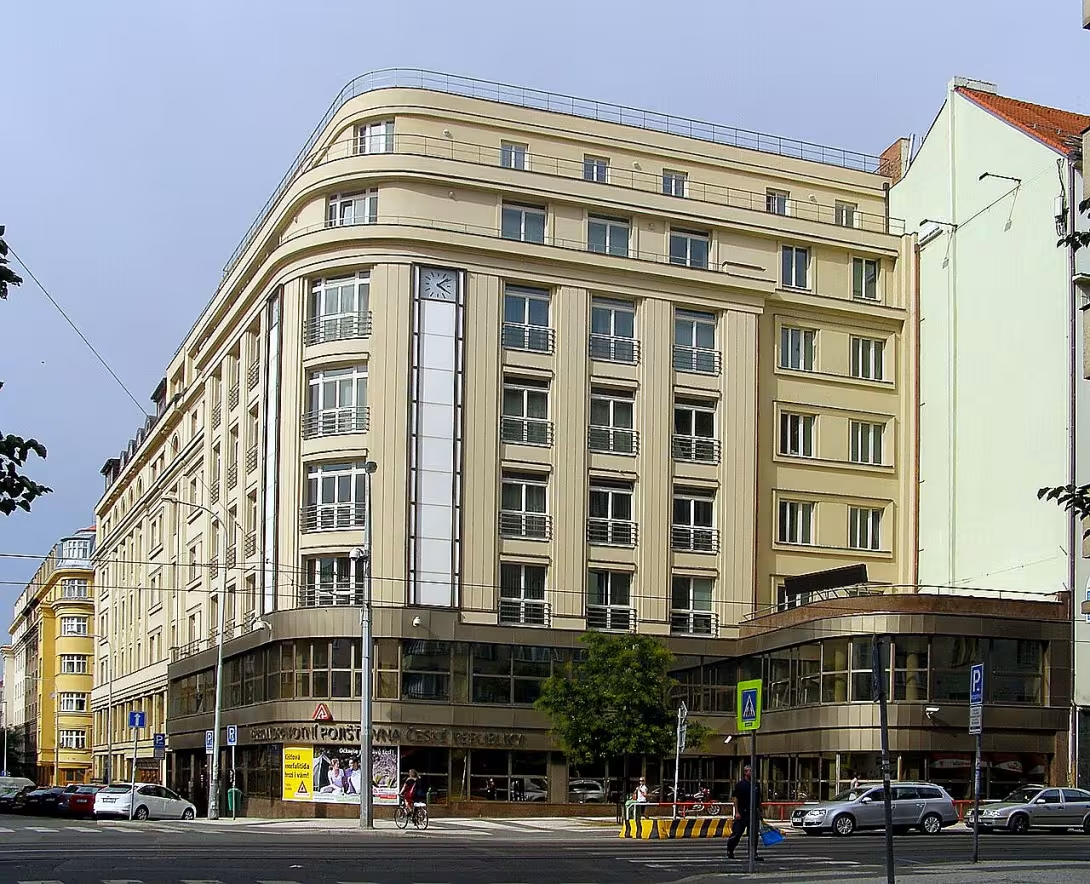
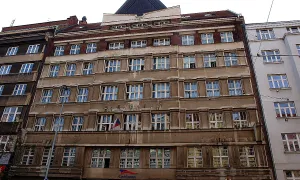
Palác Flora stands as a significant architectural landmark in Prague's Vinohrady district, located at the intersection of Orlická and Vinohradská streets. Constructed between 1926 and 1935, this multifunctional building initially served as a hotel, cinema, wine bar, and café. Designed by architect Alois Krofta, it features Art Deco elements combined with classical motifs and curvilinear style, including rounded corners and a Rococo-style decorated cinema hall. The building underwent comprehensive restoration in the late 1990s to preserve its historical significance.
The origin of Palác Flora dates back to the interwar period when Czechoslovakia experienced significant cultural and architectural development. Architect Alois Krofta designed this venue, which opened on March 1, 1928. It quickly became notable for housing Europe's largest cinema at that time, attracting visitors with its innovative design and diverse offerings.
Architecturally, Palác Flora is a testament to the modernist trends of the era. Constructed in two phases between 1926 and 1935, it incorporates Art Deco elements alongside classical motifs and curvilinear styles. Its rounded corners and Rococo-style cinema hall, adorned with marmoreal sculptures by Emanuel Kodet, highlight its artistic significance.
Ownership of Palác Flora has seen dramatic changes over the years. Initially owned by Alois Krofta until nationalization in 1948, it was later restituted to his descendants in 1995. In 1998, Všeobecná zdravotní pojišťovna acquired the building, marking another significant shift in its history.
Key events include its closure for five years starting in 1990 due to restitution disputes, followed by a period of significant restoration from 1995 onwards. After serving as an information center post-cinema era, it underwent comprehensive reconstruction under heritage conservationists' supervision in the late 1990s.
Today, Palác Flora stands as a preserved example of interwar architecture, reflecting its historical and cultural importance. Visitors can appreciate its architectural beauty and learn about its multifaceted history. Its restoration ensures that future generations will continue to experience this remarkable building. Palác Flora is not only a testament to the innovative spirit of its time but also an inviting destination for those interested in exploring Prague's rich architectural heritage.
Historical milestones
- 1928
- The opening of Palác Flora as a multifunctional venue including Europe's largest cinema at that time.
- 1995
- Restitution to the descendants of architect Alois Krofta.
Architectural development
Palác Flora was constructed in two phases between 1926 and 1935. Architect Alois Krofta incorporated elements of Art Deco, classical motifs, and the curvilinear style into its design. The building features rounded corners and a cinema hall with Rococo-style decoration.
Historical events
Opened on March 1, 1928, as a multifunctional venue including Europe's largest cinema at that time.
Closed for five years starting in 1990 due to restitution disputes and underwent significant restoration from 1995 onwards.
Owners
Initially owned by architect Alois Krofta until nationalization in 1948, it was later restituted to his descendants in 1995. Subsequently, Všeobecná zdravotní pojišťovna acquired the building in 1998.
Points of interest
- Despite its grandeur as a multifunctional building, Palác Flora originally faced significant financial challenges during its construction phase due to the economic instability of the interwar period in Czechoslovakia.
- The cinema hall within Palác Flora was once known for hosting exclusive screenings of avant-garde films and experimental cinema from across Europe, contributing to Prague's reputation as a cultural hub during the 1930s.
- A lesser-known fact about Palác Flora is that it briefly served as a secret meeting place for members of the Czech resistance movement during World War II, taking advantage of its central location and complex layout to evade detection.
- During the restoration in the late 1990s, workers discovered hidden murals beneath layers of paint in the cinema hall, believed to have been created by local artists shortly after the building's opening, which added a mysterious historical layer to its legacy.
- Palác Flora was once considered for conversion into a luxury shopping center in the early 2000s, but the proposal was ultimately rejected due to strong public outcry and advocacy from heritage conservationists who emphasized the importance of preserving its architectural integrity.
Guide
This guide is narrated by a synthetic voice generated by artificial intelligence.
Show guide text
This text was created by artificial intelligence and has not been editorially reviewed. It may contain inaccuracies.
Palác Flora on Prague's Vinohrady is a multi-purpose building that was created in the twenties and thirties of the twentieth century. On the corner of Orlická and Vinohradská streets, it housed a hotel, cinema, café and wine bar. It was designed by architect Alois Krofta, who was also its owner at the time it opened.
The building is one of the significant examples of interwar architecture. It was conceived monumentally and was built in two stages, in nineteen twenty-six and nineteen thirty-five. The distinctive feature is the rounded corners. Krofta combined motifs of the arch style and art deco with classical elements here.
The biggest attraction was the cinema. It opened on the first of March nineteen twenty-eight and at that time it was not only the largest cinema in Prague, which had eighty of them, but in the whole of Czechoslovakia. According to a contemporary report, it held over twelve hundred spectators. The auditorium measuring twenty-four point three by fourteen point seven meters was located in the basement of the palace and was decorated in rococo style. It had an orchestra pit, a balcony, cloakrooms, a smoking room and a buffet. The entrance is still decorated with marble statues of a man and woman in larger than life size, which are unrolling a film reel. Their author is sculptor Emanuel Kodet. From May nineteen thirty-one, sound films were shown here. After nineteen forty-eight, when another Prague cinema called Bystrica was closed, Flora took its name. It kept it until nineteen fifty-seven, when it returned to its original name.
Hotel Flora offered three hundred rooms and garages. The café on the first floor held dance evenings and evenings with entertainment. The wine bar had an entrance from Vinohradská Street and in the sixties was renovated under the name U bzenecké lipky.
The building served its purpose even after nationalization in nineteen forty-eight. In nineteen ninety it was closed and over five years of restitution disputes it fell into disrepair. In nineteen ninety-five, descendants of architect Krofta got it back and three years later they sold it in a devastated state to the General Health Insurance Company. The company paid one hundred fifty million crowns for the building and invested another two hundred forty-one and a half million into its reconstruction under the supervision of heritage conservators. The former cinema auditorium first transformed into a hall for public contact, today it is used only occasionally. The chandelier in the ceiling was replaced by a glazed dome which brings daylight into the hall.
Palác Flora has been protected as a cultural monument since the twenty-first of October two thousand and three.
Tips for visitors
The best time to visit Palác Flora is during the late morning or early afternoon, particularly from April to June when the weather is pleasant and the surrounding gardens are in full bloom. This period offers a serene atmosphere with softer natural light that enhances the architectural details of the building.
It's advisable to use public transportation for convenience, as it provides direct access to the area.
When visiting Palác Flora, bring comfortable walking shoes as you may want to explore the nearby surroundings on foot. A camera is recommended to capture the stunning architecture and any interesting details you might find around the building. Additionally, carrying a light jacket could be useful due to variable weather conditions in Prague.
For photography enthusiasts, the best spots for capturing Palác Flora are from Orlická Street or Vinohradská Street corners where the building's facade is fully visible. The soft morning light provides excellent natural lighting for photos. Be mindful of any restrictions on photography within certain areas of the property.
Nearby attractions within a 30-minute walk include the historic Vinohrady Cemetery, which offers a peaceful retreat and interesting tombstones from notable Czech figures. For families with children, consider visiting the nearby parks or playgrounds in the area to allow for some outdoor fun before or after exploring Palác Flora.
Frequently asked questions
Can the monument be visited?
The building is in use (offices, a school, shops and the like). The interior is generally accessible only during operating hours and tours are not usually offered; we have not verified the details. You can see the exterior from the street.
Where is the monument?
Location: Vinohrady, Hlavní město Praha. The map on this page shows the exact spot.
Why is the monument protected?
It is listed in the Central List of Cultural Monuments of the Czech Republic as a cultural monument (register no. 1804086744).
Businesses nearby
Do you run a restaurant, accommodation, shop, museum, rental, wellness or other visitor service near this monument? Show yourself directly to the people heading to it — this is how they will see you in the app and on the web:
Events nearby

Zdroj akcí: otevřená data měst a obcí ČR (Národní katalog otevřených dat) a kalendář akcí Národního památkového ústavu.
Accommodation nearby
Trips and activities nearby
Guided tours, tickets and activities nearby from GetYourGuide
Affiliate link: if you buy from the partner, we may receive a commission. The price for you does not change.
Search tours and activities →Themed route
Trasa: Vinohrady – Flora
1. Vinohradská vodárna (typ: technická památka, proč: zajímavá architektura a historie) 2. Kostel svatého Václava (typ: sakrální stavba, proč: krásná architektura a klidné okolí) 3. Flora (typ: hotel, proč: historicky významný objekt a krásné okolí) 4. Vinohradská ulice (typ: ulice, proč: zajímavá architektura domů a obchodů) 5. Křižovatka ulic Vinohradská a Škrétova (typ: veřejný prostor, proč: zajímavá architektura a živé prostředí)
Seasonal recommendations
Jaro
Spring is the time when Hotel Flora emerges from its winter slumber and comes to life. The building's lighting is brighter and warmer than in winter, and nature around the hotel changes color, full of flowers and greenery. The atmosphere is filled with optimism and hope, as if the entire world has awakened from a winter sleep. If you wish to visit Flora during the spring season, we recommend arriving early, as the hotel is very popular in spring. Don't forget to bring warm clothing, as it can still be chilly even in the spring season.
Summer
Summer is the main season for visitors of Hotel Flora. In summer, nature around the hotel is in full bloom, making it an ideal time to explore the surroundings and area. The building's lighting remains bright and warm, providing a perfect opportunity to tour the interior spaces of the hotel. If you wish to visit Flora in the summer, we recommend arriving early, as the hotel is very popular during the summer season and long lines can form.
Autumn
Autumn is the time when nature around Hotel Flora changes color, full of yellows, reds, and greens. The building's lighting remains bright but slightly cooler than in summer. The atmosphere is filled with calmness and comfort, as if the entire world is preparing for a winter sleep. If you wish to visit Flora during the autumn season, we recommend arriving early, as the hotel is less popular than in summer. Don't forget to bring warm clothing, as it can still be chilly even in the autumn season.
Winter
Winter is the time when Hotel Flora's building is at its most modest. The lighting of the building is less intense than in summer, and nature around the hotel is in a winter slumber. The atmosphere is filled with calmness and silence, as if the entire world is asleep. If you wish to visit Flora during the winter season, we recommend arriving early, as the hotel is open only for a limited time during the winter season. Don't forget to bring warm clothing, as it can still be chilly even in the winter season.
Visualizations and artistic views


The visualisations are generated by artificial intelligence and serve as inspiration.
Photos from the area
Real photos taken near the monument


Zdroj a licence jsou uvedeny u každého snímku.
Tips from visitors
No tips yet. Be the first!
Log in and add your tip.
Sources and literature
Photos: Michal Kmínek / CC BY-SA 3.0 — Wikimedia Commons. The author and licence also appear when you hover over the image.
Faktickým podkladem tohoto textu byl článek na Wikipedii, jehož autory jsou přispěvatelé Wikipedie. Článek je dostupný pod licencí CC BY-SA 4.0.
Location on the map
More monuments – Vinohrady
Show all in the municipality
Příběhy a pověsti
Legendy, pověsti a příběhy spjaté s touto památkou
Fotografie návštěvníků
Zatím žádné fotografie. Buďte první, kdo přidá fotografii z návštěvy!
Log in a přidejte svou fotografii nebo hodnoťte.
Za ověřenou návštěvu v aplikaci získáte víc bodů — poznáme podle GPS, že jste na místě.
Reviews and comments