






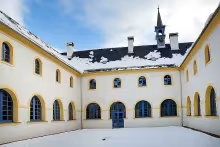
The Baroque Františkánský klášter v Hostinném is a significant historical monument in Hostinné, Czech Republic. Founded in 1684 by the Franciscan order, this complex has undergone several transformations over the centuries and is listed as a cultural heritage site. Today, it serves as a museum, library, and gallery.
Built between 1680 and 1687 in the Baroque style, the monastery has undergone several renovations and expansions. The building materials used include stone and brick, reflecting the style of its time with ornate details and functional design.
The Franciscan order owned the monastery from 1684 to 1785, when it was closed and its inventory confiscated during the Josephine reforms. The complex was reopened in 1789 and remained in Franciscan hands until 1950, when it was nationalized by the Czechoslovak state. In 1995, the monastery was returned to the Franciscan order.
A notable event in the monastery's history is the establishment of a hospital for pilgrims and the poor in 1728. This hospital was a significant institution in the region, providing care and shelter to those in need. The monastery also played a role in the cultural and spiritual life of the region, featuring a notable collection of ancient art, including a gallery of ancient sculpture casts.
Today, the monastery is a popular tourist destination with a museum, library, and gallery open to the public. Recent renovations have added a new wing and restored the existing buildings to their original glory. Visitors can explore the monastery's beautiful architecture, learn about its history, and admire its stunning collection of art and artifacts.
The Františkánský klášter v Hostinném is a must-visit destination for history, architecture, and art enthusiasts. Its rich history, stunning architecture, and impressive collection of ancient art make it a unique and fascinating place to explore.
Historical milestones
- 1684
- The Franciscan monks moved into the unfinished convent on August 8, 1684.
- 1728
- A hospital for pilgrims and the poor was established in the monastery in 1728.
- 1785
- The monastery was closed and its inventory was confiscated during the Josephine reforms in 1785.
Architectural development
The monastery was built in the Baroque style between 1680 and 1687. The complex has undergone several renovations and expansions over the centuries, including the addition of a new wing in the 18th century. The building materials used include stone and brick.
Historical events
The monastery was founded in 1684 by the Franciscan order.
The complex was renovated in 2009-2011.
The gallery of ancient art was opened in 1969.
Owners
Franciscan order (1684-1785, 1789-1950), Czechoslovak state (1950-1989), Františkánský řád (1995-present)
Points of interest
– The Františkánský klášter v Hostinném was originally intended to serve as a place of refuge for the poor and pilgrims, but it eventually became a significant cultural and spiritual hub in the region.
– In 1950, the monastery was nationalized by the Czechoslovak state, but it was returned to the Franciscan order in 1995, allowing the monks to reclaim their historic home.
– A notable feature of the monastery's architecture is the use of stone and brick, which was a common building material in the Baroque style, and the ornate details that reflect the era's functional design.
Guide
Show guide text
Welcome, and thank you for joining me at this remarkable place. You are standing before the Františkánský klášter in Hostinné, a gem of Baroque architecture that has stood for over three centuries. As you look up, you’ll notice the façade’s gentle curves, the orderly arrangement of windows, and the subtle play of light across the stone. The building’s modest yet dignified presence speaks of a history that has woven itself into the fabric of this town.
Let’s step back in time. The story of this monastery begins in 1684, when a group of Franciscan monks arrived on August 8th, moving into an unfinished convent that had been laid out but never completed. They were driven by a vision: to create a sanctuary for the poor and pilgrims who journeyed through the region. In the same year, the complex was officially founded, and the monks began to shape the space into a place of spiritual refuge and community service.
By 1728, the monastery had expanded its mission. A hospital was established within its walls, offering care to pilgrims and the less fortunate. This addition underscored the Franciscan commitment to charity, and the monastery became a beacon of compassion in the heart of Královéhradecký kraj. Yet, the winds of change would soon sweep through, and in 1785 the monastery was closed during the Josephine reforms. Its inventory was confiscated, and the monks were dispersed. The building’s purpose shifted, but its stones still held the echoes of those early years.
The architecture of the Františkánský klášter is a testament to the Baroque style that flourished in the late 17th and early 18th centuries. The architects Martin Reiner and Wolfgang Dientzenhofer brought a sense of harmony and proportion to the design. As you stand here, take a moment to observe the façade’s restrained elegance. Notice the balanced arrangement of windows, the subtle cornices, and the gentle slope of the roof. These elements reflect the Baroque penchant for movement and drama, yet they are tempered by a sense of calm that invites contemplation.
Now, let’s focus on the details that you can see right now. The stonework along the front is smooth, with a subtle texture that catches the light differently as the day progresses. The windows are tall and narrow, each framed by delicate stone lintels that hint at the craftsmanship of the era. The entrance portal, though modest, is framed by a simple arch that invites you in. If you look closely, you’ll see the subtle carvings that were common in Baroque ecclesiastical architecture, though they have weathered over the centuries.
Moving inside the complex, the church dedicated to Saint Francis of Assisi stands as a spiritual heart. While I can’t guide you through the interior in this audio, I encourage you to imagine the gentle hush that would have filled these walls as monks prayed and pilgrims sought solace. The church’s layout, typical of Baroque design, would have guided the eye toward the altar, creating a focal point for devotion.
The monastery’s history is also intertwined with several notable figures. Vilém Lamboy z Deseneru, a prominent patron of the arts, supported the construction and embellishment of the complex. Bernard Sannig, a Franciscan scholar, contributed to the intellectual life of the monastery, writing treatises that were circulated among the clergy. Ignác Ullrich, a local benefactor, helped fund the hospital’s establishment in 1728, ensuring that the monastery could continue its charitable mission. These individuals, among others, left their mark on the site, and their stories are woven into the very stones of the building.
There is a particular mystery that has intrigued visitors for generations. In 1950, the monastery was nationalized by the Czechoslovak state, a common fate for many religious institutions during that era. However, it was returned to the Franciscan order in 1960, a reversal that surprised many. The reasons behind this decision remain a topic of debate among historians. Some speculate that the cultural value of the site, combined with the growing interest in preserving national heritage, played a role. Others suggest that the monks’ persistent advocacy and the building’s significance to the local community were decisive factors. Regardless of the exact cause, this turn of events added another layer to the monastery’s rich tapestry of history.
As we near the end of our brief tour, I invite you to linger a moment longer. Take in the quiet that surrounds you, the way the light filters through the stone, and the sense of continuity that this place offers. The Františkánský klášter is not just a relic of the past; it is a living testament to faith, charity, and resilience. If you have the chance, explore the surrounding grounds, visit the museum, and perhaps even peruse the library that now houses manuscripts and artifacts from the monastery’s long past.
Thank you for sharing this moment with me. I hope you’ve found this glimpse into the history and spirit of the Františkánský klášter in Hostinné both enlightening and inspiring. Until we meet again, enjoy the rest of your journey through this beautiful region. Safe travels.
Businesses nearby
Do you run a restaurant, accommodation, shop, museum, rental, wellness or other visitor service near this monument? Show yourself directly to the people heading to it — this is how they will see you in the app and on the web:
Nearby
The monastery is located in the town of Hostinné, in the Královéhradecký kraj region of the Czech Republic. The surrounding landscape is characterized by rolling hills and forests.
Accommodation nearby
Themed route
The Franciscan Monastery in Hostinné - the main destination of our tour.
1. Monastic Garden - type: garden, why it's worth visiting: The monastic garden is a peaceful and magical place where you can relax and enjoy beautiful flowers and trees. It's an ideal spot for relaxation and rest.
2. Hostinné - type: town, why it's worth visiting: The town of Hostinné offers rich history and culture. You can stroll its streets and admire the beautiful historical buildings.
3. Forests of Hostinné - type: forest, why it's worth visiting: The forests of Hostinné offer a stunning natural environment and ideal conditions for hiking. You can walk through the woods and observe local fauna and flora.
Seasonal recommendations
Spring – As the thaw lifts, the cloister’s stone walls are framed by a riot of early‑bud roses and wild lupines that spill over the cloister walkways. Morning mist often lingers, giving the complex a hushed, almost ethereal glow that feels like a secret garden just opened. The visitor centre’s glass façade lets in soft, filtered light that accentuates the frescoes. Arrive between 9 a.m. and 10 a.m. to beat the first wave of day‑break crowds; a light jacket or a wind‑break is enough, as temperatures hover around 12–18 °C. The early hours also provide a quieter chance to photograph the interplay of light and stone without the usual bustle.
Summer – In the height of summer, the cloister’s courtyard is bathed in bright, direct sunlight that sharpens the contrast between the whitewashed walls and the green vines that climb the arches. The air is warm, often 24–30 °C, and the atmosphere buzzes with tourists, local families, and the occasional street musician. Because of the long days, the site can feel crowded from noon onward. To avoid the midday rush, plan a visit just after opening at 9 a.m. or later in the afternoon around 4 p.m., when the light softens and the temperature drops slightly. Pack a wide‑brimmed hat, sunscreen, and a reusable water bottle, and wear comfortable walking shoes for the cobblestone paths.
Autumn – When the leaves turn amber and crimson, the cloister’s gardens become a tapestry of warm hues that contrast with the cool, crisp air. The golden light of late afternoon casts long, dramatic shadows across the stone, creating a mood that feels both historic and intimate. Visitor numbers dip after the first week of September, making mid‑week afternoons ideal for a relaxed stroll. Dress in layers—perhaps a light sweater over a long‑sleeved shirt—since temperatures range from 10–18 °C, and bring a scarf or hat for the cooler mornings. Arriving around 2 p.m. allows you to catch the soft, amber glow without the peak‑hour crowds.
Winter – In the quiet of winter, the cloister’s austere architecture takes on a solemn, almost mystical quality as the light is lower and the air is sharp. Snowfall, when it occurs, drapes the stonework in a silvery hush, while the shorter daylight hours mean the complex opens later, typically around 10 a.m. The visitor centre’s interior is warmly lit, providing a comforting contrast to the cold outside. Dress warmly in layers, a waterproof coat, gloves, and a hat, as temperatures can dip below 0 °C. Visiting early in the morning, just after opening, offers a peaceful experience with minimal crowds, and the dimmer light creates a contemplative atmosphere that’s perfect for reflection.
Visualizations and artistic views


Vizualizace jsou generovány umělou inteligencí a slouží jako inspirace.


Tips from visitors
No tips yet. Be the first!
Log in and add your tip.
Reviews and comments