






Kostel Nanebevzetí Panny Marie (Police nad Metují) Church
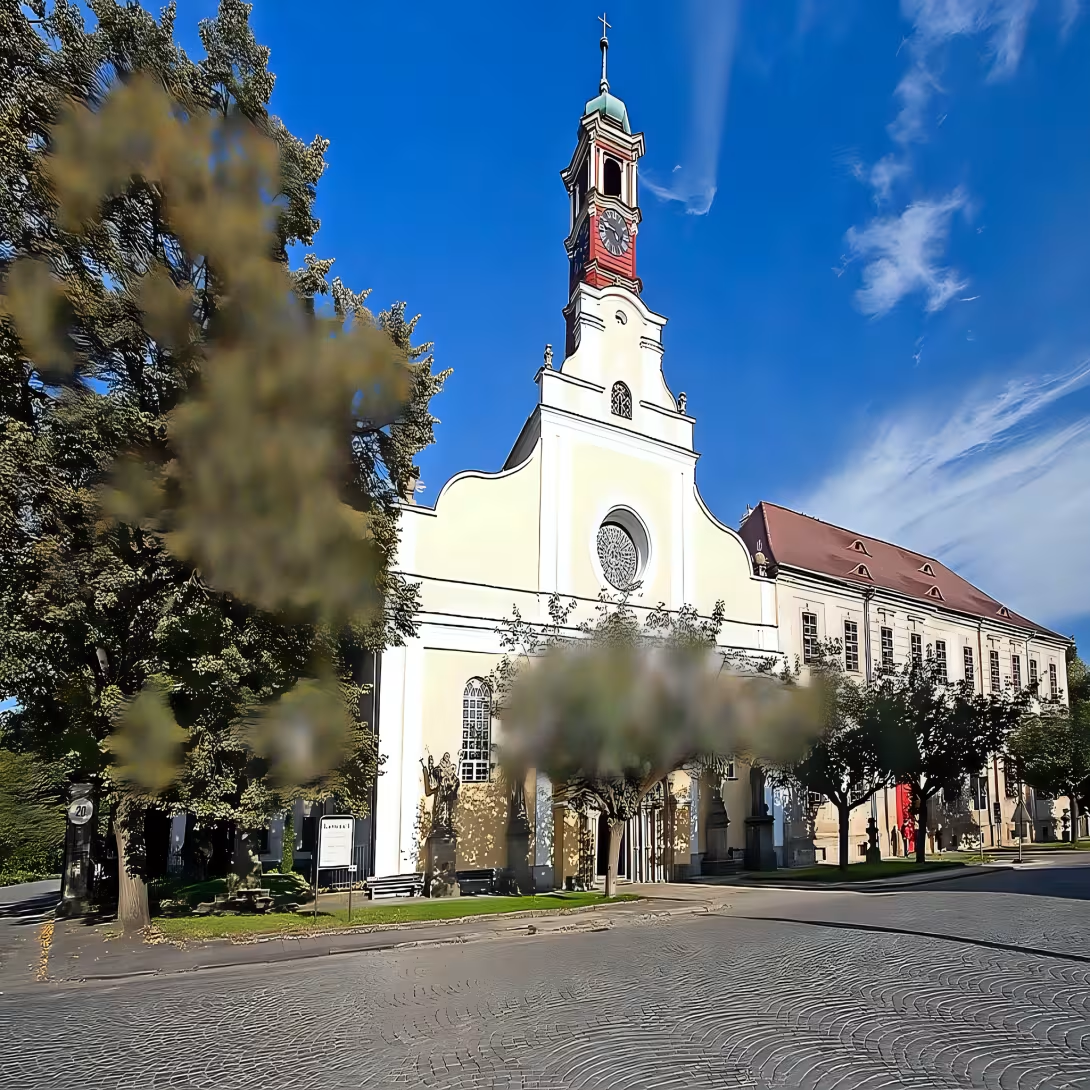
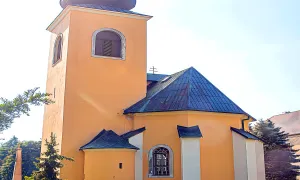
The Church of the Assumption of the Virgin Mary in Police nad Metují is a significant historical monument showcasing early Gothic architecture in Bohemia. Situated at the northwest corner of a former Benedictine monastery complex, it features a rare early Gothic portal and has undergone various architectural changes over time. Originally part of a monastic establishment under Břevnov Monastery, it became a parish church after the dissolution of the provostship in 1787.
Construction began in 1253 under Abbot Martin I., during Přemysl Otakar II.'s reign, who promoted Gothic architecture in Bohemia. Influenced by Cistercian monasteries from France, this style marked a cultural and architectural shift for the region. By 1294, construction was completed under Abbot Pavel II. Bavor z Nečtin, resulting in a three-nave basilica with two towers on its western facade.
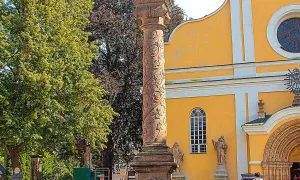
The original wooden chapel of the monastery was replaced by this stone structure, incorporating an early Gothic portal from the late 13th century. Over time, significant architectural changes occurred: in the early 18th century, it underwent Baroque modifications likely designed by Kilián Ignác Dientzenhofer. Later, in the late 19th century, it was renovated in a pseudo-Gothic style. These transformations included replacing the original wooden roof with a new vaulted ceiling and altering windows to fit Baroque aesthetics.
The church's history includes notable events such as damage during the Hussite Wars in the 15th century when a fire led to structural changes, including the replacement of its main nave's vaulting. Ownership transitioned from Břevnov Monastery to becoming a parish church after Emperor Joseph II suppressed the provostship.
Today, the Church of the Assumption of the Virgin Mary stands as a cultural monument in Police nad Metují, offering visitors insight into its rich architectural evolution and historical significance. Its preservation allows for an appreciation of both early Gothic elements and later stylistic adaptations. Visitors are invited to explore this remarkable site, which continues to be a testament to Bohemia's vibrant history and artistic heritage.
Then and now
Drag the slider to compare how the landmark may have looked when it was built with the view today.
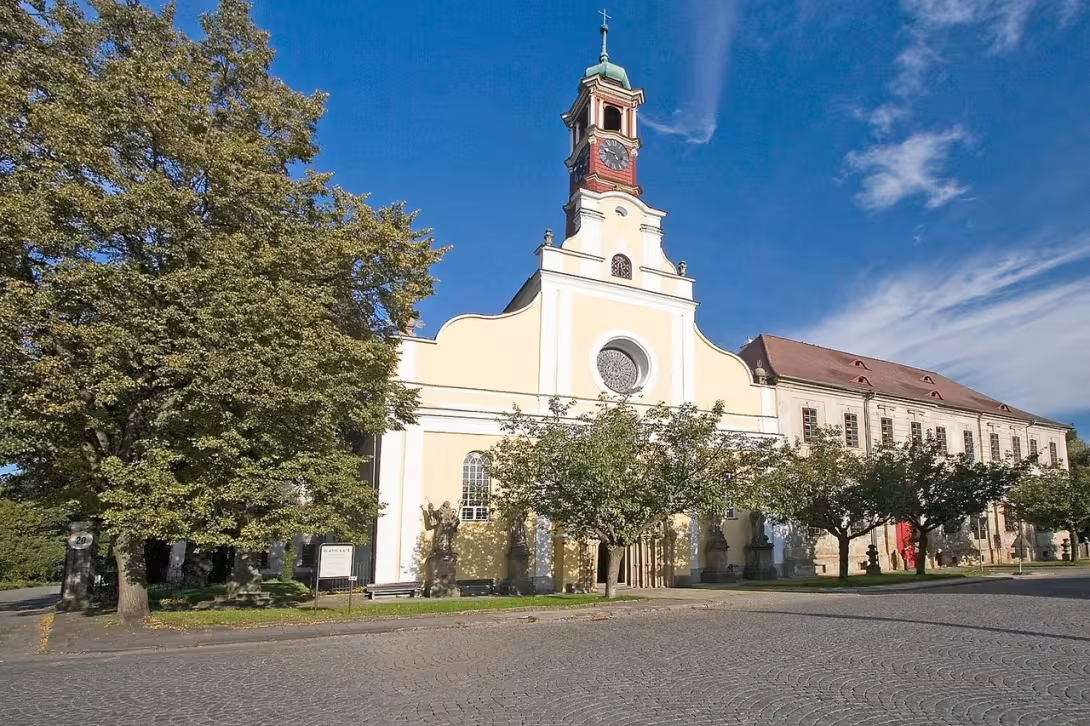
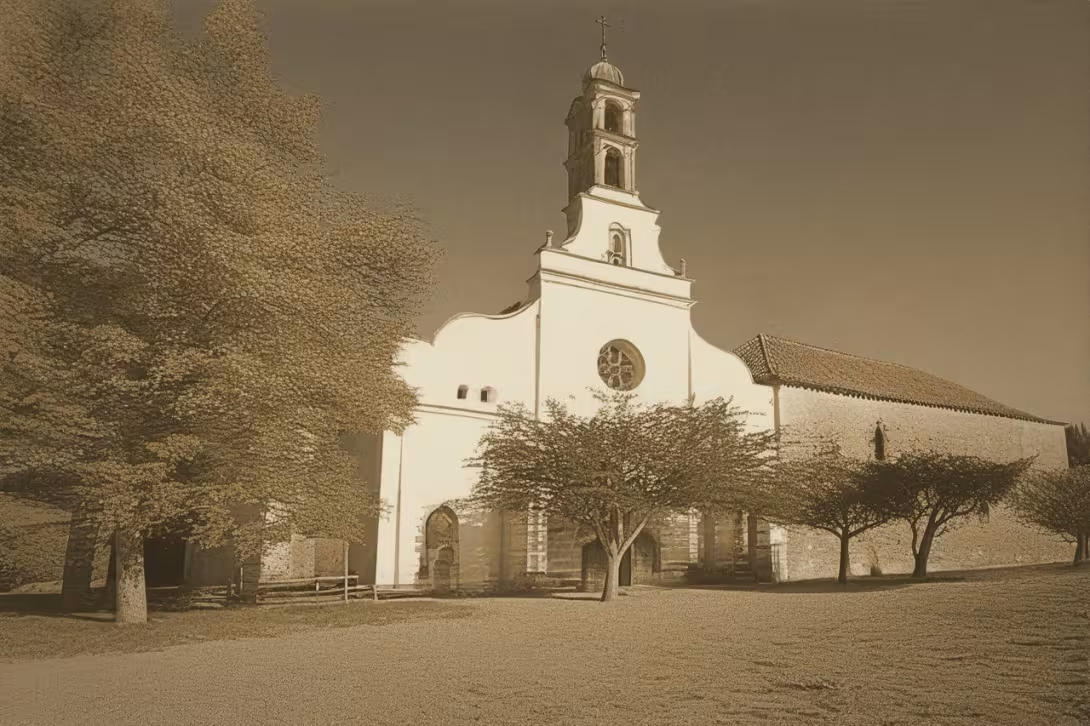
The historical appearance on the left is an AI-generated visualisation and serves as inspiration only.
Historical milestones
- 1253
- Commencement of church construction under Abbot Martin I.
- 1294
- Completion of the church building under Abbot Pavel II. Bavor z Nečtin
- 15th century
- Damage during the Hussite Wars and subsequent structural changes
- 1787
- Conversion to a parish church following the dissolution of the provostship
- early 18th century
- Baroque modifications likely designed by Kilián Ignác Dientzenhofer
- end of 19th century
- Renovation in pseudo-Gothic style
Architectural development
Originally a wooden chapel, it was replaced by a stone structure with an early Gothic portal from the late 13th century. The church underwent Baroque modifications around 1712-1714, likely designed by Kilián Ignác Dientzenhofer, and pseudo-Gothic renovations in the late 19th century.
Historical events
Construction began in 1253 by Abbot Martin I. and was completed in 1294.
The church suffered damage during the Hussite Wars in the 15th century.
Owners
Initially under the Břevnov Monastery, it became a parish church after the dissolution of the provostship in 1787.
Points of interest
- The Church of the Assumption of the Virgin Mary features a rare early Gothic portal that is one of the few remaining examples from the late 13th century in Bohemia, reflecting the influence of Cistercian monasteries from France on local architecture.
- During the Hussite Wars in the 15th century, the church suffered significant damage due to fire, leading to a transformation where its main nave's original vaulting was replaced, showcasing how historical conflicts directly influenced architectural changes.
- In the early 18th century, the church underwent Baroque modifications likely designed by Kilián Ignác Dientzenhofer, an architect renowned for his work in Prague, indicating the spread of Baroque influence beyond major urban centers to smaller towns like Police nad Metují.
- After its completion in 1294 under Abbot Pavel II. Bavor z Nečtin, the church experienced continuous architectural evolution, including a late 19th-century renovation that introduced pseudo-Gothic elements, highlighting how historical buildings often reflect multiple stylistic periods over centuries.
- The transition from a monastic establishment to a parish church in 1787 following Emperor Joseph II's suppression of the provostship marked a significant shift in the building’s role and function within the community, illustrating broader socio-political changes impacting religious institutions.
Guide
This guide is narrated by a synthetic voice generated by artificial intelligence.
Show guide text
This text was created by artificial intelligence and has not been editorially reviewed. It may contain inaccuracies.
Welcome to the Church of the Assumption of the Virgin Mary in Police nad Metují, a remarkable testament to early Gothic architecture nestled within this historic town. As you stand here, imagine yourself stepping back into a time when Benedictine monastic life thrived, and architectural innovation was at its peak.
Let's delve into its origins: construction began in 1253 under the guidance of Abbot Martin I., with completion following in 1294 during the tenure of Abbot Pavel II. Bavor z Nečtin. This church originally formed part of a larger monastic complex, embodying the spiritual and cultural aspirations of its era.
Now, take a moment to appreciate the architectural marvel before you. Notice the rare early Gothic portal—a striking feature that stands as one of the few remaining examples from late 13th-century Bohemia. Its design reflects the influence of Cistercian monasteries from France, showcasing intricate details and craftsmanship that have withstood the test of time.
As we move through history, this church has witnessed significant transformations. The Hussite Wars in the 15th century left their mark, leading to structural changes. Fast forward to 1787, when it was transformed into a parish church following the dissolution of the provostship. In the early 18th century, Baroque modifications were likely introduced by Kilián Ignác Dientzenhofer, adding layers of artistic evolution. By the late 19th century, renovations in pseudo-Gothic style further enriched its architectural narrative.
Several key figures have been intertwined with this site's history. Abbot Martin I., who initiated its construction, and Abbot Pavel II. Bavor z Nečtin, under whose leadership it was completed, played pivotal roles. Their vision laid the foundation for what you see today. Other historical personalities like Přemysl Otakar II., Opat Kristián, and Kilián Ignác Dientzenhofer have left their indelible marks on this sacred space.
Now, let me share an intriguing aspect of this church: its early Gothic portal is not just a doorway but a gateway to the past. This rare architectural feature offers a glimpse into the cultural exchanges between Bohemia and France during the medieval period, highlighting the spread of Cistercian influence across Europe.
As we conclude our journey through time at this historic site, I invite you to explore further, to walk around and soak in the atmosphere that has been shaped by centuries of faith, artistry, and history. Thank you for joining me on this virtual tour of the Church of the Assumption of the Virgin Mary. May your visit be both enlightening and inspiring.
Frequently asked questions
Can the monument be visited?
Yes. We verified the opening hours or admission on the official website (9. 10. 2026); you will find them in the visitor information on this page. Please double-check with the operator before you travel.
What are the opening hours and admission?
Details verified on the official website (9. 10. 2026) are listed in the visitor information on this page. Official website: https://www.muzeumnachod.cz/index.php/2015/10/10/muzeum-mesta-police-nad-metuji/
Where is the monument?
Location: Police nad Metují, Královéhradecký kraj. The map on this page shows the exact spot.
Why is the monument protected?
It is listed in the Central List of Cultural Monuments of the Czech Republic as a cultural monument. It is protected as part of a larger listed ensemble.
Businesses nearby
Do you run a restaurant, accommodation, shop, museum, rental, wellness or other visitor service near this monument? Show yourself directly to the people heading to it — this is how they will see you in the app and on the web:
Events nearby
Zdroj akcí: otevřená data měst a obcí ČR (Národní katalog otevřených dat) a kalendář akcí Národního památkového ústavu.
Nearby
Located in Police nad Metují, the church is part of a former monastery complex and stands near other historical sites within the region.
Accommodation nearby
Themed route
Thematic Walking Tour: Police nad Metují
1. Kostel Nanebevzetí Panny Marie (Police nad Metují)
Type: Church
The Kostel Nanebevzetí Panny Marie is the centerpiece of this tour, standing majestically as part of a former monastery complex. This church is renowned for its architectural beauty and historical significance, offering visitors a glimpse into the region's rich religious heritage. The intricate details and serene atmosphere make it an essential stop for anyone interested in history or architecture.
2. Former Monastery Complex (Police nad Metují)
Type: Historical Site
Located near the church is the former monastery complex, which adds depth to the historical narrative of Police nad Metují. This site provides context about the monastic life that once thrived here and its impact on the local community. Exploring this area offers a unique insight into the daily lives and spiritual practices of monks from centuries past.
3. Surrounding Historical Sites (Police nad Metují)
Type: Group of Historical Landmarks
In the vicinity of the church and former monastery, there are other historical sites that enrich the cultural tapestry of Police nad Metují. These landmarks collectively tell a broader story of the region's development over time. Visitors can enjoy walking through these areas to appreciate the blend of history and tradition that characterizes this charming town.
This tour provides an immersive experience into the historical heart of Police nad Metují, focusing on its religious and cultural heritage while exploring significant sites within close proximity to each other.
Seasonal recommendations
Spring: Visiting the Church of the Assumption of the Blessed Virgin Mary during spring offers a unique experience as nature awakens around Police nad Metují. The surrounding landscapes are adorned with blossoming flowers, creating a vibrant and colorful atmosphere that enhances the historic charm of the church. As daylight extends, visitors can enjoy well-lit paths leading to the site, making it an ideal time for photography enthusiasts. While spring brings moderate weather, it's advisable to wear layers as temperatures can fluctuate. Early mornings are often quieter, providing a serene environment before larger crowds arrive.
Summer: Summer is the peak season for visiting the Church of the Assumption of the Blessed Virgin Mary due to its warm and inviting atmosphere. The church grounds are lush and green, offering picturesque settings perfect for leisurely walks or picnics nearby. However, this popularity means that visitors should expect larger crowds, especially on weekends and holidays. To avoid long waits, it's recommended to arrive early in the morning when temperatures are cooler. Comfortable walking shoes and light clothing are ideal, but don't forget sunscreen and a hat for sun protection during outdoor exploration.
Autumn: Autumn transforms Police nad Metují into a tapestry of warm hues with vibrant foliage surrounding the Church of the Assumption of the Blessed Virgin Mary. The crisp air and golden landscapes provide a stunning backdrop that enhances the historical architecture's appeal. This season is ideal for those who appreciate quieter visits, as it falls outside the peak tourist months. Visitors should dress in layers to accommodate cooler temperatures, especially later in the day when evenings can become chilly. Carrying an umbrella or raincoat is also wise, as autumn weather can be unpredictable with occasional showers.
Winter: Winter offers a magical experience at the Church of the Assumption of the Blessed Virgin Mary, where snow-covered surroundings create a serene and picturesque setting. The church's historic architecture stands out beautifully against the white landscape, making it an enchanting destination for those who enjoy winter scenery. However, visitors should be prepared for shorter opening hours due to reduced daylight and possible weather-related closures. Warm clothing is essential, including coats, hats, gloves, and boots, to ensure comfort during your visit. Early morning visits are recommended not only to avoid crowds but also to experience the tranquility of a winter dawn.
Visualizations and artistic views


The visualisations are generated by artificial intelligence and serve as inspiration.
Photos from the area
Real photos taken near the monument


Zdroj a licence jsou uvedeny u každého snímku.
Atmosphere of the place
This atmospheric visualisation of the place and period was generated by artificial intelligence. It is not real footage of the location.
Tips from visitors
No tips yet. Be the first!
Log in and add your tip.
Sources and literature
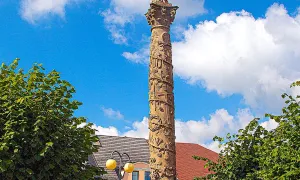
Photos: Petr1868 / CC BY 3.0, rozlišení zvýšeno umělou inteligencí — Wikimedia Commons. The author and licence also appear when you hover over the image.
Faktickým podkladem tohoto textu byl článek na Wikipedii, jehož autory jsou přispěvatelé Wikipedie. Článek je dostupný pod licencí CC BY-SA 4.0.
Location on the map

Příběhy a pověsti
Legendy, pověsti a příběhy spjaté s touto památkou
Fotografie návštěvníků
Zatím žádné fotografie. Buďte první, kdo přidá fotografii z návštěvy!
Log in a přidejte svou fotografii nebo hodnoťte.
Za ověřenou návštěvu v aplikaci získáte víc bodů — poznáme podle GPS, že jste na místě.
Reviews and comments