



kostel svatého Gotharda v Hořicích Church
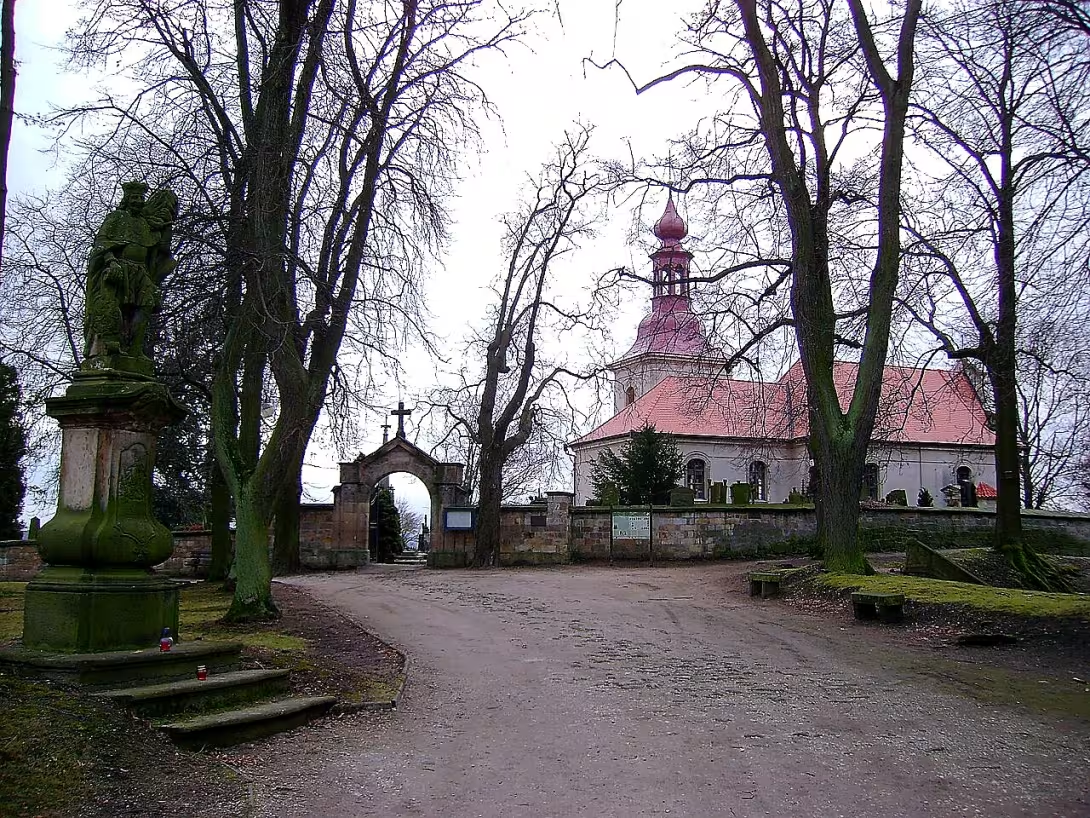
The Church of Saint Gothard in Hořice is a Roman Catholic pilgrimage church recognized as a cultural monument since December 27, 2005. Situated at the heart of a cemetery on a hill overlooking the town, it primarily serves for funeral services today. Originally constructed in the late 17th century to replace an earlier wooden chapel dedicated to Saint Gothard, this baroque-style church has undergone several renovations and expansions over time.
The origins date back to the mid-17th century when Premonstratensian canons from Prague established a wooden chapel with a small tower. Dedicated to Saint Gothard, the patron saint against storms, hailstorms, and fire, its roof was repaired in 1653 after wind damage. In 1701, an agreement with Jan Thořík and Daniel Puck led to the demolition of this old wooden chapel and the construction of a new stone chapel, forming today's presbytery.
In 1738, a devastating fire necessitated rapid reconstruction efforts, resulting in the church being consecrated just one week later. During this period, a single-story tower was added, featuring a sacristy on the ground floor and an oratory for the nobility in the mezzanine. The vaulted ceiling constructed that year collapsed in 1844 and was replaced with a flat roof.
Architecturally notable for its baroque style, the church's interior measures 14.8 meters in length, 9.2 meters in width, and 6.5 meters in height. The main altar features a baroque depiction of Saint Gothard, while pietra dura sculptures of twelve apostles and four Czech patrons are attributed to Jan Vávra, a professor from the sculpture school. Among its historical artifacts is a bell cast by Václav Konvář, which survived World War I when others were melted down for wartime purposes.
Throughout its history, the Church of Saint Gothard has experienced various changes in ownership and administration but remains an important cultural site within Hořice. Although regular religious services are no longer held here, a pilgrimage mass is celebrated around May 5th each year. Its hilltop location offers scenic views to the southeast and is surrounded by a walled cemetery with 52 gravestones.
Today, the Church of Saint Gothard stands as a testament to the baroque architectural heritage of the region. It provides visitors an opportunity to explore its historical significance and appreciate its artistic elements. The church's preservation has been supported through funding from the Program for the Rescue of Architectural Heritage between 1995 and 2014, ensuring that this cultural monument continues to be cherished by future generations.
The Church of Saint Gothard is a remarkable site reflecting both religious devotion and architectural ingenuity of its time. Its historical narrative and artistic treasures make it a worthwhile destination for those interested in exploring the rich cultural heritage of Hořice. Visitors are invited to experience this unique monument, which continues to hold significance within the community.
Then and now
Drag the slider to compare how the landmark may have looked when it was built with the view today.
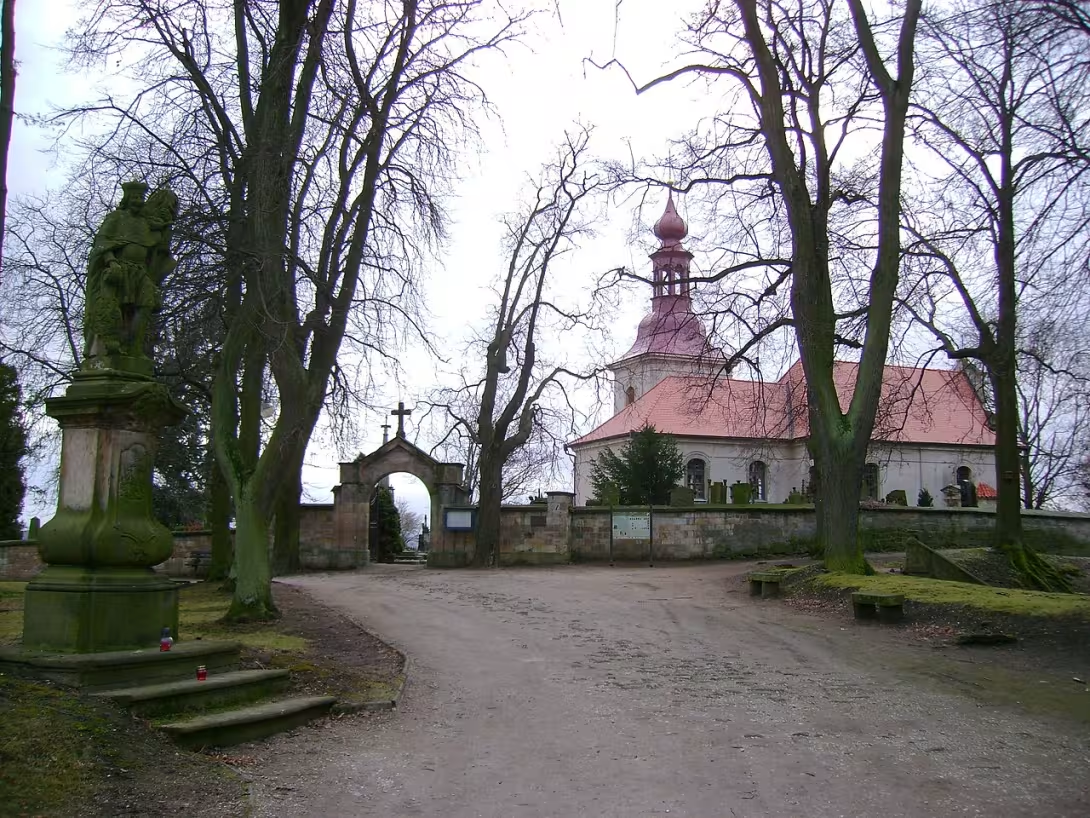

The historical appearance on the left is an AI-generated visualisation and serves as inspiration only.
Historical milestones
- 1653
- Reparace střechy dřevěné kaple.
- 1701
- Demolice staré dřevěné kaple a stavba nové kamenné.
- 1738
- Požár vedl k rychlé rekonstrukci kostela.
- 1844
- Svrácení obloukového stropu a jeho náhrada plánovitým střechou.
- 2005
- Odhlasování jako kulturní památka.
Architectural development
The Church of Saint Gothard began as a wooden chapel in the mid-17th century. By 1701, it was replaced with a stone chapel forming today's presbytery. A significant fire in 1738 necessitated quick rebuilding, including a new tower and vaulted ceiling, which later collapsed and was replaced by a flat roof in 1844.
Historical events
- 1653
- The roof of the original chapel was repaired after being damaged by wind.
- 1738
- A devastating fire led to rapid reconstruction, and the church was consecrated just a week later.
Points of interest
- The Church of Saint Gothard is dedicated to the patron saint against storms, hailstorms, and fire, reflecting its historical role as a protector for the community in Hořice.
- Despite being constructed primarily in stone after 1701, the church's original wooden chapel had a small tower that was repaired in 1653 due to wind damage, highlighting the challenges of maintaining such structures during that era.
- A unique architectural feature is the single-story tower added in 1738, which included both a sacristy on the ground floor and an oratory for nobility above, showcasing the church's role as a social hub for different societal classes.
- The church houses pietra dura sculptures of twelve apostles and four Czech patrons created by Jan Vávra, linking it to broader European artistic traditions and emphasizing its cultural significance beyond religious functions.
- Its bell, cast by Václav Konvář, is a rare survivor from World War I when many others were melted down for wartime efforts, making it an artifact of resilience and historical continuity.
Guide
This guide is narrated by a synthetic voice generated by artificial intelligence.
Show guide text
This text was created by artificial intelligence and has not been editorially reviewed. It may contain inaccuracies.
On a hilltop to the southeast of Hořic stands the church of Saint Gothard in the middle of a cemetery enclosed by a wall. It is a striking landmark of the surrounding countryside. This is a Roman Catholic subsidiary church, which has been protected as a cultural monument since December 27, 2005. The area also includes 52 tombstones.
On the site of today's church originally stood a wooden chapel with a bell turret. It was founded by Prague Premonstratensians and dedicated to Saint Gothard, the patron saint against storms, hail, and fire. In the second half of the 17th century, a Baroque chapel was built here. In 1653, the roof was repaired after being torn off by wind, and a year later the bell tower was renovated. In 1675, a new pulpit was added and in 1680, a new ceiling.
In early 1701, the parish concluded a contract with Jan Thořík and Daniel Pucek. They were to demolish the old chancel and build a new stone chapel. This still forms the presbytery up to the pulpit today. On the feast of Saint John of Nepomuk in 1738, the last mass was celebrated in the church and demolition began immediately after, followed by new construction. After a fire on August 17, 1738, the work had to be accelerated as much as possible. The church was consecrated just one week after this destructive event. Between 1739 and 1741, a single-storey tower was added. A sacristy was created in its ground floor and a noble oratory in the mezzanine. The vault from 1738 collapsed in 1844 and was replaced with a flat ceiling.
A remarkable fate befell a notable bell cast by the bell-maker Václav Konvář from Hradec Králové. During the First World War, it was moved to the deanery church in the city and was thus saved, unlike other bells which were melted down for war purposes. Of the three original bells in the church of Saint Gothard, only the smallest one remains.
The interior is 14.8 meters long, 9.2 meters wide, and 6.5 meters high. The main altar with a painting of Saint Gothard is Baroque. Sandstone sculptures of the twelve apostles and four Czech patrons were created by Jan Vávra, professor at the sculpture and stonemasonry school.
Once a famous pilgrimage church, it now mainly serves church funeral ceremonies. Regular services are not held here, yet pilgrimage masses are still celebrated today. Three point six million crowns from the Program for the Rescue of Architectural Heritage were spent on the monument's repairs between 1995 and 2014.
Tips for visitors
The best time to visit the Church of Saint Gothard in Hořice is during late spring or early autumn, when the weather is mild and pleasant for exploring outdoor spaces. These seasons offer optimal lighting conditions for photography and comfortable temperatures for walking around the cemetery and hilltop area. Additionally, visiting outside peak tourist season can provide a more serene experience, allowing you to appreciate the church's architecture and historical significance without large crowds.
For those using public transport, regional buses connect Hořice with nearby towns, though specific routes should be checked in advance. The scenic route up to the hilltop offers a pleasant walk if you prefer arriving on foot.
When visiting the Church of Saint Gothard, it's advisable to bring comfortable walking shoes as the terrain can be uneven, especially around the cemetery area. A camera is recommended for capturing the stunning views and architectural details of the church. Given that weather conditions in the region can change rapidly, carrying a light raincoat or umbrella might also be beneficial.
Photography enthusiasts will find several great spots around the church, particularly at sunrise or sunset when the lighting accentuates the structure's features against the sky. The southeast view from the hilltop offers panoramic vistas of Hořice and surrounding landscapes, making it an ideal spot for landscape photography.
Nearby attractions within a 30-minute drive include other historical sites in the Královéhradecký kraj region. The walled cemetery itself is worth exploring, with its 52 gravestones offering insights into local history and culture. For families with children, consider planning a visit to nearby parks or nature trails where kids can enjoy outdoor activities while adults appreciate the historical context of the area.
Frequently asked questions
Can the monument be visited?
Religious buildings are usually open mainly during services; at other times a visit is normally arranged with the parish or the operator. We have not verified specific times.
Where is the monument?
Location: Hořice, Královéhradecký kraj. The map on this page shows the exact spot.
Why is the monument protected?
It is listed in the Central List of Cultural Monuments of the Czech Republic as a cultural monument (register no. 101688).
Businesses nearby
Do you run a restaurant, accommodation, shop, museum, rental, wellness or other visitor service near this monument? Show yourself directly to the people heading to it — this is how they will see you in the app and on the web:
Nearby
Located on a hilltop overlooking Hořice, the church is surrounded by a walled cemetery featuring 52 gravestones. The area offers scenic views to the southeast.
Accommodation nearby
Themed route
Tematická výletní trasa: Kostel svatého Gotharda a okolí
1. Kostel svatého Gotharda - Typ: Historická památka, kostel - Proč stojí za návštěvu: Tento barokní kostel postavený v 18. století je nejen architektonicky zajímavý, ale také nabízí jedinečné pohledy na obec Hořice z vrcholu svého polohového umístění. Je to ideální místo pro ty, kteří mají rádi historii a architekturu.
2. Opevněný hřbitov - Typ: Historická památka - Proč stojí za návštěvu: Opevněný hřbitov kolem kostela svatého Gotharda je domovem 52 historických kamenů s náhrobními deskami, které představují bohatou minulost obce. Prozkoumáním těchto památek si můžete všimnout detailů a příběhů z dávných dob.
3. Výhledy na jihovýchod - Typ: Přírodní atrakce - Proč stojí za návštěvu: Z kostela svatého Gotharda a okolních výšin se otevírají krásné pohledy na obec Hořice a její okolí. Tyto místa jsou ideální pro relaxaci, fotografii nebo jen pro užívání přírodního prostředí.
4. Věž kostela - Typ: Architektonická památka - Proč stojí za návštěvu: Výstup na věž nabízí nejen pohledy, ale také možnost prozkoumat architektonické detaily kostela z jiného úhlu. Je to skvělý způsob, jak si užít historii a umístění památky.
5. Nádvoří kostela - Typ: Historický areál - Proč stojí za návštěvu: Nádvoří před kostelem je místo, kde můžete uvolnit pohled a zasvětit si klidnou chvilku. Zde se také nachází další historické prvky, které doplňují celkový dojem o památce.
Tato trasa nabízí komplexní zážitek ze středověké architektury a historie oblasti Hořic.
Seasonal recommendations
Spring: The spring season at Church of Saint Gothard in Hořice is a time when nature begins to awaken, bringing vibrant colors and fresh scents to the surroundings. As flowers bloom around the church, the natural light enhances the intricate details of its architecture, creating a picturesque atmosphere perfect for photography enthusiasts. During this period, visitors might encounter fewer crowds compared to summer, making it an ideal time for those who prefer a more tranquil experience. It is advisable to wear comfortable walking shoes and perhaps bring along a light jacket, as temperatures can be variable with occasional cool breezes.
Summer: Summer at the Church of Saint Gothard in Hořice offers warm, sunny days that illuminate the church’s stonework and stained glass windows, creating a radiant display. This is the peak tourist season, so visitors should plan to arrive early to avoid larger crowds. Comfortable clothing suitable for warmer weather is recommended, along with sun protection such as hats or sunglasses. Exploring during the morning or late afternoon can provide a more pleasant experience, avoiding the midday heat and ensuring better opportunities for photography without the interference of shadows.
Autumn: Autumn brings a stunning palette of reds, oranges, and yellows to the landscape surrounding the Church of Saint Gothard in Hořice. The changing leaves create a magical backdrop that complements the historical architecture beautifully. As temperatures begin to drop, it’s wise to dress in layers, allowing for adjustments throughout the day. This season is often less crowded than summer, offering a serene setting for visitors who enjoy walking through nature and capturing its seasonal beauty. An afternoon visit can be particularly rewarding as the light softens, enhancing the warm colors of the foliage.
Winter: Winter at the Church of Saint Gothard in Hořice provides a unique charm with snow-covered surroundings that create a peaceful and almost ethereal atmosphere. The church is often illuminated against the snowy backdrop, making it an enchanting sight during evening visits. However, winter conditions can be unpredictable, so visitors should dress warmly and wear sturdy footwear for potential icy patches. An early visit is recommended to fully enjoy the serene beauty of the church before any crowds gather, especially if visiting closer to popular holiday seasons when visitor numbers might increase.
Visualizations and artistic views


The visualisations are generated by artificial intelligence and serve as inspiration.
Photos from the area
Real photos taken near the monument


Zdroj a licence jsou uvedeny u každého snímku.
Tips from visitors
No tips yet. Be the first!
Log in and add your tip.
Sources and literature
Photos: Jirka23 / CC BY-SA 3.0 — Wikimedia Commons. The author and licence also appear when you hover over the image.
Faktickým podkladem tohoto textu byl článek na Wikipedii, jehož autory jsou přispěvatelé Wikipedie. Článek je dostupný pod licencí CC BY-SA 4.0.
Location on the map
Příběhy a pověsti
Legendy, pověsti a příběhy spjaté s touto památkou

Fotografie návštěvníků
Zatím žádné fotografie. Buďte první, kdo přidá fotografii z návštěvy!
Log in a přidejte svou fotografii nebo hodnoťte.
Za ověřenou návštěvu v aplikaci získáte víc bodů — poznáme podle GPS, že jste na místě.
Reviews and comments