






Fuchsloch Museum
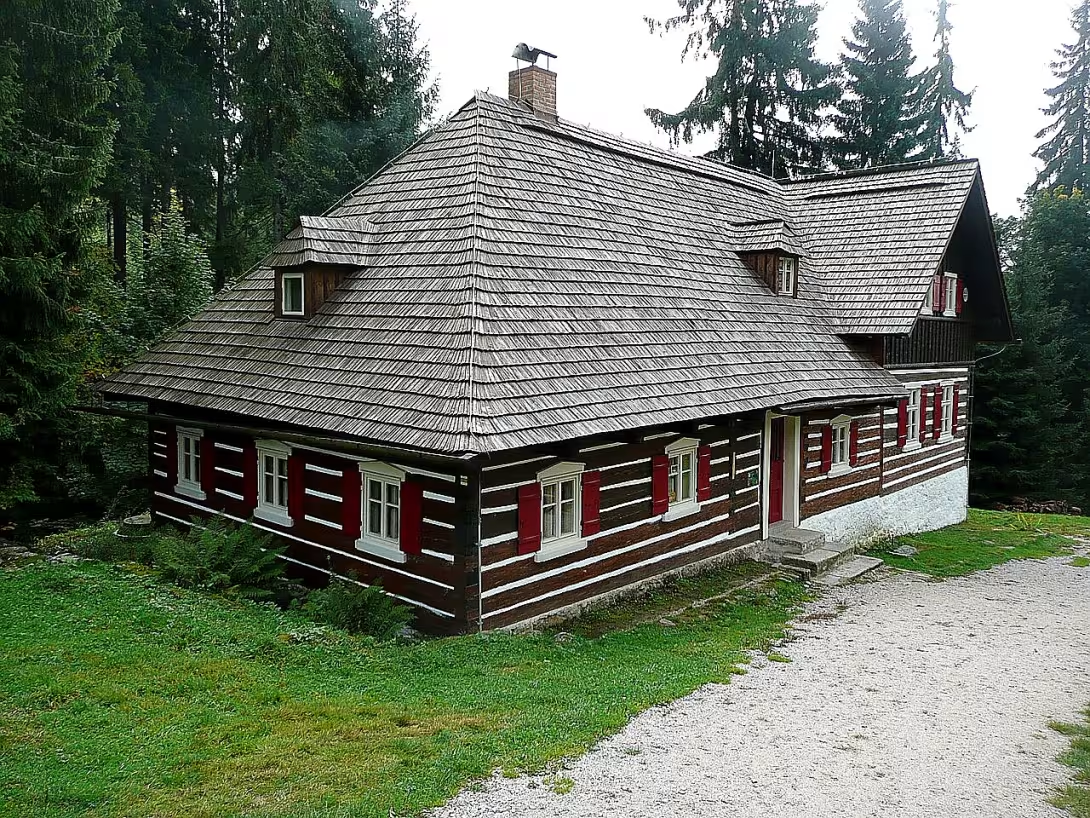
Fuchsloch, known in Czech as 'Liščí bouda', is a preserved timber-framed house near Bedřichov in the Jizera Mountains of the Liberecký region. It stands as the last remaining building from the original glassmaking settlement of Kristiánov and has been designated a cultural monument since 1963, managed by the Museum of Glass and Jewelry in Jablonec nad Nisou. The site serves as a memorial to the historical glassmaking heritage of the region.
The origin of Fuchsloch dates back to the late 18th century when Johann Leopold Riedel established the glassmaking settlement of Kristiánov between 1775 and 1776, named in honor of Count Christian Philipp Clam-Gallas. The settlement included a glassworks, residential buildings for workers, and other essential facilities. Glass production began on January 6, 1776, marking the start of Kristiánov's industrial activity. However, by 1887, a devastating fire destroyed the glassworks, leading to the decline and eventual abandonment of the settlement.
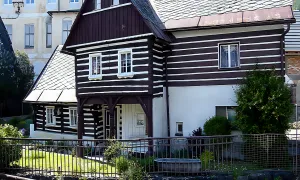
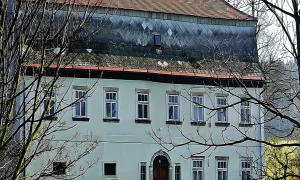
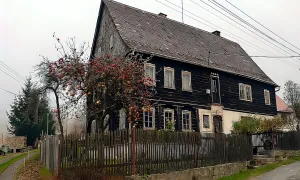
Architecturally, Fuchsloch is characterized as a timber-framed building with a "T"-shaped ground plan. The structure features vertically boarded wooden walls, gable roofs, and saddleback roofs, typical of its era. Over time, it has undergone several renovations to preserve its historical integrity, including significant restoration work by the Museum of Glass and Jewelry in 1964, further renovations between 1987-1988, and a comprehensive reconstruction completed in 2016.
Ownership of Fuchsloch transitioned through various hands over the years. Initially part of Kristiánov's settlement under Johann Leopold Riedel, it later became property of Count Franz Clam-Gallas in 1890. In 1929, ownership passed to the Czechoslovak Tourist Club before being transferred to state ownership in 1963.
Key events associated with Fuchsloch include its role as a glassmaking site and the subsequent decline following the fire in 1887. The building was named after its former owner, a glassmaker named Fuchse, reflecting its historical significance within the settlement. Today, it houses a permanent exhibition on Kristiánov's glassmaking heritage, featuring a three-dimensional model of the now-vanished buildings and showcasing typical products from the local glassworks.
Currently, Fuchsloch is accessible to visitors during the summer tourist season, offering insights into the region's rich cultural history. The site includes an information center and refreshments for guests, enhancing its appeal as a destination for those interested in historical architecture and industrial heritage. Nearby, a small forest cemetery remains as another testament to Kristiánov’s past.
Fuchsloch stands as a valuable link to the glassmaking traditions of 18th-century Bohemia, offering visitors an opportunity to explore a preserved piece of history amidst the natural beauty of the Jizera Mountains. Its well-preserved architecture and informative exhibits make it a worthwhile visit for anyone interested in cultural heritage and industrial history.
Historical milestones
- 1775
- The glassmaking settlement Kristiánov was established.
- 1776
- The first glass was produced at the new furnace.
- 1887
- A fire destroyed the glassworks, leading to its decline.
Architectural development
Originally built as part of a glassmaking settlement in the late 18th century, Fuchsloch served various roles over time. It underwent significant restoration by the Museum of Glass and Jewelry in 1964, with further renovations in 1987-1988 and a comprehensive reconstruction completed in 2016.
Historical events
The glassmaking furnace was first heated on January 6, 1776, marking the beginning of production at Kristiánov.
In 1887, a fire destroyed the glassworks and it was never rebuilt, leading to the decline of the settlement.
Owners
The house was initially part of the Kristiánov settlement established by Johann Leopold Riedel between 1775-1776. It later became property of Count Franz Clam-Gallas in 1890, and subsequently owned by the Czechoslovak Tourist Club in 1929 before being transferred to state ownership in 1963.
Points of interest
- Despite its name "Fuchsloch," which translates to "Fox Hole" in English, the building was named after a glassmaker called Fuchse, not an actual fox. This reflects how personal names were often used for places of significance during that era.
- The original Kristiánov settlement had a comprehensive infrastructure including residential buildings and facilities essential for its inhabitants, indicating it was a well-planned community designed to support the needs of its workers and their families.
- Fuchsloch underwent several ownership changes before becoming state property in 1963. Its transition from private hands, including Count Franz Clam-Gallas, to the Czechoslovak Tourist Club highlights shifts in cultural preservation priorities over time.
- The devastating fire of 1887 not only destroyed the glassworks but also marked the beginning of Kristiánov's decline, illustrating how industrial accidents could dramatically alter the fate of entire communities dependent on a single industry.
- Fuchsloch is unique as it houses a permanent exhibition that includes a three-dimensional model of the vanished buildings of Kristiánov. This feature offers visitors an immersive glimpse into the settlement’s past, showcasing its historical and cultural significance in glassmaking.
Guide
This guide is narrated by a synthetic voice generated by artificial intelligence.
Show guide text
This text was created by artificial intelligence and has not been editorially reviewed. It may contain inaccuracies.
Fuchsloch, usually called Liščí bouda in Czech, is a timber-framed house in the Jizerské Mountains near Bedřichov. Its German name literally translates as Fox Hole or Fox Lair. It is the last surviving building from the glassmaking settlement of Kristiánov and is registered as a cultural monument.
The settlement stood in the forest at an altitude of around 800 meters on the southwestern foothills of Černá hora, between the upper course of the Kamenice River and its tributary, the Malý Kamenický stream. The house stands on the right bank of this stream, about 250 meters from the Kamenice with its rapids and waterfall. Several hundred meters below Kristiánov, the Kamenice feeds the Josefův Důl reservoir, which flooded the valley after 1980.
Kristiánov was founded by master glassmaker Johann Leopold Riedel between 1775 and 1776. Besides the glassmaking furnace, there was a manor house, cottages for glassmakers, a cemetery and a school. The settlement was named in honor of the owner of the Liberec estate, Count Christian Philipp Clam-Gallas. The furnace in the new glassworks was first lit on January 6, 1776, and the first glass was melted eleven days later. Utility glassware was later largely replaced by the production of semi-finished products for jewelry. In the nineteenth century, production declined, and when the glassworks burned down in 1887, it was not rebuilt. The manor house was acquired in 1929 by the Club of Czechoslovak Tourists. In October 1938, shortly after it was seized by the Czechoslovak Army, it burned down and was destroyed.
Only the timber-framed house of glassmaker Fuchs remained. It served as a wayside inn and was named after its former owner. In 1963 it was taken over by the state and placed under the management of the Museum of Glass and Jewelry in Jablonec nad Nisou. The museum restored the house and opened the Glass-making Memorial there in 1964. Further repairs were carried out in 1987 and 1988 and a complete renovation was done in 2016. This renovation then won the Karel Hubáček Prize in the Building of the Year 2017 competition.
It is a single-story building with a T-shaped floor plan, featuring a vertically boarded wooden gable and hipped and pitched roofs. Inside there is an exhibition called the Glass-making Settlement of Kristiánov. Its centerpiece is a three-dimensional model of the settlement's vanished buildings, created by František Ulbrich from Kokonín near Jablonec nad Nisou. Also displayed are typical products from the local glassworks.
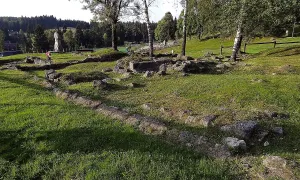
About 100 meters north of the house lies a small forest cemetery, another remnant of the settlement. In an area of approximately 20 by 30 meters are graves of local glassmakers, including members of the Riedel family, as well as graves of forest personnel from the Clam-Gallas estate. This cemetery too is registered as a cultural monument.
Tips for visitors
The best time to visit Fuchsloch is during late spring to early autumn when the weather is pleasant, allowing you to fully enjoy the natural beauty surrounding the site. The Jizera Mountains offer stunning views and the Kamenice River area is particularly picturesque with blooming flora in spring or colorful foliage in fall. Visiting during these seasons also ensures that most facilities are open and accessible.
Public transport options include buses from nearby towns; however, specific routes should be verified using a transportation search tool prior to your visit. This ensures you have the most current information regarding accessibility.
When visiting Fuchsloch, consider bringing comfortable walking shoes as there are several trails in the area that offer beautiful views of waterfalls and pebble beds along the Kamenice River. A camera is recommended for capturing the scenic landscapes and architectural details of the timber-framed house. Don't forget to bring a hat, sunscreen, and water, especially if you plan on hiking or spending extended time outdoors.
For photography enthusiasts, the best spots around Fuchsloch include the viewpoints near the Kamenice River where morning light creates soft shadows over the landscape, enhancing the natural beauty of the area. Exploring these areas early in the day or during golden hour can provide optimal lighting conditions for photography.
Nearby attractions within a 30-minute drive include other historical sites and natural landmarks in the Jizera Mountains, such as waterfalls and pebble beds along the Kamenice River. These spots are ideal for families with children who enjoy exploring nature trails and learning about local history. The area's rich cultural heritage provides educational opportunities for all ages.
Frequently asked questions
Can the monument be visited?
Some buildings of this kind are open for guided tours, others serve another purpose or are privately owned. We have not verified whether and when this monument is open – please ask the operator.
What are the opening hours and admission?
We have not verified the opening hours or admission. Current information is published by the operator.
Where is the monument?
Location: Bedřichov, Liberecký kraj. The map on this page shows the exact spot.
Why is the monument protected?
It is listed in the Central List of Cultural Monuments of the Czech Republic as a cultural monument (register no. 1000132495).
Businesses nearby
Do you run a restaurant, accommodation, shop, museum, rental, wellness or other visitor service near this monument? Show yourself directly to the people heading to it — this is how they will see you in the app and on the web:
Z magazínu
Events nearby
Zdroj akcí: otevřená data měst a obcí ČR (Národní katalog otevřených dat) a kalendář akcí Národního památkového ústavu.
Nearby
Located in the Jizera Mountains near Bedřichov, Fuchsloch is surrounded by natural beauty including waterfalls and pebble beds along the Kamenice River. The area offers scenic landscapes ideal for hiking and exploring the region's rich cultural heritage.
Accommodation nearby
Trips and activities nearby
Guided tours, tickets and activities nearby from GetYourGuide
Affiliate link: if you buy from the partner, we may receive a commission. The price for you does not change.
Search tours and activities →Themed route
Fuchsloch Museum Hiking Trail
Stop 1: Fuchsloch (muzeum) The main attraction of this trail is the Fuchsloch Museum, a unique museum showcasing the history of the region's glassmaking industry. The museum is located in a historic glassworks building and features an impressive collection of glass artifacts and exhibits.
Stop 2: Kamenice River The Kamenice River flows through the valley below the museum, offering a picturesque backdrop for a leisurely walk. Visitors can enjoy the scenic views of the river and its pebble beds, a popular spot for relaxation and picnicking.
Stop 3: Waterfalls A short hike from the museum takes you to a series of waterfalls along the Kamenice River. The waterfalls are a breathtaking sight, especially during the spring months when the snow melts and the water flow is at its peak.
Stop 4: Hiking Trails The Jizera Mountains offer a network of hiking trails for all skill levels, ranging from easy strolls to more challenging climbs. Visitors can explore the surrounding countryside and enjoy the scenic views of the mountains and valleys.
Stop 5: Nature Reserve The area around Fuchsloch is a nature reserve, home to a variety of flora and fauna. Visitors can explore the forest and meadows, spotting wildlife such as deer, rabbits, and birds.
Seasonal recommendations
Jaro
In the spring season, Fuchsloch in Bedřichov is full of life and color. The forests around the monument begin to green up and bloom, creating a pleasant atmosphere for walks. Lighting in the museum is subdued so visitors can fully engage with the exhibition. We recommend visiting Fuchsloch during the spring if you enjoy natural scenery and want to explore the site in peace.
Summer
Summer is the main season for visitors to Fuchsloch in Bedřichov. The forests are in full bloom, and nature is teeming with life. We recommend arriving early before larger crowds form so that visitors can view the exhibition in peace. Lighting in the museum is brighter so visitors can see the details of the exhibition.
Autumn
In the autumn season, Fuchsloch in Bedřichov is surrounded by the vibrant colors of fall foliage. The forests are full of color and the atmosphere is calm. Lighting in the museum is subdued so visitors can fully engage with the exhibition. We recommend visiting Fuchsloch during the autumn if you enjoy natural scenery and want to explore the site in peace.
Winter
Winter is a quiet season for visitors to Fuchsloch in Bedřichov. The forests are covered in snow, and the air is cold. We recommend visiting Fuchsloch during the winter if you enjoy a calm atmosphere and want to explore the site in warmth.
Visualizations and artistic views


The visualisations are generated by artificial intelligence and serve as inspiration.
Photos from the area
Real photos taken near the monument


Zdroj a licence jsou uvedeny u každého snímku.
Tips from visitors
No tips yet. Be the first!
Log in and add your tip.
Sources and literature
Photos: Rainerhaufe / CC BY-SA 4.0 — Wikimedia Commons. The author and licence also appear when you hover over the image.
Faktickým podkladem tohoto textu byl článek na Wikipedii, jehož autory jsou přispěvatelé Wikipedie. Článek je dostupný pod licencí CC BY-SA 4.0.
Location on the map
Příběhy a pověsti
Legendy, pověsti a příběhy spjaté s touto památkou
Fotografie návštěvníků
Zatím žádné fotografie. Buďte první, kdo přidá fotografii z návštěvy!
Log in a přidejte svou fotografii nebo hodnoťte.
Za ověřenou návštěvu v aplikaci získáte víc bodů — poznáme podle GPS, že jste na místě.
Reviews and comments