






Funkštejn Ruin
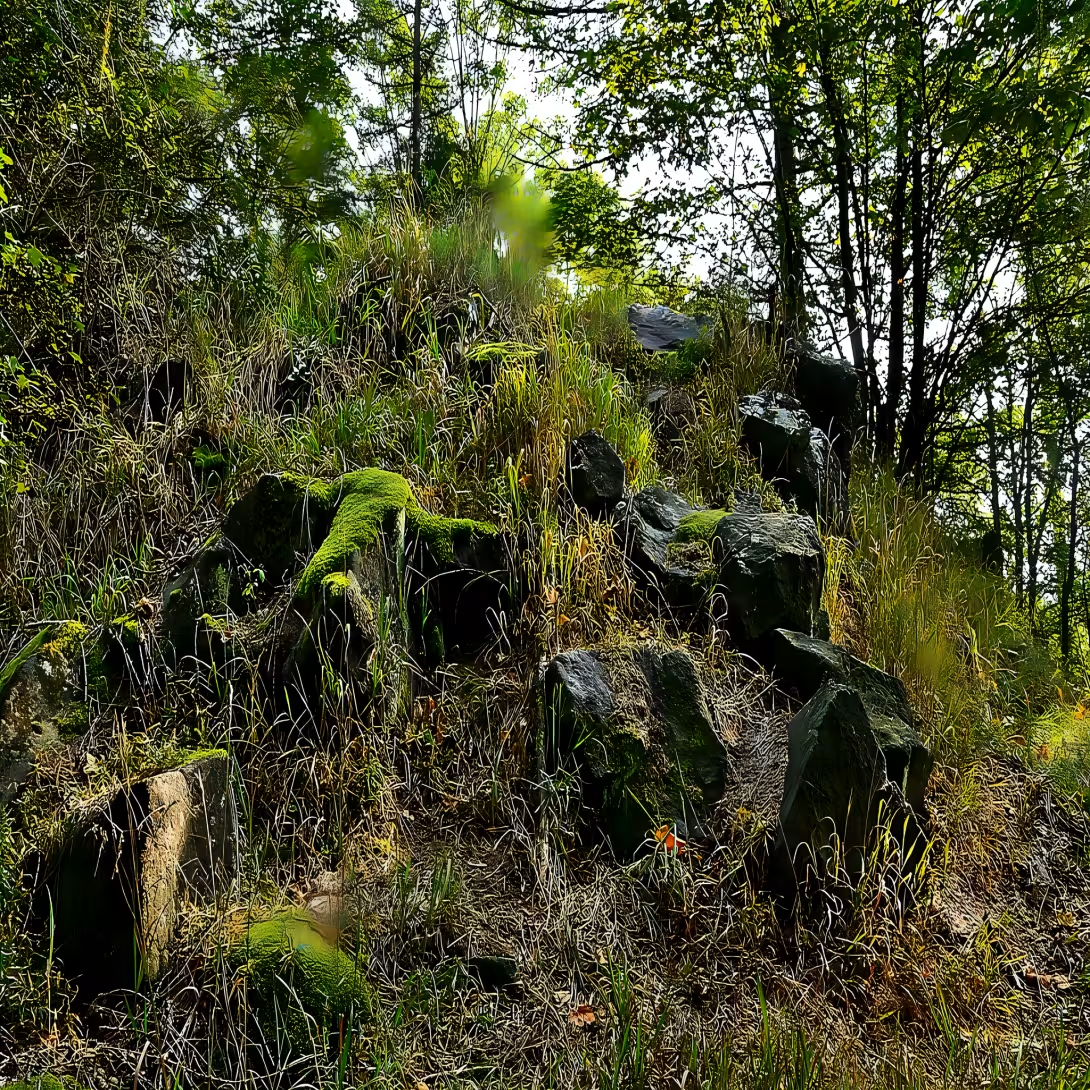
Funkštejn, also known as Finkenštejn, is a vanished castle near Klášterec nad Ohří in the Chomutov district of the Czech Republic. Its history remains mysterious due to limited documentation. Founded by Vilém ze Šumburka in the mid-15th century, its construction was never completed after his death in 1450. The exact location is unknown, though it is believed to have been near a forest named Finkenštejn and possibly linked to an unidentified fortified structure near Měděnec.
The origins of Funkštejn date back to the mid-15th century when Vilém ze Šumburka began its construction. After building Nový Šumburk in 1435, economic challenges led him to sell it and focus on creating Funkštejn. However, his death in 1450 halted further development. Historical records from 1465 mention the site as abandoned, indicating that it was never completed.
Architectural details about Funkštejn are minimal due to its incomplete state. Construction began under Vilém ze Šumburka but ceased with his death, leaving no information on the intended architectural style or materials. This lack of completion means much about its design remains speculative.
Ownership and administration saw a brief transition after Vilém's death. In 1466, his sons Bedřich and Jan sold the estate to Bedřich ze Šumburka, who incorporated it into Perštejn. This change marked the end of any significant developments at the site.
Key events in Funkštejn’s history are sparse. The most notable is its mention as abandoned in 1465, reflecting its incomplete status and lack of strategic importance following Vilém's death. No dramatic battles or historical figures are associated with the site beyond these familial transactions.
Today, the exact location of Funkštejn remains uncertain. It is believed to have been near a forest named Finkenštejn and possibly linked to an unidentified structure near Měděnec. Despite its elusive nature, the mystery surrounding Funkštejn adds intrigue for history enthusiasts exploring the region.
Funkštejn's value lies in its enigmatic past and the glimpse it offers into the feudal dynamics of 15th-century Bohemia. While physical remnants may be scarce, the site invites curiosity about the ambitions and challenges faced by noble families like the Šumburks. Visitors to the area can appreciate the historical context that shaped this elusive monument, making it a worthwhile stop for those interested in Czech history.
Then and now
Drag the slider to compare how the landmark may have looked when it was built with the view today.
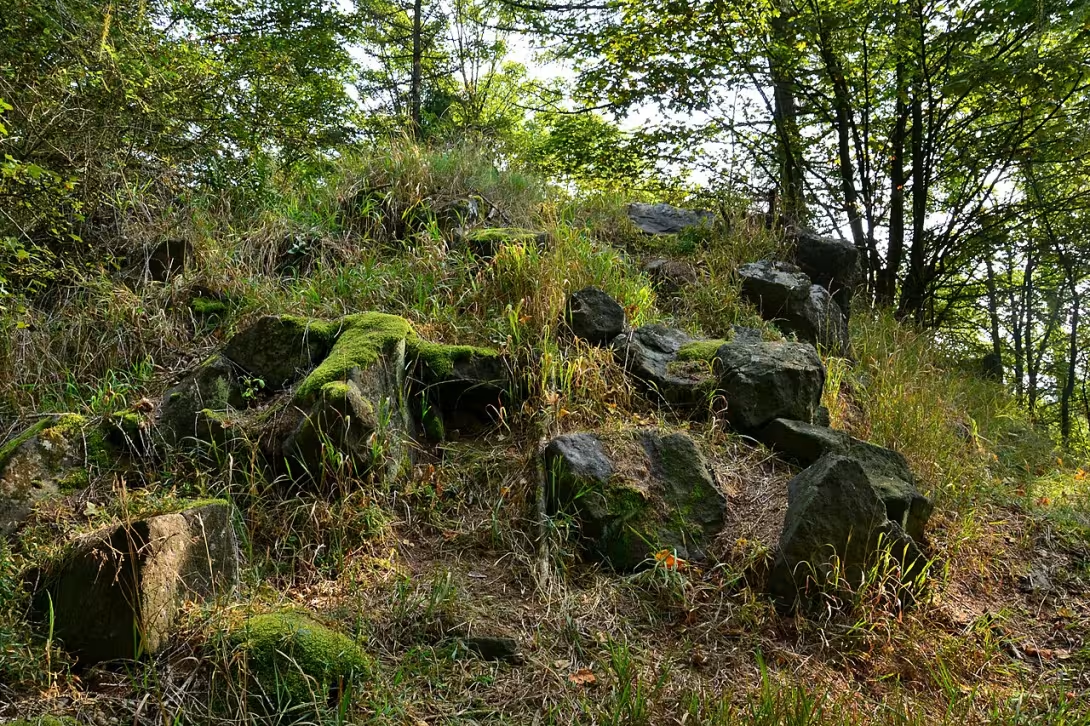
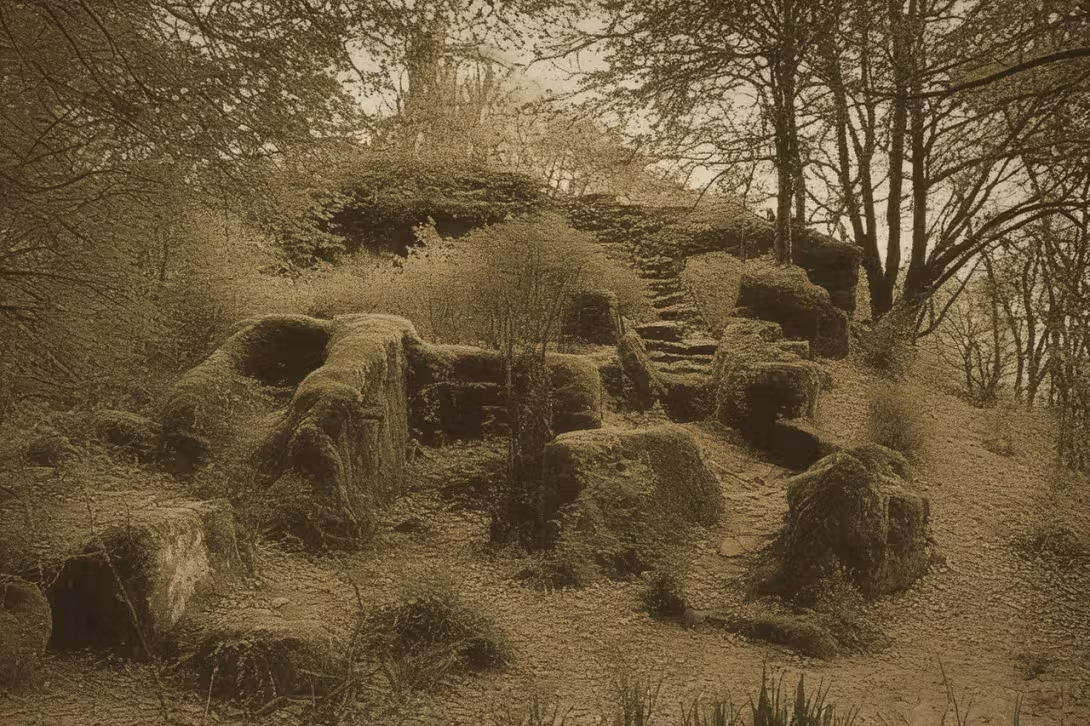
The historical appearance on the left is an AI-generated visualisation and serves as inspiration only.
Historical milestones
- circa 1435
- Vilém ze Šumburka founded Nový Šumburk.
- middle of the 15th century
- Beginning of construction of Funkštejn by Vilém ze Šumburka.
- 1450
- Death of Vilém ze Šumburka, cessation of construction.
- 1465
- Record of Funkštejn being abandoned.
- 1466
- Sale of property to Bedřich and Jan ze Šumburka, incorporation into Perštejn.
Architectural development
Funkštejn's construction began in the mid-15th century under Vilém ze Šumburka but remained unfinished. The exact architectural style and materials are unknown due to its incomplete state.
Historical events
In 1435, Vilém ze Šumburka built Nový Šumburk but later decided to construct Funkštejn due to economic reasons.
A document from 1465 mentions the castle as abandoned, indicating it was never completed.
Owners
Founded by Vilém ze Šumburka around the mid-15th century. In 1466, his sons Bedřich and Jan sold the estate to Bedřich ze Šumburka, who incorporated it into Perštejn.
Points of interest
- Despite its mysterious disappearance, Funkštejn was part of a larger strategic plan by Vilém ze Šumburka to fortify his influence in the region. He initially built Nový Šumburk before shifting focus to Funkštejn, indicating an ambitious vision for territorial control.
- The castle's incomplete state has led to various local legends about hidden treasures or secret passages within its ruins. These stories have captivated locals and historians alike, adding a layer of folklore to the site’s already enigmatic history.
- In 1466, Bedřich ze Šumburka integrated Funkštejn into Perštejn, but there are no records of any significant architectural or functional changes made to the structure at that time. This suggests that even after ownership transitioned, the site remained largely untouched and forgotten.
- Some historians speculate that Funkštejn might have been intended as a symbol of power rather than a practical fortress, given its incomplete state and lack of strategic location. This theory highlights the shifting priorities of noble families in 15th-century Bohemia.
- The forest named Finkenštejn, near which the castle was believed to be located, is said by some local tales to have been enchanted or cursed after the abandonment of the construction project, adding a mystical element to its historical narrative.
Guide
This guide is narrated by a synthetic voice generated by artificial intelligence.
Show guide text
This text was created by artificial intelligence and has not been editorially reviewed. It may contain inaccuracies.
Welcome to the site of Funkštejn, a mysterious and vanished castle near Klášterec nad Ohří. As you stand here, imagine the dense forest that once surrounded this enigmatic location. The absence of any visible structure might surprise you, yet it only adds to the intrigue of what lies beneath your feet.
The story of Funkštejn begins in the mid-15th century with Vilém ze Šumburka, a visionary nobleman determined to fortify his influence in the region. Around 1435, he established Nový Šumburk and later shifted focus to Funkštejn, reflecting an ambitious plan for territorial control. Sadly, Vilém's untimely death in 1450 halted these grand designs, leaving the castle incomplete.
As you take a moment to absorb your surroundings, consider the strategic importance this site once held. The forest of Finkenštejn, where it is believed the castle was located, would have provided both concealment and resources for such an ambitious project. Although no architectural details can be seen today, imagine the potential grandeur that might have been envisioned by its builders.
Key figures like Vilém ze Šumburka, along with his successors Bedřich and Jan ze Šumburka, are intertwined with this site's history. After Vilém's death, records from 1465 noted Funkštejn as abandoned, a silent testament to unfulfilled dreams. By 1466, the property was sold and incorporated into Perštejn, marking another chapter in its elusive narrative.
One of the most captivating aspects of Funkštejn is its mysterious disappearance. Despite scant documentation, it remains an integral part of regional history, symbolizing both ambition and loss. The castle's incomplete state serves as a reminder of how quickly plans can unravel due to unforeseen circumstances.
As you conclude your visit here, let your imagination wander through the stories that this site holds. Consider exploring nearby Klášterec nad Ohří for more insights into the region's rich history. Thank you for joining us on this journey through time and mystery at Funkštejn. Safe travels as you continue to discover the wonders of our past.
Frequently asked questions
Can the monument be visited?
This is a ruin. Such sites are often freely accessible, but some can only be visited with a guide or are closed for safety reasons. We have not verified the current situation – take care and respect any restrictions.
Where is the monument?
Location: Klášterec nad Ohří, Ústecký kraj. The map on this page shows the exact spot.
Businesses nearby
Do you run a restaurant, accommodation, shop, museum, rental, wellness or other visitor service near this monument? Show yourself directly to the people heading to it — this is how they will see you in the app and on the web:
Nearby
Funkštejn was likely situated near the forest of Finkenštejn and a now-nonexistent village called Venkov. The area also includes the historical site of Perštejn.
Accommodation nearby
Themed route
Thematic Route: Exploring the Ruins of Funkštejn and Its Historical Surroundings
1. Funkštejn (zřícenina) - Type: Castle Ruin - Why Visit: Begin your journey at the ruins of Funkštejn, a medieval castle that offers an intriguing glimpse into the region's feudal past. Explore the remnants of this once formidable fortress and imagine its historical significance in guarding the area.
2. Perštejn - Type: Historical Site - Why Visit: A short walk from Funkštejn, Perštejn is a lesser-known but historically significant site. This location provides insights into the medieval landscape and strategic importance of fortifications in this region. It's an excellent opportunity to delve deeper into local history.
3. Forest of Finkenštejn - Type: Natural Area - Why Visit: Venture through the forest of Finkenštejn, which is believed to have been near Funkštejn. The forest offers a serene environment for reflection and exploration, allowing visitors to connect with the natural surroundings that once bordered this historic site.
This route provides a comprehensive experience of Funkštejn's historical context and its connection to nearby landmarks, offering both cultural insights and natural beauty in the Klášterec nad Ohří area.
Seasonal recommendations
Spring: Visiting Funkštejn during spring offers a unique experience as the ruins are enveloped by the awakening of nature. The lush greenery and blooming flowers create a picturesque backdrop, enhancing the historical ambiance with vibrant colors. This is an ideal time to explore the site when it's less crowded than in summer. As daylight hours increase, arriving early allows for peaceful exploration before larger crowds arrive. Wear comfortable walking shoes and bring layers, as temperatures can vary throughout the day.
Summer: Summer at Funkštejn provides a lively atmosphere with longer days offering more time to explore the ruins under bright sunlight. The warm weather is perfect for outdoor activities and enjoying the surrounding landscapes. However, this is also peak tourist season, so expect larger crowds. To make the most of your visit, arrive early in the morning or later in the afternoon when it's cooler and less crowded. Light clothing and sun protection are essential to stay comfortable during your exploration.
Autumn: Autumn brings a serene beauty to Funkštejn with its rich tapestry of reds, oranges, and yellows as leaves change color around the ruins. The crisp air adds an enchanting quality to the historical site, making it a perfect time for photography enthusiasts. While the weather is generally pleasant, it can be unpredictable, so layering your clothing is advisable. Visiting during weekdays can help avoid the occasional weekend crowds that seek out this autumnal charm.
Winter: Winter transforms Funkštejn into a quiet and mystical place with snow often blanketing the ruins in a soft white cover. The cooler temperatures create an atmospheric setting perfect for those who appreciate solitude and the stark beauty of nature. Dress warmly in insulated clothing and wear sturdy boots to navigate any icy paths safely. Early visits are recommended as daylight is limited, ensuring you make the most of your time at the site.
Visualizations and artistic views


The visualisations are generated by artificial intelligence and serve as inspiration.
Tips from visitors
No tips yet. Be the first!
Log in and add your tip.
Sources and literature
Faktickým podkladem tohoto textu byl článek na Wikipedii, jehož autory jsou přispěvatelé Wikipedie. Článek je dostupný pod licencí CC BY-SA 4.0.
Příběhy a pověsti
Legendy, pověsti a příběhy spjaté s touto památkou

Fotografie návštěvníků
Zatím žádné fotografie. Buďte první, kdo přidá fotografii z návštěvy!
Log in a přidejte svou fotografii nebo hodnoťte.
Za ověřenou návštěvu v aplikaci získáte víc bodů — poznáme podle GPS, že jste na místě.
Reviews and comments