






Sedm zastavení bolesti Panny Marie v Klášterci nad Ohří Way of the cross
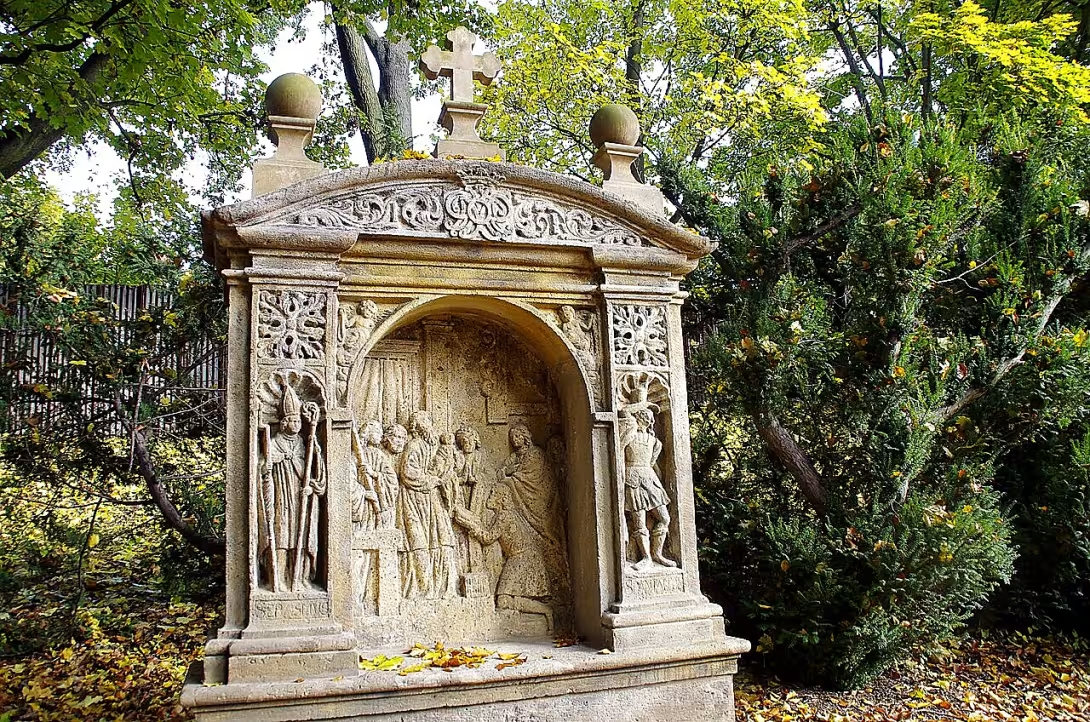
Sedm zastavení bolesti Panny Marie v Klášterci nad Ohří presents a set of seven early Baroque niche chapels from 1691. This monument-protected architectural group is located in Chomutov, at the northern edge of the castle park, along the road leading towards the historic Franciscan monastery in Kadani. The monument is an important proof of the small Baroque sacral architecture and patron's activity of the Count of Thun-Hohenstein.
In 1691 Count Michael Osvald Thun-Hohenstein commissioned chapel construction in the period of the reCatholisation of Czech countries, when the nobility founded sacral buildings to promote popular godliness. The stop originally lined the route connecting two earlier Marian structures of the same builder. The beginning of the journey was the Loretan Chapel founded in 1682 and the end point of the Chapel of the Virgin Mary on a rock, built in 1690 above the Ohří River.
Individual stops consist of small sandstone structures with a height of two metres and a width of one and a half meters. The construction structure consists of an undivided plinth with a graduated ledge and a deep niche containing a shallow embossed scene of seven of Mary's pain. On the sides of the central motif there are pilasters with shallow nobodies in which figures of holy helpers are carved, supplemented by their names. The upper part of the chapels ends with a tympanone decorated with acantic resolution, year 1691 and a monogram MOT with count crown.
The history of this journey is closely linked to the fates of both extinct terminal buildings. In 1693, Count Michael Osvald, together with the chapel on the rock, had a foundation of 8407 gold. Under the Josephine reforms in 1790, the Loretan Chapel was abolished and sold. In 1794 Josef Matyáš Thun used its abandoned space to place the first ever kiln of the monastery porcelain factory. The bell from the broken lorette was transferred to the sanctum of the Holy Trinity Church. The second building, the Chapel of the Virgin Mary on the Rock, succumbed to demolition work before 1873 during the construction of the railway bridge on the track from Chomutov to Cheb.
During the ages the sandstone chapel was moved and therefore their original route was not preserved nor the correct chronological order. Today the stops are located between Chomutov Street and the railway bridge in Pod Brewery Street as part of the castle park. The ensemble represents valuable evidence of the region's religious and industrial development. Visiting this monument offers an interesting insight into Baroque history in the environment of the preserved castle grounds.
Then and now
Drag the slider to compare how the landmark may have looked when it was built with the view today.
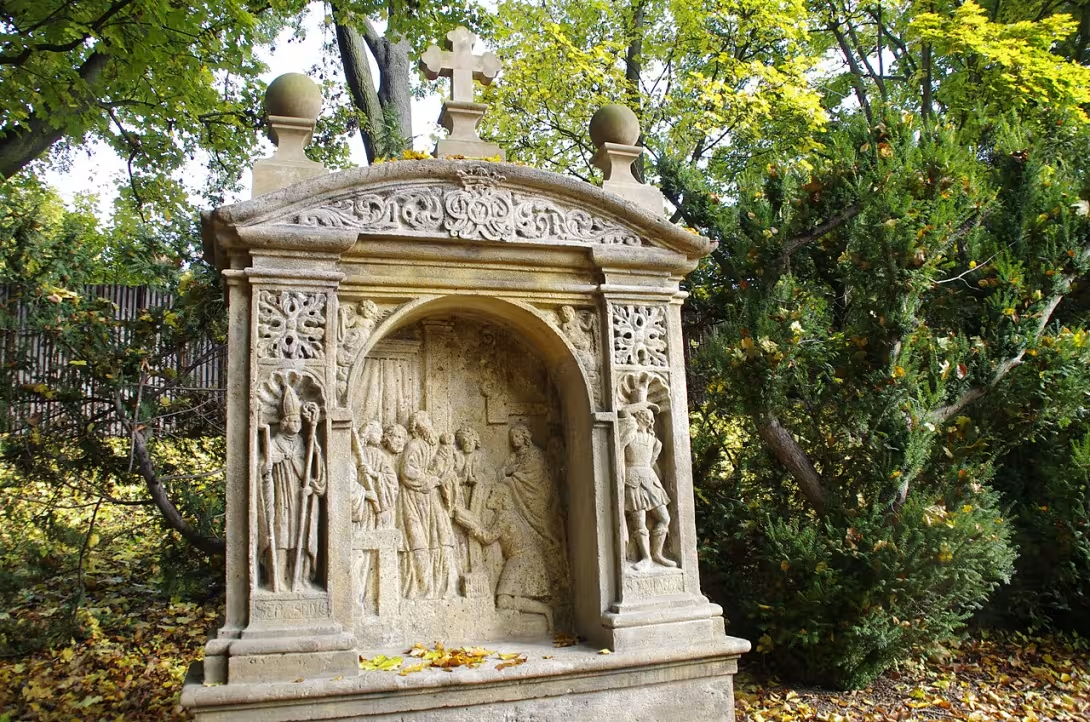
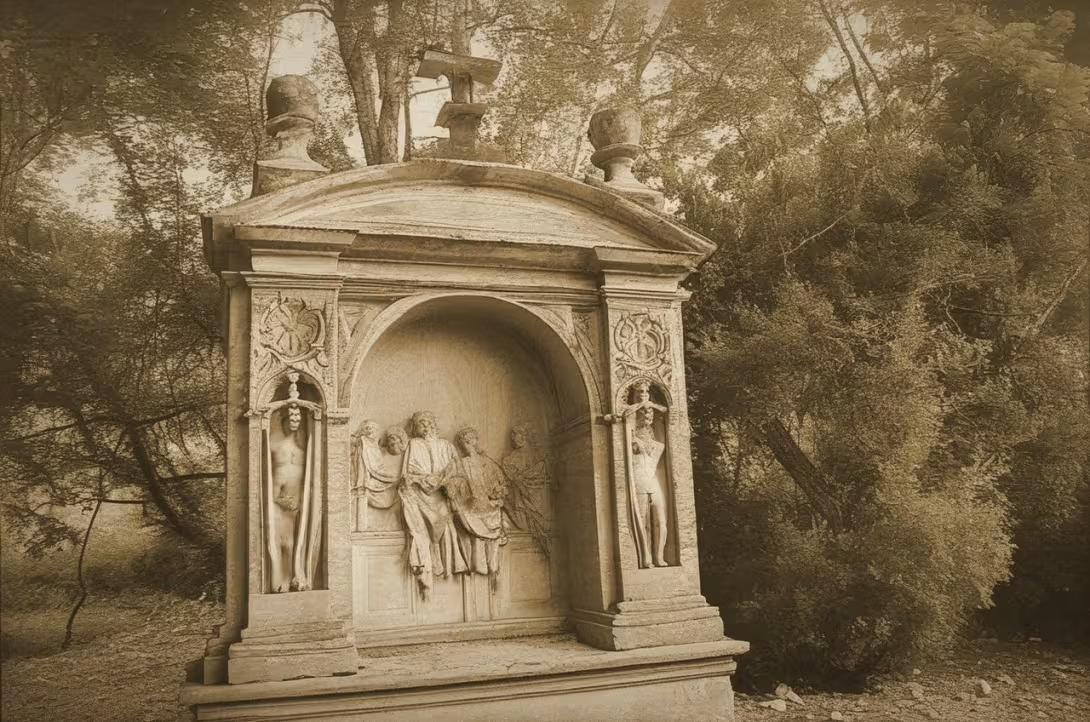
The historical appearance on the left is an AI-generated visualisation and serves as inspiration only.
Historical milestones
- 1682
- Count Michael Osvald Thun founded the Loretan Chapel near the Holy Trinity Church.
- 1690
- Construction of the Chapel of the Virgin Mary on a rock above the river.
- 1691
- Construction of the seven niche chapels Seven stops the pain of the Virgin Mary.
- 1790
- The closure and sale of the Loretian Chapel as a result of the Josephine reforms.
- 1794
- The first porcelain burning in the furnace built into the former Loretto Chapel, the creation of the monastery porcelain factory.
- before 1873
- The demolition of the Chapel of the Virgin Mary on the rock during the construction of the railway bridge on the track Chomutov - Cheb.
Architectural development
The small Baroque niche chapel from sandstone is two metres tall and one and a half meters wide. They are made of a simple plinth, a deep niche with embossed scenes and pilasters with statues of saints. Tympanone is decorated with acantic roliage, year 1691 and monogram MOT with count crown. During the ages, the chapel was moved so that its original route and chronological order were not preserved.
Historical events
1682 - the foundation of the Loretan Chapel by Count Michael Osvald Thun, 1691 - the construction of seven baroque stops, 1790 - the abolition of the Loretan Chapel during Josephine reforms, 1794 - the establishment of the first kiln of the monastery porcelain factory in the abandoned Loretan Chapel.
Owners
Originally the Count of Thun-Hohensteins, currently a monument protected property within the castle park Klášterec nad Ohří.
Points of interest
- The collection of the seven early Baroque nouveau chapels dates back to 1691 and represents an important piece of small Baroque sacral architecture and patron activities of the count of Thun-Hohenstein. - The chapel construction was commissioned by Count Michael Osvald Thun-Hohenstein during the period of the reCatholisation of Czech countries in support of popular piety. - Individual stops are small sandstone buildings with a height of two metres and a width of one and a half meters with relief scenes of seven of Mary's pain, figures of holy helpers and year 1691 with MOT monogram and count crown in tympanone. - In 1794 Josef Matyáš Thun used the abandoned space of the abandoned Loretan chapel to place the first ever kiln of the monastery porcelain factory. - Sandstone Chapel was moved over the ages, so their original route was not preserved or the correct chronological order.
Guide
Show guide text
This text was created by artificial intelligence and has not been editorially reviewed. It may contain inaccuracies.
Welcome to the Temple of Fire. You've just stopped in front of a place that carries silent nobility and deep spiritual meaning. In front of your eyes is a set of seven early baroque niche chapels, which make up Seven stops the pain of the Virgin Mary. Feel this atmosphere in which history, faith and work of art are mixed more than 300 years ago. These stone structures are not just a set of structures, but a testimony about an era that has fundamentally shaped the face of our countries.
To understand why this place was created and why it is so important, we must return to the end of the seventeenth century. It was a time of reCatholisation, a time when society and landscape in the Czech countries returned to Christian traditions and the building of sacral space. In 1691 this set of chapels was completed and its formation was closely linked to the powerful and educated family of the Thun-Hohenstein. The main initiator and benefactor of the entire building was Count Michael Osvald Thun-Hohenstein. His intention was not only to create a religious place, but also to promote a people's godliness and to create a path that would combine various sacred points in this area. Originally, this path led from the Loretian Chapel, which the Count founded in 1682, towards the Chapel of the Virgin Mary, which stood on a rock cliff above the river. These seven stops thus formed an important knot on the spiritual map of the then Klastrec.
Now pay attention to the architecture itself and the details you have right in front of you. The whole file is the work of an architect named J. Rossi da Luca. Notice how the chapel is built. These are walled niche structures that appear harmonious and attractive in the early Baroque style. The whole is built from sandstone, a material that gives the chapels their specific appearance and allows delicate processing. If you approach the individual chapels now, you can see the shallow relief that decorates their walls. These reliefs depict Seven of Mary's pain, a theme that has a deep emotional charge in the Christian tradition. In addition to these reliefs, you can also find statues of holy helpers, which complement the overall picture and strengthen the sacred character of every stop. Feel the softness with which the sandstone was worked to express even the most sensitive moments.
But the history of this place is much more complex than the story of the chapel. It's a story about the transformation of the entire region and the Thun family, which left an enormous mark. In addition to Count Michael Osvald, who gave birth to this place, there is also the name of Josef Matthias Thun. The Thun-Hohenstein family was not only a sponsor of the church, but also a driver of economic development. This transformation became very clear in the second half of the eighteenth century. While in 1790 the Loretian Chapel had to remain closed due to the Yosefin reforms and was subsequently sold, something completely unusual happened in its premises in 1794. The former Loretan chapel had the first burning of porcelain in the oven, which meant the birth of the famous monastery porcelain factory. So you see, in this place, what is eternal and spiritual, and what is earthly and industrial.
If you look now towards the river and the surrounding rocks, you can imagine in your mind what the landscape looked like earlier. There's a hidden story about loss and how the modern world clashes with history. The chapel of the Virgin Mary, which once proudly stood on a rock above the river and which was the original destination of the pilgrimage, no longer exists. Unfortunately, before 1873 this chapel was demolished. This was not a coincidence, but a need to build a railway bridge on the track connecting Chomutov and Cheb. This event is a reminder of how technical progress and development of transport in the nineteenth century changed in the face of our landscapes, sometimes at the cost of losing historical monuments.
So this set of seven stops is more than just a group of sandstone chapels. It is a testament to the patron's work of noble generations, it is a sign of reCatholisation, and it is also a witness to the transformations that society went through from religious fervor to industrial revolution. Every relief, every statue and every stone here tells of an attempt to combine human pain with hope and an attempt to keep it noble in the midst of the constant movement of time.
I allow you to continue your search now. Go through the individual stops, stop by each of them and try to hear the details of these early Baroque works in silence. Leave yourself to the Voší atmosphere of this place and perhaps even in spirit you will connect these chapel with the history of the whole Klaštrec over Ohří. Thank you for your journey and I wish you a pleasant continuation in discovering the beauty of this region.
Tips for visitors
To visit the Sedm zastavení bolesti Panny Marie v Klášterci nad Ohří Chapel ensemble, choose an ideal spring or autumn morning when the surrounding landscape is quietest and the light underlines the early Baroque details of the 1691 buildings. Transportation to the place is possible by car and public transport, while check the current connection in the normal search engine and choose the parking at suitable places in the wider area of the monument. Take with you comfortable fixed shoes suitable for long walking along the historic route, clothes matching the current weather and a bottle of drinking. For photography it is best to use the morning side light to highlight the depth of the chapels that originally had the Count Michael Osvald Thun-Hohenstein built. Within a walking distance of 30 minutes you can visit the adjacent Castle Park in Monasteries above Ohří, the castle Klášterec nad Ohří, the Church of the Holy Trinity, the picturesque banks of the Ohře River, the nearby railway bridge and the historic pilgrimage route towards Kadana. For families with children, the route is suitable as an undemanding walk connecting the discovery of history with a stay in nature along the river and in the castle park.
Businesses nearby
Do you run a restaurant, accommodation, shop, museum, rental, wellness or other visitor service near this monument? Show yourself directly to the people heading to it — this is how they will see you in the app and on the web:
Nearby
Castle park in Monasteries above Ohří, castle Klášterec nad Ohří, Church of the Holy Trinity, river Ohře, railway bridge and historic pilgrimage trip to Kadana.
Accommodation nearby
Trips and activities nearby
Guided tours, tickets and activities nearby from GetYourGuide
Affiliate link: if you buy from the partner, we may receive a commission. The price for you does not change.
Search tours and activities →Themed route
Seven Stopping Pain of the Virgin Marie Type: Chapel This is the main goal of your journey, the spiritual heart of the village. The chapel offers a quiet place to reflect and honor the memory of the suffering of the Virgin Mary, which forms the emotional core of the entire cruise route.
Castle Klášterec nad Ohří Type: Castle After a spiritual stop, move to this historic building that dominates the horizon. The castle represents a secular counterpose to the pilgrimage character of the chapel and allows a glimpse into the noble heritage of the region.
Castle Park in Monasteries over Ohoř Type: Park Walk through the park serves as an ideal rest between the various goals. The green environment and quiet atmosphere allow regenerating the forces before continuing the route near the castle.
Church of the Holy Trinity Type: Church This sacral monument complements the religious aspect of the trip. Visiting the church allows you to see other works of local art and architecture, which are often strongly connected with pilgrimage traditions of the village.
Railway bridge Type: Bridge Moving to the Fire River will lead you to this technical work. The bridge offers a view of the river flow and reminds us of the historical importance of transport moves in this area, which closes the loop around the centre of the village.
River Otom Type: Water flow While walking along the river bank enjoy a view of the landscape. The water provides a peaceful rhythm and visual contrast to the historical structures you have already visited.
Historical pilgrimage to Kadane Type: Path End the route with a short section of this old trail. Even if you do not go all the way to Kadana, the very beginning of the journey will connect you to a long tradition of pilgrims and close the circle between the spiritual and natural environment of the Monasterc above Ohří.
Seasonal recommendations
Spring awakens the surrounding nature into lush colours and the surrounding trees begin to bloom, giving the chapel a poetic and peaceful touch. The spring sun falls at a mild angle and creates fine shadows on the historical wall, ideal for undisturbed contemplation. You will not meet large crowds of tourists in this period, so you will enjoy the memory in complete silence. I recommend fixed shoes because of the occasional spring humidity on the access roads and a light windbreaker, as a cooler wind may blow at the Ohře River. The best time to visit is in the morning, when the morning mist slowly retreats to spring rays.
Summer brings lush surrounding green vegetation, which picturesque frames the memory, and warm sunlight radiates the exterior for most of the day. The atmosphere is more lively thanks to tourists exploring the region, which slightly increases the traffic. Due to the warm weather, it is advisable to leave either early in the morning or late in the afternoon to avoid noon heat. Don't forget to take your headgear, enough drinking water and comfortable summer shoes for a longer walk around the surrounding spa park and city.
Autumn turns the landscape into a varied palette of yellow, red and brown shades that create a melancholy and deeply spiritual atmosphere. The low autumn sun and occasional fog provide dramatic lighting with chapels that excites every photo lover. The crowds of tourists fall significantly during this period, which guarantees maximum privacy. The practical necessity is warmer layered clothing, waterproof shoes and umbrella, because weather is usually variable. The ideal time for a visit is the afternoon when the landscape falls into a golden haze.
Winter covers the memory in a snow blanket and silence that amplifies the spiritual dimension of the whole place. Early dimming and muffled winter light create an extremely peaceful and chamber mood in advent time. Visiting is minimal, you will often be alone here. The key to a pleasant visit is quality winter clothes, hats, gloves and firm anti-slip shoes, because stairs and surrounding terrain can freeze. The best place to go is around noon, when the outside is warmer and daylight allows the best, albeit short view.
Visualizations and artistic views


The visualisations are generated by artificial intelligence and serve as inspiration.
Photos from the area
Real photos taken near the monument

Zdroj a licence jsou uvedeny u každého snímku.
Tips from visitors
No tips yet. Be the first!
Log in and add your tip.
Sources and literature
Fotografie: Vlasta Fišrová / CC BY-SA 4.0 — Wikimedia Commons. The author and licence also appear when you hover over the image.
Faktickým podkladem tohoto textu byl článek na Wikipedii, jehož autory jsou přispěvatelé Wikipedie. Článek je dostupný pod licencí CC BY-SA 4.0.
Location on the map
More monuments – Klášterec nad Ohří
Show all in the municipality
Příběhy a pověsti
Legendy, pověsti a příběhy spjaté s touto památkou
Fotografie návštěvníků
Zatím žádné fotografie. Buďte první, kdo přidá fotografii z návštěvy!
Přihlaste se a přidejte svou fotografii nebo hodnoťte.
Za ověřenou návštěvu v aplikaci získáte víc bodů — poznáme podle GPS, že jste na místě.
Reviews and comments