



Kostel Nejsvětější Trojice (Klášterec nad Ohří) Church
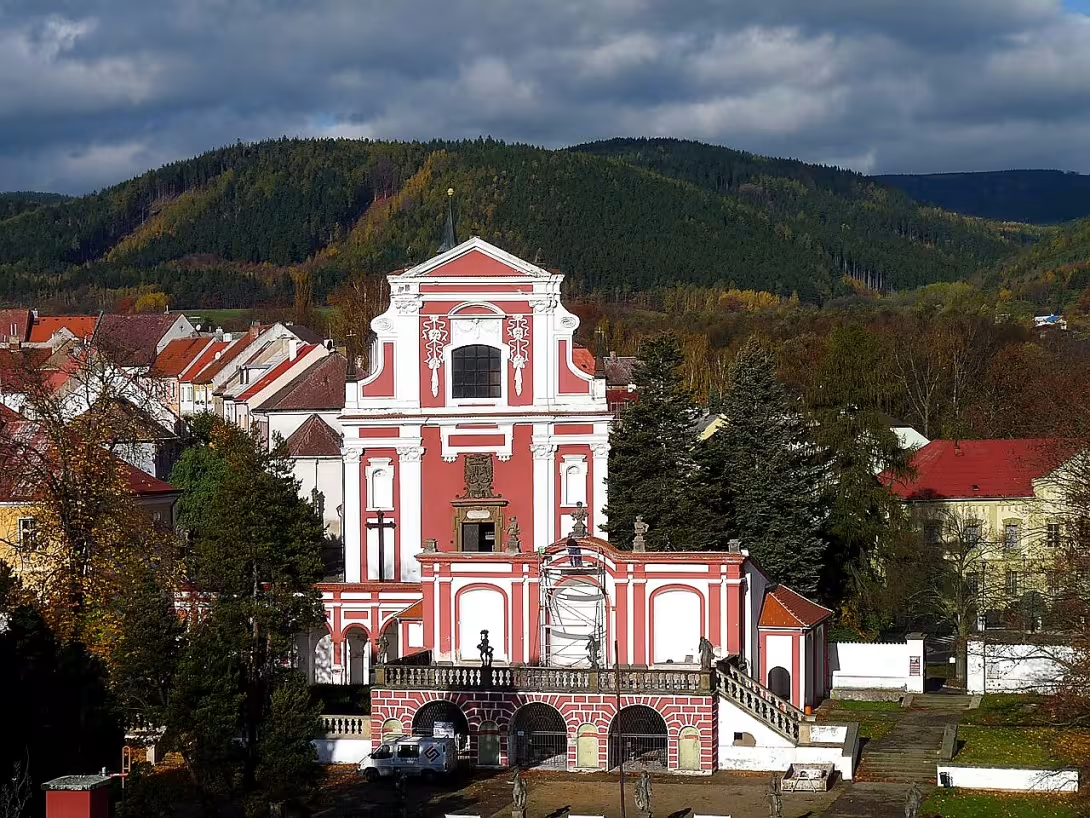
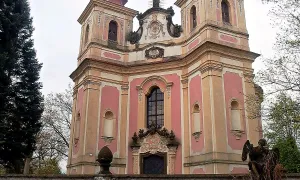
The Church of the Most Holy Trinity in the Monasteries of Ohří represents the most important church monument in the village. This baroque one-storey building with a polygonal presbytery is protected as a cultural monument since 1963.
The place for the new parish church was chosen by Jan Zikmund Thun, but the construction did not take place during his life. The implementation was completed by his son, Michael Osvald z Thun-Hohensteinu, between 1665- 1670. Architectural plans come from the workshop of Italian architect Carl Luraga, while the construction itself was led by the village builder and stucco Rossi de Luca. Bishop Václav z Thun-Hohensteinu, brother of Michael Osvald, church consecrated on 21 September 1670. On this occasion, the bishop donated the main altar dedicated to the Most Holy Trinity, while the old parish church was also cleaned out.
Architecturally, it is a single-storey building with a northern sacristy and an oratory reserved for nobility. The main facade is decorated with a shield with the character of Count Michael Thun and his wife, the born Countess of the Lodrons. The inner space consists of richly ornamented rolled vaults with lunettes. The walls were divided by eight rectangular lateral chapels over which the bleachers were located. A valuable pulpit and some side pillar altars were probably brought into the interior from Austria or Bavaria. The main altar is decorated with statues of St. Michael and St. Wenceslas together with pictures of the Assumption of the Virgin Mary and the Most High Trinity. A brick bell tower was probably added to the north side in 1850.
The building is owned by the Thun-Hohenstein family and has successfully resisted several fires over the centuries. In 1884, extensive renovation took place, which included a new painting, modification of the altars and the setting of new colour windows dedicated to local volunteers. Further repairs took place in 1936 and 2003, when the inner facade and stucco decorations were restored.
Important elements include the original 17th-century Thun tomb, which was reopened to the public in 1993; contains porcelain family tree Thun-Hohenstein. Another interesting thing is the fate of the bell that the church lost during World War II. His replacement was brought by the initiative of Father Arthur Ściana. Thanks to it, a new bell called Michael was delivered from the German Evangelical parish in Milspe- Rüggeberg near Wuppertal, which first rang on April 5, 2015.
Today the church serves as a parish place for regular services, but it is also used for concerts and cultural events. In the Advent period there is an exhibition of Bethlehem made up of children from local kindergarten, and gymnazists present theatre performances of Comet during the festival of the Three Kings. The church and the tomb can be viewed within the tour circuits of the monastery chateau.
This monument represents a valuable example of Baroque architecture and the history of Thun nobility. We recommend visiting her as part of a tour of the local chateau.
Then and now
Drag the slider to compare how the landmark may have looked when it was built with the view today.
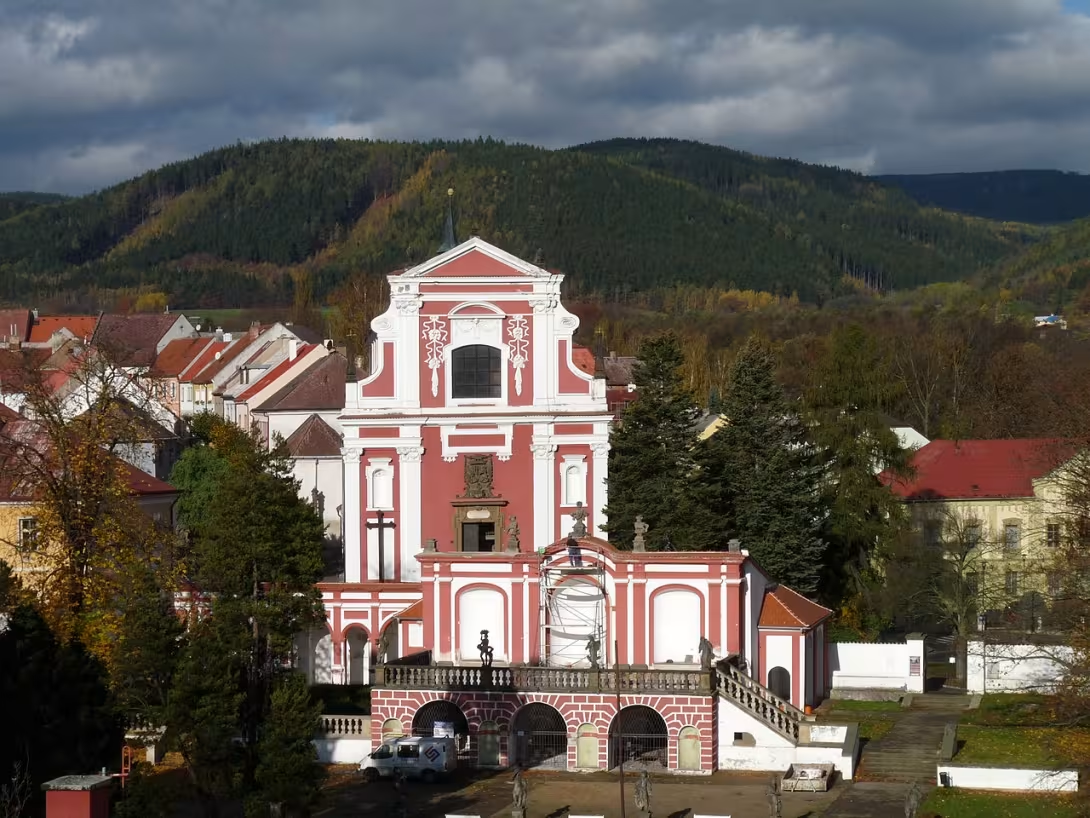

The historical appearance on the left is an AI-generated visualisation and serves as inspiration only.
Historical milestones
- 1670
- The ordination of the church by Bishop Václav of Thun-Hohenstein
- 1850
- Adding the wall bell tower to the north side of the church
- 1963
- Protecting the church as a cultural monument
- 1993
- Public access to the Thun tomb
- 2015
- The first ring of a new bell called Michael
Architectural development
Baroque one-storey building with presbytery and northern sacristy. In the middle of the 19th century a brick bell tower was added to the north side. Over the centuries the church passed several renovations, especially in 1884, 1936 and 2003.
Historical events
1665-1670: Implementation of the church building. 1850: Adding the wall bell tower. 1963: Entry into the list of cultural monuments. 2015: New bell set by Michael.
Owners
The Thun-Hohenstein family
Points of interest
- The original Thun tomb from the 17th century contains the porcelain family tree of the Thun-Hohenstein family. The church lost its bell during World War II. A new bell called Michael was brought from the German parish in 2015. - In the interior there is a valuable pulpit and some side pillar altars, which were probably brought from Austria or Bavaria. - The construction has a northern sacristy and an oratory that was reserved for nobility. - In the advent period in the church there is an exhibition of Bethlehem, which consists of children from local kindergarten.
Guide
Show guide text
This text was created by artificial intelligence and has not been editorially reviewed. It may contain inaccuracies.
Welcome to the Temple of Fire. Right now, standing in front of this monumental building, you are at the most important spiritual and cultural heart of the city. The Church of the Holy Trinity, which now stands before your eyes, is not only a walled building, but a living witness to the centuries that shaped this landscape. Feel the atmosphere of peace and nobility radiating from this place. The Baroque architecture that you see here was designed to instantly bend a person's size and create a sense of connection to something much higher.
Now let's go back deep into the past to understand why this place is standing right here. The whole history of this church is inseparably linked to the powerful and influential family of Thun-Hohenstein. To understand its meaning, we have to look at 1670. That was the year that Bishop Václav z Thun-Hohensteinu ceremoniously consecrated the church. Since then, this place has become a symbol of faith and the political influence of the family, which has left an extremely deep mark in the region. The church was built not only as a place of worship, but as an expression of the strength and stability of the nobility, which at that time controlled the surrounding goods and lives of the people.
Now pay attention to the construction itself and what you can see when you look at her body. The whole object is a one-storey baroque structure, which means that its inner space is open and has a monumental effect. If you look at its structure, you'll notice the polygonal presbytery and the northern sacristy that give the building its specific, dynamic shape. The plans for this construction came from the workshop of the important Italian architect Carl Luraga, whose influence on Baroque architecture was huge in all the countries of the then Europe. In his footsteps there was also another architect, Rossi de Luca, who together created a work which today stands under protection as a valuable cultural monument. Note also the wall bell tower, which was added to the north side of the church only much later, in 1850, and which provides the whole complex with its characteristic silhouette profile.
Once you decide to enter, prepare yourself for an experience that will consume you completely. The interior of the church is a real treasure of baroque art. Focus your view up on the rolled vaults. They are decorated with rich ornaments that twist and dance over your heads, creating a sense of constant movement and light. The church is not empty; its space is supplemented by eight side chapels, each offering its own space for prayer and contemplation. Also note the valuable pulpit, which is the masterpiece of its time, and the side pillar altars, which complement the overall spiritual and aesthetic impression of the place with its elegance.
Looking at these details, however, you cannot realize that every stone and every ornament is behind specific people. Church is a place where power and faith clash. Characters like Jan Zikmund Thun or Michael Osvald z Thun-Hohensteinu are not just names in chronicles, but people who directly influenced this place. Their decisions, their faith and their desire for endurance are reflected in every detail of this building. It is thanks to their contributions and care that the church has become such an important centre that has survived centuries of political and social change.
But now I'm going to introduce you to something that may surprise you, something that you can't see at first sight in this church, but that carries deep mystery and beauty. Did you know that in the interior there is an original Thun tomb from the seventeenth century? This tomb is not just a resting place for the deceased, but contains an absolutely unique element - the porcelain family tree of the Thun-Hohenstein family. Imagine the precision and the effort to preserve the history of the genus in such fragile and precious material. It's a fascinating combination of human art and family pride that has lasted here for centuries.
And if you're interested in sound, you might realize that this place has a voice of its own that was once quiet. During World War II, the church lost its bell, which was a huge loss to the local community. The bells are not just instruments, they are the voice of the village, which proclaims joy and sadness. However, this loss was eventually balanced. In 2015, the church became alive again. A new bell was brought in, named Michael. It comes from the German parish and its first ring in 2015 was for all present the moment of the new beginning and return of tradition.
Now I'm not going to slow you down any more. I suggest you enter, be consumed by the silence of the interior and enjoy each of those eight chapels and richly decorated vaults. Don't forget to stop at the pulpit and try to imagine what word people sitting in these benches had heard hundreds of years ago. Thank you for spending this moment with us. We wish you a beautiful and inspiring visit to the Church of the Greatest Trinity.
Tips for visitors
The best time to visit is in the morning, when natural light best illuminates the spaces of the church and highlights rich ornaments of rolled vaults. The most suitable places for photography are near eight side chapels during clear days.
The monument can be reached by car and public transport; the current connection is best checked in the search engine.
Close by, within short walks, you can visit the Monastery Chateau.
It is ideal for families with children to choose calmer days so that they can enjoy the Baroque interior without a big rush.
Frequently asked questions
Can the monument be visited?
Religious buildings are usually open mainly during services; at other times a visit is normally arranged with the parish or the operator. We have not verified specific times.
Where is the monument?
Location: Klášterec nad Ohří, Ústecký kraj. The map on this page shows the exact spot.
Why is the monument protected?
It is listed in the Central List of Cultural Monuments of the Czech Republic as a cultural monument (register no. 1000146171).
Businesses nearby
Do you run a restaurant, accommodation, shop, museum, rental, wellness or other visitor service near this monument? Show yourself directly to the people heading to it — this is how they will see you in the app and on the web:
Nearby
Monastic Chateau
Accommodation nearby
Trips and activities nearby
Guided tours, tickets and activities nearby from GetYourGuide
Affiliate link: if you buy from the partner, we may receive a commission. The price for you does not change.
Search tours and activities →Themed route
Thematic cruise route: Klášterec nad Ohří
1.Kostel Nejsvětější Trojice (Klášterec nad Ohří) * Type: * Church building Why is worth a visit: This Baroque church is one of the most important sacral monuments in the region. Its richly decorated interiors and historical significance attract visitors who want to see a beautiful work of art from the 18th century.
2. Monastic Chateau * Type: * Castle Complex Why is worth a visit: This chateau is not only an architectural pearl, but also an important cultural centre of the village. Its history dates back to the 13th century and offers visitors a view of the region's rich past through its architectural design and exhibitions.
3. Chateau sets Monasteries * Type: * Park green Why is worth a visit: These sets are an ideal place to relax and walk around nature, offering a beautiful view of the surrounding countryside. They are a quiet place to relax after visiting the church and the chateau.
4. Chateau courtyard Monastercka * Type: * Historical courtyard Why is it worth a visit: The tank is part of the chateau complex and offers a view of historical architecture. It's a place where you can enjoy a quiet moment and see the details of the chateau from a different angle.
5. Chateau brewery Monasteries * Type: * Brewery exhibition Why is it worth a visit: This brewery is part of the chateau area and offers a view of traditional beer production. It is an ideal place for those who want to know local traditions and enjoy a good beer in a special environment.
This track offers a combination of historical, cultural and relaxing experiences in the area of Monasterce nad Ohří.
Seasonal recommendations
Spring: In spring, the church's surroundings awaken to life and nature near the Ohře River gains a fresh green color. Lighting is delicate and soothing during this period, which creates ideal conditions for observing details of sacral architecture. It is advisable for visitors to bring layered clothes because spring weather is usually variable. The best time for a tour is in the morning, when the air is the cleanest and the light is the most attractive to capture the beauty of the place.
Summer: Summer months bring intense sunlight and long days to the Monument of the building. The atmosphere is alive and the surrounding landscape is in full bloom. Due to the increased number of people in the main summer season, we recommend arriving as early as possible in the morning to enjoy your peace and avoid the greatest heat. Clothes should be light and comfortable, but don't forget to protect from the sun while walking around the monument.
Autumn: Autumn season offers a melancholy and deep atmosphere, where fog often hovers over the river and surrounding trees offer a rich palette of golden and brown shades. The afternoon light is soft at this time and creates interesting shadows in the interior of the church. It is advisable to take a warmer layer of clothing and firmer shoes because the humidity in the surroundings can be higher. For the best experience, choose a visit when the sun falls below, which will highlight the colors of the landscape.
Winter: Zimą makes the church very majestic in the landscape, especially if the surrounding area is covered with snow and silence. The short day and cold weather create the inner space of the sights very cozy and spiritual. When planning a visit in advent time or in freezing days, you can expect shorter opening times and necessarily warmer clothes. The best place to visit is around noon, where the sun in the interior makes the most light.
Visualizations and artistic views


The visualisations are generated by artificial intelligence and serve as inspiration.
Photos from the area
Real photos taken near the monument


Zdroj a licence jsou uvedeny u každého snímku.
Tips from visitors
No tips yet. Be the first!
Log in and add your tip.
Sources and literature
Faktickým podkladem tohoto textu byl článek na Wikipedii, jehož autory jsou přispěvatelé Wikipedie. Článek je dostupný pod licencí CC BY-SA 4.0.
Location on the map

Příběhy a pověsti
Legendy, pověsti a příběhy spjaté s touto památkou
Fotografie návštěvníků
Zatím žádné fotografie. Buďte první, kdo přidá fotografii z návštěvy!
Log in a přidejte svou fotografii nebo hodnoťte.
Za ověřenou návštěvu v aplikaci získáte víc bodů — poznáme podle GPS, že jste na místě.
Reviews and comments