



Gotthardská 4 Building
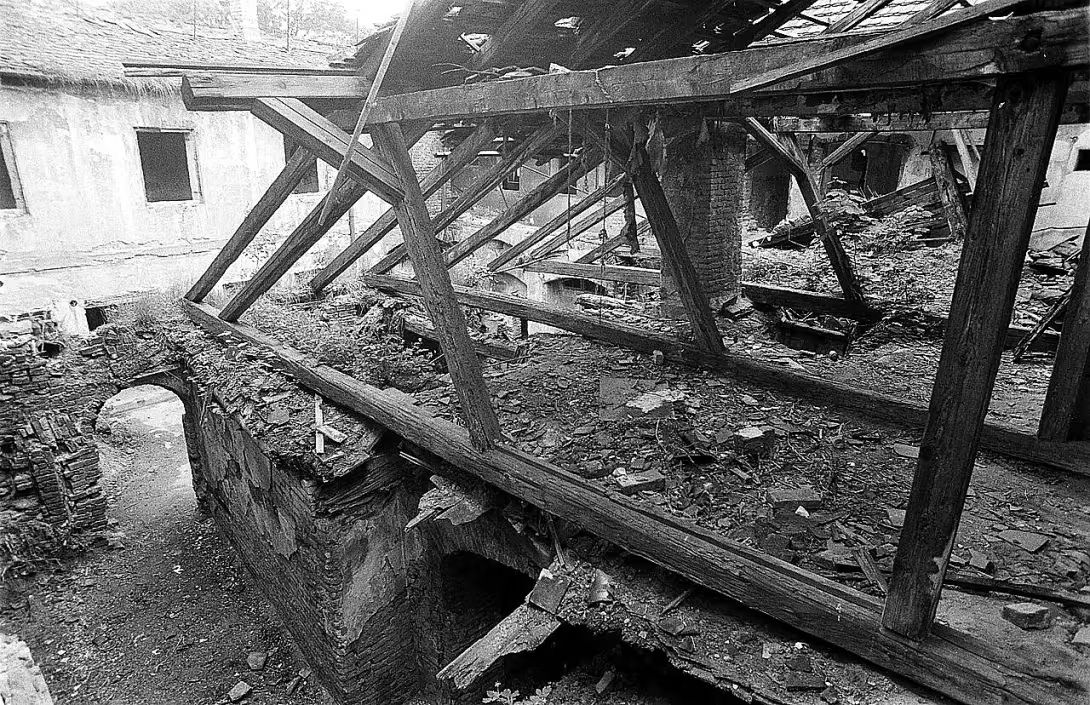
Objekt se nedochoval — na místě dnes nestojí. Následující text popisuje jeho historii, ne současnou návštěvu.
House No. 37 in Prague's Bubenč was a historic building situated in Gotthard Street opposite the church of St. Gotthard. This classical building from the beginning of the 19th century has undergone many changes - from rental housing to conservation. In 2021, it was finally replaced by a new building.
Originally, the Prokopovská cottage, which was destroyed by the Thirty Years' War, stood on the ground. The land was subsequently used by the Jarošov family as a garden. In 1802 it was purchased by the architect and builder Josef Zobel and exchanged it with Jan Dominik, owner of the land on the brick hill. On the basis of the agreement of 9 April 1804, Zobel built a new house in the Jarošov Garden for Dominik, to which descriptive number 37 passed. The creation of the building falls within the period of the Napoleon Wars and the Rising Enlightenment, when the foundations of the modern state were formed in Europe and Classicist architecture developed.
The bunk house was on the corner, and it was cut into a blunt angle. His facade was nine-axis. The interior was decorated by segmental vaults and the yard was filled with braids. From 1848 to 1889 the original building was significantly rebuilt and expanded by Tomáš Vlach to meet the growing demand for housing in Bubenč. After this modification, the house provided facilities for 17 families.
Property history includes Jarošov family, architect Josef Zobel, Jan Dominik and Tomáš Vlach. From 1958 to 1994 the building was protected as a real-estate cultural monument of the Czech Republic. However, in the early 1990s, the monument protection from the decrepit house was removed and the authorities allowed demolition. The construction of a volume replica was a condition, which was completed in 1994 and subsequently served as an office building. This modern building was demolished in 2021 and a new building with a new descriptive number grew in its place.
House No. 37 is an example of the transformation of the Bubenec building over two centuries, from a rural building to a densely populated rental house. Although the original historical building no longer exists, the location near St. Gotthard's Church and Stromovka Park remains an important place in Bubenèek history. The visit to this part of Bubenči offers the opportunity to know the historical core of the village, which, despite modern interventions in architecture, maintains its original urban context.
Historical milestones
- 1804
- Finishing the building on the basis of an agreement between Josef Zobel and Jan Dominik.
- 1958
- The house was declared a cultural monument.
- 1994
- The demolition of the original house and construction of a volume replica.
- 2021
- Devastation of the building and subsequent construction of the new building.
Architectural development
The original building from 1804 was a classicist house, which was rebuilt in 1848-1889 and extended for rental housing. In 1994, a volume replica was built on the site, replacing a decrepit historical object. In 2021, even this modern-day object was removed.
Historical events
1804: Construction of the house on the site of the older cottage. 1958- 1994: Monument protection period of the building. 1994: Demolition and construction of volume replica. 2021: Final demolition of the object.
Owners
The Jaroš family, Josef Zobel, Jan Dominik, Tomáš Vlach.
Points of interest
- The house was originally built by the Prokopo cottage, which was destroyed by a 30-year war. - In 1804 the architect Josef Zobel built a new house for Jan Dominik, to which the descriptive number 37 passed. - The bunk house was on the corner, it was folded into a blunt angle and its facade was nine-axis. - Between 1848 and 1889 the house was rebuilt by Tomáš Vlach so that 17 families could live in it. - From 1958 to 1994, the building was protected as a real-estate cultural monument, then the protection was taken down due to decrepit.
Guide
Show guide text
This text was created by artificial intelligence and has not been editorially reviewed. It may contain inaccuracies.
Welcome to Prague's Drumstick, specifically Gotthard Street. You're standing right where the house of the descriptive number 37 once stood. Look around you and try to perceive the atmosphere of this corner that has been fundamentally transformed in recent decades. In front of you, there is an area that already bears traces of the original historical development, but for us who are concerned with the history of this place, it is a place full of stories that have taken place here throughout centuries. Even if there is a new construction in front of you, or there is an open space, imagine that there once stood a significant object that was an important part of the urban landscape. This house stood on the corner, right opposite the church of St. Gotthard, and its silhouette was an inseparable part of their daily life for the inhabitants of Bubenč. Now that you're standing in this particular place, you have a unique opportunity to think about how quickly the city's face changes and how important it is to remember what was here before.
Let's move back in time and see how this house happened. The place where you're standing today wasn't always a setup. Originally there was the Prokopovská cottage, which witnessed many historical events, including the devastating Thirty Years' War. This cottage, however, did not pass the time test and was destroyed. It was only in 1804 that there was a fundamental change. Architect Josef Zobel, who was an active figure in the Prague building scene at that time, was tasked with building a new building on this site. The construction took place on the basis of an agreement between architect Zobel and the owner of the property, Jan Dominik. The result of this cooperation was a storey house, which took over descriptive number 37. This year, 1804, is therefore a key milestone in the history of this particular object. The house was not just a residential building, but it became a place where new chapters were born in the life of Prague's families.
Now pay attention to what this house would look like if you could go back in time. Even if there is a new building or empty area in front of you, imagine a nine-axis facade that was one of its main features. The house was situated on the corner and was folded into a blunt angle, giving it a specific architectural character. This form of construction was common at the time, but it was its proportions and details that made this building a remarkable part of the urban development. In the nineteenth century, namely between 1848 and 1851, there was significant reconstruction and expansion of the building. The architectural master Tomáš Vlach was behind this reconstruction. His aim was to create enough space for 17 families, indicating that it was a relatively large and important residential building. Vlach's work was not only about adding square meters, but about adapting the house to the new needs of that time.
The key figures associated with this place are Josef Zobel and Tomáš Vlach, but also Jan Dominik, for which the house was originally built. Jan Dominik was probably an important figure in the then-bubenical company and therefore could afford such a construction. Josef Zobel as an architect brought to the project his professionalism and knowledge of the construction techniques at the time. Tomáš Vlach then extended the house and adapted it to a new form that allowed it to serve as a residence for many people for many years. These three names are closely linked to the fate of this house, and their work together shaped his final form, which was known to generations of freshmen.
The cultural protection of this place is also interesting. In 1958, the house was declared a cultural monument. That was a very important decision at the time to save this object from possible destruction or inappropriate rebuilding. Unfortunately, history sometimes develops unexpectedly. In 1994, the original house was demolished. In his place, however, not a whole new building was built, but a volume replica. This means that the builders tried to mimic the original shape and dimensions of the building as accurately as possible in order to visually preserve the continuity of the urban landscape. This line was meant to serve as a bridge between the past and the present. But even this quest to preserve form has not lasted for ages. In 2021, this building was demolished, that is, the replica, and a new building began to be built. This development shows how dynamic the city of Prague is and how approaches to the protection of monuments and to the construction of historical centres change.
Imagine you're standing outside this house in 1950. You can see the nine-axis facade that rises above the street. Notice how the house is lined with corners and how its shape affects the flow of people around it. It was a house where children were born, where weddings were celebrated and people's fates were lived. Seventeen families who lived here after Vlach's reconstruction had their own story. Each window in this nine-axis facade hid a different life, different pleasures and other worries. Today, when you stand in this place, you can feel the weight of the history that lies there. Even though the original bricks and stone are gone, the memory of this house remains in the memory of the city and in our hearts.
This story of house number 37 is also a story of how the city develops. From the Prokopov cottage, which survived the war, to Zobel's new construction, to Vlach's expansion, to today's new construction. Each stage brought something new and something old stayed in the background. It is important to realize that the city is not just a set of buildings, but a living organism that breathes and changes. When you go through Drummer, try not only to perceive what you see, but also what was here before. Every stone, every alley has a story. And this story of a house on Gotthard is one of them.
Now that we've gone through the history of this place, allow me to invite you to further explore the area. Look at the church of St. Gotthard, who stood opposite. Its tower and architecture are yet another proof of the rich history of this place. Try to imagine how the house and church formed a harmonious whole together. How the building around them changed and how the city changed itself. Drummer is a neighborhood with rich history and many other monuments that are worth visiting. Every step you take here will bring you closer to understanding how today's Prague came about.
A good-bye to this place is always a little sad, but at the same time full of hope. The hope that history will continue and that new generations will remember what was here before. Thank you for taking the time to put on your headphones so you can hear this story. I hope he gave you something new and that you will perceive this place with a different look.
Businesses nearby
Do you run a restaurant, accommodation, shop, museum, rental, wellness or other visitor service near this monument? Show yourself directly to the people heading to it — this is how they will see you in the app and on the web:
Events nearby

Zdroj akcí: otevřená data měst a obcí ČR (Národní katalog otevřených dat) a kalendář akcí Národního památkového ústavu.
Nearby
V bezprostřední blízkosti se nachází kostel svatého Gottharda a park Stromovka.
Visualizations and artistic views


The visualisations are generated by artificial intelligence and serve as inspiration.
Photos from the area
Real photos taken near the monument


Zdroj a licence jsou uvedeny u každého snímku.
Tips from visitors
No tips yet. Be the first!
Log in and add your tip.
Sources and literature
Photos: Jan Sommer / CC BY-SA 4.0 — Wikimedia Commons. The author and licence also appear when you hover over the image.
Faktickým podkladem tohoto textu byl článek na Wikipedii, jehož autory jsou přispěvatelé Wikipedie. Článek je dostupný pod licencí CC BY-SA 4.0.
Location on the map


Příběhy a pověsti
Legendy, pověsti a příběhy spjaté s touto památkou
Fotografie návštěvníků
Zatím žádné fotografie. Buďte první, kdo přidá fotografii z návštěvy!
Log in a přidejte svou fotografii nebo hodnoťte.
Za ověřenou návštěvu v aplikaci získáte víc bodů — poznáme podle GPS, že jste na místě.
Reviews and comments