



Hadovka (usedlost) Homestead
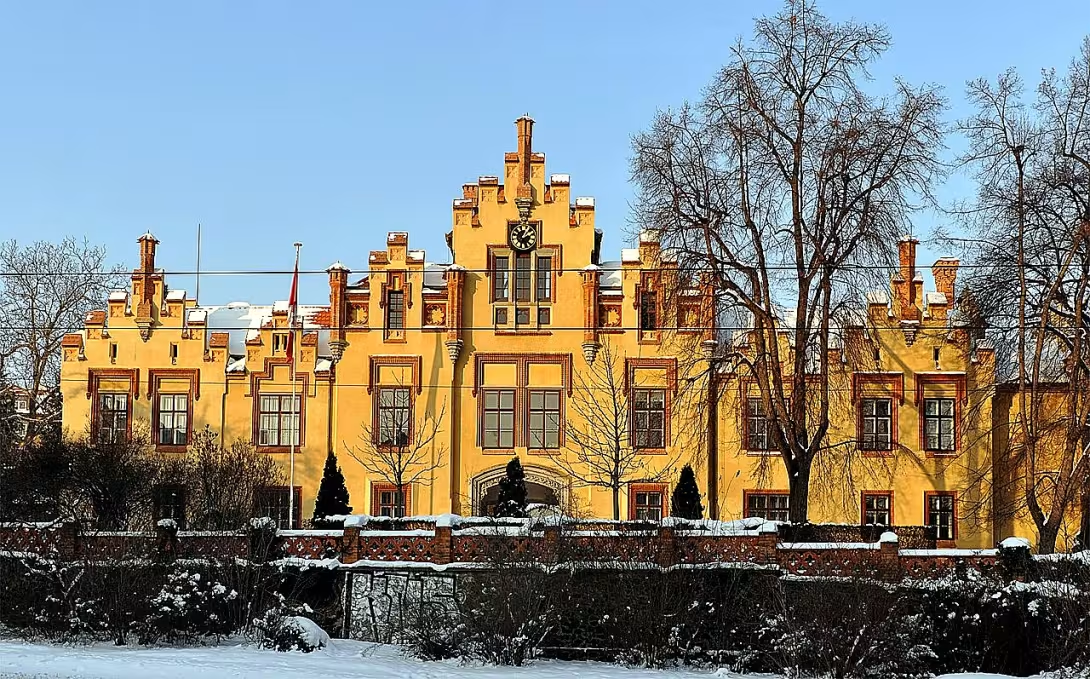
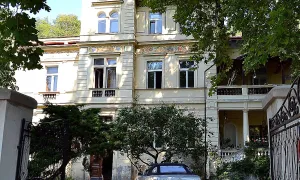
Hadovka is a historic summer castle in Prague-Dejvice on Hanspaulka near European street. The building is remarkable from the agricultural area with vineyards to the Baroque mansion to the Neo-Gothic castle. The complex also includes the Baroque Chapel of the Holy Trinity.
The estate was created by the gradual joining of seven small vineyards, which were in today's place in the first half of the 16th century. The wine press is already mentioned here in 1602. Another facility was built before 1659 by Jan Jakub Paravicini on the property of Burkovské vinika, which belonged to the tomato. After the destruction of the vineyards during the Thirty Years' War, the land was acquired by the imperial notary and lawyer František Ferdinand de Serponte in 1661.
The name Hadovka was created by the incorrect possession of the name of the owner Serponte, because the Latin word serpens means snake. Before that, it was called Serpentka. After Ferdinand Serponte's death in 1705, the property was auctioned off and won by František Doudlebský of Sternegg. In 1743 the property was purchased by the vicar at St. Wenceslas on the small side of Antonín Messler. The site was expanded and probably built by the Holy Trinity Chapel. Later his nephew Daniel Beckert inherited the estate and in 1784 he switched to his wife.
In 1798 the professor of medicine Vojtěch Vincenc Zarda bought the building. At that time it was a three-wing building with the same long side wings and baroque shaped perimeter walls. Around 1800, the reconstruction took place at the summer residence with a late Baroque character. After 1842 the garden was rebuilt into an English park.
The fundamental change of architecture occurred after 1850 when the estate bought Gabriel František Janoušek. He converted it into a neo-gothic castle according to the design of architect Josef Niklas. During this reconstruction, part of the west wing was demolished and the construction became irregular. In 1853 the chapel of the Holy Trinity was rebuilt, whose interior was decorated with paintings by Josef Navrál.
After 1872, Hadovka transferred to the property of the metropolitan capital, namely Adolf Würfel's Probost. It was used as a summer residence for the Saint's Proboštas with a home chapel. Later in 1930 Zdenka Havranková bought it from the capital of Prague. She had the castle modernised, set up central heating, garage and built a large representative hall in the east wing. Construction work was carried out by Václav Neklasil.
Since 1948 he served as a residence of the Canadian Embassy in the Czech Republic. Before 2013, the estate was purchased by PPF Group. Although a branch of the Open Gate school was planned to be established on the premises, the construction was not implemented due to lack of permits. The Kellner Family Foundation declared its intention to set up a children's playground at the bottom of the complex and a publicly accessible outdoor gallery with parts of British sculptor Tony Cragg.
The Snake represents a unique layer of architectural styles from Baroque to neo-gothic to modern 20th century modifications. It is an important witness to the transformation of the Dívik suburb from the wine landscape into an urban development. Visiting this place offers insight into the history of Prague settlements and their time changes.
Historical milestones
- 1602
- First mention of the vineyard press on one of the vineyards on the premises.
- 1850
- The purchase of the estate by Gabriel František Janoušek and the launch of a neo-gothic reconstruction.
- 1930
- The property Zdenka Havranková and its subsequent reconstruction.
Architectural development
Originally a three-wing building with baroque shaped perimeter walls. Around 1800 it was rebuilt to a summer residence with a late Baroque character. In 1850, a major neo-gothic reconstruction took place, during which part of the west wing was demolished. In 1930, a modern reconstruction was carried out with central heating installation and garage construction.
Historical events
1661: Acquisition of the land by Franz Ferdinand de Serpont. 1850: Opening of the reconstruction into a neo-gothic castle. 1948: Opening of the Canadian Embassy residence.
Owners
František Ferdinand de Serponte (from 1661), František Doudlebský z Sternegg (after 1705), Antonín Messler (1743), Daniel Beckert, Vojtěch Vincenc Zarda (1798), Gabriel František Janoušek (1850), Metropolitan capital (after 1872), Prague Capital City, Zdenka Havranková (1930), PPF Group (before 2013)
Points of interest
- The building evolved from the agricultural area with vineyards to the Baroque mansion to the neo-gothic castle. - The name was created by mishonoring the name of the owner of Serponte because the Latin word for the snake is serpens. - The estate was created by gradually joining seven small vineyards in the first half of the 16th century. - After 1842, the garden was rebuilt into an English-style park. - Since 1948, the building has served as the seat of the Canadian Embassy.
Guide
Show guide text
This text was created by artificial intelligence and has not been editorially reviewed. It may contain inaccuracies.
Welcome to Dejvice. You're standing right in front of Snake's, a beautiful estate that will carry you through its atmosphere to other times. If you look around you now, you will see an elegant structure in front of you, which today acts as a quiet island in the urban rush. It is a place with a very long history that has constantly changed over the centuries and adapted to the needs of its owners. What you see today is not just one house, but the result of a long process of connecting smaller land and buildings.
Now let's look together at how this place came to be. Imagine that in the first half of the 16th century, Dejvice was not as you know them today. Instead of asphalt streets and modern houses there were vast fields and above all vineyards. It was from these vineyards that the Hadovic rose. It wasn't one big building from the start, but there were seven small vineyards. It was a practical solution to increase economic space and make grape cultivation more efficient. The first written mention of a thousand six hundred and two brings us to one of the most important elements of the site at the time, namely the vineyard press. This was the heart of the entire economy, because it was here that wine was produced from the crop, which was the basic product of this area at the time.
Over time, however, the purpose of this place began to change. From a simple agricultural area with presses and vineyards, Hadovka gradually developed into a representative residence. The owners no longer wanted only wine profits, but they wanted a place where they could show their wealth and social status. Now pay attention to the overall appearance of the building. Note her character, which is the result of interventions from different periods. The most significant change came in the middle of the nineteenth century. In the year a thousand and eight hundred and fifty houses bought Gabriel František Janoušek. He was the one who decided that instead of the original look, the building would be rebuilt into a neo-gothic style.
Now, if you look at the details of the facade and the total silhouette of the building, feel this neo-gothic spirit. This style was very popular at the time because it followed medieval architecture, but added comfort and pomp to it. The architect Josef Niklas was behind these changes. It is fascinating to think about how one and the land itself has turned from a simple vineyard into a Baroque mansion and finally into this castle. In addition to the main house, the Baroque Chapel of the Holy Trinity is a very important element in the complex, which gives the complex a spiritual dimension and reminds us of the deep faith of people who once lived and worked here.
Let's now talk about the people who made up the history of this place. In addition to Gabriel František Janoušek, names such as František Ferdinand de Serponte, Antonín Messler or Vojtěch Vincenc Zarda are associated with Hadovka. Each of them put something of their own into the estate, whether it was the extension of the site or its maintenance. In later times, namely in the year one thousand nine hundred thirty, the estate was bought by Zdenka Havranková, who took care of its further reconstruction and keeping it in good condition. It is interesting that the building also served as a seat of the Canadian Embassy in the newer times, which shows that Hadovka was not only a local matter, but a part of international diplomatic relations in Prague.
Now I want to interest you in one little mystery that concerns the very name of this place. Whenever you say the word Snake, you probably imagine a snake or reptile. But the truth is much funnier and a little tragic. The name has nothing to do with reptiles. It all started on behalf of one of the owners named Serponte. But the people in the area could not pronounce that name correctly or could not understand it, and so it was improper. Because the Latin word for a snake is "serpen," people associate Serponte with a snake, and that's how the name "snake" came up. It's a beautiful example of how one little language error can name the whole memory for centuries and change its perception.
When you're standing outside this building today, think of it as a layered pie of history. Under the neo-gothic details are hidden traces of baroque manor and even deeper beneath them are the roots of seven small vineyards from the sixteenth century. It's a place where agriculture has met art, where wine presses have turned into diplomatic salons, and where one person's name has turned into a reptile.
I suggest you now rewind the building in peace, look at its facade and try to imagine how wine smelled here hundreds of years ago, and how there was a spectacular neo-gothic reconstruction here in the nineteenth century. Feel the peace and quiet this area offers in the middle of modern Prague.
This concludes our short journey through the history of the Snake. I hope you're interested in this story about vineyards, architectural changes and language errors. It is now up to you whether you decide to explore the surroundings of Dejvice further or enjoy the atmosphere of this unique place for a while longer. Thank you for your attention and I wish you a pleasant continued walk through the city.
Tips for visitors
The best time to visit is when the valley is much green, for example in spring or summer. In these times the surroundings are very pleasant for walks.
Transport to the place is possible by car and by public transport; Please check the current connection in the search engine. To move around we recommend to wear comfortable shoes.
For photo lovers are the best moments in the afternoon when light hits the building from an angle that highlights its details. Great views offer places in the park in the valley of the former Dejvický creek.
After a tour of the building from the outside, you can visit Hadovka Park in the valley of the former Dejvický creek, take a walk on the European street or visit the hotel Prague.
For families with children walking in nature in the valley is the ideal choice. We recommend that you bring a drink and a snack so that children can enjoy their outdoor time.
Frequently asked questions
Can the monument be visited?
This is a residential or farm building, not a museum with opening hours. Please view it from public space and respect the owners' privacy. We have no information about access to the interior.
Where is the monument?
Location: Dejvice. The map on this page shows the exact spot.
Why is the monument protected?
It is listed in the Central List of Cultural Monuments of the Czech Republic as a cultural monument (register no. 1000152548).
Businesses nearby
Do you run a restaurant, accommodation, shop, museum, rental, wellness or other visitor service near this monument? Show yourself directly to the people heading to it — this is how they will see you in the app and on the web:
Events nearby

Zdroj akcí: otevřená data měst a obcí ČR (Národní katalog otevřených dat) a kalendář akcí Národního památkového ústavu.
Nearby
Evropská ulice, park Hadovka v údolí bývalého Dejvického potoka, hotel Praha.
Accommodation nearby
Trips and activities nearby
Guided tours, tickets and activities nearby from GetYourGuide
Affiliate link: if you buy from the partner, we may receive a commission. The price for you does not change.
Search tours and activities →Themed route
Here is a proposal for a thematic walk:
1. European street (travel artery) - The starting point of the road where you can observe urban tourism and architecture. 2. Hotel Prague (hostel) - A significant building nearby that complements the character of this part of the city. 3. Hadovka (summer castle) - The main destination of the visit, where you admire the historical estate and its beauty. 4. Hadovka Park (green space) - Walk in the valley of the former Dejvický creek for relaxation in nature.
Seasonal recommendations
In the spring, the surrounding greenery awaken to life and the flourishing gardens give the summer castle a fresh look. The soft spring light highlights the facade details beautifully. We recommend light but warm clothes and a visit in the morning when the air is the cleanest.
In the summer months, the space is dominated by dense greenery and hot air. The building provides visual relief thanks to its historical form, while the sun illuminates the details of the walls into rich colors. It is advisable to choose breathable clothes and travel here in the early morning or late evening to avoid the greatest of the waves of heat.
Autumn brings golden leaves to Dejvice, which form a picturesque frame around the estate. The atmosphere is calmer and nostalgic, which underlines the long shadows hitting the masonry. The ideal for walking is waterproof shoes and a warm sweater, especially when visiting in the foggy morning hours.
Zimą acts as a monument in quiet sleep, and if the temperature drops, it can be covered by a layer of snow that highlights its clean line. The lighting is gray and the short days force a quick admiration from the outside. Hot winter clothes, hats and gloves are essential, while the best time to visit is around noon when the most daylight is.
Visualizations and artistic views

The visualisations are generated by artificial intelligence and serve as inspiration.
Photos from the area
Real photos taken near the monument

Zdroj a licence jsou uvedeny u každého snímku.
Tips from visitors
No tips yet. Be the first!
Log in and add your tip.
Sources and literature
Photos: Jirka Dl / CC BY 3.0 — Wikimedia Commons. The author and licence also appear when you hover over the image.
Faktickým podkladem tohoto textu byl článek na Wikipedii, jehož autory jsou přispěvatelé Wikipedie. Článek je dostupný pod licencí CC BY-SA 4.0.
Location on the map
More monuments – Dejvice
Show all in the municipality


Příběhy a pověsti
Legendy, pověsti a příběhy spjaté s touto památkou
Fotografie návštěvníků
Zatím žádné fotografie. Buďte první, kdo přidá fotografii z návštěvy!
Log in a přidejte svou fotografii nebo hodnoťte.
Za ověřenou návštěvu v aplikaci získáte víc bodů — poznáme podle GPS, že jste na místě.
Reviews and comments