



Haltýř Haltýř
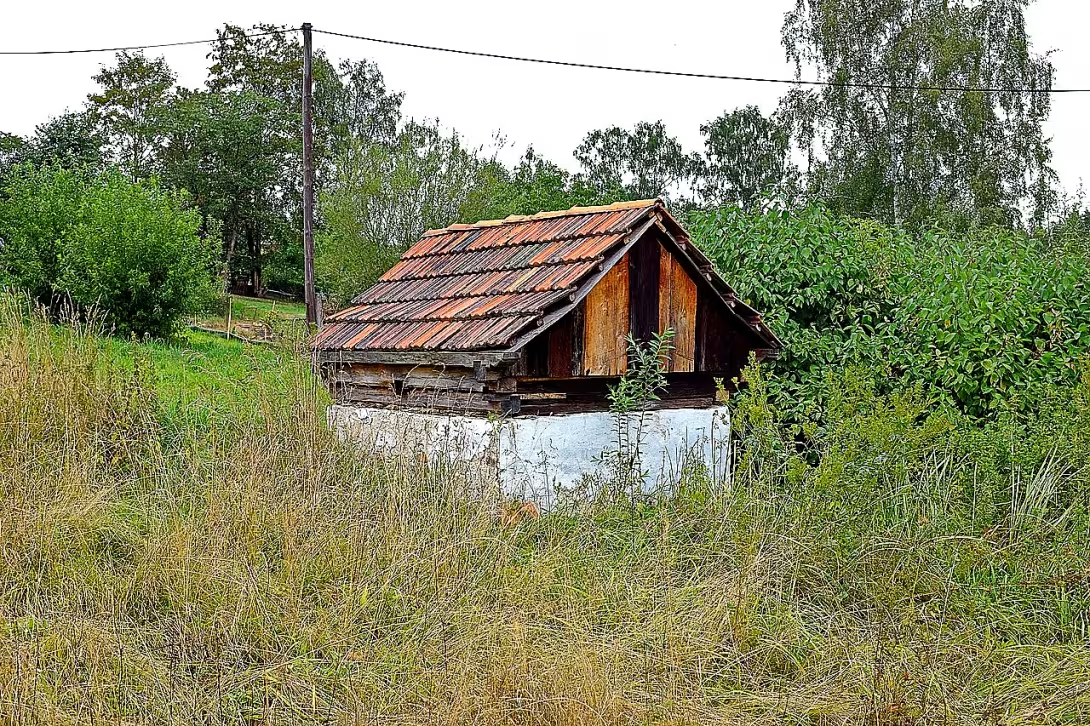
Haltýř in the part of Salajna the municipality of Dolní Žandov in the district of Cheb is a small building from the 19th century, which was used for food storage. The building is protected as a cultural monument of the Czech Republic and is part of the village monument zone Salajna. The construction represents a specific type of rural storage through which water flows.
It was probably created in the 19th century, during the period of rapid industrialization and modernization in Europe and Bohemia. At that time, the development of agriculture and infrastructure could have contributed to the need to build halters for efficient food storage.
The building is built on a rectangular ground plan made of mixed masonry with the predominance of stone, which reaches a height of approximately one metre. In the base part and in the corners are used stonewalled granite blocks, green slate and burnt brick, connected with lime mortar. The outside surface of the walls is coated with the same material. On the decorated part lies a grafted wreath, to which the cross with a saddle roof covered with burnt bags is added. The exceeding shields are boarded by wide plates connected by metal nails. The inner ceiling consists of two large flat stone plates and the entrance on the north side creates a stone portal.
The Haltýř was located on the premises of the farm near the estate No. 24 and was mainly used for the preservation of dairy products and meat. Since water flows through the construction, it can also perform the function of the well.
In 2013, the building was declared a cultural monument by the Ministry of Culture of the Czech Republic. Two years later he underwent a reconstruction, where the well was cleaned and the bottom was treated with grafting. On such a reinforced base, the stones of the ground were laid dry. Hot lime mortar with hydraulic lime was used to denounce the above-ground walls, which was the result of the Calcarius research project.
Haltýř in Salaň is a rare witness to the traditional management and construction techniques of the past. Thanks to the technical reconstruction it will be preserved as part of the monument zone. Visiting this place offers insight into the practical solution of food cooling in earlier times.
Historical milestones
- 2013
- Declaration for the cultural monument of the Czech Republic.
Architectural development
Haltýř is a walled plastered building built on the ground plan of the rectangle. The mixed masonry with the weight of the stone reaches a height of about one metre and has been connected with lime mortar. The outside part was plastered with lime mortar with a grafted wreath with a saddle roof covered with burnt bags.
Historical events
- 2013
- Haltýř was declared a cultural monument of the Czech Republic by the Ministry of Culture.
- 2015
- Reconstruction of the halter which included cleaning of the well and the use of hot lime mortar with hydraulic lime.
Points of interest
- It's a small 19th-century building designed to store food that flows through the water. - It was mainly used for the preservation of meat and dairy products and could serve as a well. - The wall of the building combines granite blocks, green slate and burnt brick. - The inner ceiling of the building consists of two large flat stone plates. - Hot lime mortar from the Calcarius research project was used in the reconstruction in 2015.
Guide
Show guide text
This text was created by artificial intelligence and has not been editorially reviewed. It may contain inaccuracies.
Welcome to the village Dolní Žandov. If you're listening to a gentle noise and a constant movement of running water right now, you're standing exactly where you should be. In front of your eyes is a small but extremely important building called a halter. At first glance, it may seem like a small stone object, but believe me, even this small thing can carry a deep story about how people in the past fought for survival and how they could use nature's power to their advantage. Feel this atmosphere, feel the cold that radiates from the water, and try to stop for a moment and think about what this building has experienced.
Now let's take a look together at how this object came into being and why it's even standing here. This halter is not just a random stone hippo in the landscape. It comes from the nineteenth century, which means that it was built at a time when life in this area was closely linked to the rhythm of agricultural work and what the country was able to provide. This building was directly part of an agricultural farm that once worked here. At a time when there were no electric freezer boxes or modern food storage technologies, people had to be very resourceful. They needed a place to keep the temperature stable and low, so that the food wouldn't run and stay fresh. That's why this halter was built directly above the flowing water. The water here served as a natural cooling element. Imagine the housekeepers who brought in fresh milk, cheese or meat to store them safely for later use. This construction was a key point for the entire farm to secure supplies.
Now pay attention to what you see right in front of you on the actual body of the building. Look at the material from which this object is made. It's a fascinating mix of different species of masonry that shows how humans were able to combine what they found in the surrounding nature. Notice these massive granite blocks. These large stones give the building a sense of firmness and firmness. Granite is a hard and durable material, which serves as the basis and main supporting element. Right next to them, you can see the green slate. This slate gives the whole a very specific look and color, which is beautifully supplemented with the surrounding greenery and moisture. And finally look at the details of where the burning brick is used. This red paint brick creates an interesting contrast to grey granite and green slate. This combination of materials is not only an aesthetic matter, but also practical, because each of these materials responds to moisture and cold slightly differently. Now, if you look towards the inner space, you might notice that the inner ceiling of the object is two large surfaces that cover the space above the flowing water. It is a fascinating view of how the construction was designed to withstand constant contact with water and moisture.
Although we may be interested to know exactly who laid these stones and who was the architect of this work, we must accept the fact that the names of these people have been forgotten over time. We don't know any particular builders or any famous personalities that are directly connected to this place. Yet there are other layers of humanity in this place. This halter is a monument to the everyday but indispensable life of the inhabitants of Lower Zandov. Every stone here talks about the sling of a farmer, about the care of a farmer who had to have food in order, and about the wisdom of people who knew that water was a source of life and cold. Even if we don't see statues of any kings here, we see a trail of people who have built their future through the work and use of what the country has offered them.
But now I want to invite you to think about one interesting thing that remains a little bit hidden here. The whole existence of this halter is built on the movement of water, but there is also a question that can appeal to you. It is said that this construction did not have to be used only to preserve food. It is very likely that she could also perform the function of the well. Imagine this - a place where people could go to clean, fresh water that flows right through this stone structure. The water that shines here could have been an irreplaceable source of drinking water for the entire surrounding settlement. The mysterious link between the food stock and the water source creates very strong energy in this small place. It's a place where there's a need to feed the body and a need to drink, all within one small stone building.
In the year two thousand and thirteen, this halter became something much more than just an old stone object. It was officially declared a cultural monument of the Czech Republic. This means that its value for our history and for our culture has been recognised at the highest level. It's not just part of the old farm anymore, but it's a protected treasure that we have a duty to preserve for future generations.
I hope that this short journey through time to the nineteenth century and the view of this unique object has intrigued you. You're standing here in front of a piece of history that's small, but its meaning is huge. Don't forget to stop again, listen to the noise of water and perceive the texture of those old stones. It's the best way to truly understand what this halter means. Now you can continue your walk and discover other secrets that this surrounding landscape has prepared for you. Thank you for your visit and read what the next trip will bring. Goodbye.
Tips for visitors
The best time to visit the halter in Lower Zandov is during the summer months when the weather is favourable and can enjoy beautiful rural landscapes. Sunshine days offer the best conditions for exploring surrounding green areas.
For those travelling by public transport, it is advisable to check the current connections using an online search engine or contact the local tourist center for recommendations.
When visiting the halter, bring protective clothing and footwear suitable for walking on rural roads. Also remember to take water with you if you are planning a long walk, and perhaps some candy or food for a break.
Photography of the halter offers interesting views from a special angle, where intermingling water and ancient architecture form a beautiful composition. The best light is usually during morning or late afternoon hours when the sun is not too high and the shadow effects are strong.
An agricultural farm can be visited in the vicinity of the halter, offering the opportunity to explore rural life and make a visit to the local market. For families with children it is a suitable place to walk and discover nature.
Frequently asked questions
Can the monument be visited?
We have not verified whether this monument is accessible. Please ask the owner or operator, or the local municipal office.
Where is the monument?
Location: Dolní Žandov, Karlovarský kraj. The map on this page shows the exact spot.
Why is the monument protected?
It is listed in the Central List of Cultural Monuments of the Czech Republic as a cultural monument (register no. 1300678657).
Businesses nearby
Do you run a restaurant, accommodation, shop, museum, rental, wellness or other visitor service near this monument? Show yourself directly to the people heading to it — this is how they will see you in the app and on the web:
Events nearby


Zdroj akcí: otevřená data měst a obcí ČR (Národní katalog otevřených dat) a kalendář akcí Národního památkového ústavu.
Nearby
🏰 Historic sites (89)
- zřícenina hradu Boršengrýn 3.7 km
- židovský hřbitov 3.7 km web
- Hrázděný statek Milíkov 4.0 km
- Historický rozcestník 5.4 km
- Chata na Dyleni 6.5 km
- Bývalá raketová základna 6.6 km
- Františkův monument 6.8 km
- 1/55 7.0 km
- Památník 1. pěší divize Americké armády - The Big Red One 7.3 km
- Severovýchodní základní koncový bod v Chebu 7.4 km
- Diana 7.4 km
- Sengerhof 7.4 km Turmstraße 9
- Bývalá obec Smrkovec 7.4 km
- Zámek Kynžvart 7.5 km +420 354 691 269 web
- Pozůstatky kamenného mostku 7.6 km
- Mittelpunkt Europas - Střed Evropy 7.8 km
- sv. Jan Nepomucký 7.9 km
- Schloss Ernestgrün 8.5 km
- Starý Hrozňatov 8.6 km
- Letište Cheb 8.6 km
🍽️ Restaurants and dining (163)
- Rustlerův statek 4.3 km
- Hospůdka Lipová 4.4 km Lipová 76
- Turmstüberl 6.5 km
- Rybarska basta 6.5 km Na Hrazi 5 +420 354 431951 web
- Dama 6.8 km
- Restaurant Kemp Vaclav 7.2 km
- Pizzeria da Nunzia 7.4 km Turmstraße 1 +49 163 5175486
- Das Marktplatz-Cafe 7.5 km web
- Pizzastube Ackermann 7.5 km +49 9638 9399899
- Stop Cafe 7.6 km web
- Gasthof Ney 7.6 km
- Gasthof Zum Tillenblick 7.6 km Tirschenreuther Straße 6a web
- Hotel Restaurant Metternich 7.7 km +420 736 612 482 web
- Minigolfstüberl 8.0 km web
- Gasthof Adamhof 8.3 km +49 9638 370 web
- Die Cafébar 8.3 km
- Hostinec pod Hradem 8.5 km
- U Bůčků 8.5 km
- Pension Pergola 8.5 km
- „M“ Kavárna 8.6 km Malé nám. 114
🏨 Accommodation (102)
- Statek Salajna 1.2 km Salajna 12 web
- Kemp Stebnice 5.1 km +420604921495 web
- Camping Baldi 5.2 km +420602427163 web
- Autokemp Rybářská Bašta 6.5 km +420 354 431 951 web
- SK Delfín Jesenice - Cheb 6.7 km web
- Autokemp Dřenice 6.9 km +420 354 431 591 web
- Gästehaus Weber 7.2 km Am Bühl 5 +49 9638 498 web
- Vaclav 7.4 km web
- Zámecký hotel Metternich 7.7 km
- Reisemobilhafen Sibyllenbad 8.1 km +49 9638 912200 web
- Campingplatz Platzermühle 8.2 km Platzermühle 2 +49 9638 912200 web
- Appartment-Hotel Sibyllenbad 8.3 km web
- Pension U stříbrného jelena 8.4 km web
- Kurhotel Pyramide 8.4 km web
- Schlosshotel Albenhof 8.4 km Rothmühle 15 +49 9638 9300 web
- Hubertus 8.7 km nám. Republiky 131
- U Mlýna 8.7 km +420 354 691 237 web
- RS U Mlýna 8.8 km
- Wohnmobilstellplatz Golfclub Stiftland 8.9 km
- U čertova mlýna 10.1 km
🚲 Rentals and sport (16)
- Kartarena Cheb 7.4 km
- Opravna jízdních kol 9.2 km
- Bazén 9.4 km web
- TJ lokomotiva 10.4 km
- plavecký bazén Chetes 10.7 km web
- Jízdní kola 10.7 km web
- Sportisimo 10.8 km web
- Better Fitness 11.1 km Komenského 7
- Sport Flori 11.1 km Valdštejnova 8
- Hervis 11.1 km
- Lanové centrum 12.0 km
- SC Mähring 13.5 km web
- Motokrosový areál Cech 14.5 km
- Michal Kandráč 14.6 km
- Motorsport-Übungsgelände MSC Stiftland 14.9 km
- Modellflugplatz Großkonreuth 15.0 km web
🥾 Hiking and nature (199)
- Manský Dvůr 2.2 km
- Pastvina 3.1 km
- Lipovka 3.5 km
- Paličský vrch 3.6 km
- Lipovka 3.9 km
- Za drůbežárnou 4.0 km
- Doubravecký vrch 4.5 km
- Radionka 4.5 km
- Kyselecký hamr 4.6 km
- Mechový vrch 4.7 km
- Rovina 4.8 km
- Střední vrch 5.1 km
- Šitbořský potok 5.2 km
- Stráž 5.3 km
- Na Srázu 5.3 km
- Kamenná hora 5.4 km
- Chebský vršek 5.7 km
- Javořík 5.8 km
- Kružný 5.9 km
- Felsen am Lerchenbühl 6.0 km
Accommodation nearby
Themed route
1. Haltýř (main object) - You start with the building itself. This part of the route allows you to observe the unique architecture and main features of the monument. 2. Tank Haltýře (area) - Continue to open space around the object. It is an ideal place for a quiet observation of details near the monument. 3. Exposure Haltýře (internal space) - The final stop leads to the interior. Here you will learn about the history and importance of the whole place.
Seasonal recommendations
In spring, the surroundings of the monument in Lower Zandov are awakened along with nature. The trees start to green, and the sun's rays are still soft, creating a fresh and optimistic atmosphere. It's an ideal time to observe details in soft light. I recommend wearing layered clothes because the wounds are usually cold and the afternoon can be warm. Visit the place in the morning when there are least visitors.
Summer period brings to the surroundings Haltýře intense sunlight and full of greenery. The days are long and the air is hot, which gives the place a very lively character. Due to the increased attendance in the high summer season, it is best to arrive immediately after opening to avoid the biggest crowds and the hot sun. Don't forget the headgear, enough water and sun protection.
Autumn moons turn the surroundings into a varied palette of gold and brown shades. The morning fog surrounding the memory gives the place a mysterious and melancholy mood. The light is low in this period and very beautiful, especially in the afternoon. Prepare stronger shoes because of wet soil and warmer top layer of clothing, because the air is getting much colder.
In winter the place is very quiet and lonely, especially when the trees are without leaves. The atmosphere is calm and raw. Due to the shorter time of day and lower temperature, I recommend a visit around noon when the light is the most. The need is very warm clothes, scarves and gloves so that the freezing air does not spoil the experience of the tour.
Visualizations and artistic views


The visualisations are generated by artificial intelligence and serve as inspiration.
Photos from the area
Real photos taken near the monument


Zdroj a licence jsou uvedeny u každého snímku.
Tips from visitors
No tips yet. Be the first!
Log in and add your tip.
Sources and literature
Photos: Lubor Ferenc / CC BY-SA 4.0 — Wikimedia Commons. The author and licence also appear when you hover over the image.
Faktickým podkladem tohoto textu byl článek na Wikipedii, jehož autory jsou přispěvatelé Wikipedie. Článek je dostupný pod licencí CC BY-SA 4.0.
Location on the map
More monuments – Dolní Žandov
Show all in the municipality
Příběhy a pověsti
Legendy, pověsti a příběhy spjaté s touto památkou
Fotografie návštěvníků
Zatím žádné fotografie. Buďte první, kdo přidá fotografii z návštěvy!
Log in a přidejte svou fotografii nebo hodnoťte.
Za ověřenou návštěvu v aplikaci získáte víc bodů — poznáme podle GPS, že jste na místě.
Reviews and comments