






Hanácká kasárna Barracks
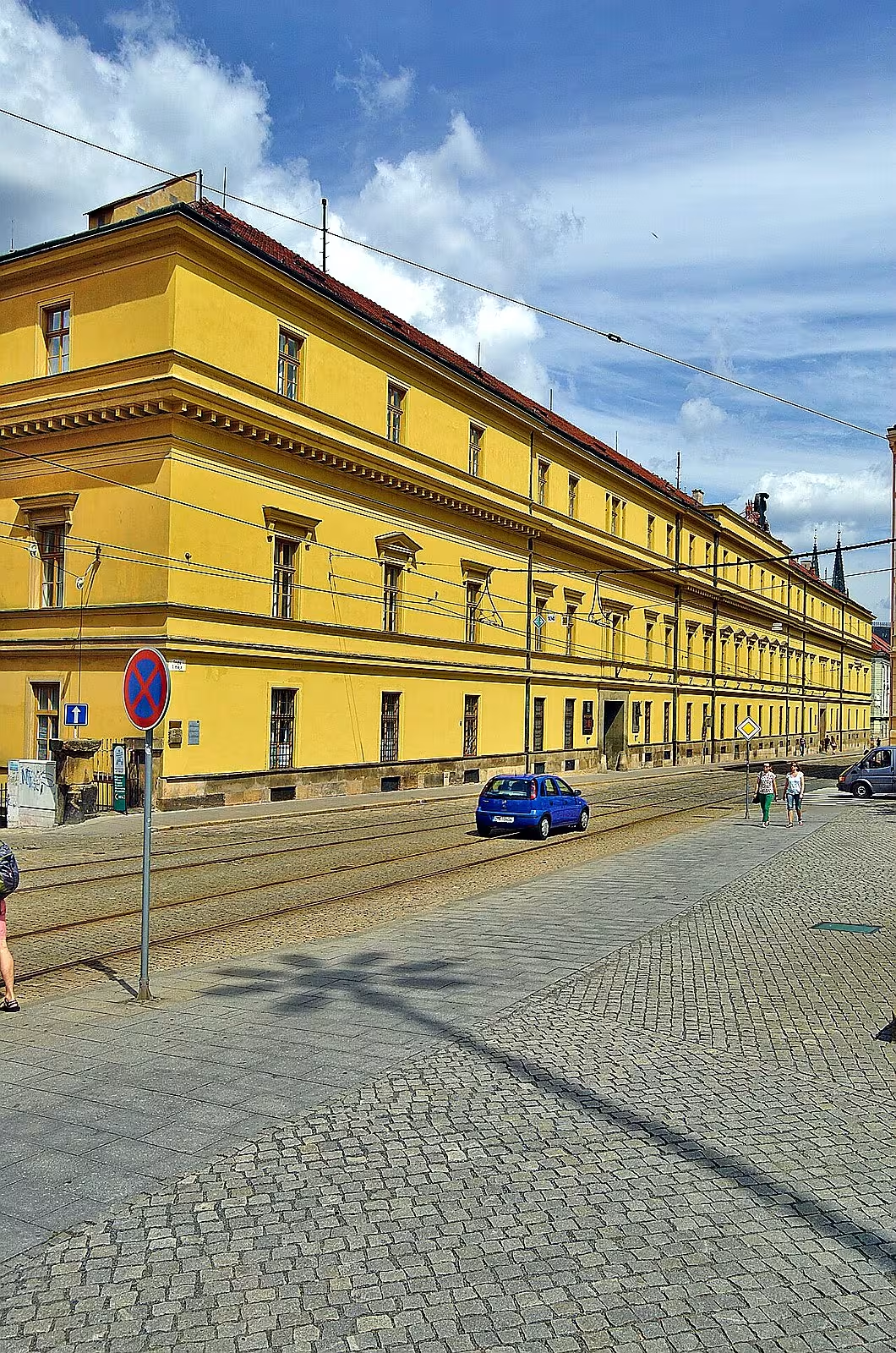
Hanácká kasárna in Olomouci are a five-storey Classicist building from 1839 to 1845, which represents one of the largest buildings in urban development. This monument is an important example of high-quality military construction in the mid-19th century and since 1958 it has been protected as a cultural monument.
The building was created in a place that had served religious purposes since the Middle Ages. Since the 12th century there stood the Chapel of All Saints, in the 15th century the Church of the Assumption of the Virgin Mary with the Carthusian monastery was added and at the beginning of the 16th century the chapel was extended to the Church of All Saints with the Augustinian monastery. After the abrogation of the monasteries in 1782 and 1784 and the demolition of churches by 1811, the use of space for military purposes was considered. The first attempts to build bomb-proof barracks in the early 19th century were stopped for auctioning. The new project was developed in 1831 by Fortification Director Emanuel Zitta, whose work was followed by Colonel Camillo Vacani. The Archduke Jan Habsbursko-Lotrinský was also involved in the preparations. Project definitely approved in June 1839 Emperor Ferdinand I.
The building is performed in a classic style with a four-sided plan and a saddle roof. Due to the position in the slope, there are three floors above and two underground floors on the south side, while the western and eastern sides line the basement skylights. 14 million bricks and 4000 cubic fathoms of stones were used during construction. The original name Špital barracks referred to the planned use as a military hospital in the event of a siege of the city or a former hospital mill.
After the cast of the crew in 1846, 1813 people lived here in 392 rooms in 1847. There were sapers and miners in the building. The first floor included, in addition to the accommodation of the team, carpentry, lithographic room and prison. On the second floor there were clothing warehouses and canteen, in the third medical and officer's room. The fourth and fifth floors served for typists, officers, artisans, bandmen and archives, with a chapel on the fourth floor. In 1856 the court level was reduced to eliminate moisture in the lower floors.
Probably since 1872, the 54th Moravian Infantry Regiment, called Hanácký, was based here. After World War I, the building was renamed Hanácká kasárna according to this unit and the Austrian Reich emblem was removed from the shield. In 1920, the 6th Czechoslovak Infantry Regiment Hanácký was placed in the building, founded as legionnaire in the Ukrainian Borisale, which was subsequently merged with the 54th Regiment. In 1937 and 1938 repairs of facades and interior equipment took place. On the facade there was a record commemorating the 20th anniversary of the Battle of Bachmac.
After World War II, the 6th Infantry Regiment was abolished in 1947 and the building was mainly used for administrative purposes, for example for the Municipal Military Administration. In 2014, the military left the building. Since September 2021, the State has been unsuccessfully attempting to sell. In March 2022, the building began to serve as a centre for Ukrainian war refugees. In 2024, the barracks acquired a private developer at auction, but the Palacký University decided to legally close the offer and applied for the building itself.
Hanácká kasárna remains the dominant of Olomouce and proof of the strategic importance of the city within the Austrian fortification. It's a place where religious history intersects with military discipline and modern social events. Visiting the surroundings of this monumental building offers insight into the classical architecture and military history of the region.
Historical milestones
- 1839
- final approval of the project by Emperor Ferdinand I.
- 1845
- completion of barracks
- 1958
- initiating protection as a cultural monument
- 2014
- the army left the building
Architectural development
The building is performed in a classic style with a four-sided plan and a saddle roof. Due to the position in the slope, there are three floors above and two underground on the south side. The west and east sides are lined with basement skylights.
Historical events
1872: movement of the 54th moravian infantry regiment into the building, 1958: declaration for cultural monument, 2014: exit of the building by army, 2022: start of operation of the centre for ukrainian refugees
Owners
Austrian Empire, Czech Army (until 2014), private developer (2024), Palacký University (in the process of matching the offer 2024)
Points of interest
- It is a five-storey Classicist building from 1839 to 1845, which is one of the largest objects in urban development. - The barracks were built in a place that served religious purposes since the Middle Ages. - 14 million bricks and 4000 cubic fathoms of stones were used during construction. In 1847, 1813 people lived here in 392 rooms. - Since March 2022, the building has served as a centre for war refugees from Ukraine.
Guide
Show guide text
This text was created by artificial intelligence and has not been editorially reviewed. It may contain inaccuracies.
Welcome to Olomouci. You're standing in front of one of the most prominent and monumental buildings in this whole city. While you're looking at this huge object, I believe that it immediately hits you with its incredible size and the weight it carries. This building is not just an ordinary building, it is a symbol of a certain era, proof of human effort and a monumental footprint that has remained here for centuries. Feel the presence, the strength of the five floors that stand above you, and the geometric precision that gives the whole place its unwavering character. This building, known as Hanácká kasárna, will now invite you on a journey through time to understand why it was built here and what fate it has passed.
Let us now return together to the past in the middle of the nineteenth century. Imagine the time when the city of Olomouc expanded and needed new space for its military crews. This building was not created randomly. Its roots extend far beyond the years of eighteen hundred thirty-Chinese to eighteen hundred forty-five when the construction was completed. The place you're standing on right now has a very strange history. Before the military premises were built here, this area served various religious purposes throughout the Middle Ages. There were monasteries, places of peace and spiritual life. It was on these old foundations, the site of the former monastery complexes, that this massive military architecture was built. This transition from religious peace to military presence is one of the most interesting aspects of this place. The whole project wasn't just a local matter. In order to begin this huge project at all, it had to be definitively approved by the highest authority. In the year eighteen hundred thirty-nine the project was approved by Emperor Ferdinand the First. This clearly shows how strategic this place was for the entire power structure at the time.
Now pay close attention to the very form of the building in front of you. If you look at its overall structure, you'll see a typical example of classical military architecture. This style is characterized by order, symmetry and monumentality, which is exactly what you feel here. The building has a very clear, four-sided plan, which gives it a sense of stability and impenetrability. It's one of the largest buildings in the entire urban environment. Its five-multiple walls form an impervious barrier that dominates the surrounding space. behind this precise work were important creators of their time, architects Emanuel Zitta and Camillo Vacani. Their work here came back to life in the form of a construction which was not only intended to serve as accommodation for soldiers, but also had another, very important task at a certain time. It was originally also meant as a military hospital, which required a specific approach to the space and organisation of the building. Even though you're looking at the barracks today, these walls used to have scenes of a completely different kind, full of care and treatment.
When we talk about the history of this place, we can't ignore names that are closely related to it. In addition to the said Emperor Ferdinand the First, who gave the construction green, Jan Habsbursko-Lotrinský is present in the historical context. These personalities represent the political and power class that shaped the face of the country and this city. Their decisions and presentations within the framework of the then administration determined how such large projects would be implemented. Every brick and every stone you see here was part of a larger plan to ensure the stability and strength of the state through its military power.
Now, before we go on, let me share something with you that might really surprise you. We often look at buildings as finished units, but we rarely think about how much work and material was needed to create them. Imagine this incredible job and a huge amount of raw materials. In building these barracks, an incredible 14 million bricks were consumed. Fourteen million! That's a number we can hardly grasp in our imagination. And that's not all. To this was added four thousand cubic fathoms of stone. These huge quantities of material had to be transported, processed and accurately placed to create this monumental structure. By the year eighteen hundred and forty-seven, the building was so large that it had a total of three hundred ninety-two rooms. Each of these rooms had its own function, its own history, and its own stories that have been in them for many decades.
This building has gone through many phases. From its completion in eighteen hundred forty-five through the period of intensive military use to one thousand nine hundred fifty-eight, when it was officially recognised as a cultural monument and started its protection. Even though the army left these premises in the year two thousand and fourteen, the building still stands here as a silent witness to history. It is a place where the past clashes with the present, where the religious tradition of the monasteries has given way to military discipline and where we are now again learning to perceive the value of this heritage.
I hope this brief insight into the history of Hanac barracks has helped you better understand what you're seeing in front of you right now. This building is much more than just a pile of bricks and stone. It is a record of human efforts, political decisions and changes that every great city goes through. But now I will not hold you back. I suggest you continue to walk around this building, perceive its shadows, its dimensions and try to imagine the thousands of people who have been here over the years. Olomouc has many other secrets and hidden treasures waiting for you. I wish you a beautiful and inspiring tour of our city. Thank you for your attention and goodbye.
Tips for visitors
The best time to visit Hanac barracks is early spring or late autumn when there are fewer tourists and the light on the facade is soft and pleasant. At these times you can easily walk through the courtyard and enjoy the atmosphere of historical architecture. Parking is possible in public parking lots near the city centre; If you arrive by car, look for marked areas for visitors. Public transport will lead you to the main stop in Olomouci, where there is only a short walk to the building - check the current connection in the traffic search engine. Take comfortable shoes, water and possibly umbrella or raincoat because part of the area is open. We recommend that you also have a printed or mobile map of the city so that you can easily navigate the area. For photography are the most interesting places in front of the main facade, in the inner courtyard and in narrow passages, where the impact of sunlight creates interesting shadows. It is ideal to capture the building during the golden hour - just after sunrise or before sunset. In the vicinity you can reach the historical centre Olomouce within half an hour, where you can find other sights and cafes, or visit the Monastery Hradisko, which offers quiet walks and views. For families with children it is advisable to plan a stop in the children's playground in the town park where children can go for a run after a visit to the barracks.
Businesses nearby
Do you run a restaurant, accommodation, shop, museum, rental, wellness or other visitor service near this monument? Show yourself directly to the people heading to it — this is how they will see you in the app and on the web:
Nearby
město Olomouc, Klášterní Hradisko
Accommodation nearby
Trips and activities nearby
Guided tours, tickets and activities nearby from GetYourGuide
Affiliate link: if you buy from the partner, we may receive a commission. The price for you does not change.
Search tours and activities →Themed route
1. Monastic Hradisko (Type: historical area) - Explore this important place with a rich history. 2. city Olomouc (Type: historical center) - Walk the streets and know the atmosphere of this place. 3. Hanácká kasárna (Type: military object) - The main destination of the trip, which represents an interesting architecture.
Seasonal recommendations
Spring: During the spring season Hanácká kasárna is fertilized by flowering gardens, which adds colour and durability to the historical environment. Sunbeams shining between the mists create a romantic atmosphere that is ideal for visiting this monument. In this period, it is recommended to arrive at the beginning of the day in order to enjoy a quieter moment before drowning the crowd of tourists. Clothes should be medium-warm, with the possibility of adding layers depending on the weather, because spring days can quickly change.
Summer: During the summer period Hanácká kasárna is a popular destination for visitors. Sunshine weather and warm days attract a lot of people, which means more likely to meet with a crowd of tourists. It is advisable to visit the memory early in the morning or later in the evening so that it is possible to use the space without overloading people. Today's visitors should wear light clothes and not miss sun protection. The visit this season offers the opportunity to explore the surrounding green areas which are in full beauty.
Autumn: In autumn, Hanácká kasárna is surrounded by colorful tree leaves, adding a unique and quieter atmosphere to the historic environment. Sunshine days are short, but intense light increases the dramatic nature of landscapes. It is advisable to visit the memory during the day to use this colour spectrum. Clothes should be appropriate to colder autumn temperatures and a quiet visit is recommended because there is less likelihood of meeting with large crowds.
Winter: During winter, Hanácká kasárna offers a calm and quiet atmosphere. Sunbeams falling on snow or wet streets create a magical impression that is ideal for visiting this historic monument. Due to colder temperatures and shorter daylight, it is recommended to visit the memory early in the morning or during the opening breaks when there are fewer people. It is important to wear warm clothes with protection against cold and moisture in order to enjoy visits without discomfort.
Visualizations and artistic views


The visualisations are generated by artificial intelligence and serve as inspiration.
Photos from the area
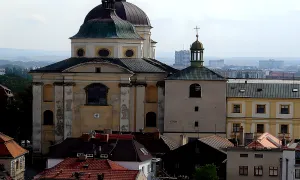
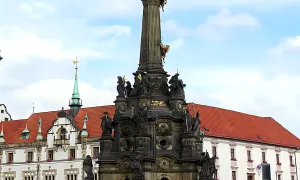
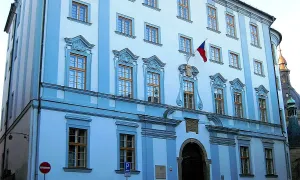
Real photos taken near the monument


Zdroj a licence jsou uvedeny u každého snímku.
Tips from visitors
No tips yet. Be the first!
Log in and add your tip.
Sources and literature
Photos: Jiří Komárek / CC BY-SA 4.0 — Wikimedia Commons. The author and licence also appear when you hover over the image.
Faktickým podkladem tohoto textu byl článek na Wikipedii, jehož autory jsou přispěvatelé Wikipedie. Článek je dostupný pod licencí CC BY-SA 4.0.
Location on the map
Příběhy a pověsti
Legendy, pověsti a příběhy spjaté s touto památkou
Fotografie návštěvníků
Zatím žádné fotografie. Buďte první, kdo přidá fotografii z návštěvy!
Log in a přidejte svou fotografii nebo hodnoťte.
Za ověřenou návštěvu v aplikaci získáte víc bodů — poznáme podle GPS, že jste na místě.
Reviews and comments