



Hlavačov (Lužná) Castle
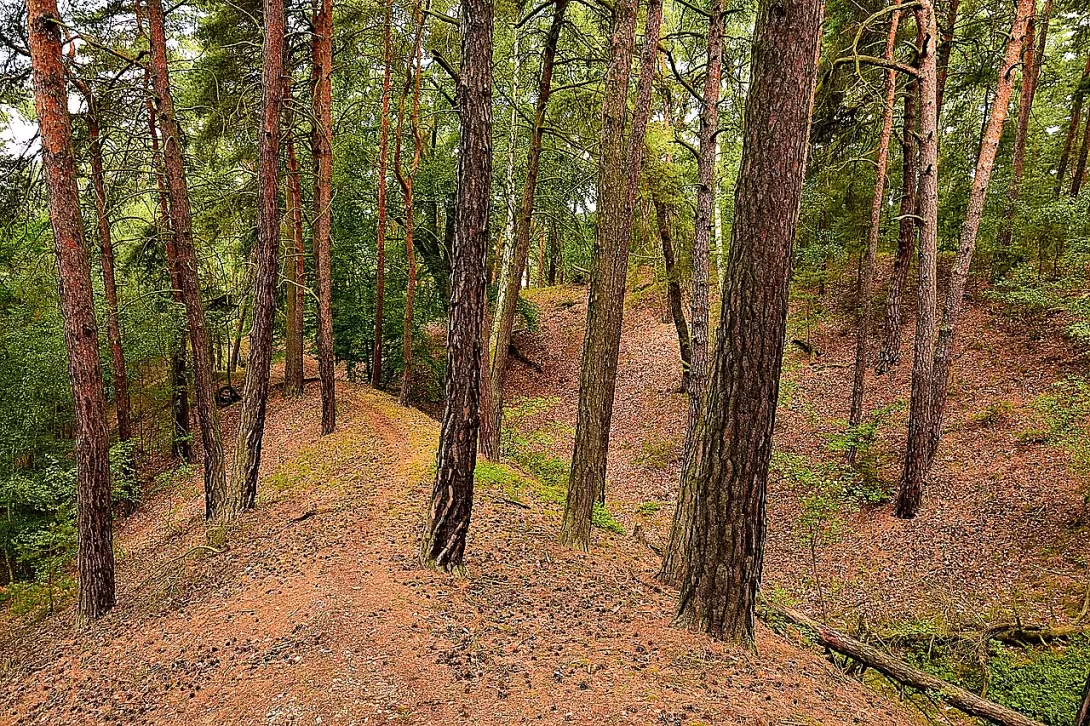
Objekt se nedochoval — na místě dnes nestojí. Následující text popisuje jeho historii, ne současnou návštěvu.
Hlavačov, also known as Castellum Vetus or Starý Hrádek, is a historical site near Rakovník in the Lužná municipality of Středočeský kraj. Constructed around 1300, this medieval castle served as an administrative center for the Rokytenské region. Although likely abandoned by the late 13th century, Hlavačov remains a significant cultural monument in the Czech Republic. Remnants such as ramparts and ditches are still visible on its forested hilltop.
The origins of Hlavačov trace back to an Iron Age settlement from the Halstatt culture. Archaeological findings from 1974 uncovered a palisade fortification and stone-paved areas, evidencing this early occupation. The site's historical significance is enhanced by its role as a royal castle of transitional type during the early 13th century when Bohemia was under the Přemyslid dynasty. This era saw the consolidation of royal power and territorial administration, with several castles established to strengthen control over newly acquired lands.
Architecturally, Hlavačov features wooden palisades and stone-paved areas, indicative of a transitional-type castle that utilized minimal stone in its construction. This style was typical for early medieval fortifications in the region, reflecting both practicality and available resources at the time. The site's strategic location on a forested hilltop near Rakovník underscores its historical importance as an administrative center.
Historical sources suggest a connection between Hlavačov and the nearby Křivoklát, although the exact nature of this relationship remains unclear. Some historians speculate that Hlavačov might have been the original location of a larger, now unknown Křivoklát. Despite its eventual abandonment by the end of the 13th century, Hlavačov's role as an administrative hub was significant during its operational years.
Today, visitors can explore the remnants of this medieval castle, including its ramparts and ditches, set against natural landscapes. The site is recognized as a cultural monument, offering insights into the region's historical development and architectural practices. Its preservation allows for an appreciation of the strategic and administrative roles such castles played in medieval Bohemia.
Hlavačov stands as a testament to the rich history of the Czech Republic, inviting visitors to explore its remnants and reflect on its past significance. The site offers a unique glimpse into the early medieval period, making it a worthwhile destination for those interested in history and architecture.
Then and now
Drag the slider to compare how the landmark may have looked when it was built with the view today.
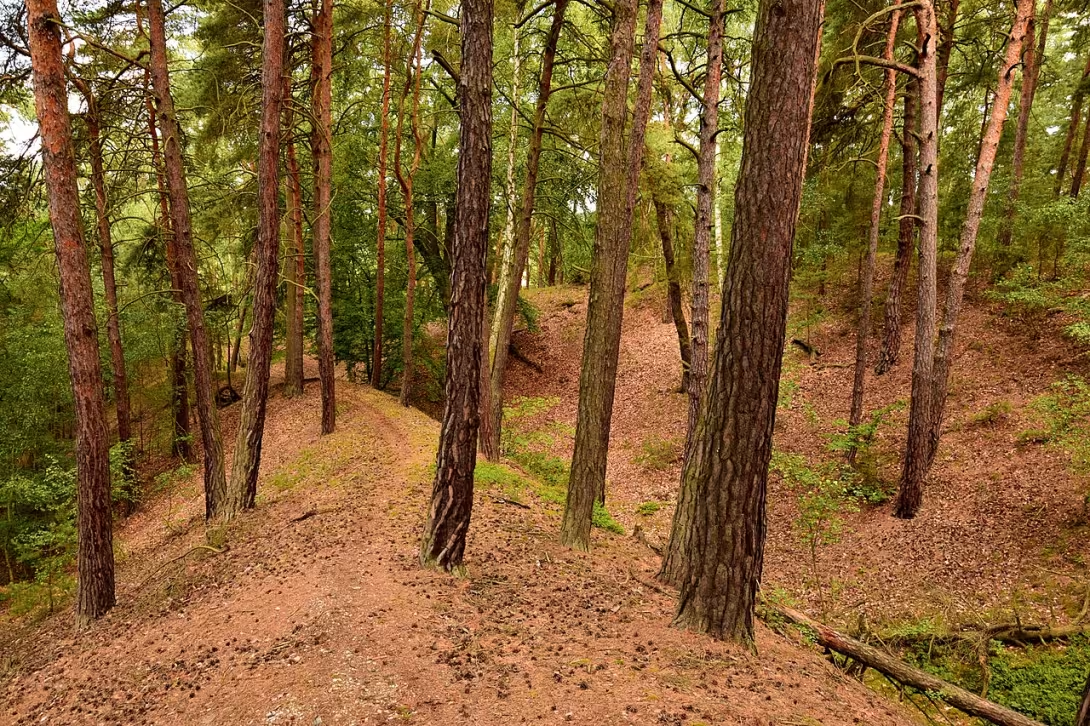
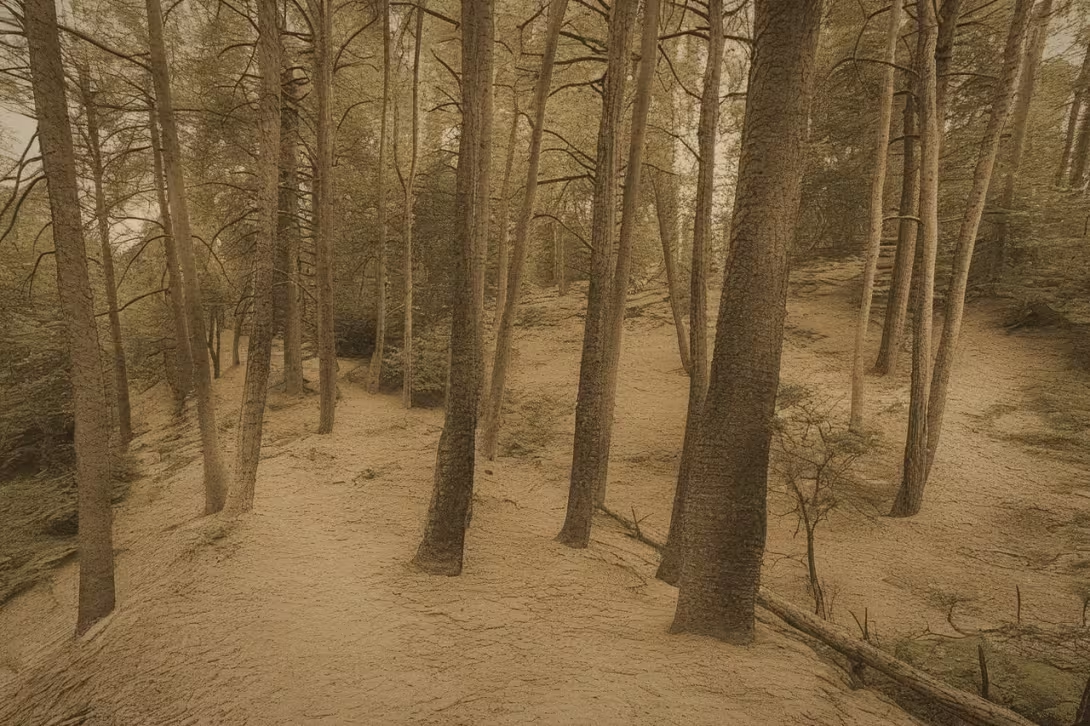
The historical appearance on the left is an AI-generated visualisation and serves as inspiration only.
Architectural development
Hlavačov was a transitional-type castle, characterized by wooden palisades and stone-paved areas. Its construction style suggests minimal use of stone, typical for early medieval fortifications in the region.
Historical events
The castle served as an administrative center for the Rokytenské region in the early 13th century.
It was likely abandoned by the end of the 13th century.
Points of interest
- Despite its abandonment by the late 13th century, Hlavačov's remnants suggest it once had a sophisticated administrative role in medieval Bohemia, serving as an early example of centralized governance under the Přemyslid dynasty.
- The castle’s connection to Křivoklát is shrouded in mystery; some historians propose that Hlavačov might have been the original site for what later became known as Křivoklát, hinting at a lost chapter of Bohemian history involving strategic relocations or expansions.
- Archaeological excavations in 1974 revealed Halstatt culture artifacts, indicating that the area was inhabited long before it became an administrative center, showcasing its historical layers from Iron Age settlements to medieval fortifications.
- The use of wooden palisades and minimal stone in Hlavačov's construction reflects a transitional architectural style unique to early Bohemian castles, highlighting resourcefulness and adaptation to local materials during the 13th century.
- Visitors today can explore the site's natural landscape, where remnants like ramparts and ditches provide insights into medieval military architecture and strategic planning, offering a tangible connection to the region’s past.
Guide
This guide is narrated by a synthetic voice generated by artificial intelligence.
Show guide text
This text was created by artificial intelligence and has not been editorially reviewed. It may contain inaccuracies.
North of Rakovník, more than a kilometer beyond the town, rises the elongated forested hill Hlavačov. At its end, at a height of around four hundred meters above sea level, the ramparts and ditches of a medieval royal castle have been preserved to this day. It lies in the cadastral territory of the municipality of Lužná and its remains are protected as a cultural monument. We do not know the castle's original name. From the middle of the thirteenth century, the Latin designation castellum vetus, meaning Old Castle, appears in sources.
The site was settled as far back as prehistoric times. During the older Iron Age, there stood a settlement of the Hallstatt culture. An archaeological excavation in nineteen seventy-four uncovered the remains of a palisade and an area paved with pebbles. The oldest pottery shards belong to the Bylanská culture from the eighth to the beginning of the sixth century before our era. Due to the unusual location and method of fortification, it is believed that this was not a fortified settlement, but a fortified manor.
In the Middle Ages, the surrounding area belonged to the Rokytná region, named after the Rokytná river, the later Rakovnický stream. It is already mentioned in charters from Vyšehrad from the first half of the twelfth century. Where the administrative stronghold of Rokytná stood, however, is not certain. The historian Renner allowed for the possibility of Hlavačov. Other scholars search for it near Senomaty at the confluence of the Rakovnický and Petrovický streams, in a place long called Na Hradišti, where, however, no fortifications were found. The historian Václav Kočka saw an extensive economic manor there. By the first half of the thirteenth century, in any case, the castle on Hlavačov held the administration of the region.
The castle apparently had a connection to the nearby Křivoklát. It probably arose in the twelfth century, at the latest at the beginning of the thirteenth century, thus even before the founding of Křivoklát. That was called Hrádek Křivoklát in the Middle Ages, perhaps in distinction from the older and much more extensive fortified settlement of Křivoklát, about which the chronicler Kosmas wrote at the beginning of the twelfth century. Its location is not known and it cannot be ruled out that it stood right on Hlavačov.
According to the archaeologist Tomáš Durdík, it was a castle of a transitional type, similar to the nearby Angerbach. It had timber and clay ramparts and half-timbered buildings, stone was used here only minimally. It belonged to the most extensive castles of its kind. Perhaps an early medieval fortified settlement already stood in its place. The castle probably ceased to exist in the second half of the thirteenth century.
Businesses nearby
Do you run a restaurant, accommodation, shop, museum, rental, wellness or other visitor service near this monument? Show yourself directly to the people heading to it — this is how they will see you in the app and on the web:
Nearby
Hlavačov is situated on a forested hilltop near Rakovník. The area features natural landscapes and remnants of medieval fortifications.
Visualizations and artistic views


The visualisations are generated by artificial intelligence and serve as inspiration.
Photos from the area
Real photos taken near the monument

Zdroj a licence jsou uvedeny u každého snímku.
Tips from visitors
No tips yet. Be the first!
Log in and add your tip.
Sources and literature
Photos: Petr Kinšt / CC BY-SA 4.0 — Wikimedia Commons. The author and licence also appear when you hover over the image.
Faktickým podkladem tohoto textu byl článek na Wikipedii, jehož autory jsou přispěvatelé Wikipedie. Článek je dostupný pod licencí CC BY-SA 4.0.
Location on the map





Příběhy a pověsti
Legendy, pověsti a příběhy spjaté s touto památkou
Fotografie návštěvníků
Zatím žádné fotografie. Buďte první, kdo přidá fotografii z návštěvy!
Log in a přidejte svou fotografii nebo hodnoťte.
Za ověřenou návštěvu v aplikaci získáte víc bodů — poznáme podle GPS, že jste na místě.
Reviews and comments