



Hraniční kámen (Ostrovačice) Border stone
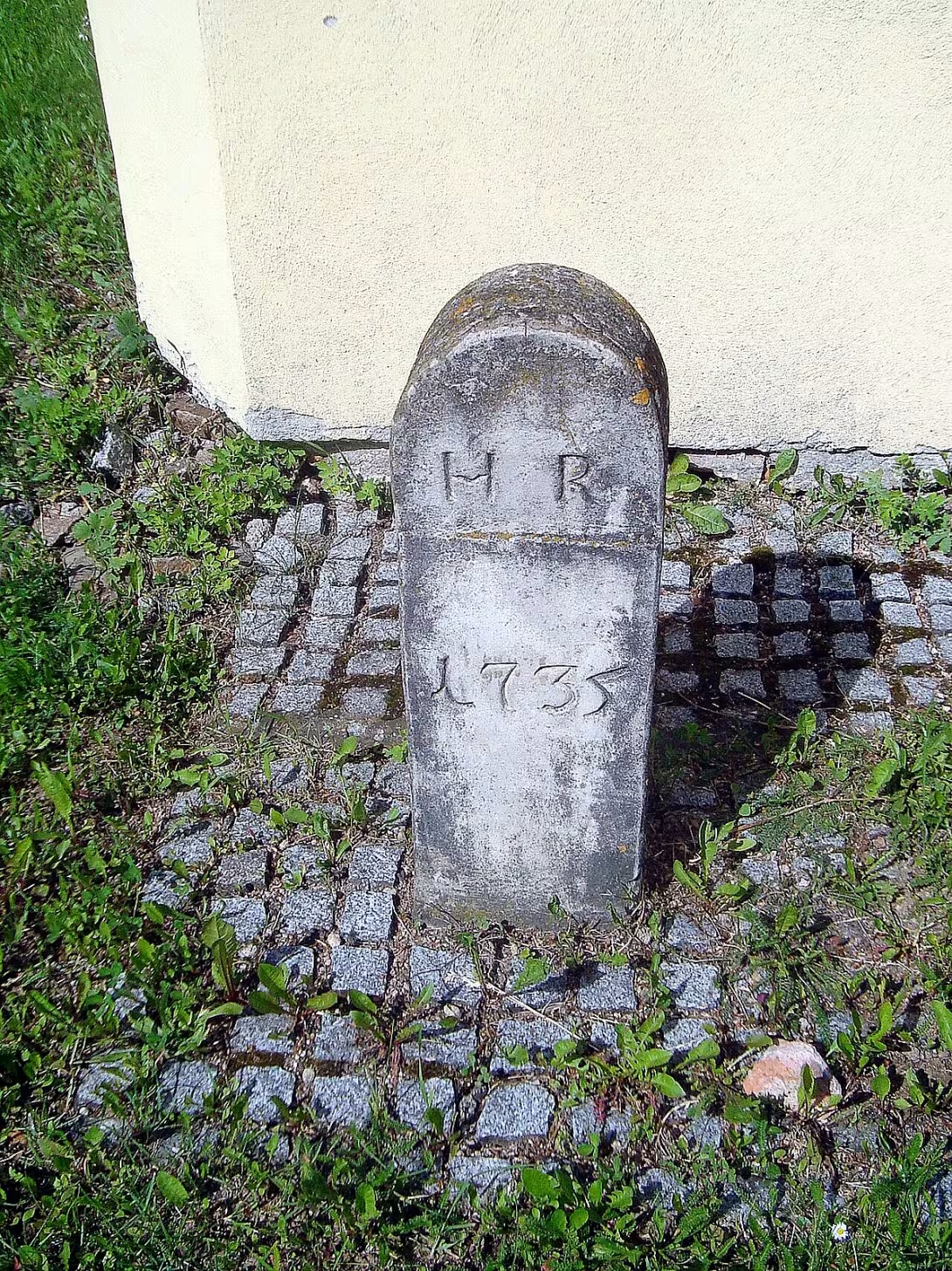
The border stone in the town Ostrovačice, located near the wall of the rectory near the church of St. John the Baptist and Wenceslas, is a cultural monument of the Czech Republic. This 18th-century object was used to set the border of the forest cadastral of the Rajadh benedictines. Its historical importance is that it represents the physical heritage of monastery land holdings and their management during the baroque era.
The creation of the border stone in 1735 was linked to the need to set the limits of the property of the Benedict monastery in Rajhrad. This stone was part of a wider effort to organise and manage land holdings, which was common at the time of baroque absolutism, when monastic orders sought to strengthen their economic foundations. In this era, the benedictines in Rajhrad played an important role in the management and development of local forests.
Architecturally, the boundary stone is flat rectangular, approx. 70 cm high with a semicircular upper part. It is located on a rectangular base and its surroundings are treated with granite cubes. This simple but solid design reflects the practical purpose of stone as the boundary of property.
The border stone was owned by the Rajadean benedictines over the years. These monasteries were an important part of local history and their management of forest land reflected the broader economic and religious dynamics of that time. Although specific events relating to this stone are not recorded in detail, its existence shows the long-term impact of the benedictines on the local landscape.
A key interest of the border stone is the very establishment of the forest cadastral boundary. This stone was not only a physical sign, but also symbolized the monastery's legal and administrative efforts to maintain its land holdings at a time when political and religious structures were changing.
Today, the border stone at the Ostrovacice centre is accessible to visitors. Its location at the church of St. John the Baptist and Wenceslas makes it an interesting location that offers insight into the history of local monasteries. By examining this stone, visitors can imagine the life and administration of the Rajadan benedictines in the 18th century.
The border stone is not only a monument but also a witness to history that reflects the complexity and variability of local land holdings. His visit offers a unique view of the past and calls for an examination of the historical context in which this object is located.
Historical milestones
- 1735
- The creation of stone for setting the boundaries of the forest cadastral
- 18th century
- Forest land management during baroque absolutism
- Present
- Protected cultural monument at its location
Architectural development
The stone is made of stone, approximately 70 cm tall and has a specific shape with a semi-circular end. Currently, its surroundings are supplemented by granite tiles.
Owners
Rajhrad benedictines (historically)
Points of interest
- The border stone is a cultural monument of the Czech Republic. - It was used to set the boundary of the forest cadastral of the Rahrad benedictors in the 18th century. - It was created in 1735 for the organisation and management of land holdings during the Baroque era. - Architectural is flat rectangular, approx. 70 cm high with half-circular upper part. - He symbolized the monastery's legal and administrative efforts to maintain his land holdings.
Guide
Show guide text
This text was created by artificial intelligence and has not been editorially reviewed. It may contain inaccuracies.
Welcome to Ostrovacice, a small town full of history and secrets. You are standing in front of one of the most famous monuments of this region - a border stone that witnessed a long past. This space will invite you to travel to the 18th century, where the forest cadastral boundaries were set.
This border stone, which stands at the facade of the rectory and near the church of St. John the Baptist and Wenceslas, was built in 1735. His mission was to set the boundaries of the forest cadastral of the Rahrad benedictors. It was a time of baroque absolutism when land and resource management played a key role in people's lives.
Look up at the flat rectangular shape of the stone. Its upper part is decorated with a semicircle, which gives him a unique and elegant impression. The stone stands on a rectangular footstool that fastens it, and the entire space around it is adjusted by granite plates. These details may remind you of the care and artistic standards of the time.
Although not known architects or specific personalities associated with its creation, the border stone represents important building elements of the time with its functionality and aesthetic impact. It served as a permanent record of borders, which was necessary for land management during the baroque absolutism.
The interesting thing is that this stone is not only a historical monument, but also symbolizes the importance of borders and their maintenance. It is a reminder of how issues of wealth and resource management have been addressed in the past.
Now that you've seen this memory, you might as well continue to explore Ostrovac. The city has many other attractions and stories waiting to be discovered. I hope this boundary stone has inspired you to think deeper about the history of this place.
Thank you for your visit and I wish you a lot of pleasure for other attractions that Ostrovačice offers.
Tips for visitors
The best time to visit the border stone in Ostrovacice is the spring and autumn season, when the weather is favourable and there are not so many people. This time of year offers a quieter atmosphere to explore historical sites.
When visiting, remember suitable clothes and protective sunglasses, especially during the summer. A map or mobile application for navigation around the surroundings can also be added.
The photography of the border stone is the most successful in sunny weather, when the building is well looked at. The best light offers morning and afternoon hours. Photographs can also be taken from nearby paths leading around the church.
There is a church of St. John the Baptist and Wenceslas in the vicinity of the border stone, which is suitable for viewing. The place also offers beautiful walks in the natural environment around the town.
Frequently asked questions
Can the monument be visited?
This is a structure in a public space that can usually be seen from outside free of charge. We have not verified that this particular one is freely accessible.
Where is the monument?
Location: Ostrovačice, Jihomoravský kraj. The map on this page shows the exact spot.
Why is the monument protected?
It is listed in the Central List of Cultural Monuments of the Czech Republic as a cultural monument (register no. 1000132430).
Businesses nearby
Do you run a restaurant, accommodation, shop, museum, rental, wellness or other visitor service near this monument? Show yourself directly to the people heading to it — this is how they will see you in the app and on the web:
Events nearby


Zdroj akcí: otevřená data měst a obcí ČR (Národní katalog otevřených dat) a kalendář akcí Národního památkového ústavu.
Nearby
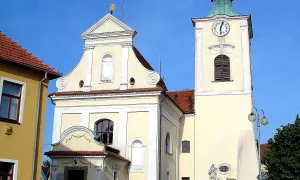
Kostel svatého Jana Křtitele a Václava v Ostrovačicích.
Accommodation nearby
Trips and activities nearby
Guided tours, tickets and activities nearby from GetYourGuide
Affiliate link: if you buy from the partner, we may receive a commission. The price for you does not change.
Search tours and activities →Themed route
Thematic cruise route from Ostrovacice
1.Hraniční kámen (Ostrovačice)
Type: Historical monument
Why is it worth a visit: This border stone is a symbolic place that marks the border between Bohemia and Moravia. It is an important historical element that resembles an ancient territorial division and is an ideal beginning to explore the region.
2. Church of St. John the Baptist and Wenceslas in Ostrovacice
Type: Religious object
Why is worth a visit: This church is an architectural pearl that attracts its historical significance and beautiful design. It's a place of calm and shelter where you can appreciate rich history and artistic details.
3. St. John the Baptist and Wenceslas Church
Type: Historical area
Why is worth a visit: The tank is an ideal place to relax and view the surrounding countryside. Here you can enjoy a quiet moment while looking at historical buildings and the natural environment.
4. Tower of St. John the Baptist and Wenceslas Church
Type: Architectural element
Why is it worth visiting: If the tower is accessible, it offers a unique perspective on the entire Ostrovačice. It's a great way to see the historical and present faces of the city.
5. Park at St. John the Baptist and Wenceslas church
Type: Green Zone
Why it is worth a visit: The park offers pleasant space for relaxation and walks. It's a place where you can relax your mind and appreciate the natural beauty around the church.
This route allows for deeper knowledge of the historical and cultural heritage of Ostrovacic, focusing on key places in the village.
Seasonal recommendations
Spring: During the spring season, the Boundstone in Ostrovacice is lit with sunlight, which emphasizes the details of the stone and surrounding nature. Flowers are beginning to bloom, giving the landscape a vivid color and smell. The atmosphere is calm and relaxed, ideal for relaxing on the green meadow. It is advisable to visit the memory in the early afternoon, when the temperature is pleasant and the crowds are minimal. It is recommended to wear clothes suitable for mild weather with the possibility of adding a layer in case of cold.
Summer: Summer is the time when the Boundstone gains life through long sunny days. Warm weather and green nature create ideal conditions for a long walk or picnic near the monument. The atmosphere is full of energy, but it can also be terrifying because of large crowds of tourists. The best time to visit is an early afternoon or early evening, when temperatures are tempered and fewer people are walking the surrounding paths. It is recommended to wear light clothes, protective sunglasses and plenty of drinking.
Autumn: In autumn the Border Stone in Ostrovice Melancholic beauty is acquired by dyeing leaves. The sun is less intense, giving the landscape a gentle and calm atmosphere. Due to colder weather, the crowd of tourists are significantly less than in the summer. The best time to visit is early afternoon, when the temperature is pleasant and the sun's rays illuminate the yellow and orange palette with leaves. It is recommended to wear layered clothing with the possibility to defer layers in case of warmer weather.
Winter: Winter visit to the Boundstone offers a calm and quiet atmosphere where the surrounding nature is covered with snow. Sun rays create beautiful shadows on the snowy landscape, giving the monument a unique view. The best time to visit is early afternoon, when the sun lights up the snow landscape. It is recommended to wear warm clothes, a protective coat and shoes suitable for walking on a freezing surface.
Visualizations and artistic views

The visualisations are generated by artificial intelligence and serve as inspiration.
Photos from the area
Real photos taken near the monument

Zdroj a licence jsou uvedeny u každého snímku.
Tips from visitors
No tips yet. Be the first!
Log in and add your tip.
Sources and literature
Photos: Dendrofil / CC BY-SA 3.0 — Wikimedia Commons. The author and licence also appear when you hover over the image.
Faktickým podkladem tohoto textu byl článek na Wikipedii, jehož autory jsou přispěvatelé Wikipedie. Článek je dostupný pod licencí CC BY-SA 4.0.
Location on the map


Příběhy a pověsti
Legendy, pověsti a příběhy spjaté s touto památkou
Fotografie návštěvníků
Zatím žádné fotografie. Buďte první, kdo přidá fotografii z návštěvy!
Log in a přidejte svou fotografii nebo hodnoťte.
Za ověřenou návštěvu v aplikaci získáte víc bodů — poznáme podle GPS, že jste na místě.
Reviews and comments