






Hřbitovní kaple (Dolní Poustevna) Chapel
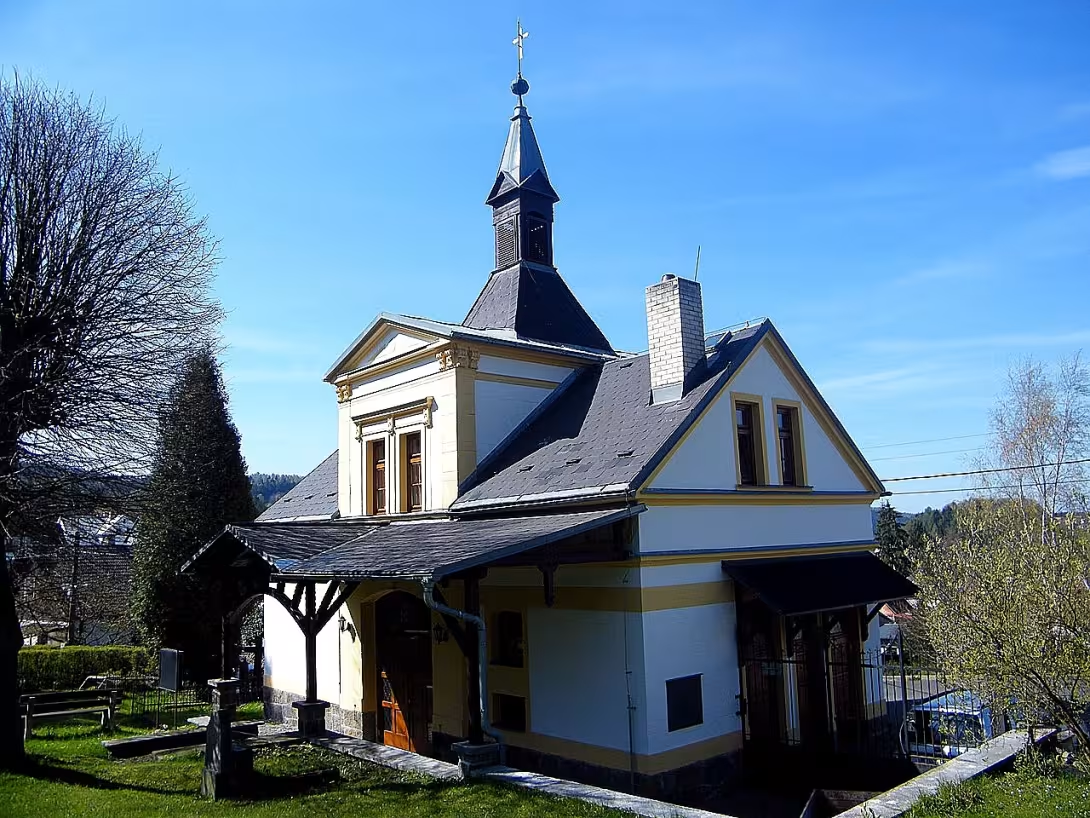
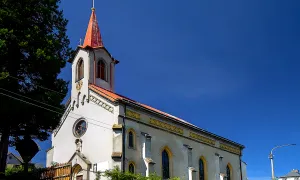
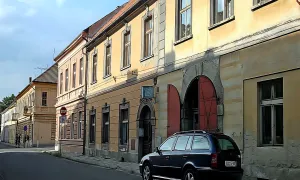
The Hřbitovní Kaple in Dolní Poustevna is a distinctive chapel that serves as both the entrance to the local cemetery and the residence for the caretaker. Built in 1876, this neo-Renaissance structure stands out due to its architectural resemblance to residential buildings from the late 19th and early 20th centuries. Notable features include an ornate risalit with a central inscription of 'Friedhof' (Cemetery) and a tower topped by a cross. The chapel's dual-color facade, adorned with decorative elements like cornices and pilasters, adds to its unique charm. This monument is significant not only for its architectural style but also as a historical site that has continuously served the community since its completion.
Constructed in 1876 on the lower edge of a newly established cemetery, two years after the cemetery itself was founded, the chapel reflects broader societal and cultural developments occurring in Bohemia during the late 19th century when it was part of the Austro-Hungarian Empire. This period saw industrial growth and architectural innovation, evident in the chapel’s design. While specific details about its architects or builders are not documented, the structure's completion marked a significant addition to the region's landscape.
Architecturally, the Hřbitovní Kaple exhibits characteristics typical of the neo-Renaissance style prevalent during its time. The building features a dual-color facade in white and yellow, enhanced by decorative elements such as cornices, pilasters, and lisenes. A prominent risalit with rich stucco decoration stands at the center of both the external and cemetery-facing sides, topped by an inscription that reads 'Friedhof.' The chapel's windows are segmentally finished on the ground floor and rectangular above, while its roof is covered with imitations of slate, and a slender tower rises from the central part of the roof, capped with a cross. Over the years, the chapel has undergone several renovations, including significant changes at the end of the 20th century when the central passageway was closed to expand the ceremonial room, and windows throughout were replaced.
Throughout its history, the Hřbitovní Kaple has seen various modifications that reflect both necessity and aesthetic evolution. During World War I, the original bell was removed, only to be replaced in 1921 with a new one. The chapel's continuous renovations have included updates to its structural elements such as windows, roof covering, and additional shelter on the cemetery side. These changes ensure that while the chapel retains its historical essence, it also meets contemporary needs.
The Hřbitovní Kaple has been an integral part of Dolní Poustevna’s community life since its completion in 1876. It has served as a ceremonial space for burials and other events at the cemetery, which itself was established on Ferdinandova výšina (416 m n.m.) in 1874. The chapel's role expanded beyond its initial purpose when it became the residence of the cemetery caretaker, further embedding it within the local community fabric.
Today, the Hřbitovní Kaple remains a functional and accessible site for visitors interested in exploring historical architecture and local heritage. Its continuous use since the late 19th century underscores its enduring significance to Dolní Poustevna. The chapel's unique design, coupled with its rich history of renovations and adaptations, makes it an intriguing destination for those keen on understanding regional architectural trends and cultural developments.
The Hřbitovní Kaple stands as a testament to the historical and architectural evolution of Dolní Poustevna. Its enduring presence offers visitors a glimpse into the past while continuing to serve its community in the present. For anyone interested in history, architecture, or simply seeking a serene place to reflect, this chapel is undoubtedly worth visiting.
Then and now
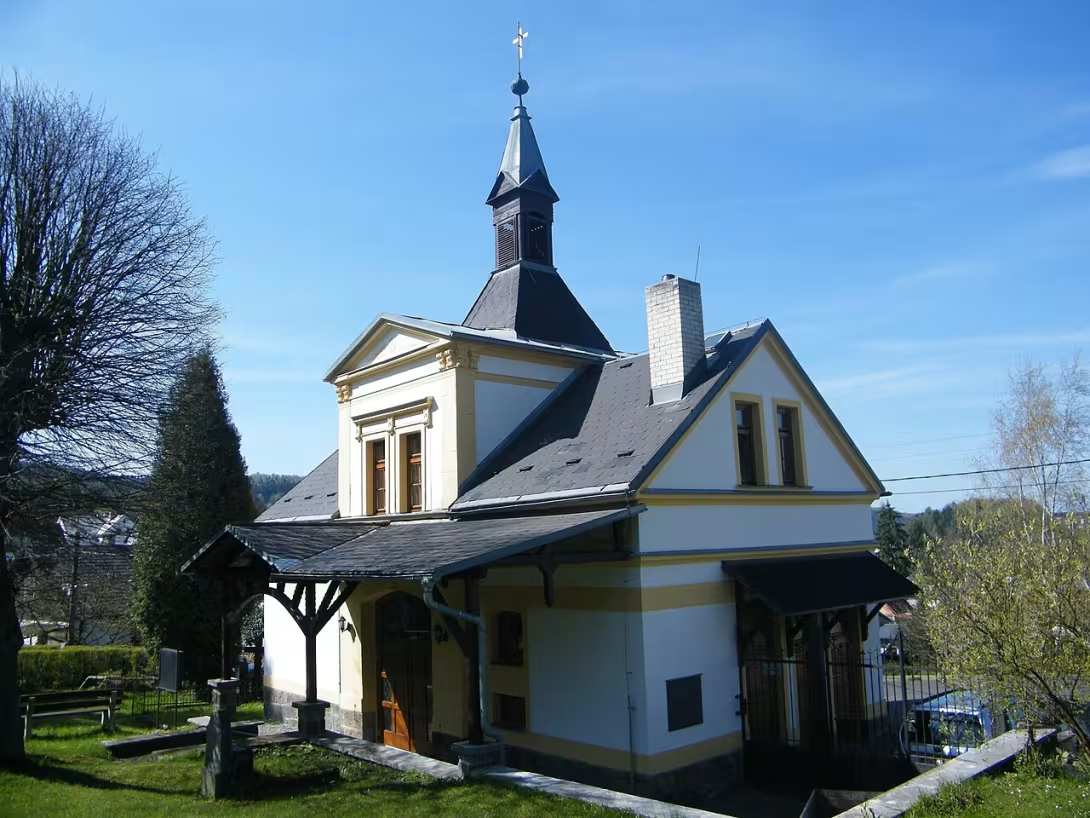
Drag the slider to compare how the landmark may have looked when it was built with the view today.
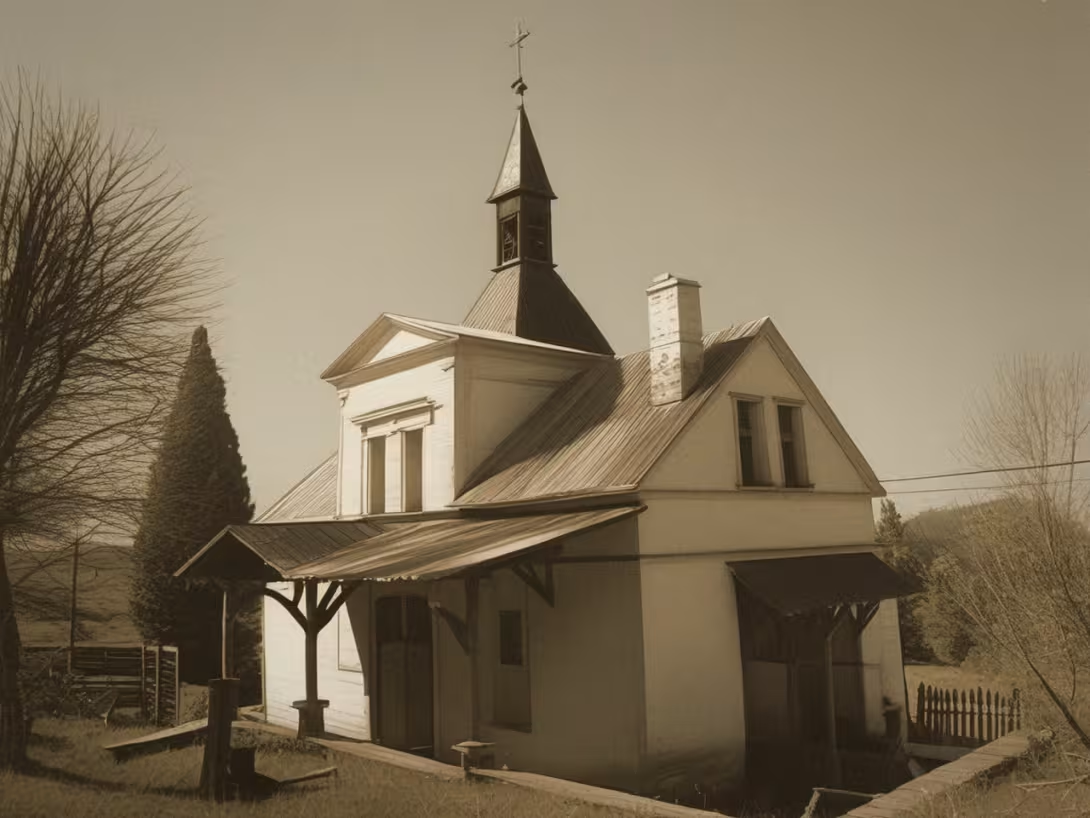
The historical appearance on the left is an AI-generated visualisation and serves as inspiration only.
Historical milestones
- 1876
- The chapel was completed and began serving its purpose.
- 1921
- A new bell was installed after the original was removed during World War I.
Architectural development
Since its completion in 1876, the chapel has undergone continuous renovations. Significant changes occurred at the end of the 20th century when the central passageway was closed to expand the ceremonial room, and windows throughout were replaced. The roof covering and a shelter on the cemetery side were also added during this period.
Historical events
The chapel was completed in 1876, two years after the establishment of a new cemetery.
During World War I, its original bell was removed and replaced with a new one in 1921.
Points of interest
- The Hřbitovní Kaple's dual-color facade is a distinctive feature that reflects the architectural trends of the late 19th century in Bohemia, blending residential and funerary architecture.
- During World War I, the chapel lost its original bell, which was replaced only in 1921 with a new one, marking an era of restoration amidst post-war recovery efforts.
Guide
This guide is narrated by a synthetic voice generated by artificial intelligence.
Show guide text
This text was created by artificial intelligence and has not been editorially reviewed. It may contain inaccuracies.
Welcome to the Hřbitovní Kaple in Dolní Poustevna, a truly unique chapel that stands as a testament to architectural innovation and historical significance. As you stand before this remarkable structure, take a moment to absorb your first impressions. The chapel's facade is strikingly reminiscent of residential buildings from the late 19th and early 20th centuries—a time when architecture began exploring new forms and expressions.
The Hřbitovní Kaple was completed in 1876, marking its beginning as a place of solace and reflection for those nearby. Its creation during this period reflects an era where architectural styles were blending residential aesthetics with funerary purposes, a trend quite prevalent in Bohemia at the time.
As you take in the chapel's exterior, notice the ornate risalit that draws your eye to its central inscription, 'Friedhof' (Cemetery). This feature not only serves as an artistic focal point but also connects visitors with the chapel’s purpose. The tower, crowned by a cross, adds a sense of timelessness and reverence to the structure.
The facade itself is a study in contrasts, featuring a dual-color scheme of white and yellow that beautifully complements its decorative elements like cornices and pilasters. These details are not just ornamental; they reflect the architectural trends of their era, blending functionality with aesthetic appeal.
While there may be no famous architects or historical figures directly tied to this chapel, it carries stories within its walls—stories of those who found peace here and the community that gathered around it. The chapel's history is further enriched by its resilience; during World War I, it lost its original bell—a symbol of continuity and tradition. It wasn't until 1921 that a new bell was installed, marking a rebirth and continuation of its role in the community.
One intriguing aspect of the Hřbitovní Kaple is its dual-color facade. This distinctive feature not only highlights the chapel’s architectural uniqueness but also invites reflection on how architecture can serve as a bridge between different eras and functions—blending residential charm with sacred purpose.
As you conclude your visit to this historic site, I invite you to continue exploring Dolní Poustevna, letting its stories and beauty inspire you. Thank you for joining me in experiencing the Hřbitovní Kaple—a place where history, architecture, and community come together in harmony. Safe travels as you explore more of what Ústecký kraj has to offer.
Businesses nearby
Do you run a restaurant, accommodation, shop, museum, rental, wellness or other visitor service near this monument? Show yourself directly to the people heading to it — this is how they will see you in the app and on the web:
Accommodation nearby
Themed route
Tematická výletní trasa: Hřbitovní kaple (Dolní Poustevna) a okolí
1. Hřbitovní Kaple (Dolní Poustevna) *Typ:* Historická památka *Proč stojí za návštěvu:* Tato barokní kaple je jednou z nejstarších a nejzajímavějších architektonických památek v oblasti Dolní Poustevny. Je známá svými bohatými historickými prvky a působivým interiérem, který přitahuje návštěvníky zasvěcené do dějin české architektury.
2. Kostel Nanebevzetí Panny Marie (Dolní Poustevna) *Typ:* Církevní stavba *Proč stojí za návštěvu:* Tento kostel je dalším klíčovým historickým a duchovním centrem obce. Jeho architektura a umělecké prvky, včetně interiérů, nabízejí pohled na bohatou církevní tradici regionu.
3. Dolní Poustevna - Historický centrum obce *Typ:* Kulturní a historické procházky *Proč stojí za návštěvu:* Procházka po ulicích Dolní Poustevny nabídne pohled na typickou venkovskou architekturu, s historickými domy a budovami. Je to skvělý způsob, jak se dozvědět více o místním životě a dějinách obce.
4. Památník válečných obětí (Dolní Poustevna) *Typ:* Památník *Proč stojí za návštěvu:* Tento památník je významnou místností pro uctívání a vzpomínku na oběti válek. Poskytuje cenné poznatky o historických událostech, které formovaly region.
Tato trasa nabízí návštěvníkům komplexní pohled na kulturní a historický význam obce Dolní Poustevna.
Seasonal recommendations
Spring: The arrival of spring at Dolní Poustevna's Hřbitovní Kaple brings a gentle awakening of nature, with the surrounding landscape adorned in fresh blooms and vibrant greenery. This season offers an enchanting atmosphere as light filters through budding trees, casting dappled shadows on the chapel’s historic walls. Visitors are advised to wear comfortable walking shoes for exploring the rejuvenated paths and bring along a camera to capture the picturesque scenery. Although crowds are generally moderate, arriving early can provide a more tranquil experience.
Summer: Summer at Dolní Poustevna's Hřbitovní Kaple is characterized by long days filled with warm sunlight that enhances the chapel’s serene beauty. The lush surroundings create an ideal backdrop for leisurely strolls and picnics in the verdant landscape. This period often sees increased visitor numbers, so planning a visit during off-peak hours or weekdays can help avoid larger crowds. Dressing in light clothing is recommended to stay comfortable in the summer heat.
Autumn: As autumn sets in, Dolní Poustevna’s Hřbitovní Kaple becomes enveloped in a tapestry of warm hues with leaves turning shades of amber and gold. The crisp air adds a layer of tranquility, making it an inviting time for reflection amidst the chapel's historic charm. While visitor numbers may decrease compared to summer, taking advantage of this quieter season can offer a more intimate experience. Layered clothing is advisable to accommodate the cooler temperatures.
Winter: Winter transforms Dolní Poustevna’s Hřbitovní Kaple into a serene and mystical site, with snow often blanketing the landscape in a pristine white. The chapel’s architecture takes on an ethereal quality under the soft glow of winter light, creating a peaceful atmosphere perfect for contemplation. Visitors should be prepared for shorter opening hours and ensure they wear warm clothing to fully enjoy this quiet season. Arriving early can help avoid any potential closures due to inclement weather.
Visualizations and artistic views


The visualisations are generated by artificial intelligence and serve as inspiration.
Photos from the area
Real photos taken near the monument


Zdroj a licence jsou uvedeny u každého snímku.
Atmosphere of the place
This atmospheric visualisation of the place and period was generated by artificial intelligence. It is not real footage of the location.
Tips from visitors
No tips yet. Be the first!
Log in and add your tip.
Sources and literature
Fotografie: Gumideck / CC BY-SA 4.0 — Wikimedia Commons. The author and licence also appear when you hover over the image.
Faktickým podkladem tohoto textu byl článek na Wikipedii, jehož autory jsou přispěvatelé Wikipedie. Článek je dostupný pod licencí CC BY-SA 4.0.
Location on the map
Příběhy a pověsti
Legendy, pověsti a příběhy spjaté s touto památkou

Fotografie návštěvníků
Zatím žádné fotografie. Buďte první, kdo přidá fotografii z návštěvy!
Přihlaste se a přidejte svou fotografii nebo hodnoťte.
Za ověřenou návštěvu v aplikaci získáte víc bodů — poznáme podle GPS, že jste na místě.
Reviews and comments