



Hřbitovní kaple (Lobendava) Chapel
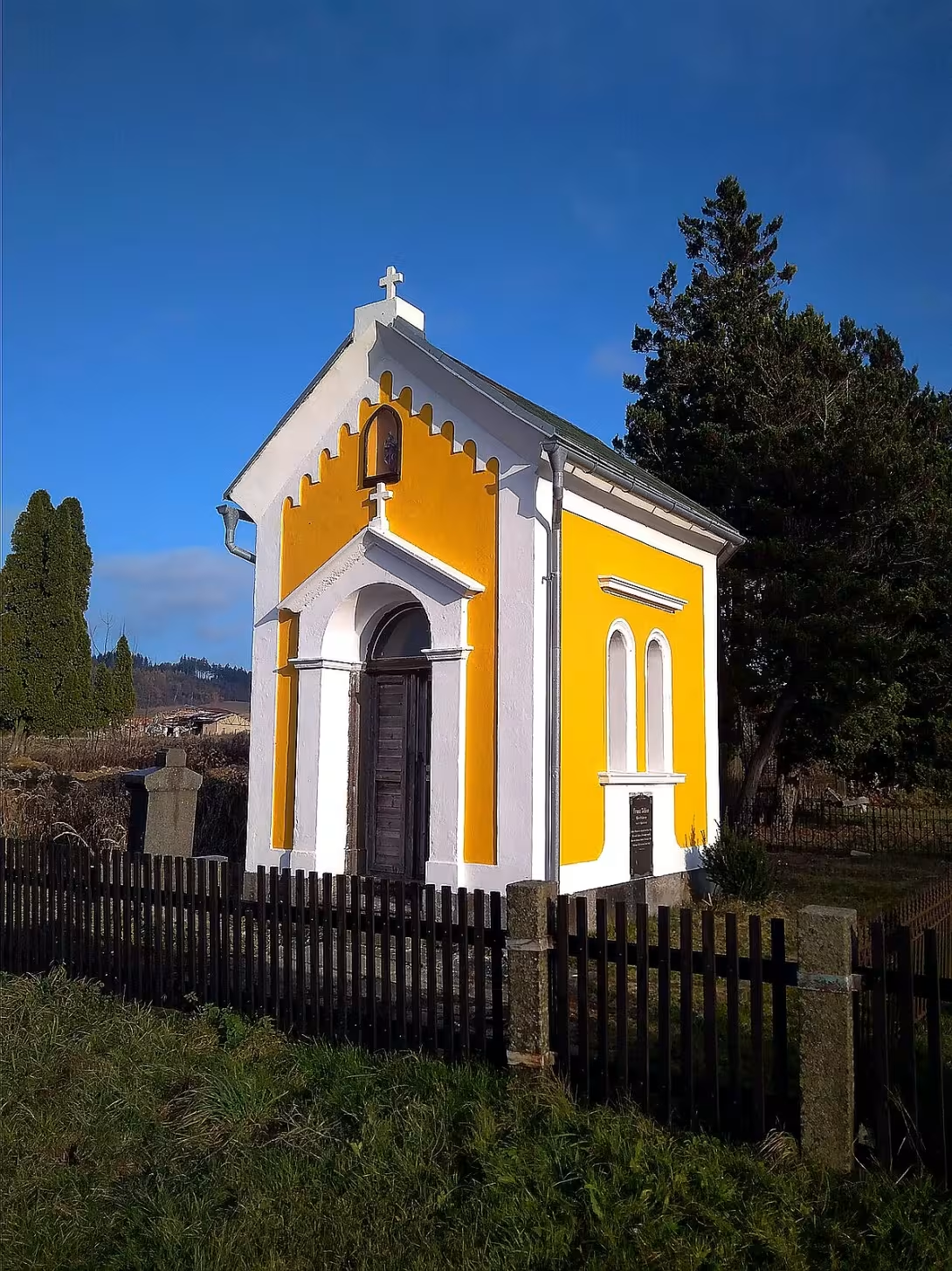
The cemetery chapel in Lobendava is a new Romanesque building dating back to 1874. It was built simultaneously with the creation of a new cemetery and its long history reflects not only architectural elements, but also its fate during the twentieth century.
The chapel is located in a normal place in the landscape - in a local cemetery which the village Lobendava owns since its inception. In contrast to the vast part of its surroundings, it has basically preserved its original form, with a single distinctive treatment: the headstone of the head teacher Franz Schier from 1876, placed in the south wall. Until the beginning of the twenty-first century, the construction changes slowly, but gradually it is subject to the destructive effect of time.
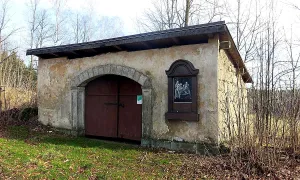
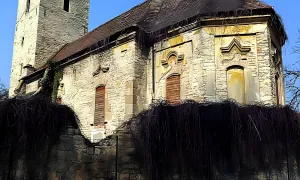
Architecturally, the chapel is built in New Romanesque style. Its rectangular plan is triangular and the facade is dominated by a stucco portal with a ledge and cross. The facade is decorated with lizenas, which move in the shield into decorative arches. In the middle of the shield is a glass niche with a polychrome statue of Madonna. The side walls are divided by the Lizene frames and pairs of joined windows with simple arches; a small circular window is then placed in the rear wall. The inside of the chapel is glazed, presbytery decorates pilasters with decorative heads. The roof is now covered with green asphalt shingles, while the facade after the last repairs combines white and yellow.
After World War II, circumstances changed significantly. The number of inhabitants of Lobendava and the surrounding North has fallen substantially, with which also the number of funeral ceremonies. The chapel gradually lost its interior equipment and lost over the years. The situation became critical - it threatened its complete demise. The first major intervention came in the early 21st century, when the leaky roof and degraded plaster were repaired. A more comprehensive reconstruction of the external plaster was carried out in October and November 2020, which gave the construction a suitable look.
Today, the chapel has no official special status. It is not listed in the property register and is not protected as a cultural monument. The mobile space in its interior is completely missing; In the windows, however, the polychrome Madonna is still mirrored in her nobodies. The visitor will not find here great drama, rather a fine melancholy place where life and death met for decades. The chapel resembles a simple but dignified face of the 19th century, when such structures were created in every larger village as a natural part of their life and memory.
Then and now
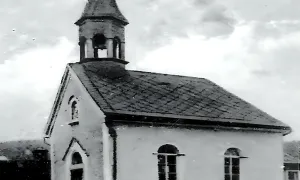
Drag the slider to compare how the landmark may have looked when it was built with the view today.
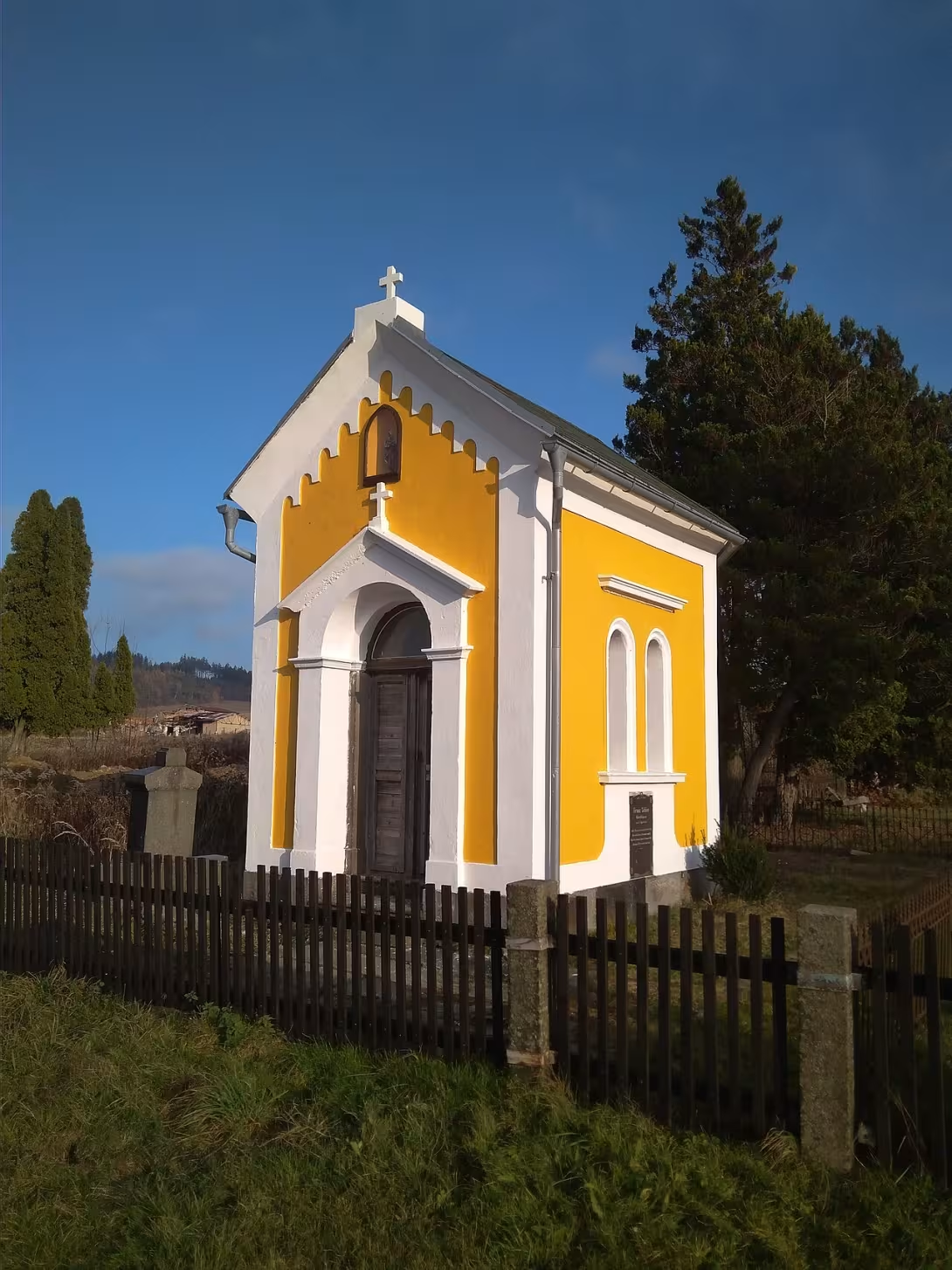
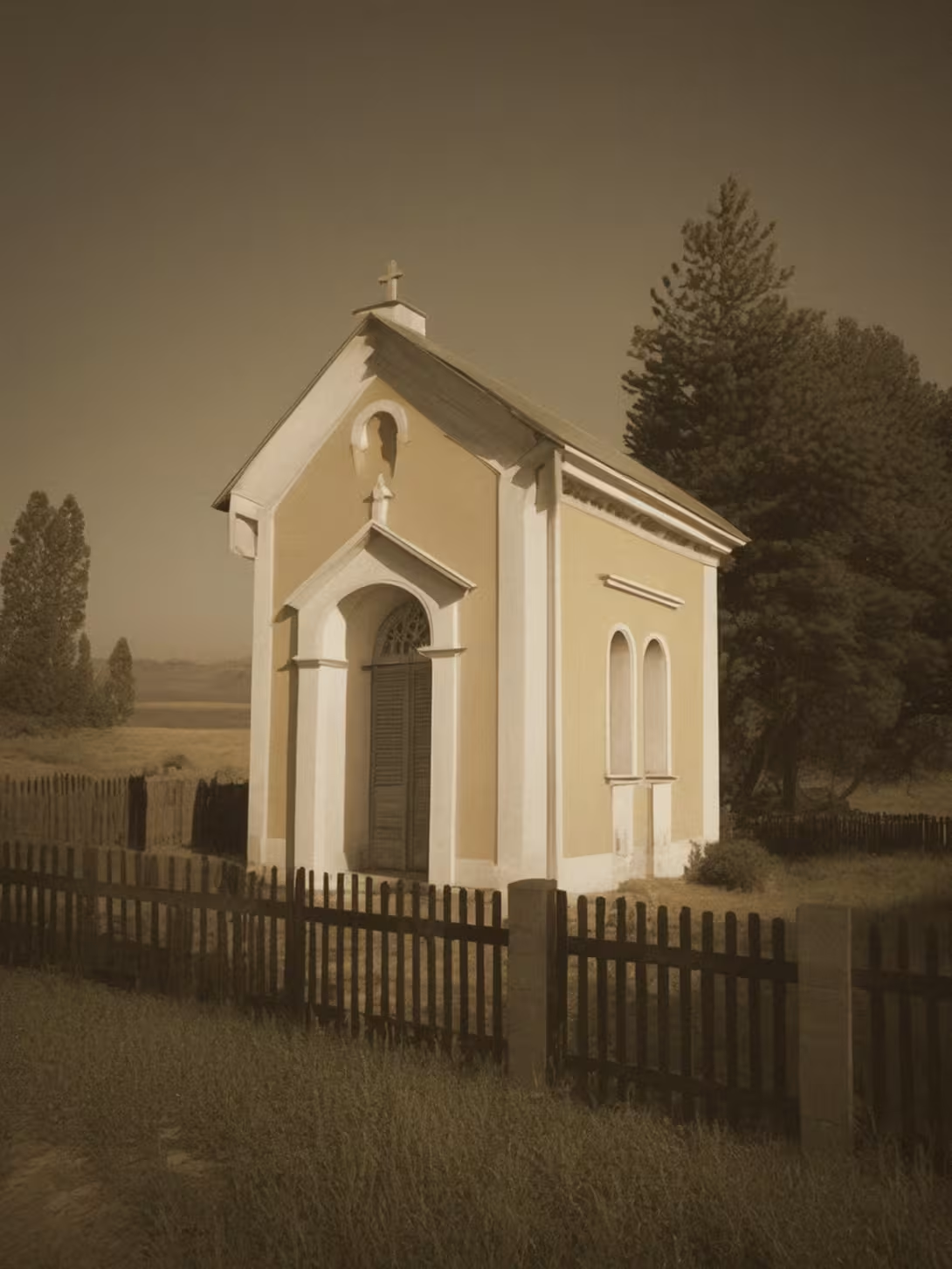
The historical appearance on the left is an AI-generated visualisation and serves as inspiration only.
Historical milestones
- 1874
- Built together with the creation of a new cemetery in Lobendava; The chapel was built in a new Romanesque style without further modifications.
- After 1945
- The chapel has ceased to be used because of the decline in population and funeral ceremonies; She lost her interior equipment and started to lose it.
- 2000-2001
- The roof and plaster were repaired for material degradation.
- 20
- Total reconstruction of external plaster facade.
Architectural development
The chapel was built in the New Romanesque style in 1874 without other significant reconstructions. The facade combines white and yellow, the roof covers green asphalt shingle. The inner walls of the presbytery are decorated with Pilasters with decorative heads, the ceiling is arched. The wooden door is original, but it's heavily worn.
Historical events
The foundation of the cemetery and chapel in 1874; gradual neglect and loss of internal equipment after World War II; the first repair of the roof and plaster at the beginning of the 21st century; reconstruction of the facade in October and November 2020.
Owners
Municipality of Lobendava
Points of interest
- The chapel was built in 1874 at the same time as a new cemetery in Lobendava.
- In the south wall of the chapel is planted the headstone of Chief Teacher Franz Schier from 1876.
- The chapel is a Neo-Romanesque building with a rectangular ground plan with a triangular finish and a shield decorated with lizenas and an arc feature.
- In the interior of the chapel is a glass niche with polychrome statue of Madonna, which has been preserved to this day.
- After World War II, the chapel gradually lost its interior equipment and threatened its complete demise.
Guide
This guide is narrated by a synthetic voice generated by artificial intelligence.
Show guide text
This text was created by artificial intelligence and has not been editorially reviewed. It may contain inaccuracies.
On the communal cemetery in Lobendava stands a small Neo-Romanesque chapel. It was built in 1874, when the village was establishing a new cemetery. At the same time, new cemeteries were being created in the surrounding area.
The chapel has remained virtually unchanged since then, and therefore has been preserved in its original form. The only later modification is a tombstone inserted into the south wall. After the Second World War, it ceased to be used. One of the reasons was that Lobendava as well as the neighboring Severní experienced a significant decline in population, and thus in funeral ceremonies. The chapel gradually lost its interior fittings and deteriorated so much that its destruction was imminent. At the beginning of the twenty-first century, it received a repaired roof, through which water had been leaking, and restored plaster. In the autumn of 2020, the exterior plaster underwent a complete reconstruction. The chapel and cemetery belong to the village. The building is not registered in the cadastre of real estate and is not protected as a monument.
The chapel has a rectangular floor plan, which is closed in three-sided fashion at the end. The facade is decorated with a stucco portal topped with a cornice and a cross. Along the sides run pilasters, that is shallow vertical strips in the wall, which transition into arched details in the gable. In the middle of the gable is a glazed niche with a colored statue of the Madonna. At the top of the gable stands a cross on a concrete base. The wooden doors are not original and are considerably worn.
The side walls are divided by pilaster frames and pairs of combined windows with simple arches and cornices above and below the windows. Below the windows of the south wall is set a tombstone of the head teacher Franz Schier from 1876. In the rear wall is a small circular window. The facade is white and yellow after the recent reconstruction and the roof is covered with green asphalt shingles. Inside, the chapel has a vaulted ceiling. The walls of the presbytery are decorated with pilasters with ornamental capitals, which are mass-produced and assembled. No furniture has been preserved in the chapel.
The cemetery is surrounded by a wooden fence with stone posts. Besides the chapel, it includes the caretaker's house with number 297, which today serves as a storage room and morgue. Since the end of the Second World War, only part of the cemetery has been in use. The left side is empty and unmaintained. In the maintained part stands a monument to soldiers of the Second Polish Army who fell during the liberation of the village in May 1945.
Tips for visitors
The best time to visit the cemetery chapel in Lobendava is in the spring or autumn when the weather is pleasant and the chapel is lit with natural light. In summer it can be hot in the cemetery and in winter some roads can be frozen. The chapel is typical of its peaceful and sacred environment, which is the most striking in sunny weather, when the details of the New Romanesque architecture are displayed.
The memory can be reached by car or public transport. The chapel is located right by the cemetery, so there is no need for a long walk.
When visiting, wear comfortable clothes and shoes because the cemetery is built on uneven terrain. It is also recommended to take a small umbrella or sunglasses with you because the weather can be unpredictable. If you want to photograph, don't forget the quality camera or smartphone with a good camera because the chapel offers beautiful photo scenes.
The best places for photography are the entrance part of the chapel and its interior, where there are historical tombstones and monuments. The most suitable light is in the morning or sunset, when the light falls directly on the facade of the chapel and creates interesting shadows. In the interior it is advisable to photograph in natural light to capture details of painting and architecture.
Around the chapel is worth visiting the cemetery in Lobendava, which is part of the monument. The house of Administrator No. 297 and the memorial to the soldiers of the 2nd Polish army from 1945 is located here. These places are interesting for the history and architecture of the region. If you have more time, you can visit other interesting places nearby that are within 30 minutes drive.
For families with children a visit to the cemetery chapel is appropriate because children can explore historical tombstones and monuments as small archaeologists. You can explain the meaning of individual symbols and tell stories associated with local tombstones. Children can also see the house of the administrator, which can be interesting to them as a small historical building.
Frequently asked questions
Can the monument be visited?
Religious buildings are usually open mainly during services; at other times a visit is normally arranged with the parish or the operator. We have not verified specific times.
Where is the monument?
Location: Lobendava, Ústecký kraj. The map on this page shows the exact spot.
For kids
Imagine going back 152 years, to the small village Lobendava, where today there is a beautiful cemetery chapel. But things looked different back then. The village was much smaller and quieter, people living in peace and quiet. The chapel wasn't here yet, but people had other ways of remembering the dead.
It was like a game where the kids played. The village was full of life, full of smiles and joy. People gathered in markets, shared fruit and vegetables, sang songs and danced. And when someone died, people took a moment to remember him.
Businesses nearby
Do you run a restaurant, accommodation, shop, museum, rental, wellness or other visitor service near this monument? Show yourself directly to the people heading to it — this is how they will see you in the app and on the web:
Accommodation nearby
Themed route
Thematic cruise route: cemetery chapel and monuments of Lobendava
1. Cemetery Chapel * Type: * Sacral building, historical monument. * Why visit? * The unique chapel in the cemetery, built in the 19th century, served as the final resting place of the locals. Its architecture and location in a quiet environment offers a peaceful atmosphere for reflection.
2. The cemetery in Lobendava * Type: * Historical cemetery, cultural monument. * Why visit? * Founded in 1874, it is bounded by a wooden fence with stone columns, which provides the place with a rustic charm. The house of the administrator (no. 297) and the old tombstones reveal the rich history of the village.
3. Memorial to the soldiers of the 2nd Polish Army * Type: * Military memorial, symbol of dedication. * Why visit? * The monument reminds Polish soldiers who fell in liberating Lobendava in 1945. Its location in the cemetery links local history to the international heritage of World War II.
Seasonal recommendations
Spring In the spring months, the cemetery chapel in Lobendava is surrounded by fine light of dawn, where the sun's rays intersect between awakened trees and create fine shadows on the stone walls of the chapel. Nature awakens to life - the first flowers on the graves, the green lawn and the roar of leaves in the mild wind give the place a peaceful, meditative atmosphere. It is an ideal time to visit where the chapel appears to be a hiding place from the everyday rush, while the surrounding landscape offers pleasant walks between old tombstones. It is recommended to visit early in the morning when the air is clean and warm, and avoid rainy days that may limit the availability of some parts of the cemetery. Light clothing with a waterproof layer is sufficient, but cold wounds may occur in March and April, so it is advisable to carry a sweater.
Summer In the summer months, especially in July and August, the cemetery chapel will turn into a place where sunlight is reflected from white tombstones and creates sharp contrasts with dark wood and greenery. The warm afternoon and long days offer an opportunity to clear the mind in a quiet environment, but also require caution - in the noon hours there may be a strong sun in unplanted places of the cemetery. The best time to visit is early morning or late afternoon when the chapel is lit with golden light and the crowds are minimally lit. Light, breathable clothes, hat and plenty of water are recommended as temperatures may exceed 30 ° C in the main summer season. The shade offers the surrounding trees, but some roads may be unpleasantly heated in the heat, so it is advisable to have shoes with good support when you take them.
Autumn Autumn brings golden and red colors of deciduous leaves to Lobendava, which are placed in the cemetery chapel as natural decorations and create a melancholy but beautiful atmosphere. The colder air and short days give the place a more mysterious feel, especially in October and November, when the sun boils down and the chapel is lit with soft, scattered light. In Advent Time, the cemetery appears to be a place of calm and reflection, ideal for those seeking escape from Christmas preparations. It is recommended to visit the chapel in the morning when the air is still clean, and put on layered clothing - temperatures range around 10- 15 ° C, but evenings may be cold. Shoes with good grip are suitable for possible leaf fall, which can be slippery.
Winter Winter Lobendava offers a unique atmosphere where the snow cover turns the cemetery chapel into a fairy tale scenery lit by pale winter light. The chapel, surrounded by a white landscape, receives silver shine, while the freezing air and silence give the place a sacred impression. Hot, laminated clothing, gloves, caps and waterproof shoes are recommended as temperatures often fall below freezing. Due to the possible freezing of roads, it is necessary to be careful when moving, but it is this winter that creates a unique, almost magical atmosphere worth experiencing.
Visualizations and artistic views


The visualisations are generated by artificial intelligence and serve as inspiration.
Photos from the area
Real photos taken near the monument


Zdroj a licence jsou uvedeny u každého snímku.
Atmosphere of the place
This atmospheric visualisation of the place and period was generated by artificial intelligence. It is not real footage of the location.
Tips from visitors
No tips yet. Be the first!
Log in and add your tip.
Sources and literature
Photos: Gumideck / CC BY-SA 4.0 — Wikimedia Commons. The author and licence also appear when you hover over the image.
Faktickým podkladem tohoto textu byl článek na Wikipedii, jehož autory jsou přispěvatelé Wikipedie. Článek je dostupný pod licencí CC BY-SA 4.0.
Location on the map
Příběhy a pověsti
Legendy, pověsti a příběhy spjaté s touto památkou
Fotografie návštěvníků
Zatím žádné fotografie. Buďte první, kdo přidá fotografii z návštěvy!
Log in a přidejte svou fotografii nebo hodnoťte.
Za ověřenou návštěvu v aplikaci získáte víc bodů — poznáme podle GPS, že jste na místě.
Reviews and comments