



kaple Anděla Strážce (Lobendava) Chapel
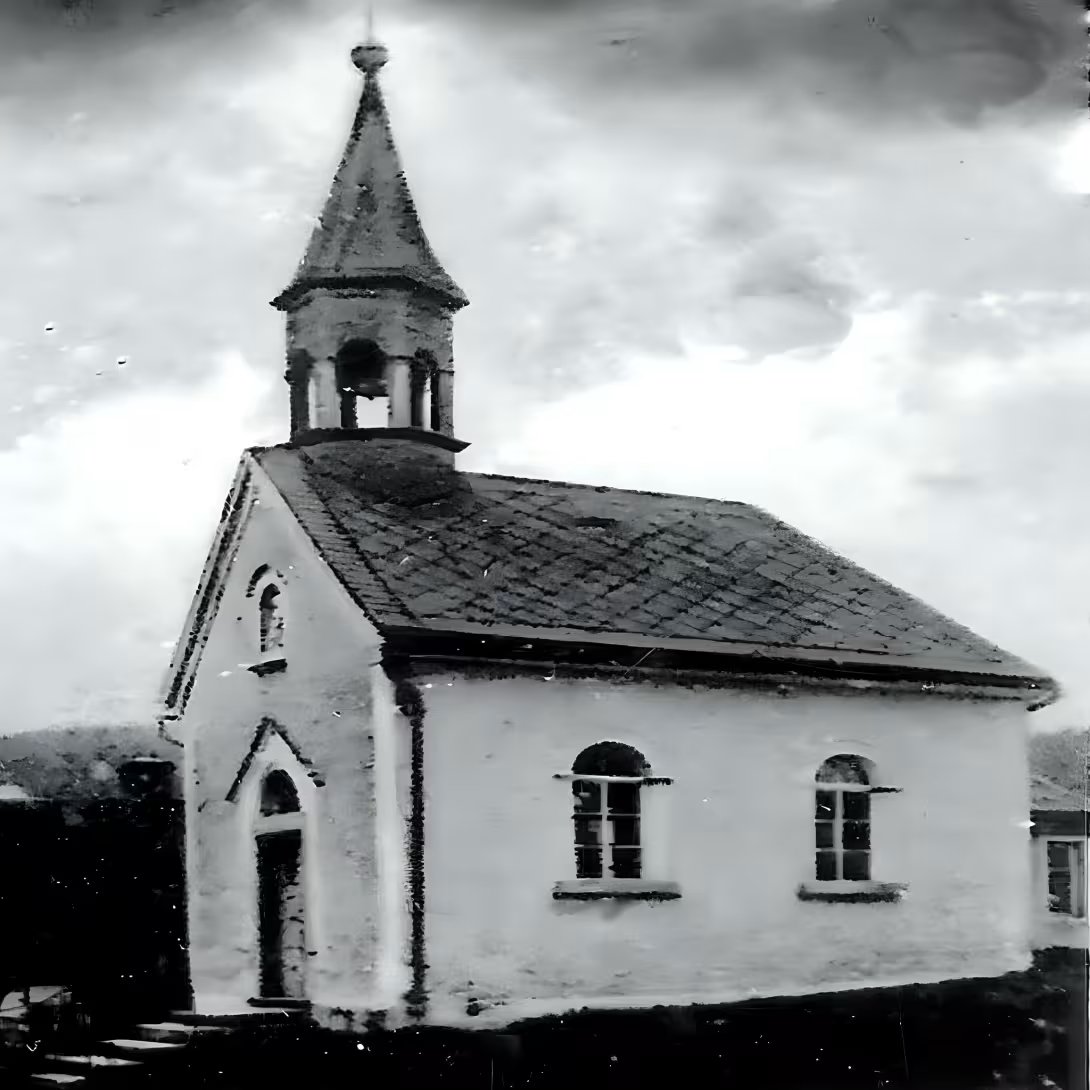
Objekt se nedochoval — na místě dnes nestojí. Následující text popisuje jeho historii, ne současnou návštěvu.
The Chapel of the Guardian Angel, known as Kaple Anděla Strážce in Czech or Schutzengelkapelle in German, is a historical monument located in the former village of Severní within Lobendava, Ústecký kraj. Built between 1868 and 1869 with funds from the local association of Easter singers, this chapel served as a unique sacred structure for religious observances until its demolition in the late 1950s. Its significance lies not only in its architectural simplicity but also in its role within the community's spiritual life.
The chapel replaced an earlier wooden bell tower at Severní's northern end, which was then a separate village. The construction, completed between 1868 and 1869, reflected the community's dedication to maintaining religious traditions during a period when Bohemia was part of the Austro-Hungarian Empire—a time marked by both traditional practices and emerging modern influences.
Architecturally, the Chapel of the Guardian Angel features an oblong floor plan with a modest facade lacking distinctive elements. Its walls include two arched windows on each side, while the entrance boasts double-winged doors complemented by a semicircular window. Above the entrance is a small niche containing a statue of the Virgin Mary. The chapel's roof is half-barrel vaulted, covered in tiles, and topped with a hexagonal belfry that housed a steel bell from 1918.
Throughout its history, the chapel was maintained until the end of World War II. It served as a site for ringing bells during prayer services and announcing deaths within the village. Regular religious services were held here once every two weeks, while parishioners attended weekly mass at the Navštívení Panny Marie church in Lobendava. However, after World War II, the chapel began to deteriorate and was eventually demolished along with surrounding buildings in the late 1950s.
Today, the site where the Chapel of the Guardian Angel once stood is registered as non-arable land within the local property registry, owned by the municipality of Lobendava. While the chapel itself no longer exists, two small-leaved lindens that once adorned its entrance have survived the demolition and continue to mark the location.
Visiting the site today offers a glimpse into the past, providing insight into the community's historical religious practices and architectural heritage. Although the chapel is gone, its legacy endures through local history and the surviving linden trees, inviting visitors to reflect on the cultural and spiritual life of Lobendava's former village of Severní.
Then and now
Drag the slider to compare how the landmark may have looked when it was built with the view today.
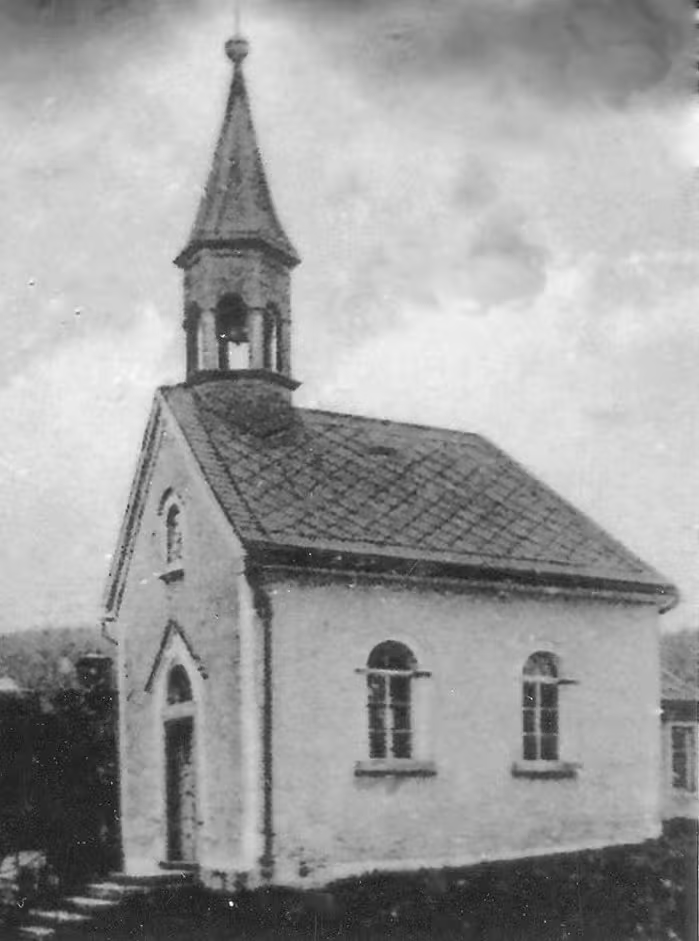
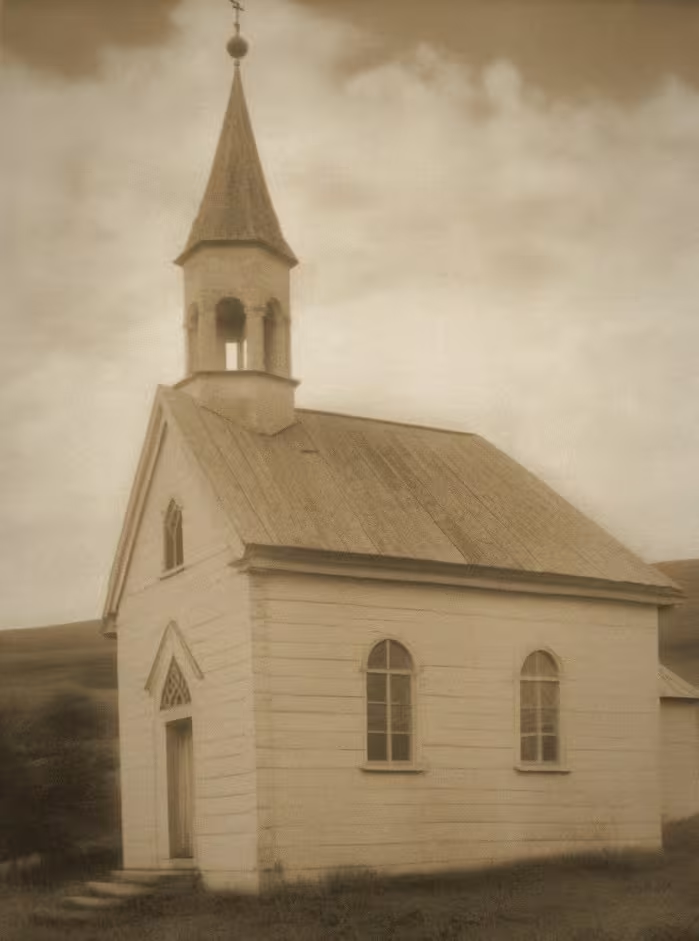
The historical appearance on the left is an AI-generated visualisation and serves as inspiration only.
Historical milestones
- 1869
- The chapel was consecrated on June 6, 1869.
Architectural development
Constructed between 1868 and 1869, the Chapel of the Guardian Angel replaced a wooden bell tower. It featured an oblong plan with a simple facade, two arched windows on each side, and a small niche above its entrance containing a statue of the Virgin Mary. The chapel had a half-barrel vaulted roof covered in tiles, topped by a hexagonal belfry with a steel bell from 1918.
Historical events
The chapel was built in 1868–1869 by local Easter singers' association funds.
It was consecrated on June 6, 1869.
Regular services were held until the end of World War II.
The chapel and surrounding buildings were demolished in the late 1950s.
Points of interest
- The Chapel of the Guardian Angel was funded by the local association of Easter singers, highlighting a unique community-driven effort to maintain religious traditions during the Austro-Hungarian Empire era.
- Before its construction in 1868-1869, an earlier wooden bell tower stood at the site, indicating that the area had long been used for spiritual and communal purposes.
- The chapel's roof featured a hexagonal belfry with a steel bell from 1918, reflecting both historical craftsmanship and the technological advancements of early 20th-century Europe.
- After World War II, the chapel fell into disrepair, leading to its demolition in the late 1950s—a fate shared by many religious structures during this period due to changing political climates.
- Despite its destruction, two small-leaved lindens that once adorned the chapel's entrance survived and continue to mark the site, serving as living reminders of the chapel’s historical presence.
Guide
This guide is narrated by a synthetic voice generated by artificial intelligence.
Show guide text
This text was created by artificial intelligence and has not been editorially reviewed. It may contain inaccuracies.
The Chapel of the Guardian Angel, in German Schutzengelkapelle, was once the only religious building in the village of Severní. It was previously an independent municipality, today it is a local part of Lobendava. The chapel stood on the northern edge of the village by the main road that led towards Steinigtwolmsdorf. It no longer exists today.
Originally, a wooden bell tower stood in its place. The chapel dedicated to the Guardian Angel was built in the years eighteen sixty-eight to eighteen sixty-nine and consecrated on the sixth of June, eighteen sixty-nine. The money for the construction was donated by a local society of Easter singers. In the chapel, bells were rung for kneeling and presumably also when announcing deaths. For regular Sunday services, local believers went to the parish Church of the Visitation of the Blessed Virgin Mary in Lobendava. However, once every two weeks a service was held directly in the chapel.
Until the end of the Second World War, the chapel was maintained. After that it began to deteriorate and suffered the same fate as many other buildings in the village. At the end of the nineteen fifties they demolished it along with the neighbouring houses. The bell was transferred to the tower of the Lobendava church. The plot is today registered in the land register as waste land and belongs to the municipality of Lobendava.
The chapel stood on a small hill by the main road and a stone staircase led to it. It had a rectangular floor plan and had no distinctive architectural features. The facade was simple, undecorated and not particularly distinguished in colour. In each side wall were two rectangular windows with semicircular tops. In the front were rectangular double-leaf doors with a semicircular fanlight. Above them in the gable was a small niche with a statue of the Virgin Mary. The half-hipped roof was covered with slate and in front of it stood a six-sided sanctus bell tower with a steel bell from nineteen eighteen.
Inside stood a wooden altar and on both sides three rows of benches. The furnishings also included several smaller paintings. The space in front of the chapel was completed by two small-leaved linden trees. They survived the demolition.
Businesses nearby
Do you run a restaurant, accommodation, shop, museum, rental, wellness or other visitor service near this monument? Show yourself directly to the people heading to it — this is how they will see you in the app and on the web:
Visualizations and artistic views


The visualisations are generated by artificial intelligence and serve as inspiration.
Photos from the area
Real photos taken near the monument

Zdroj a licence jsou uvedeny u každého snímku.
Tips from visitors
No tips yet. Be the first!
Log in and add your tip.
Sources and literature
Photos: autor neuveden / Public domain, rozlišení zvýšeno umělou inteligencí — Wikimedia Commons. The author and licence also appear when you hover over the image.
Faktickým podkladem tohoto textu byl článek na Wikipedii, jehož autory jsou přispěvatelé Wikipedie. Článek je dostupný pod licencí CC BY-SA 4.0.
Location on the map

Příběhy a pověsti
Legendy, pověsti a příběhy spjaté s touto památkou

Fotografie návštěvníků
Zatím žádné fotografie. Buďte první, kdo přidá fotografii z návštěvy!
Log in a přidejte svou fotografii nebo hodnoťte.
Za ověřenou návštěvu v aplikaci získáte víc bodů — poznáme podle GPS, že jste na místě.
Reviews and comments