



Hřebčín – lovecké stáje Hřebčín
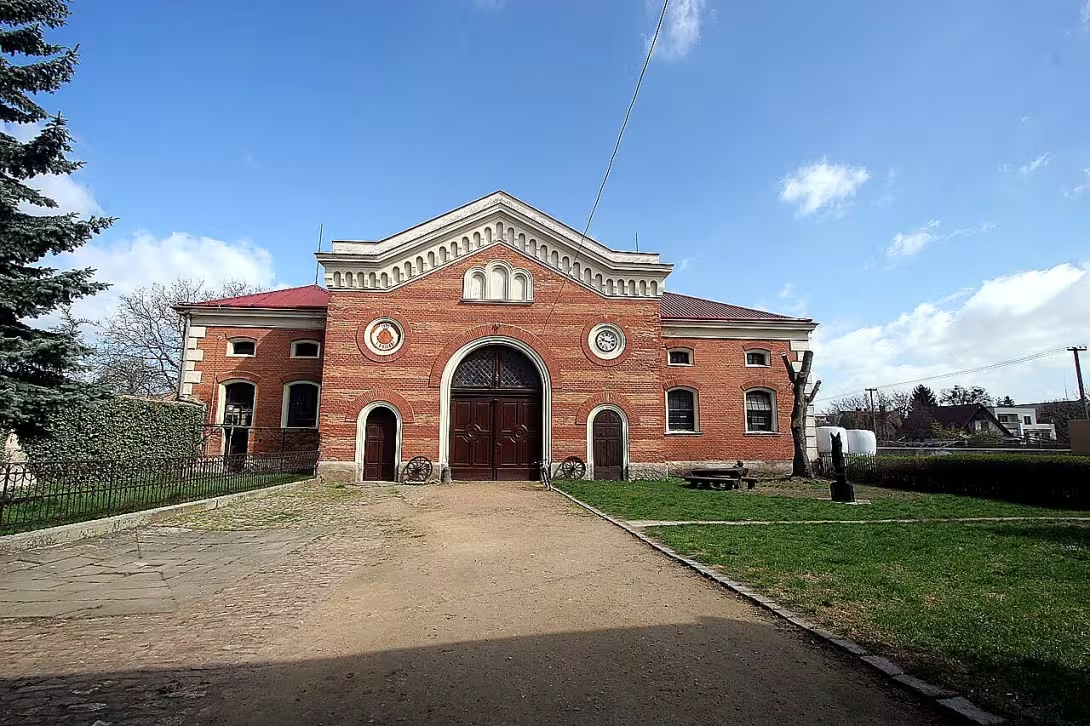
Clovin in Heřmanov The city is a complex of former manor stables in the Chrudim district of Pardubice. In 1875 he had it built by Prince Ferdinand Bonaventura Kinský. The area in the Neo-Romanesque style was originally used for parformic hunting, racing and horse polo. Since 1991 it has been protected as a real-estate cultural monument of the Czech Republic.
The construction took place in the 1970s, in the period of economic flourishing of noblemen's goods in Austria-Hungary. Prince Ferdinand Bonaventura Kinský has built the complex as a base for his riding activities. The architecture was often drawn from historical styles. The choice of neo-Romanesque style was intended to underline the tradition and prestige of the noblemen.
The architectural solution consists of the main three-boat building stables with a glazed atrium. There is a yard on the north side surrounded by four other objects. From the west we will find here former summer stables, dogs, forge and other premises, which also served as accommodation for staff. North of the yard there is a fortified riding hall. The original area was closely connected with nearby pheasants and large pastures, which were later partly built by new buildings.
Since 1875, the Kinski family was owned, and later the area went to state administration. A major breakthrough occurred in 1945, when the complex was integrated into the stallion in Slatinán. Since then, the premises have been mainly used for the breeding and training of the Old Kladrub crow. In addition to horse housing, the main building also serves as a depository of historical harness collections.
The important milestone was November 1, 1991, when the stallion was declared a cultural monument. In 2021 the complex underwent extensive reconstruction. An indoor circular horseman and horse trainer were added, which enabled the operation to be modernised while maintaining the historical character of the objects.
Today, the stud in Høman's City is a key place for breeding the Old Kladrub crow and valuable evidence of the noble architecture of the 19th century. The visit offers the opportunity to look at the history of male horse breeding near the local castle and historical center of the city. This monument is an important testament to the equestrian culture of past generations and its preservation is essential for maintaining the breeding tradition in the region.
Then and now
Drag the slider to compare how the landmark may have looked when it was built with the view today.
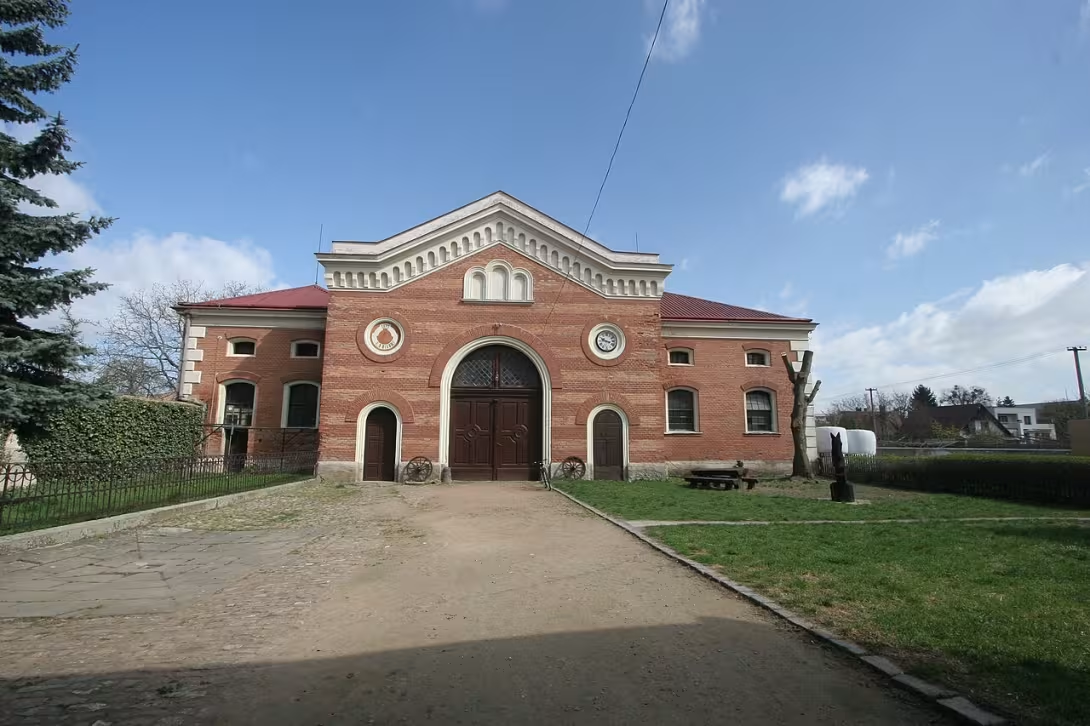
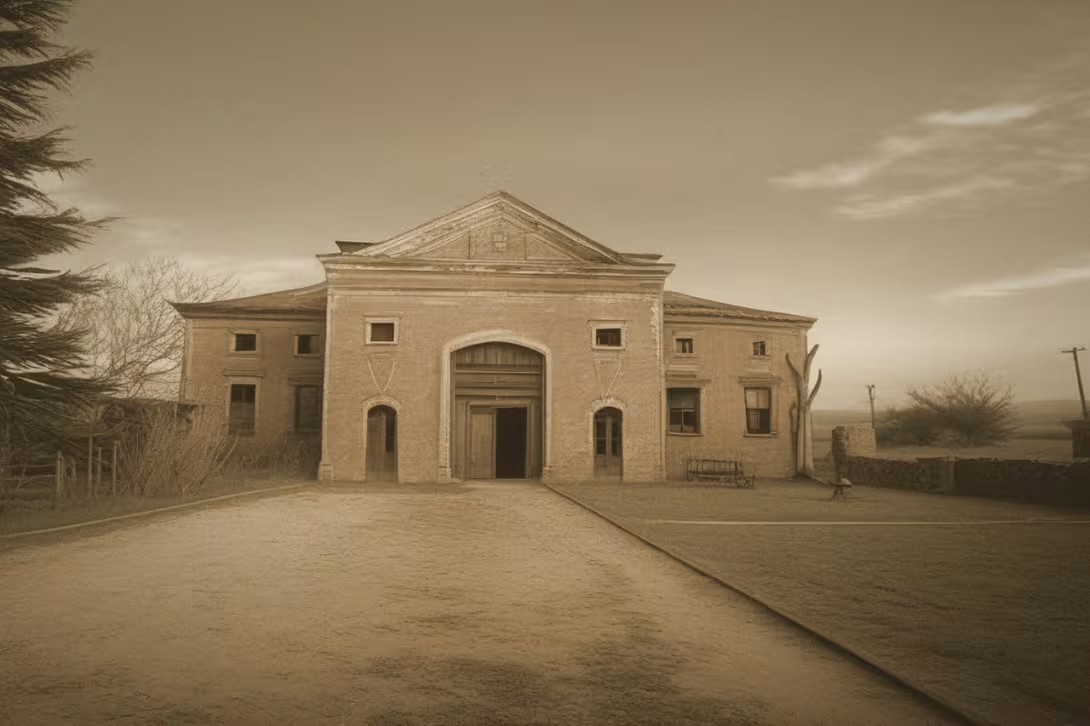
The historical appearance on the left is an AI-generated visualisation and serves as inspiration only.
Historical milestones
- 1875
- Construction of the complex of the manor hunting stables by Prince Ferdinand Bonaventura Kinský.
- 1945
- The area started to be used for the breeding and training of the Old Kladuban sparrow under the administration of a stud in Slatinán.
- 1991
- The area was declared a cultural monument of the Czech Republic.
- 2021
- There was a reconstruction of the complex with the construction of a new covered circular horseman.
Architectural development
The area was built in Neo-Romanesque style as a comprehensive economic complex. The main building has a tripod layout with a glazed atrium. In 2021, the complex underwent modernization, which added an indoor circular riding hall and horse trainer.
Historical events
1875: Construction of the premises by Prince Ferdinand Bonaventura Kinský. 1945: Inclusion in the management of the stud in Slatinán. 1991: Declaration of the premises for a cultural monument. 2021: Extensive reconstruction of the complex including extension of the covered horseman.
Owners
Rod Kinski (since 1875), then state.
Points of interest
- In 1875, the stallion built Prince Ferdinand Bonaventura Kinský as a background for his riding activities. - The area was built in a neo-Romanesque style to underscore the tradition and prestige of the nobility. - The main building of the stables has a glazed atrium and besides horse housing it also serves as a depository of historical collections of harness. - Since 1945 the complex has been part of a stud in Slatinán and focuses on the breeding and training of the Old Kladuban crow. - In 2021, the area was renovated, where an indoor circular riding hall and horse trainer were added.
Guide
Show guide text
This text was created by artificial intelligence and has not been editorially reviewed. It may contain inaccuracies.
Welcome to Hermano City. Stop for a moment, take a breath and look around you. Right now, you're standing in front of an area that carries echoes of ancient noble glory, horse-picking and the sound of anvil. In front of you is the Claw, the former Pansky Hunting Stables, which are today a silent but proud witness to the history of this region. Feel the atmosphere of this place, where the practical need to breed animals has been combined with high aesthetic requirements of aristocracy. It is the space that was created for movement, strength and elegance, and it is in this world that I now invite you together.
Let's first look at how this place was created and who was its creator. If we move back more than 150 years in time, namely until 1875, we will see Prince Ferdinand of Bonaventura Kinsky. He was the person who decided to create a hunting stable complex here. For Prince Kinski it was not only about building functional space for horses, but about creating a background for his passionate riding activities. At that time, horses were a symbol of power, wealth and social standing. So the stallion was not just an economic building but a representative place where nobles met and social events related to riding art took place.
Now pay attention to the architecture itself that you see before you. Notice the style in which the site was built. It's a neo-Romanesque style. Why this style? Prince Kinský and his architects wanted to underline the tradition and prestige of their family. The Romanesque elements that appear in neo-Romanesque form evoke stability, strength and return to the beginnings of European architecture, which was intended to provide the whole complex with a sense of timeliness and nobility. Look at the facade of the buildings and feel the rhythm of their shapes.
The main point of the entire complex is the three-boat building. It is a monumental building that dominates space by its size and arrangement. If you look closely, you'll see a glazed atrium. This atrium is really unique; It transmits natural light into the interior, creating an air and open feeling that was very modern for its time. Today, this atrium plays a very important role because it serves as a depository of history, a place where memories and traces of this stallion's past are kept.
Let us now slowly move towards the adjacent court. Notice the surrounding economic objects that form a closed whole. Although they may seem calm today, there used to be constant activity here. This is where the dogs were found, where they rested and were trained by hunting dogs, and blacksmiths where the hooves of horses were forged and the riding equipment was repaired. Imagine the noise, the smell of skin, the sweat of horses and the hot iron. This whole space was designed so that everything was at hand and that hunting expeditions could be organized with maximum efficiency.
When we talk about the purpose of this place, we must mention the activities that have taken place here. The stallion served mainly for the needs of the parfortic hunting. It was a very demanding and enduring hunt where dogs chased animals in open terrain until they exhausted it. It required a horse with great endurance and a rider with a firm hand. In addition to hunting, there were also horse racing and horse polo, which is a sport that requires incredible coordination between the rider and the horse. Imagine the dynamic movements, the dust, the animals' hooves and tension in the world, watching these noble competitions.
But the history of Clovin did not stop with the end of the era of the great manor. After 1945, the fate of the compound changed, but his mission remained linked to the horses. The area began to serve for the breeding and training of the Old Kladuban crow. It's a rare and beautiful black horse that was managed by a stud in the Slatinans. These animals are known for their elegance and strong constitution. Imagine these black, shiny animals moving around the court that once belonged to Prince Kinski. It was a combination of the history of the old family and the tradition of one of the most important Czech horse breeds.
In 1991 the area was recognised as a real-estate cultural monument of the Czech Republic. This was an important moment because it recognised its architectural and historical value, which goes beyond local significance. The monument gained protection to preserve its beauty and authenticity for future generations.
If you look at the latest parts of the complex, you will see the results of the extensive reconstruction from 2021. The modern age has brought improvements that allow the Stallion to perform its function today. A new indoor circular riding hall and a trainer were built here. It is a place where horses can train in every weather, which is essential for modern riding sport and proper animal care. It's fascinating to see how the old nineteenth-century neo-Romanesque architecture connects with modern technical elements of today.
You may be wondering what's left of this place hidden. It's not just about buildings, it's about stories of humans and animals. Every stone in this court could hear the orders of Prince Kinsky or the silent rustling of horses waiting for their start in the race. The mystery is how many secret stories have taken place in these stables over the decades when different generations of carers and riders have been involved.
Now that you know the story of this place, I suggest you go through the area at your own pace. Look again at the glazed atrium, perceive the court space and imagine what it would look like in 1875 when it was in full bloom. Try to imagine the sound of hooves falling on the pavement and a sense of pride that the people who worked here must have felt.
Clovin in Heřmanov Cities are places where time has stopped, but they are constantly evolving. It is a bridge between the aristocratic past and the present, where horses still play a major role. I hope you are interested in this short journey through history and that you will take a sense of respect for this beautiful complex.
Thank you for your attention and now just enjoy your walk. Explore every corner, perceive the peace and quiet of this place, and let yourself be drifted by images of ancient times. I wish you a pleasant rest of the day and a wonderful experience in discovering our monuments. Goodbye.
Tips for visitors
The best time to visit is in the morning during the working week or on the weekend, when there is a quieter atmosphere in the area and light better depicts details of Neo-Romanesque stables architecture.
You can reach Høman City by car and public transport.
For photography we recommend using morning or late afternoon hours, when the sun highlights brick wall and decorative building elements. Ideal places for pictures are the courtyard and views on the main facade.
In the vicinity of the monument you can visit the castle in Høman City, take a walk with the adjacent pheasant or explore the historical center of the city, which offers a pleasant setting for walking trips.
The area is suitable for families with children due to flat terrain and proximity to green. We recommend you take with you comfortable shoes and snacks, which you can enjoy in the quiet corners of the castle park.
Frequently asked questions
Can the monument be visited?
We have not verified whether this monument is accessible. Please ask the owner or operator, or the local municipal office.
Where is the monument?
Location: Heřmanův Městec. The map on this page shows the exact spot.
Why is the monument protected?
It is listed in the Central List of Cultural Monuments of the Czech Republic as a cultural monument (register no. 1681462545).
Businesses nearby
Do you run a restaurant, accommodation, shop, museum, rental, wellness or other visitor service near this monument? Show yourself directly to the people heading to it — this is how they will see you in the app and on the web:
Nearby
Zámek v Heřmanově Městci, bažantnice, historické centrum města.
Accommodation nearby
Trips and activities nearby
Guided tours, tickets and activities nearby from GetYourGuide
Affiliate link: if you buy from the partner, we may receive a commission. The price for you does not change.
Search tours and activities →Themed route
1. Historical city centre (urban zone) - The walk through the streets allows you to feel the atmosphere of the whole place. 2. Castle in Høman City (aristocratic residence) - Construction with beautiful architecture that tells about the past. 3. Pheasant (natural area) - A place to relax in the green before visiting horses. 4. Hřebčín – lovecké stáje (horse structure) - The main destination of a trip focused on a unique hunting tradition.
Seasonal recommendations
Spring: In spring the Hřebčín – lovecké stáje (others) is turned into a green sanctuary, where newly grown leaves and flowering shrubs add colored nuances. The sun's rays penetrating the misty clouds illuminate historical architecture in fine shading, creating a romantic atmosphere. It is advisable to come in early afternoon time when the crowds are minimal and you can enjoy a quiet walk. It is recommended to wear clothing with the possibility of approaching or removing layers as temperatures may vary significantly during the day.
Summer: During the summer period Hřebčín – lovecké stáje (others) is full of life and light. Sun rays light every corner while warm wind brings comfort. In the main summer season is expected high traffic, therefore it is recommended to visit early in the morning or in the evening when there are fewer people and temperatures are more pleasant. Don't forget your sunglasses, UV cream and enough drinking water to enjoy your country stay.
Autumn: Autumn brings Cane - hunting stables (others) in colours of pink and yellow leaves. Sunny days with cold evenings create a mild atmosphere that is ideal for quieter walks. This season you can expect a smaller number of visitors compared to the summer season, meaning more space and peace. It is recommended to wear layered clothes to prepare for quick changes in temperature during the day.
Winter: The winter visit to the Stallion - Hunting Stables (others) offers a unique atmosphere where cool air and snow covering architecture create views full of calm. Days are shorter and light quickly turns into darkness, which means that good lighting for photos is limited to sunny time. For an outdoor visit, remember to wear warm clothes, including hat and gloves to protect yourself from cold and possible snow.
Visualizations and artistic views


The visualisations are generated by artificial intelligence and serve as inspiration.
Photos from the area
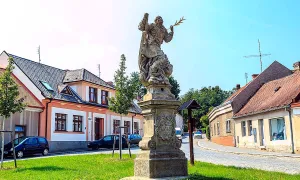
Real photos taken near the monument


Zdroj a licence jsou uvedeny u každého snímku.
Tips from visitors
No tips yet. Be the first!
Log in and add your tip.
Sources and literature
Photos: Petr1888 / CC BY-SA 3.0 — Wikimedia Commons. The author and licence also appear when you hover over the image.
Faktickým podkladem tohoto textu byl článek na Wikipedii, jehož autory jsou přispěvatelé Wikipedie. Článek je dostupný pod licencí CC BY-SA 4.0.
Location on the map
Příběhy a pověsti
Legendy, pověsti a příběhy spjaté s touto památkou
Fotografie návštěvníků
Zatím žádné fotografie. Buďte první, kdo přidá fotografii z návštěvy!
Log in a přidejte svou fotografii nebo hodnoťte.
Za ověřenou návštěvu v aplikaci získáte víc bodů — poznáme podle GPS, že jste na místě.
Reviews and comments